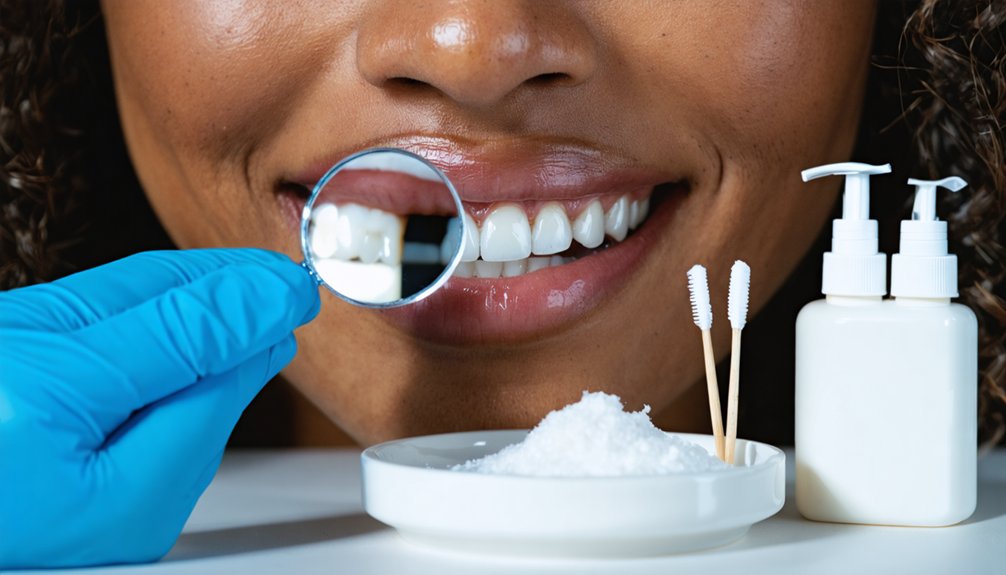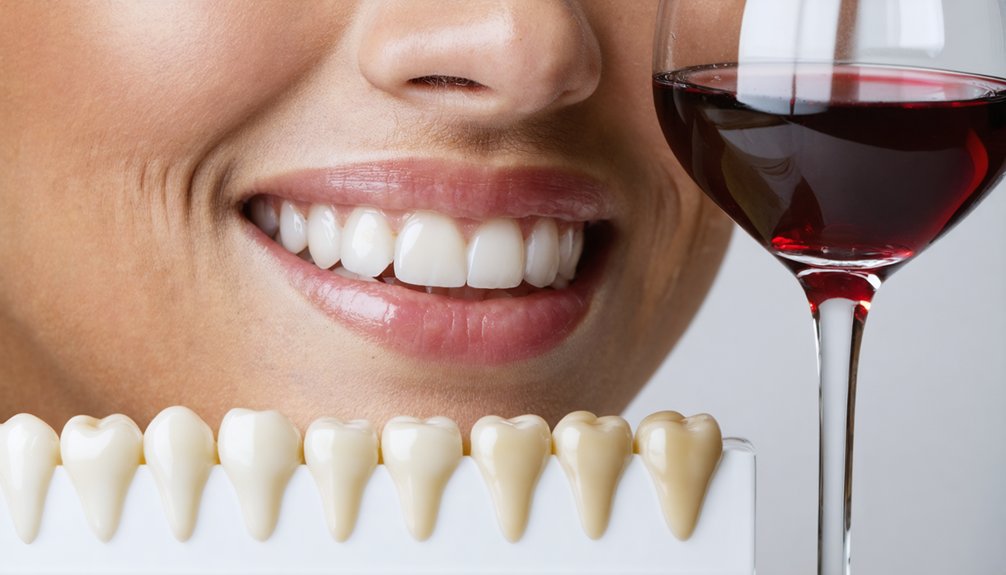
Your lifestyle choices directly influence wine stain formation by creating or eliminating protective barriers against chromogens and tannins. Pre-drinking oral hygiene removes plaque that traps pigments, while saliva-stimulating foods like cheese establish calcium-based enamel coatings. Strategic hydration dilutes acidic compounds, preventing the porosity that allows deep chromogen penetration. Post-consumption rinsing dislodges tannins before they bond with tooth surfaces, and delayed brushing protects acid-softened enamel from abrasion. The specific timing and sequence of these interventions determine whether pigments merely contact or permanently infiltrate your dental structures.
Key Takeaways
- Pre-drinking oral care removes plaque and hardens enamel, creating a protective barrier against wine pigments and tannins.
- Regular water rinsing dilutes staining compounds and stimulates saliva production, which naturally buffers acidity and prevents tannin penetration.
- Strategic food pairings like cheese and crunchy vegetables form protective enamel coatings while mechanically scrubbing away staining particles.
- Choosing low-tannin wines and using straws minimizes direct enamel contact with chromogens that cause discoloration.
- Waiting thirty minutes post-wine before brushing prevents enamel damage while acid-softened, allowing natural remineralization to occur.
How Pre-Drinking Oral Care Creates a Protective Foundation
Removing plaque through pre-emptive brushing establishes a critical defense mechanism against wine-induced dental discoloration. You’ll eliminate the sticky biofilm that provides tannins with adhesion sites, directly reducing stain accumulation. Immediate plaque removal 30 minutes before consumption allows your enamel to re-harden, preventing the compound damage of brushing softened surfaces. This timing window maintains structural integrity while strengthening your teeth against pigment penetration.
Strategic pre-drinking preparation extends beyond brushing. You can incorporate whitening toothpaste into your routine to combat existing surface stains before new exposure occurs. Saliva stimulation pre wine through crunchy vegetables or dairy creates a natural buffering system that neutralizes acids and mechanically washes away pigments. Cheese specifically forms a protective enamel layer while binding tannins before they contact tooth surfaces, giving you measurable control over staining outcomes.
The Science Behind Rinsing and Staying Hydrated
Water’s mechanical action against wine stains begins the moment it contacts your tooth surfaces. Rinsing dilutes anthocyanins and tannins before they bind to enamel, while the neutral pH (versus wine’s 3.4) limits acid etching that creates porosity for pigment adhesion.
You’ll stimulate saliva production through hydration, maintaining moisture content regulation that buffers harmful bacteria and washes away wine pigments. This saliva flow restores ideal oral pH, reducing tannin penetration into compromised enamel.
When you rinse post-wine, you’ll prevent the continuous surface layer formation that solidifies staining. Following with toothpaste removes residual pigments more effectively than water alone.
Consistent hydration strengthens enamel surface integrity against plaque buildup, while avoiding immediate brushing protects softened surfaces from sensitivity. You’re maintaining conditions where staining remains statistically negligible.
Strategic Food Choices That Shield Your Enamel
Strategic food selection modifies your oral environment’s susceptibility to chromogenic compounds through mechanical and biochemical mechanisms.
High-fiber vegetables like spinach and broccoli require extensive chewing that generates saliva, which naturally scrubs tannins from enamel surfaces. Hard cheeses—particularly cheddar and Asiago—provide calcium coating that prevents wine pigments from adhering while neutralizing acidity. Crunchy fruits such as apples deliver mechanical cleaning action without berry-related discoloration risks.
Nuts and seeds offer stain-free nutrients that support enamel integrity post-whitening. Calcium-rich dairy products strengthen tooth surfaces and buffer acidic compounds effectively. Ideal dietary timing involves consuming these protective foods alongside wine exposure to maximize their preventive effects. This approach enables oral microbiome management through strategic nutrient delivery, creating biochemical barriers against chromogenic penetration while maintaining enamel resilience through targeted food-based interventions.
Smart Wine Consumption Methods to Minimize Contact
While dietary modifications establish foundational protection, consumption techniques directly determine chromogenic exposure duration and intensity on enamel surfaces.
Strategic consumption methods control how long and intensely wine stains contact your teeth, surpassing diet alone in protective effectiveness.
You’ll minimize staining through responsible wine selection—choosing low-tannin reds like Gamay or Beaujolais reduces pigment adherence, while avoiding white-before-red sequencing prevents acid-softened enamel from absorbing chromogens.
Optimized pour patterns incorporate water intervals that dislodge particles, restore neutral pH, and stimulate protective saliva flow. Sparkling water’s carbonation mechanically scrubs tannins between glasses. Wine straws create physical barriers, limiting direct enamel contact with staining compounds.
Apply lip protection products before consumption to prevent surface absorption. Deploy specialty removal wipes after each glass to extract tannins before permanent embedding occurs.
These methodical adjustments grant you precise control over wine’s interaction with dental and labial tissues.
Essential Post-Wine Practices for Long-Term Prevention
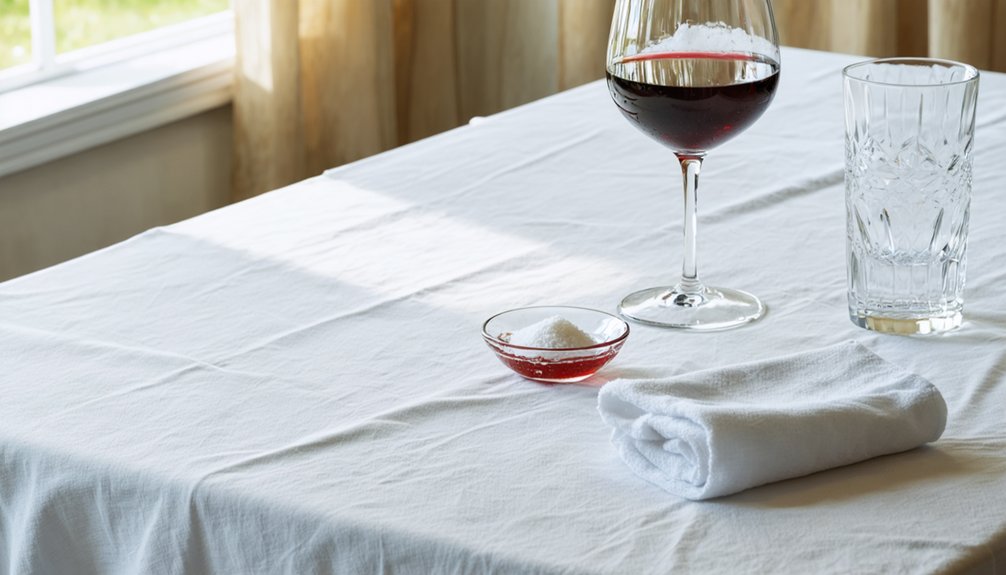
Your immediate actions following wine consumption determine whether chromogenic compounds embed permanently into enamel microstructure or remain superficial and removable. You’ll need to rinse your mouth with water within five minutes to dilute tannins before they bond with tooth surfaces.
Applying specialized cleaners containing hydrogen peroxide or baking soda neutralizes acidic pH levels that facilitate staining. You should wait thirty minutes before brushing to prevent enamel abrasion while temporarily weakened by acidity.
Removing stains promptly through professional cleanings every six months prevents chromogen accumulation in microscopic enamel fissures. You must avoid immediate contact with additional pigmented substances—coffee, tea, berries—which compound staining potential.
Document your oral hygiene protocol consistency to identify behavioral patterns that either mitigate or exacerbate discoloration progression over time.
Frequently Asked Questions
Can Red Wine Stains Be Completely Reversed With Home Whitening Treatments?
You can’t guarantee complete stain reversal, but vinegar-based treatments combined with baking soda abrasives will markedly lighten fresh red wine stains when you act immediately, giving you better control over the outcome than delayed intervention.
Do Certain Wine Glass Shapes Reduce Staining Risk Compared to Others?
Glass shape doesn’t directly reduce staining risk. However, stemmed glass shapes can help you control wine consumption duration by preserving temperature, potentially decreasing prolonged dental exposure. You’ll minimize staining through shorter contact times rather than vessel design.
Are Some People’s Teeth Naturally More Resistant to Wine Staining Than Others?
Yes, you’re blessed—or cursed—by genetic factors determining your enamel thickness and saliva composition. Thicker enamel resists staining better, while alkaline saliva neutralizes wine’s acids more effectively. You can’t choose your genes, but you’ll control preventive measures.
How Long Do Wine Stains Take to Become Permanent Without Treatment?
Wine stains set within 24-48 hours as pigments bond to enamel’s porous surface. You’ll maintain control through immediate blotting action after exposure and timely professional cleaning every six months, preventing irreversible discoloration before molecular binding occurs.
Does the Temperature of Wine Affect Its Staining Potential on Teeth?
Research shows enamel immersed at 37°C demonstrates increased pigment uptake. Yes, wine temperature affects staining degree—warmer wines near body temperature enhance chromogen absorption into enamel. You’ll minimize staining potential by consuming wine chilled rather than warm.