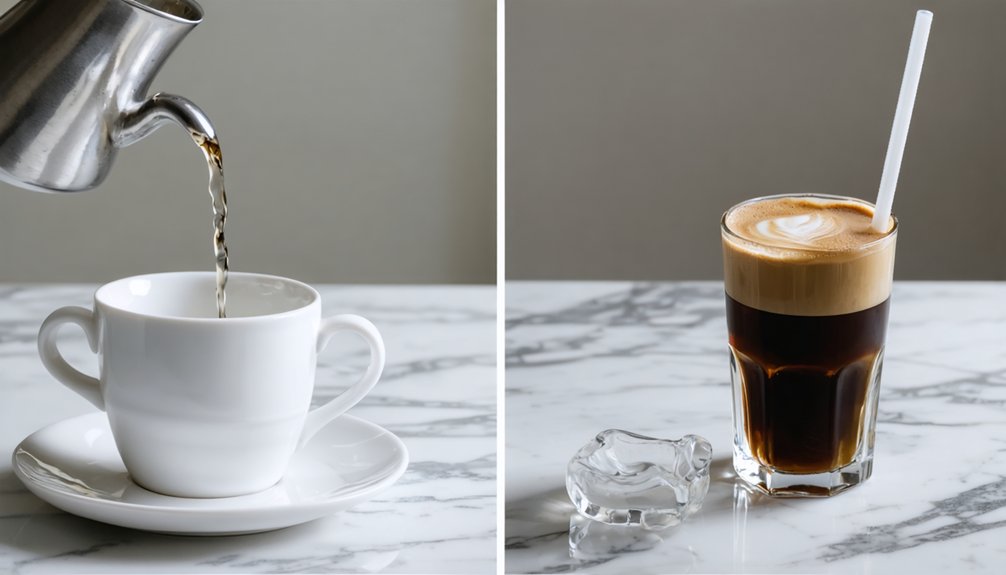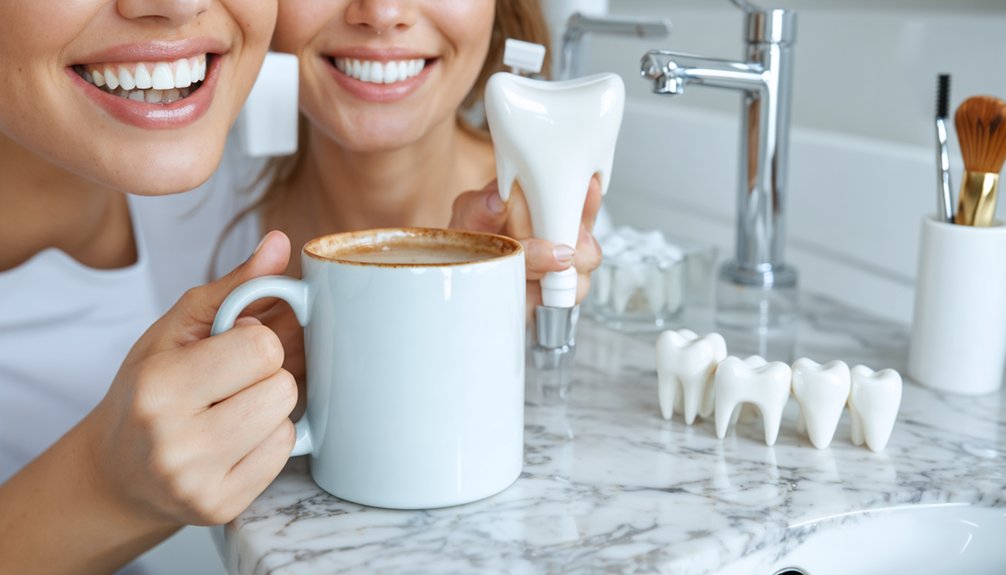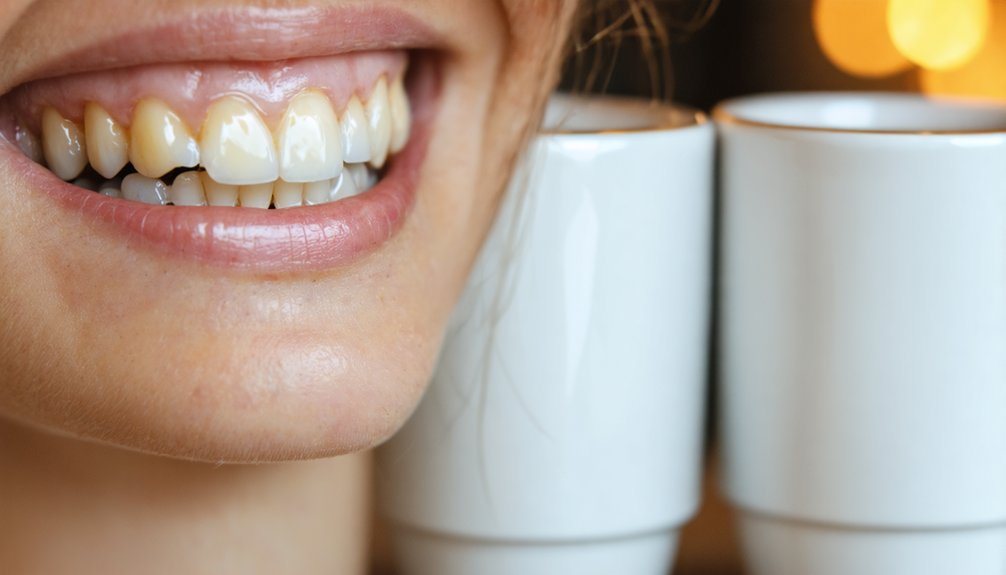
Coffee stains on teeth rarely require emergency whitening, but you shouldn’t dismiss sudden or severe discoloration too quickly. Tannins in coffee bond aggressively to enamel, and daily consumption compounds staining fast. More critically, a single darkened tooth or unexpected color change can signal pulp damage, infection, or structural problems that go far beyond cosmetics. Recognizing the difference between a surface stain and a serious warning sign could protect both your smile and your health.
Key Takeaways
- Coffee stains rarely qualify as true dental emergencies, but social or professional pressure can create urgency for whitening.
- Tannins in coffee bond aggressively to enamel within minutes, making early intervention critical for easier removal.
- Daily coffee consumption layers pigment deposits progressively, making stains increasingly resistant to standard over-the-counter whitening treatments.
- A single darkened tooth accompanied by pain or sensitivity may signal pulp damage, requiring prompt professional evaluation.
- Delaying treatment allows stains to set deeper into enamel, significantly complicating and limiting future whitening outcomes.
Do Coffee Stains on Teeth Ever Need Emergency Whitening?
Coffee stains on teeth rarely qualify as a dental emergency, but there are specific circumstances where prompt attention becomes necessary.
If your coffee consumption has led to discoloration accompanied by tooth pain, sensitivity, swelling, or a single darkened tooth, these symptoms may signal enamel erosion, pulp damage, or infection rather than surface staining alone. In those cases, you shouldn’t delay evaluation.
Coffee stains paired with pain, swelling, or a lone dark tooth may signal something far more serious than surface discoloration.
For purely cosmetic staining, urgency typically stems from social or professional pressure rather than medical need.
However, acting early matters. Stains that set into enamel pores become progressively harder to remove, making stain prevention and timely whitening a strategic advantage.
Waiting allows tannins to bind more deeply, reducing the effectiveness of over-the-counter options and potentially requiring more aggressive professional intervention.
What Makes Coffee Stains Worse Than Other Tooth Discoloration
Coffee’s tannins bond aggressively to enamel proteins and pore surfaces, embedding pigment more deeply than many other staining agents.
Unlike wine or tea, which you may consume occasionally, daily coffee use compounds this effect by continuously reintroducing chromogens before previous stains fully surface-clean.
The result is a rapid discoloration cycle that outpaces your ability to manage it with standard brushing alone.
Tannins Bind Deeply
Tannins grip enamel in a way that most other staining compounds simply don’t. Unlike pigments from berries or wine that sit loosely on the surface, tannin adhesion creates a molecular bond with enamel proteins, pulling chromogens deeper into microscopic pores.
That enamel penetration means standard brushing rarely reverses the damage on its own. You’re not just removing a surface film — you’re fighting a compound that’s chemically anchored to your tooth structure. The longer tannins remain in contact with enamel, the stronger that bond becomes.
If you drink coffee daily without intervening, each cup compounds the previous one. Understanding this mechanism tells you why basic whitening toothpaste often underperforms and why stronger peroxide-based solutions or professional treatment become necessary faster than most people expect.
Stains Set Quickly
When you drink coffee, staining begins within minutes — not hours. Tannins adhere to plaque and enamel pores almost immediately, and once they set, basic stain prevention strategies become less effective.
Unlike wine or tea, coffee combines high tannin concentration with acidity, softening enamel while simultaneously depositing chromogens — a double mechanism that accelerates discoloration faster than most beverages.
You can’t rely on delayed action. The longer pigments remain on enamel, the deeper they penetrate, narrowing your whitening techniques options to professional-grade peroxide treatments rather than accessible over-the-counter solutions.
Daily drinkers face compounding buildup where each cup reinforces existing stains. Acting quickly — rinsing immediately, brushing within 30 minutes, and maintaining consistent whitening protocols — directly determines whether stains stay manageable or require aggressive cosmetic intervention.
Daily Use Accelerates Discoloration
Daily coffee consumption doesn’t just stain your teeth — it actively compounds discoloration in ways that other beverages don’t. Each cup deposits tannins into enamel pores, and repeated exposure prevents those pores from clearing between sessions.
Unlike occasional staining, daily consumption creates a layering effect where pigments bond over existing deposits, deepening the color progressively.
Your oral hygiene habits either slow or accelerate this cycle. Poor brushing, skipping water rinses, and neglecting professional cleanings remove stain prevention as a defense, letting tannins anchor into plaque before you can address them.
The longer this pattern continues, the more resistant the discoloration becomes to standard whitening approaches. Acting early — before buildup compounds — gives you far greater control over the outcome and reduces how aggressive your whitening treatment needs to be.
How Fast Can Coffee Stains Become Harder to Remove?
Coffee stains don’t take long to become stubborn, especially if you drink multiple cups a day without rinsing or brushing afterward. Tannins bind to plaque and penetrate enamel pores within hours, making stain prevention considerably harder the longer you wait.
Once pigments set, basic whitening toothpaste rarely reverses the discoloration effectively. Enamel protection also becomes more difficult as stains deepen. Repeated acid exposure from coffee weakens enamel, allowing chromogens to penetrate further below the surface.
At that point, over-the-counter strips may produce inconsistent results, and professional intervention becomes the more reliable option. Acting early gives you more control over the outcome.
Delaying treatment shifts you from simple maintenance to aggressive correction, which costs more time, money, and increased sensitivity risk during whitening procedures.
When Coffee Staining Signals a Real Dental Problem
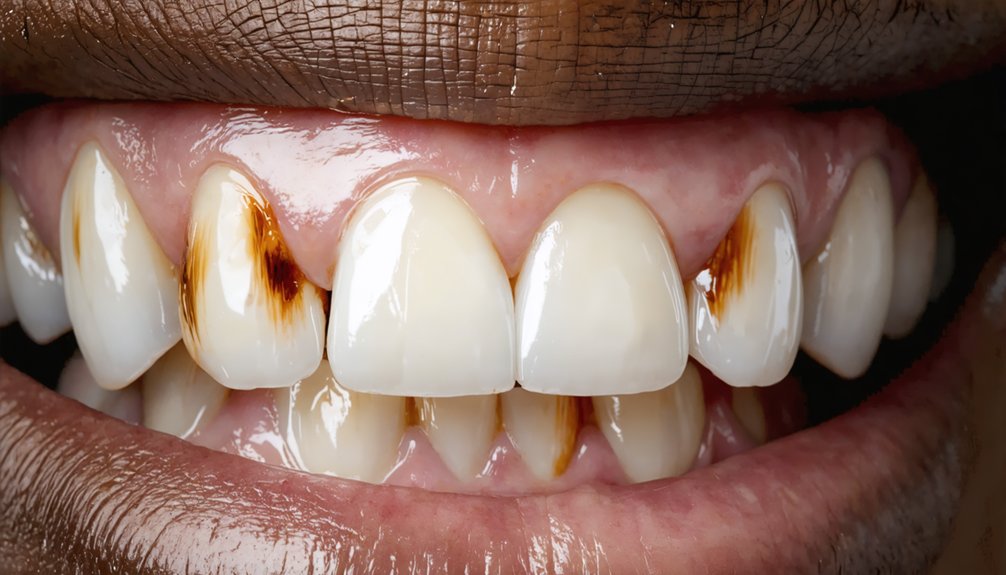
Not every dark spot on your teeth traces back to your morning cup.
If you notice a sudden color change, a patch that won’t respond to whitening, or staining accompanied by pain or sensitivity, you’re likely dealing with something beyond surface discoloration.
These signs can point to enamel erosion, decay, pulp damage, or infection—conditions that require prompt diagnosis rather than another round of whitening strips.
Sudden Color Changes Matter
While coffee staining is typically a gradual, cosmetic concern, a sudden color change in one or more teeth signals something more serious. Unlike slow tannin buildup, abrupt discoloration affecting color perception often points to structural or biological failure—not surface staining.
Take control by recognizing these urgent warning signs:
- A single darkening tooth may indicate pulp damage, trauma, or internal bleeding requiring immediate evaluation.
- Rapid discoloration paired with sensitivity or pain suggests enamel health compromise, possible decay, or erosion beyond cosmetic concern.
- Dark spots resistant to brushing often reflect intrinsic staining from dental disease, not coffee pigments.
Don’t self-diagnose with whitening products when these signs appear. Pursuing cosmetic treatment before diagnosis can mask serious conditions, delay necessary care, and worsen long-term outcomes.
Dark Spots Resisting Whitening
Sudden color changes warn you that whitening isn’t the answer—but dark spots that stubbornly resist your whitening efforts send an equally important signal.
Dark spot identification matters because not every discoloration responds to peroxide or abrasives. When standard whitening effectiveness plateaus despite repeated applications, the stain likely isn’t superficial.
Intrinsic discoloration from pulp damage, internal decay, or enamel breakdown originates beneath the surface where topical treatments can’t reach. Persistent dark spots may also indicate bacterial infiltration or structural compromise requiring clinical intervention, not another whitening cycle.
Continuing aggressive home whitening on compromised enamel accelerates damage rather than correcting it. If your dark spots don’t respond to evidence-based whitening protocols, schedule a professional evaluation immediately—you’re managing a diagnostic problem, not a cosmetic one.
Pain Alongside Staining
When coffee staining coincides with tooth pain or sensitivity, you’re no longer dealing with a cosmetic issue—you’re dealing with a clinical one. These pain factors demand immediate attention because discoloration paired with urgent symptoms often signals structural damage rather than surface buildup.
Recognize these warning signs before they escalate:
- Persistent sensitivity after hot or cold exposure suggests enamel erosion or pulp involvement—not staining.
- Localized pain near a darkened tooth may indicate trauma, decay, or internal pulp necrosis requiring intervention.
- Swelling or bleeding alongside discoloration points to active infection that whitening products can’t resolve.
Attempting whitening treatments on a compromised tooth risks worsening the damage. You need a professional diagnosis first—not a whitening strip.
Take control by treating the cause, not masking the symptom.
When a Dark or Discolored Tooth Is a Warning Sign
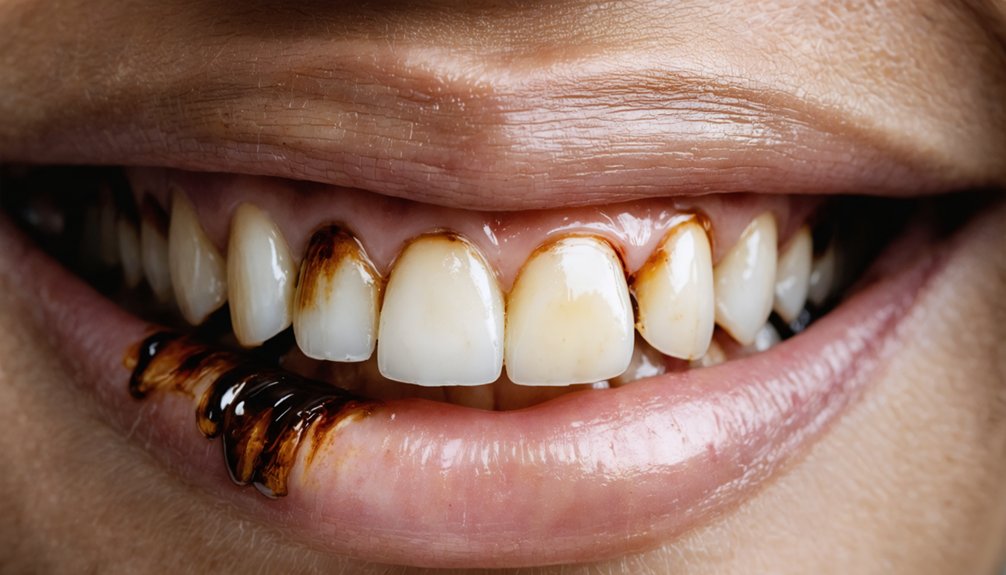
Not every dark or discolored tooth traces back to your morning coffee habit. A single tooth turning gray, brown, or black often signals pulp damage, internal bleeding, or infection rather than surface staining.
These discoloration causes demand clinical evaluation, not a whitening kit. When enamel health deteriorates from trauma or decay, the tooth structure itself changes color from within, and no peroxide product reverses that. You need to act decisively.
If one tooth darkens while others remain lighter, that asymmetry is a red flag. Accompanying sensitivity, pressure pain, or gum swelling confirms something structural is happening.
Treating these signs as a cosmetic inconvenience delays necessary care and worsens outcomes. Identify the cause first, then pursue appropriate treatment with full confidence in your decision.
Which Whitening Methods Work Fast Without Damaging Enamel
Once you’ve ruled out structural damage or infection as the cause of discoloration, fast and safe whitening becomes a practical goal.
Once structural damage and infection are off the table, effective whitening stops being a luxury and starts being achievable.
Emergency whitening doesn’t mean reckless whitening—it means choosing methods that deliver results without sacrificing enamel integrity.
Here are three safe methods ranked by speed and effectiveness:
- In-office peroxide treatments — deliver dramatic shade changes in one session with professional gum barriers protecting soft tissue.
- Hydrogen peroxide whitening strips — outperform toothpaste for moderate coffee stains, though overuse increases sensitivity risk.
- Custom take-home trays — offer controlled peroxide concentration with gradual, predictable results.
Whitening toothpaste alone won’t cut it for stubborn buildup.
Choosing professionally supervised safe methods protects your enamel while giving you visible, fast results you can actually count on.
Which Works Better for Coffee Stains: In-Office or At-Home Whitening?
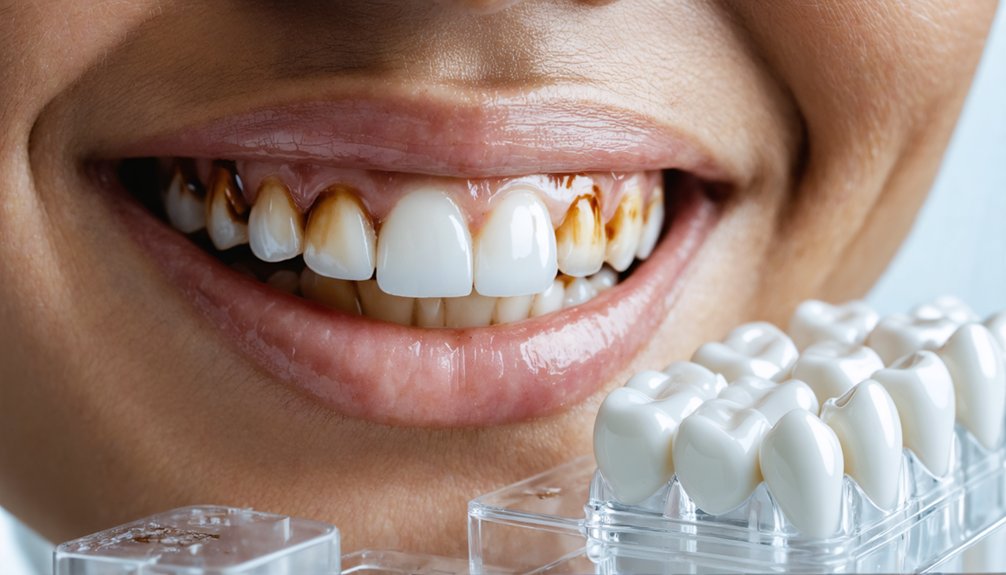
How you answer this question depends entirely on how much staining you’re dealing with and how fast you need results.
In-office convenience gives you a measurable shade change in a single session using high-concentration peroxide and professional gum protection — the right call when you’re facing a deadline.
At-home effectiveness works differently. Custom trays deliver consistent peroxide contact over days or weeks, producing comparable results but requiring patience.
Over-the-counter strips offer a middle ground, though concentration limits cap how much they can reverse deep tannin buildup.
If your staining is mild to moderate, at-home options give you controlled, cost-effective results.
If it’s heavy or time-sensitive, in-office treatment removes the guesswork.
Choosing the wrong method wastes time and risks sensitivity — match the solution to the severity.
Whitening Products That Cause Damage When Overused
Whitening products work by oxidizing surface pigments, but when you overuse them, that same chemistry starts breaking down enamel and irritating soft tissue. Exceeding recommended usage causes measurable harm:
- Whitening sensitivity intensifies — repeated peroxide exposure inflames pulp tissue, turning routine temperature changes into sharp, radiating pain you can’t ignore.
- Enamel erosion accelerates — peroxide weakens the enamel matrix, thinning your tooth’s protective layer and making it permanently more vulnerable to acids and bacteria.
- Gum tissue degrades — prolonged contact with concentrated peroxide burns and recedes soft tissue, creating cosmetic and structural damage that requires professional correction.
You control how this ends. Follow product instructions precisely, space treatments appropriately, and consult a dentist before intensifying any whitening regimen.
Damage compounds; prevention doesn’t.
How to Keep Coffee Stains From Coming Back After Whitening
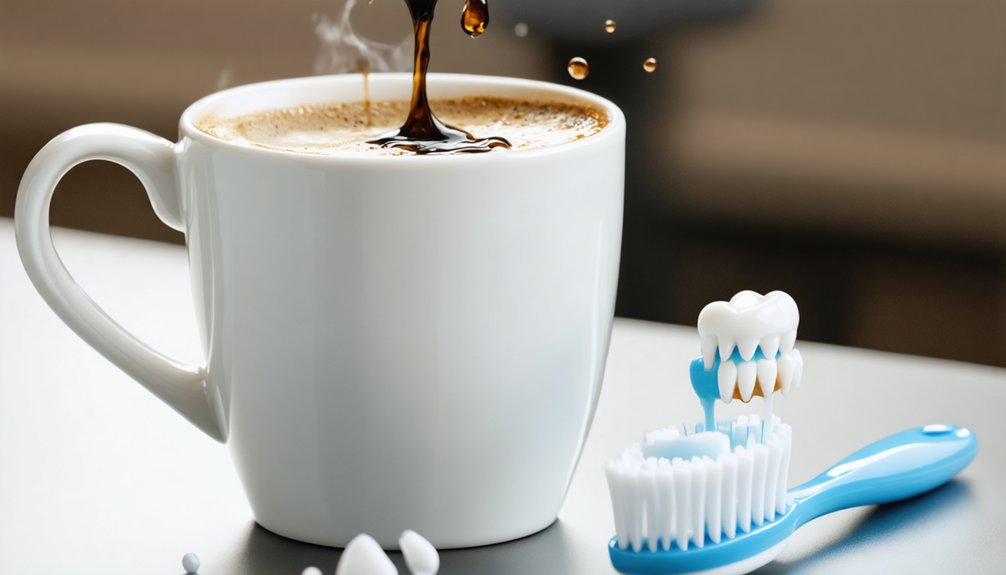
Protecting your whitening results requires the same discipline that preventing damage does—consistency and timing.
Coffee’s tannins rebind to enamel within days if you don’t establish strong preventive habits immediately after treatment. Rinse with water after every cup, brush within 30 minutes, and use a straw to minimize direct enamel contact.
Tannins don’t wait—without immediate preventive habits, coffee stains reclaim your enamel within days.
Incorporate a whitening toothpaste into your daily routine to manage early surface buildup before it sets. Effective stain management also means scheduling regular professional cleanings, where hygienists remove plaque-bound pigments that home care misses.
If you drink coffee heavily, touch-up whitening strips every few months can maintain your baseline shade without requiring another full treatment. Delay these steps, and stains reappear faster than most people expect.
Frequently Asked Questions
Can Coffee Stains Affect Dental Restorations Like Crowns or Veneers?
Coffee stains won’t discolor your crowns or veneers, but they’ll yellow your natural teeth around them. That contrast worsens teeth discoloration visibly. You must prioritize consistent dental care to maintain a uniform, controlled, professional smile.
Does the Temperature of Coffee Influence How Quickly Stains Develop?
Yes, hotter coffee accelerates staining because heat opens enamel pores, allowing tannins to penetrate deeper. Combined with coffee acidity driving enamel erosion, you’ll notice discoloration develops faster, making prompt whitening intervention essential for maintaining control over your smile.
Are Certain People Genetically More Prone to Severe Coffee Staining?
Yes, your genetic predisposition directly influences staining severity. If you’ve inherited naturally porous enamel or thinner protective layers, you’ll accumulate coffee stains faster, making proactive whitening and prevention strategies especially critical for maintaining your smile’s appearance.
Can a Dentist Whiten Teeth During a Regular Cleaning Appointment?
Studies show 80% of patients request teeth whitening annually. Yes, your dentist can perform teeth whitening during a dental hygiene appointment, combining cleaning with professional whitening treatment, giving you full control over your smile’s results efficiently.
Does Decaf Coffee Stain Teeth as Much as Regular Coffee?
Decaf coffee still stains your teeth considerably. In a staining comparison, decaf benefits you slightly since it contains fewer tannins, but its chromogens still bind to enamel, causing noticeable discoloration that you shouldn’t underestimate or ignore.
References
- https://www.advancedsmilesmarion.com/resources/teeth-whitening-coffee-stains
- https://smilliedental.com/national-coffee-day-remove-tooth-stains-with-whitening/
- https://www.goodrx.com/conditions/dental-care/remove-coffee-stains-teeth
- https://dmsmiles.com/how-do-i-get-rid-of-coffee-stains-from-my-teeth/
- https://www.mydentaloffice.com/natural-whitening-remedies-for-coffee-and-wine/
- https://www.millerdentalcc.com/blog/how-can-i-remove-coffee-stains-from-my-teeth
- https://dentistinmanvel.com/goodbye-to-coffee-stains-8-effective-methods-to-brighten-your-smile/
- https://www.colgate.com/en-us/oral-health/teeth-whitening/how-does-coffee-stain-teeth
- https://www.hendersonfamilydentistry.com/3-way-to-eliminate-coffee-stains-on-teeth/
- https://beachside-dentistry.com/teeth-whitening-for-coffee-stains/