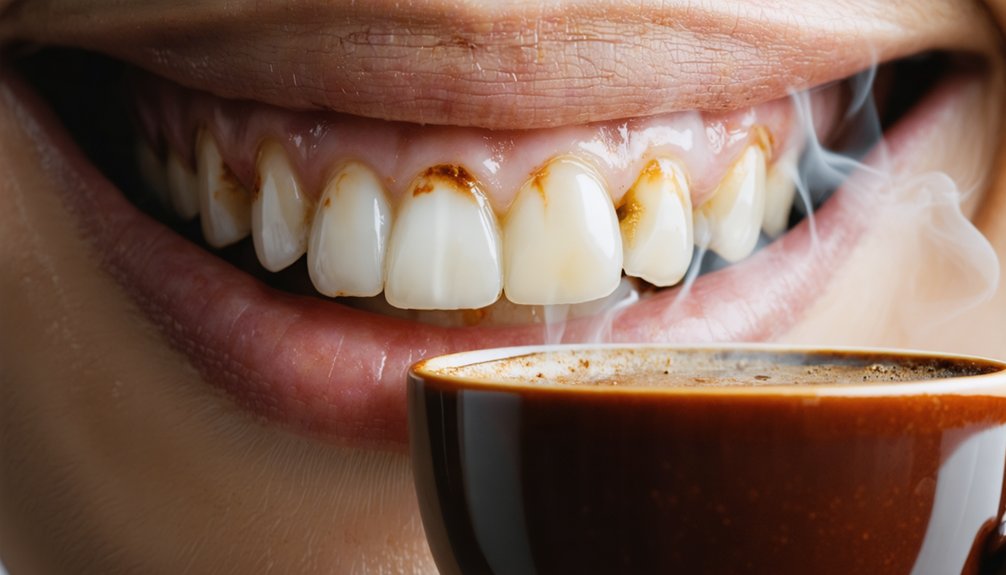
Coffee stains your teeth yellow because tannins and chromogens bind directly to your enamel’s surface. Tannins create a sticky protein layer that traps pigment, while chromogens penetrate microscopic pits and lock color beneath the surface. Coffee’s acidity accelerates this process by widening enamel pores, giving staining compounds deeper access. Your genetics, oral hygiene habits, and how often you drink coffee all influence how quickly discoloration develops—and there’s much more to understand about protecting your smile.
Key Takeaways
- Coffee contains tannins that bind to enamel’s protein layer, creating a sticky surface that traps yellow-brown pigments on teeth.
- Chromogens in coffee penetrate microscopic pits in enamel, locking pigments beneath the surface and causing persistent yellowing.
- Coffee’s acidity erodes enamel, widening micro-pores and creating larger entry points for staining compounds to penetrate deeper.
- Darker roasts contain higher concentrations of melanoidins, increasing the staining load and intensifying yellowing with each cup consumed.
- Poor oral hygiene allows plaque buildup, giving coffee pigments additional surfaces to adhere to, worsening discoloration over time.
What Actually Makes Coffee Stain Your Teeth Yellow
Coffee stains your teeth yellow because of two primary compounds: tannins and chromogens. Tannins break down in water, releasing color compounds that adhere to your tooth enamel.
Chromogens then penetrate microscopic surface pits, locking pigment adhesion deep within enamel layers.
Coffee acidity accelerates this process. Low pH triggers enamel demineralization, widening micro-pores and making surfaces increasingly vulnerable to staining.
Your dental health deteriorates faster when acid exposure combines with poor oral hygiene habits.
Genetics factors also influence your susceptibility. Naturally thinner or more porous enamel traps pigments more readily than denser structures.
Prioritizing stain prevention through consistent oral hygiene routines reduces long-term discoloration. Understanding these mechanisms gives you precise control over stain removal strategies before permanent yellowing establishes itself.
Why Tannins and Chromogens Lock Onto Your Enamel
When you drink coffee, tannins bind directly to your enamel’s protein layer, creating a sticky foundation that traps additional pigments over time.
Chromogens — the dark color compounds in coffee — then penetrate the microscopic pits and pores within that enamel surface, embedding stain molecules beneath the visible layer.
Together, these two mechanisms work simultaneously to lock discoloration into your tooth structure in ways that routine rinsing alone can’t fully reverse.
Tannins Bind to Enamel
Tannins, the polyphenolic compounds abundant in coffee, bind directly to hydroxyapatite crystals within your enamel’s surface layer. Their tannin characteristics include strong electrochemical affinity, allowing them to adhere to calcium-rich surfaces through hydrogen bonding and hydrophobic interactions.
This enamel interaction isn’t passive — tannins actively embed into microscopic surface irregularities, creating persistent discoloration bonds that routine rinsing won’t break.
Your enamel’s crystalline structure provides abundant binding sites, particularly within micro-pits where surface area increases dramatically.
Hot coffee accelerates this process by temporarily expanding enamel pores, allowing deeper pigment penetration. Once cooled, pores contract, trapping tannin molecules beneath the surface.
You can limit this binding by rinsing immediately after consumption, reducing the contact time tannins need to establish strong enamel adhesion.
Chromogens Penetrate Micro-Pits
Chromogens — color-producing chemical compounds found throughout coffee — don’t just rest on your enamel’s surface; they actively penetrate the microscopic pits and fissures embedded within hydroxyapatite crystal formations.
This micro pit penetration occurs because chromogens are water-soluble molecules small enough to infiltrate enamel’s porous crystalline architecture. Once inside, enamel absorption locks these pigments beneath the surface layer, making superficial cleaning ineffective at full removal.
Hot coffee accelerates this process by thermally expanding micro-pores, widening pathways for deeper chromogen infiltration. Acidic erosion compounds the problem further — demineralized enamel creates larger entry points, increasing absorption rates considerably.
You can disrupt this cycle by rinsing immediately after consumption, reducing chromogen contact time before penetration deepens beyond what standard brushing can adequately reverse.
Why Coffee Acidity Makes Staining Worse
When you drink coffee, its low pH directly triggers enamel demineralization, stripping away the protective mineral layer that guards your teeth.
This acid exposure widens the micro-pores within your enamel’s crystal structure, creating pathways for chromogens and tannins to penetrate deeper than they otherwise would.
Once your enamel weakens, it traps pigments far more efficiently than healthy enamel, accelerating the yellow discoloration you’re trying to prevent.
pH Triggers Enamel Erosion
Coffee’s pH typically falls between 4.85 and 5.10, making it acidic enough to trigger enamel demineralization with repeated exposure. When pH drops below 5.5, your enamel’s hydroxyapatite crystals begin dissolving, widening micro-pores within the surface structure.
These enlarged pores don’t just represent structural damage—they create direct pathways for chromogens and tannins to penetrate deeper than intact enamel would allow.
You can’t achieve meaningful enamel restoration without first addressing pH balance in your oral environment. Each acidic exposure shifts conditions away from remineralization, leaving previously stained layers permanently vulnerable.
Saliva naturally neutralizes acid, but frequent sipping overwhelms this defense mechanism. Your enamel never fully recovers between exposures, compounding both erosion severity and pigment retention with every subsequent cup you consume.
Acid Widens Micro-Pores
Acid doesn’t just erode enamel—it actively restructures its crystalline architecture in ways that dramatically worsen pigment uptake.
When coffee’s low pH contacts your enamel, it dissolves calcium-phosphate mineral bonds, physically widening the micro pore structure between hydroxyapatite crystals. This expansion directly increases enamel permeability, creating larger pathways for chromogens and melanoidins to penetrate deeper than they otherwise could.
What makes this particularly damaging is the sequence: you’re consuming acid and pigment simultaneously. Your enamel becomes more receptive at the exact moment pigment concentration is highest. Each sip compounds the previous one.
You’re not just staining a surface—you’re staining a progressively more vulnerable substrate. Controlling contact time and neutralizing acidity quickly are your most effective interventions against this escalating cycle.
Weakened Enamel Traps Pigments
Enamel weakened by repeated acid exposure doesn’t just stain faster—it retains pigments at a structural level that routine brushing can’t reverse.
When coffee acidity compromises your enamel composition, the crystalline hydroxyapatite matrix loses density, creating irregular micro-pits that trap chromogens and melanoidins deep within the surface layer.
Unlike healthy enamel, which resists pigment retention through its compact mineral structure, demineralized enamel behaves more like a porous substrate—absorbing staining compounds rather than deflecting them.
Your brushing pressure can’t reach pigments embedded at this depth. Each subsequent coffee exposure compounds the damage, driving new pigments into already-compromised zones.
To interrupt this cycle, you need to actively remineralize your enamel using fluoride treatments and reduce acid contact time before structural pigment retention becomes irreversible discoloration.
How Roasting Turns Coffee Into a Staining Agent
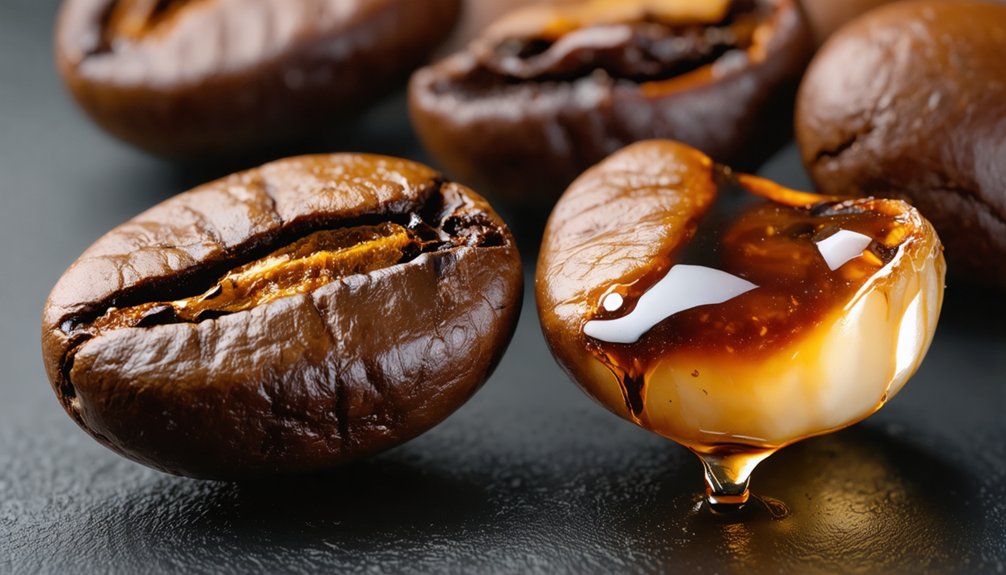
When coffee beans undergo roasting, heat triggers a chemical transformation that converts chlorogenic acids into melanoidins—rich, brown-hued compounds that readily bond to tooth enamel.
Higher roasting temperatures accelerate melanoidin formation, increasing pigment concentration in your final brew. These water-soluble molecules penetrate enamel micro-pores efficiently, embedding themselves within the crystal structure.
You should understand that darker roasts don’t simply taste stronger—they deliver a markedly higher staining load per cup.
Once dissolved in hot liquid, these roasted compounds contact your enamel directly, exploiting any existing surface vulnerability. The heat of the beverage simultaneously widens enamel pores, allowing deeper pigment infiltration.
Hot beverages don’t just carry staining compounds—they actively prepare your enamel to absorb them more deeply.
Recognizing this roasting-to-staining pathway gives you actionable leverage—choosing lighter roasts measurably reduces your exposure to concentrated melanoidin-based discoloration agents.
Does Hot Coffee Stain Teeth Faster Than Cold?
Temperature directly determines how rapidly coffee pigments infiltrate your enamel. When you drink hot coffee, thermal expansion forces your enamel pores to widen, allowing tannins and melanoidins to penetrate deeper into the crystal microstructure. This accelerates staining considerably compared to cold brew consumption.
Cold brew’s lower coffee temperature means your enamel health remains less thermally compromised during each session. Pores stay comparatively contracted, reducing pigment absorption depth.
However, cold brew’s extended steeping process concentrates chromogens, so acidity still poses a measurable risk.
You can strategically manage this variable. Switching to cold brew, allowing hot coffee to cool slightly before drinking, or rinsing immediately after consumption reduces thermal pore expansion.
Controlling coffee temperature gives you a direct, actionable method for preserving enamel integrity long-term.
Why Do Some People’s Teeth Stain More Than Others?
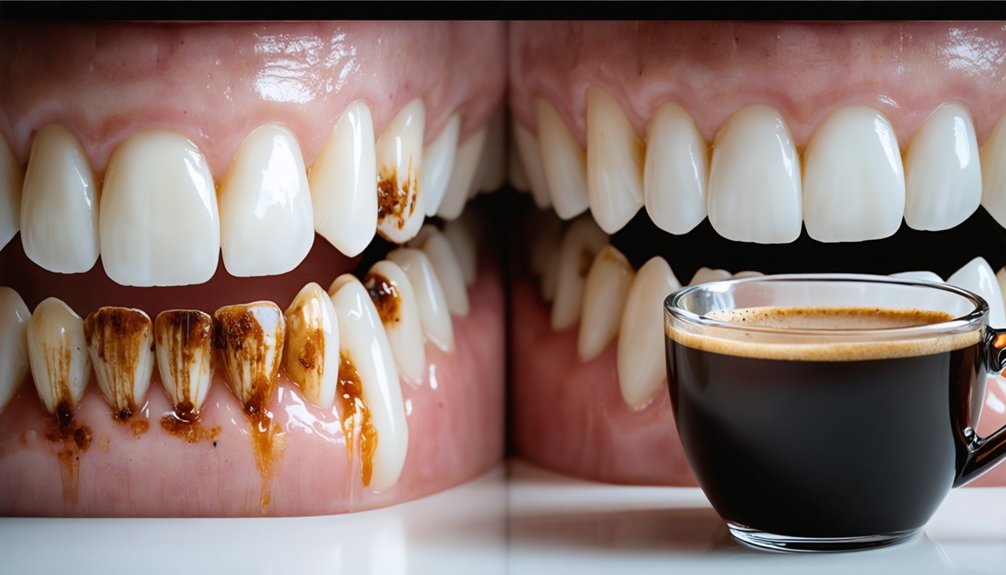
Genetic variation in enamel density and thickness directly determines how susceptible your teeth are to coffee staining.
Your enamel thickness isn’t a choice — it’s inherited, and it’s quietly deciding how deeply coffee stains settle into your teeth.
If your genetic factors produce thinner enamel, your micro-pores are wider, allowing chromogens and tannins to penetrate deeper into the crystalline structure. You’re inheriting a structural disadvantage before you’ve taken a single sip.
Dental restorations compound the problem. Crowns, veneers, and composite bonding absorb pigments differently than natural enamel, creating uneven discoloration across your smile.
Your saliva composition also matters. Lower salivary flow reduces your mouth’s natural rinsing capacity, extending pigment contact duration against enamel surfaces.
You can’t change your genetic factors or enamel thickness, but you can compensate.
Rinse immediately after drinking, use a straw, and schedule professional cleanings every six months to mechanically remove embedded stains.
How Often You Drink Coffee Determines Stain Speed
Structural susceptibility sets the stage, but your consumption frequency determines how quickly staining progresses. A single daily cup initiates yellow hue formation gradually, but sipping coffee throughout the day extends pigment contact duration considerably.
Each exposure compounds tannin and chromogen adhesion onto enamel surfaces, accelerating discoloration. Holding coffee in your mouth worsens localized staining by maximizing direct enamel contact.
Your coffee consumption pattern dictates cumulative pigment load—the more frequent and prolonged each session, the faster yellowing develops.
Stain prevention depends on controlling exposure intervals. Rinsing with water immediately after drinking washes away active tannins before they bind. Drinking through a straw reduces direct enamel contact.
Strategic adjustments to your consumption habits notably slow stain progression without requiring complete elimination.
How Poor Oral Hygiene Makes Coffee Stains Worse
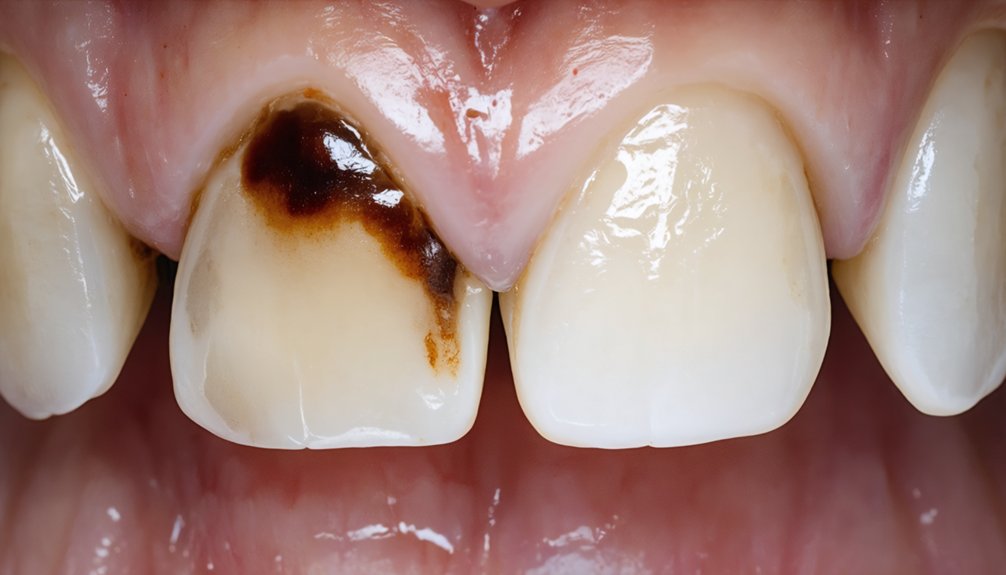
Plaque accumulation gives coffee pigments a ready surface for adhesion, compounding discoloration beyond what enamel exposure alone produces. When you skip brushing, tannins and melanoidins bond directly to biofilm layers, embedding chromogens deeper into enamel micro-pits. That bonding accelerates yellowing at a measurable rate.
Skipping brushing lets tannins bond to biofilm, embedding chromogens deeper and accelerating yellowing at a measurable rate.
Neglecting flossing leaves interproximal spaces saturated with trapped pigments, widening visible staining across your full dentition.
Poor oral hygiene also allows acidic coffee residue to continue demineralizing enamel unchecked, increasing surface porosity and pigment retention simultaneously.
Stain prevention requires consistent oral hygiene as a clinical baseline. You can’t effectively counter coffee’s chromogenic compounds without removing the plaque matrix that anchors them.
Brushing twice daily and flossing once eliminates the primary structural scaffold that makes staining considerably worse.
Can You Drink Coffee Without Staining Your Teeth?
You can reduce coffee staining considerably by adjusting how you consume it.
Drinking through a straw bypasses direct enamel contact, limiting chromogen and tannin exposure to tooth surfaces.
Rinsing with water immediately after drinking flushes residual pigments before they penetrate enamel micro-pores.
Straw Usage Minimizes Staining
Using a straw is one of the most effective ways to reduce direct enamel contact with coffee’s staining compounds. By routing liquid past your front teeth, you’re considerably limiting tannin and chromogen exposure to vulnerable enamel surfaces.
The straw benefits extend beyond aesthetics—you’re actively reducing acid contact with your tooth structure, which slows demineralization and pigment penetration.
For maximum stain reduction, position the straw toward the back of your mouth, preventing pooling around anterior teeth. This technique won’t eliminate staining entirely, since some liquid contact remains unavoidable, but it measurably decreases pigment accumulation over time.
You’re fundamentally controlling the delivery pathway of staining agents, giving your enamel a structural advantage against daily coffee consumption’s cumulative effects.
Rinsing Teeth After Drinking
Rinsing with water immediately after drinking coffee mechanically displaces tannins and chromogens before they bind to enamel surfaces. This post-drink habit neutralizes residual acidity, reducing demineralization risk and preventing micro-pore widening that traps pigments deeper within enamel crystal structures.
Your rinsing techniques matter greatly. Swish water vigorously for 30 seconds, targeting all tooth surfaces to dislodge melanoidins and polyphenol compounds before they adhere permanently.
Don’t swallow immediately—allow water contact time to dilute chromogen concentration effectively.
Timing is critical. Rinsing within two minutes post-consumption delivers maximum protective benefit. Delayed rinsing permits tannin oxidation and enamel bonding, considerably increasing stain severity.
Incorporating this precise habit into your daily routine provides a cost-effective, accessible defense against progressive yellow discoloration.
How to Remove Yellow Coffee Stains From Teeth
Removing yellow coffee stains requires a targeted approach that addresses both surface pigments and deeper enamel discoloration. You’ll need to combine mechanical and chemical stain removal strategies for effective results.
Start with a whitening toothpaste containing mild abrasives to eliminate surface chromogens. For deeper discoloration, professional whitening treatments using peroxide-based compounds break down melanoidins embedded within enamel micro-pores.
At-home whitening strips deliver concentrated hydrogen peroxide directly to stained surfaces, producing measurable results within two weeks. Professional in-office treatments accelerate this process through higher peroxide concentrations and light activation.
You should schedule dental cleanings every six months to mechanically remove calcified plaque harboring trapped pigments. Combining professional whitening treatments with consistent daily hygiene protocols produces the most clinically significant and lasting discoloration reversal.
Frequently Asked Questions
Does Adding Milk to Coffee Reduce Its Teeth-Staining Effects Significantly?
Adding milk offers milk benefits by binding tannins, reducing their enamel adhesion. You’ll achieve moderate stain prevention, but it won’t eliminate chromogen exposure entirely. You’re still advised to rinse with water afterward for ideal protection.
Can Teeth Whitening Toothpaste Fully Reverse Existing Yellow Coffee Stains?
Like a knight polishing tarnished armor, whitening toothpaste effectiveness has limits—you can’t fully reverse deep stains. It aids surface stain removal, but melanoidins embedded in porous enamel require professional-grade treatments for complete restoration.
Does Decaf Coffee Stain Teeth Less Than Regular Caffeinated Coffee?
Decaf doesn’t considerably reduce your staining risk. In a staining comparison, decaf benefits are minimal since tannins, chromogens, and melanoidins remain present regardless of caffeine content—you’ll still experience enamel pigment accumulation without preventive intervention.
How Long Does Professional Whitening Treatment Last for Coffee Drinkers?
for coffee drinkers, professional whitening treatment longevity typically spans 6–12 months. Your whitening frequency increases with daily consumption, so you’ll need consistent touch-ups to maintain ideal enamel brightness and control discoloration effectively.
Does Coffee Staining Increase the Risk of Developing Tooth Decay?
Coffee staining doesn’t directly cause tooth decay, but it weakens your tooth enamel through acid erosion, making it more vulnerable. Poor dental hygiene combined with staining accelerates demineralization, notably increasing your decay risk.
References
- https://www.healthline.com/health/dental-and-oral-health/what-does-coffee-do-to-your-teeth
- https://www.cdhp.org/why-does-coffee-make-my-teeth-yellow/
- https://orthodonticsaustralia.org.au/how-to-drink-coffee-without-staining-your-teeth/
- https://dublincornersdental.com/blog/does-caffeine-really-stain-teeth/
- https://www.maloclinics.com/en/blog/the-coffee-stains-the-teeth-everything-you-need-to-know
- https://www.reddit.com/r/Coffee/comments/5xzhe1/coffee_and_yellow_teeth/
- https://springorchid.com.au/does-coffee-stain-your-teeth/
- https://www.arlingtondentalimplants.com/blog/2021/05/10/yellow-teeth-and-how-coffee-impacts-your-smile/
- https://fuquayvarinadentists.com/blog/5-tips-to-avoid-coffee-stains-on-teeth
- https://my.clevelandclinic.org/health/symptoms/10958-tooth-discoloration