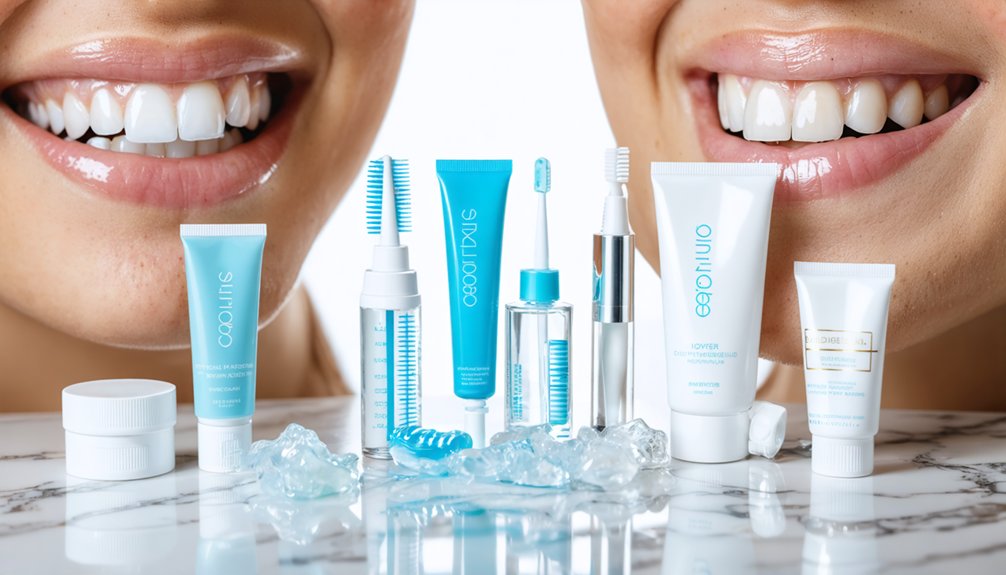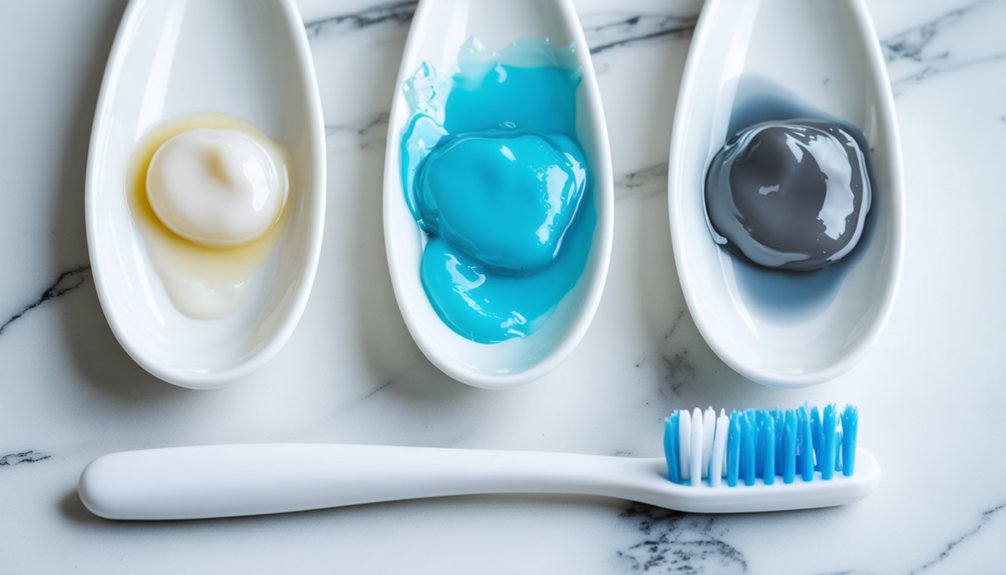
Hydrogen peroxide-based formulations like Crest 3D White Professional Effects and Colgate Optic White Pro Series deliver clinically validated whitening for yellow teeth. You’ll see measurable results within 2-4 weeks as peroxide agents oxidize chromogenic stains at the enamel surface. These toothpastes work effectively on extrinsic discoloration from coffee, tea, and tobacco, though they can’t address intrinsic staining from genetics or aging. For ideal outcomes, you should apply a pea-sized amount twice daily and avoid rinsing for 30 minutes post-brushing. The following sections explain proper application techniques and evidence-based recommendations.
Key Takeaways
- Crest 3D White Professional Effects and Colgate Optic White Pro Series deliver superior whitening results through hydrogen peroxide formulations.
- Hydroxyapatite-based toothpastes provide optical whitening by filling enamel micropores, creating a brighter surface appearance without harsh abrasives.
- Whitening toothpastes only remove surface stains from coffee or tobacco, not intrinsic yellowing from genetics or aging.
- Visible results typically appear within 2-6 weeks of twice-daily use with proper technique and consistent application.
- ADA-certified options like Sensodyne Whitening balance effectiveness with enamel safety, preventing erosion from excessive abrasion.
Top-Rated Toothpastes for Whitening Yellow Teeth
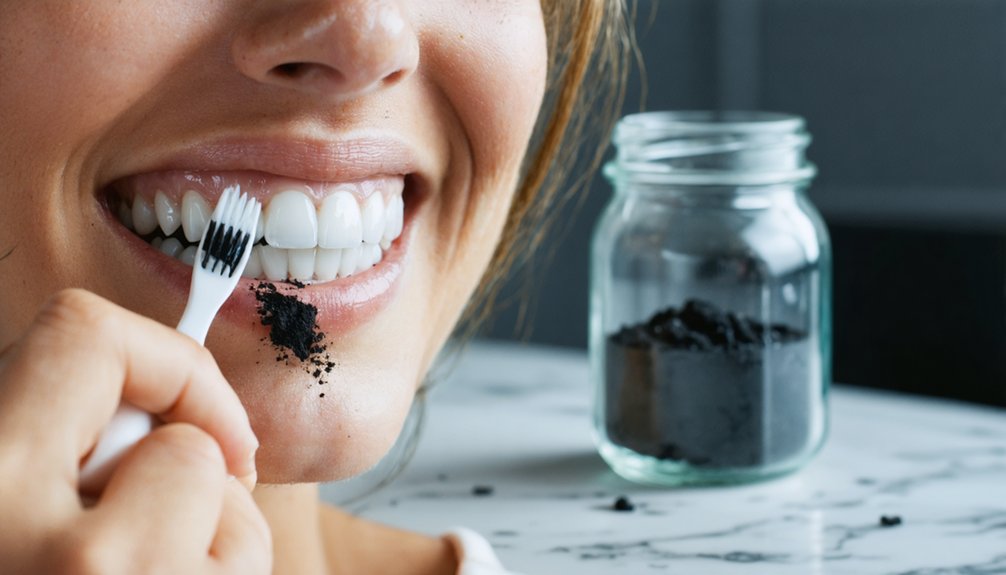
Yellow teeth typically respond to whitening toothpastes containing specific active ingredients: hydrogen peroxide for chemical bleaching, mild abrasives for physical stain removal, or activated charcoal for surface discoloration. Crest 3D White Professional Effects delivers clinically superior results, eliminating 95% of surface stains through hydrogen peroxide and controlled abrasives.
You’ll find Opalescence offers proven whitening effectiveness tradeoffs—its low-abrasion formula protects enamel while requiring extended treatment duration. For impact on sensitive teeth, Sensodyne Pronamel combines potassium nitrate desensitization with hydrogen peroxide whitening, though you’ll pay premium pricing.
Colgate Optic White Advanced provides activated charcoal stain removal with fluoride protection, suitable for sensitivity management. Tom’s of Maine offers fluoride-free xylitol-based whitening at $6.40 per dual pack for natural-preference users.
Active Ingredients That Remove Yellow Stains
Understanding which toothpastes deliver results requires examining the chemical compounds that actually break down chromogens embedded in enamel.
Effective whitening depends on active ingredients that chemically oxidize chromogens rather than surface-level cleaning agents alone.
Key Active Ingredients for Effective Stain Removal:
- Hydrogen peroxide (3-6%) permeates dental tissues, oxidizing intrinsic and extrinsic stains while targeting chromophores within enamel structure
- Carbamide peroxide decomposes into hydrogen peroxide, delivering sustained bleaching action through controlled-release mechanisms
- Hydroxyapatite particles provide immediate optical whitening by filling surface irregularities and mechanically removing plaque without aggressive abrasion
- Stannous fluoride strengthens enamel matrices while delivering clinically-proven 2-shade whitening in 8-week protocols
Combining oxidative agents with biomimetic minerals maximizes whitening efficacy. Peroxide-based formulations offer rapid chromogen breakdown, while hydroxyapatite and fluoride minerals safeguard enamel through remineralization. You’ll control yellowing by selecting ingredients matching your stain severity and sensitivity threshold.
How Quickly Can You Expect Results
When evaluating whitening toothpaste efficacy, you’ll observe initial surface stain reduction within 2-6 weeks of twice-daily application, though clinical significance varies based on chromogen depth and formulation chemistry.
Blue covarine-based products deliver immediate optical effects through light-reflective pigments, while abrasive systems require sustained mechanical action. Extrinsic discoloration from coffee, tea, and wine responds faster than intrinsic staining, which demands professional peroxide concentrations unavailable in over-the-counter formulations.
Your baseline tooth shade directly influences perceived improvement—darker starting points show more dramatic changes. Consistent use maintains efficacy, as interrupted protocols reset stain accumulation patterns.
Ideal outcomes depend on comprehensive oral hygiene practices: proper brushing technique, adequate contact time, and elimination of staining agents. For accelerated results beyond six weeks, you’ll need higher-concentration professional treatments.
Proper Application for Maximum Whitening
Achieving ideal whitening outcomes requires precise application protocols that maximize active ingredient contact while minimizing enamel abrasion. When applying whitening toothpaste properly, you’ll position your soft-bristled brush at a 45-degree angle toward the gumline, employing gentle circular motions across all tooth surfaces—anterior, posterior, and occlusal. You’ll maintain light pressure throughout the two-minute duration to protect enamel integrity.
For achieving preferred whitening results, execute these evidence-based steps:
- Apply only a pea-sized amount to prevent excessive abrasion
- Delay post-brushing rinse for 30 minutes to extend peroxide contact time
- Limit baking soda formulations to twice weekly maximum
- Pair with daily flossing to eliminate interproximal chromogenic deposits
You’ll replace standard dentifrice with whitening variants twice daily—morning and evening—maintaining consistency for gradual stain removal.
What Whitening Toothpaste Cannot Do
Despite manufacturer claims, whitening toothpastes possess fundamental physiological limitations that prevent substantive tooth color modification. You’ll find these products ineffective against intrinsic stains—yellowing from genetic dentin pigmentation, enamel thinning, or aging-related dentin exposure in adults over 50.
The limitations of whitening toothpaste stem from absent peroxide-based bleaching agents capable of penetrating dental hard tissues. Instead, you’re receiving surface-level abrasive action through silica or pyrophosphates, which address only extrinsic coffee, tea, or tobacco stains. Blue covarine creates optical illusions rather than actual color change.
Unrealistic whitening expectations arise when you anticipate results comparable to professional treatments. You risk enamel erosion from overuse, paradoxically increasing dentin visibility and yellow appearance. Exposed dentin from receding gums, restorations, and intrinsic discoloration remain completely unresponsive to toothpaste formulations.
Dentist-Approved Recommendations and Testing Results
When selecting whitening toothpaste for yellow teeth, you’ll benefit from understanding which products have undergone rigorous clinical testing and earned dentist endorsements. Professional recommendations consistently highlight formulations containing hydrogen peroxide or carbamide peroxide combined with fluoride and calibrated abrasives, as these combinations demonstrate measurable efficacy in controlled studies.
The ADA seal verification process guarantees products meet established safety thresholds while delivering whitening results, providing you with evidence-based assurance beyond marketing claims.
Top Professional Product Picks
Professional-grade whitening toothpastes demonstrate measurable efficacy through standardized clinical testing protocols and dentist evaluations. You’ll achieve ideal results by selecting toothpaste formulas aligned with your specific stain removal requirements.
Top-Performing Whitening Products:
- Crest 3D White Professional Effects – Combines hydrogen peroxide with fluoride and calibrated abrasives for comprehensive whitening across diverse tooth compositions
- Colgate Optic White Pro Series – Delivers consistent results for general whitening applications through balanced peroxide concentrations
- Sensodyne Whitening – Addresses sensitivity while maintaining whitening efficacy through specialized desensitizing agents
- Arm & Hammer Whitening – Targets heavy nicotine and tar deposits with sodium bicarbonate-based formulations
Each product carries ADA certification, confirming validated safety parameters and effectiveness claims. Your selection should prioritize ingredients matching your staining severity and sensitivity profile.
Clinical Testing Performance Data
Clinical testing validates whitening toothpaste efficacy through standardized protocols measuring color change parameters in controlled environments. Randomized trials utilizing CIE L*a*b* color space quantify luminosity (L*), red-green axis (a*), and yellow-blue axis (b*) values, with total color change calculated as ΔE.
Clinical study design characteristics include sample sizes powered at 80% confidence (α=0.05) and evaluation periods spanning 7-28 days when improvements plateau. Comparison of whitening effectiveness metrics reveals hydroxyapatite formulations demonstrate statistically significant results across 12 of 13 studies with low bias risk.
Blue Covarine products reduce b* yellowness parameters but require continuous application. Crest 3D White systems show superior ΔE values in 12-week protocols. Meta-analyses confirm whitening dentifrices outperform conventional formulations for extrinsic stain removal, though efficacy remains inferior to 10% carbamide peroxide bleaching gels.
Expert Safety Guidelines
The American Dental Association seal functions as the gold standard for validating whitening toothpaste safety and efficacy, requiring manufacturers to submit clinical data demonstrating both therapeutic claims and absence of adverse effects on hard and soft oral tissues.
Ingredient safety standards demand verification before use:
- You’ll protect your enamel by selecting fluoride-containing formulations that demonstrate remineralization capacity in acidic environments
- You can minimize sensitivity triggers through hydrogen peroxide-free alternatives while maintaining whitening effectiveness
- You’ll prevent enamel degradation by avoiding excessive brushing frequency with abrasive formulations
- You maintain long-term dental health by rejecting products lacking cavity-protective ingredients
Formulation transparency enables informed decision-making. Dentist-recommended options include Crest 3D White Professional Effects and Sensodyne Clinical White, both validated through clinical studies demonstrating measurable whitening without compromising enamel integrity.
Frequently Asked Questions
Can Whitening Toothpaste Damage Dental Work Like Crowns or Veneers?
Like a medieval alchemist’s harsh elixir, whitening toothpaste won’t damage your crowns or veneers structurally, but it’ll cause unacceptable color shifts. You’ll experience increased tooth sensitivity and potential for gum irritation, especially affecting restored teeth more than natural ones.
Should I Use Whitening Toothpaste Before or After Professional Teeth Cleaning?
Use whitening toothpaste *after* professional cleaning for ideal results. You’ll determine whitening timeline by identifying toothpaste compatibility with freshly scaled enamel, maximizing abrasive efficacy on exposed surfaces while minimizing enamel erosion risks from combined treatments.
Does Diet Affect How Well Whitening Toothpaste Works on Yellow Teeth?
Yes, your dietary habits profoundly affect whitening toothpaste efficacy. Acidic foods erode enamel while staining beverages create persistent chromogens that overwhelm peroxide formulas. You’ll maximize results by modifying consumption patterns and maintaining a rigorous oral hygiene routine with appropriate abrasive levels.
Can Children or Teenagers Safely Use Whitening Toothpaste for Yellow Teeth?
Tread carefully—teens can use whitening toothpaste if enamel’s fully developed, but children under six shouldn’t due to enamel erosion risks and teeth sensitivity concerns. You’ll need pediatric formulas instead, and always consult your dentist first.
Will Whitening Toothpaste Work on Teeth Yellowed by Medication or Aging?
No, whitening toothpaste won’t work on intrinsic discoloration. The causes of medication-induced tooth discoloration and effects of aging on tooth enamel create internal stains that require professional bleaching treatments or cosmetic solutions like veneers for effective correction.