If you’re dealing with genetic tooth discoloration, whitening treatments often won’t cut it since intrinsic stains resist peroxide-based solutions. Your best options are restorative treatments like veneers, crowns, or composite bonding, each designed to camouflage or correct discoloration at its source. The right choice depends on your enamel’s condition and the severity of your genetic condition. Keep exploring to find out exactly which treatment fits your smile goals.
Key Takeaways
- Genetic conditions like dentinogenesis imperfecta and amelogenesis imperfecta cause intrinsic discoloration, often resisting standard professional whitening treatments.
- Professional whitening effectively removes extrinsic stains but typically cannot correct intrinsic discoloration caused by genetic conditions.
- Veneers are porcelain shells bonded to teeth, camouflaging discoloration while preserving natural structure and lasting 10–15 years.
- Crowns provide full coverage for severely discolored or weakened teeth, offering durability lasting over 15 years with proper care.
- Dental bonding uses composite resin to cover deep stains, requiring touch-ups every 5–7 years as a less invasive option.
What Causes Genetic Tooth Discoloration?
Genetics play a significant role in tooth discoloration, influencing everything from enamel thickness to dentin shade. Specific genetic mutations can disrupt normal tooth structure development, leading to conditions like dentinogenesis imperfecta and amelogenesis imperfecta.
Dentinogenesis imperfecta produces grayish, transparent enamel with brittle teeth, while amelogenesis imperfecta causes yellow-brown discoloration alongside soft, fragile enamel.
Beyond these conditions, you might simply inherit naturally thick or thin enamel, transparent enamel, or a deeper yellow dentin shade. These variations determine how your teeth respond to whitening treatments and how susceptible they’re to decay or chipping.
Your genetic blueprint shapes your enamel’s thickness and dentin’s shade, directly affecting whitening results and cavity susceptibility.
Understanding your genetic baseline helps you and your dentist identify the most effective, targeted solutions for your specific discoloration concerns.
How Genetics Determines Your Natural Tooth Color
While many people assume tooth color is purely a matter of hygiene, it’s largely written into your DNA before you’re even born. Your genetic inheritance shapes both enamel thickness and the natural shade of your underlying dentin during tooth development, establishing a baseline color no toothbrush can change.
If your family tends toward thicker, whiter enamel, you likely share that trait. Conversely, naturally transparent or thin enamel exposes the yellowish dentin beneath, creating a darker appearance regardless of your oral care routine.
Some inherited genes even influence how your teeth absorb fluoride, affecting long-term enamel integrity.
Understanding this genetic foundation helps you set realistic expectations and pursue the right cosmetic or restorative solutions rather than relying solely on whitening products that can’t address structural color.
Which Genetic Conditions Affect Tooth Enamel Most?
If you’ve inherited a genetic condition like dentinogenesis imperfecta, you’ll notice grayish, transparent enamel and brittle teeth that fracture easily.
On the other hand, amelogenesis imperfecta leaves your enamel soft, fragile, and yellowed or brown.
Both conditions create intrinsic discoloration that resists standard whitening treatments, making restorative solutions your most effective path forward.
Beyond these disorders, your genetic enamel thickness also plays a significant role, since naturally thin or transparent enamel exposes the darker dentin beneath and limits how much cosmetic improvement whitening alone can achieve.
Dentinogenesis Imperfecta Overview
Dentinogenesis imperfecta is one of the most disruptive genetic conditions affecting tooth structure, producing grayish, translucent enamel that’s both visually distinctive and physically fragile. These genetic factors compromise dentin development, leaving your teeth weak, brittle, and vulnerable to everyday wear.
Unlike surface staining, the discoloration originates deep within the tooth’s structure, making standard whitening treatments ineffective.
The enamel defects associated with this condition affect both primary and permanent teeth, meaning early intervention matters considerably. Your teeth may chip, crack, or break under normal pressure, compounding both functional and aesthetic concerns.
Recognizing this condition early allows you to explore restorative solutions before damage worsens. A dentist experienced in genetic tooth disorders can assess your specific situation and recommend targeted treatments that restore strength and appearance effectively.
Amelogenesis Imperfecta Effects
Another genetic condition that greatly disrupts enamel development is amelogenesis imperfecta, which produces yellow-brown discoloration alongside soft, fragile enamel that’s highly susceptible to decay, chipping, and cracking.
The amelogenesis effects stem from defective enamel formation during tooth development, leaving your teeth structurally compromised before they even emerge.
Enamel fragility becomes your primary challenge, as weakened surfaces break down faster under normal biting forces and daily wear.
Unlike extrinsic staining, this discoloration exists within the tooth structure itself, making standard whitening treatments largely ineffective.
Your dentist can assess the severity of your condition and recommend targeted restorative solutions—such as porcelain veneers, dental crowns, or composite bonding—that simultaneously address cosmetic concerns and reinforce compromised enamel, restoring both function and appearance effectively.
Genetic Enamel Thickness Variations
Beyond individual genetic conditions, your inherited enamel thickness plays a significant role in both tooth appearance and how effectively treatments work.
Enamel heredity determines whether you’ve naturally developed thick, white enamel or a thinner, more transparent layer that reveals the yellowish dentin beneath.
Thicker enamel typically responds better to professional whitening, while thinner enamel may require restorative solutions like veneers or bonding to achieve your desired aesthetic.
Your enamel thickness also influences fluoride uptake, affecting your overall fluorosis risk and long-term enamel integrity.
Understanding your specific enamel heredity helps you and your dentist identify the most effective treatment path.
A professional assessment clarifies whether whitening, protective coatings, or restorative options best align with your genetic baseline and cosmetic goals.
Does Professional Whitening Work on Genetic Tooth Discoloration?
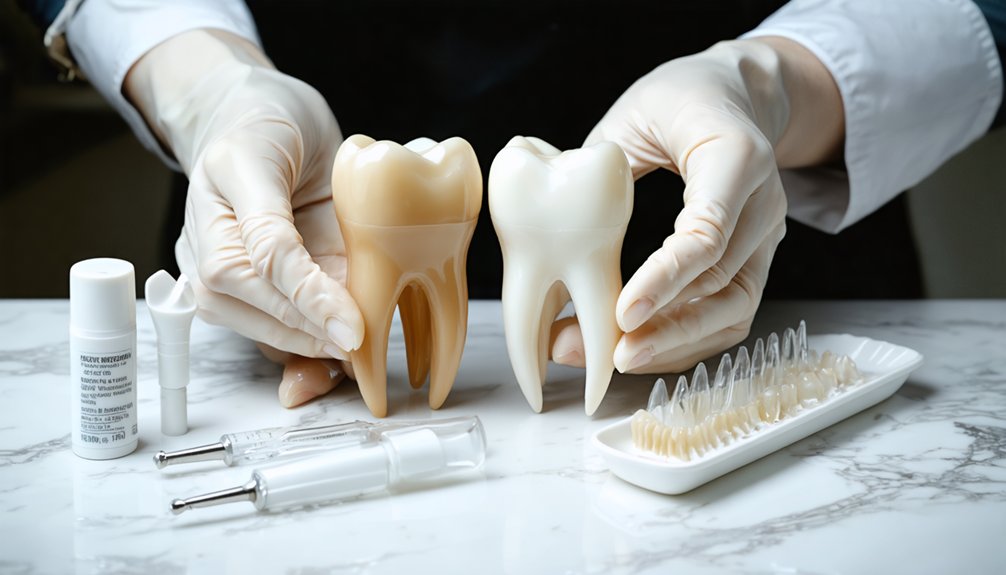
Professional whitening treatments can brighten your smile, but their effectiveness depends heavily on whether your discoloration is extrinsic or intrinsic. Genetic factors greatly influence whitening effectiveness, particularly when dentin darkness or enamel defects are involved.
Here’s what you should know:
- Extrinsic stains respond well to professional peroxide-based treatments, potentially improving your smile up to eight shades.
- Intrinsic discoloration from conditions like dentinogenesis imperfecta resists whitening, since stains are embedded within the tooth structure.
- Genetic dentin shade determines your ceiling for whitening results, meaning outcomes vary person to person.
If whitening doesn’t deliver your desired results, restorative options like veneers or bonding offer more reliable, lasting solutions for genetically discolored teeth.
Which Restorative Treatment Is Right for Your Teeth?
When genetic conditions like dentinogenesis or amelogenesis imperfecta leave you with severely discolored or weakened teeth, veneers and crowns offer two distinct paths forward.
Veneers bond to your tooth’s front surface, camouflaging widespread discoloration while preserving more of your natural structure, whereas crowns encase the entire tooth, making them the stronger choice for brittle, compromised enamel.
For deeper stains that don’t require full coverage, dental bonding applies composite resin directly to the affected area, giving you a cost-effective, minimally invasive option.
Veneers Versus Crowns
For teeth affected by genetic discoloration, two restorative treatments stand out: porcelain veneers and dental crowns. Choosing between them depends on your tooth’s condition and cosmetic goals.
Consider these key distinctions:
- Veneers benefits — Thin porcelain shells bond to your tooth’s front surface, camouflaging discoloration while preserving more natural structure.
- Crowns durability — Full-coverage crowns encase the entire tooth, making them ideal when genetic conditions like dentinogenesis imperfecta have weakened enamel considerably.
- Longevity — Both last 5–15 years, but crowns offer stronger protection for brittle or structurally compromised teeth.
Your dentist’s assessment determines which option delivers the best functional and aesthetic outcome.
You’re not just masking discoloration—you’re investing in long-term dental strength and confidence.
Bonding For Deep Stains
Dental bonding offers a practical solution when deep, genetically caused stains resist whitening treatments. Your dentist applies composite resin directly to affected teeth, sculpting it to match surrounding enamel and conceal discoloration effectively.
Bonding techniques allow precise color-matching, giving you control over your final aesthetic outcome.
If you’re managing conditions like amelogenesis imperfecta or dentinogenesis imperfecta, bonding also reinforces weakened enamel, adding structural support alongside cosmetic improvement. It’s a less invasive alternative to veneers or crowns, preserving more of your natural tooth structure.
Bonding durability typically ranges five to seven years before touch-ups become necessary. Avoiding hard foods and maintaining consistent oral hygiene extends its lifespan.
Your dentist will assess whether bonding suits your specific discoloration severity and enamel condition.
Can Veneers, Crowns, or Bonding Fix Genetic Tooth Discoloration?
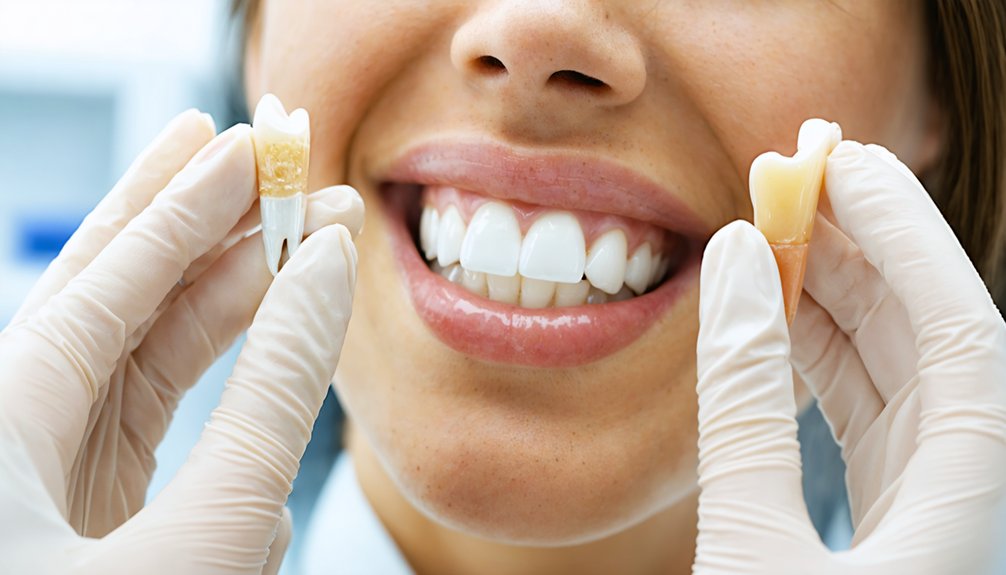
Genetic tooth discoloration runs deeper than surface stains, which is why restorative treatments like veneers, crowns, and bonding often deliver results that whitening simply can’t.
Genetic tooth discoloration goes beyond the surface — and so do the treatments needed to truly fix it.
Each option targets a specific level of severity:
- Veneers — Porcelain shells bonded to front tooth surfaces offer strong veneer advantages, including lasting discoloration coverage for 5–15 years.
- Crowns — Full coverage solutions designed for severely weakened or discolored teeth, restoring both function and appearance.
- Bonding — Composite resin applied directly to affected teeth provides reliable bonding durability, with touch-ups needed every 5–7 years.
Your dentist will assess your enamel condition and discoloration severity to recommend the most effective, personalized treatment plan.
How Long Veneers, Crowns, and Bonding Actually Last
Understanding how long each restorative option lasts helps you make a smarter investment in your smile. Longevity factors like oral hygiene, bite pressure, and material choices directly determine how well each option holds up over time.
Porcelain veneers typically last 10–15 years before requiring replacement, while dental crowns often exceed that range with proper care. Both options deliver durable coverage for genetically compromised enamel.
Dental bonding, however, demands more maintenance, requiring touch-ups every 5–7 years due to composite resin’s susceptibility to staining and wear.
Your daily habits greatly influence each option’s lifespan. Avoiding hard foods, grinding, and neglecting cleanings accelerates deterioration.
Discussing material choices with your dentist guarantees you select a solution aligned with your genetic condition’s severity and your long-term goals.
Frequently Asked Questions
Can Genetic Tooth Discoloration Worsen With Age or Certain Medications?
Yes, your genetic factors can intensify discoloration over time, and medication effects like tetracycline or antihistamines can deepen staining. You’ll want to consult your dentist promptly to explore tailored restorative solutions that restore control over your smile.
Are Children With Genetic Tooth Conditions Eligible for Early Cosmetic Treatment?
Nearly 1 in 14,000 children has amelogenesis imperfecta. Your child’s eligible for early intervention, and cosmetic options like dental bonding can strengthen brittle teeth, protecting their smile before permanent damage worsens their genetic condition.
Does Dental Insurance Typically Cover Restorative Treatments for Genetic Discoloration?
Your dental coverage limitations often exclude cosmetic restorative options like veneers or bonding for genetic discoloration. You’ll want to verify your plan’s specifics, as some policies cover crowns when structural damage exists, giving you greater treatment control.
Can Genetic Tooth Discoloration Affect Overall Oral Health Beyond Appearance?
Yes, genetic factors can compromise your oral hygiene by weakening enamel, increasing decay risk, and causing brittleness. You’ll want to address these issues proactively with restorative treatments to protect both your health and smile’s appearance.
Are There Dietary Changes That Help Manage Genetic Tooth Discoloration Symptoms?
“You are what you eat” — your food choices matter! Avoid staining foods like coffee and berries, and consider dietary supplements like calcium and vitamin D to strengthen genetically weakened enamel and manage discoloration symptoms effectively.
References
- https://www.dentistrybybrand.com/blog/2025/06/12/tooth-discoloration-genetic/
- https://www.perfectsmiles.net/2024/06/17/genetics-and-discolored-teeth/
- https://www.beverlyfarmsdental.com/blog/2022/06/15/can-genetics-cause-stained-teeth/
- https://www.budadental.com/blog/stained-teeth-and-the-role-of-genetics/
- https://downtowntorontodentistry.ca/genetic-factors-that-influence-tooth-color/
- https://www.cocodentalcenter.com/blog/2023/04/30/tooth-discoloration-and-genetics/
- https://www.westgatedentalcare.net/blog/2022/03/01/are-stained-teeth-hereditary/
- https://my.clevelandclinic.org/health/symptoms/10958-tooth-discoloration
- https://www.crescentdentalmn.com/blog/discolored-teeth-and-genetics/