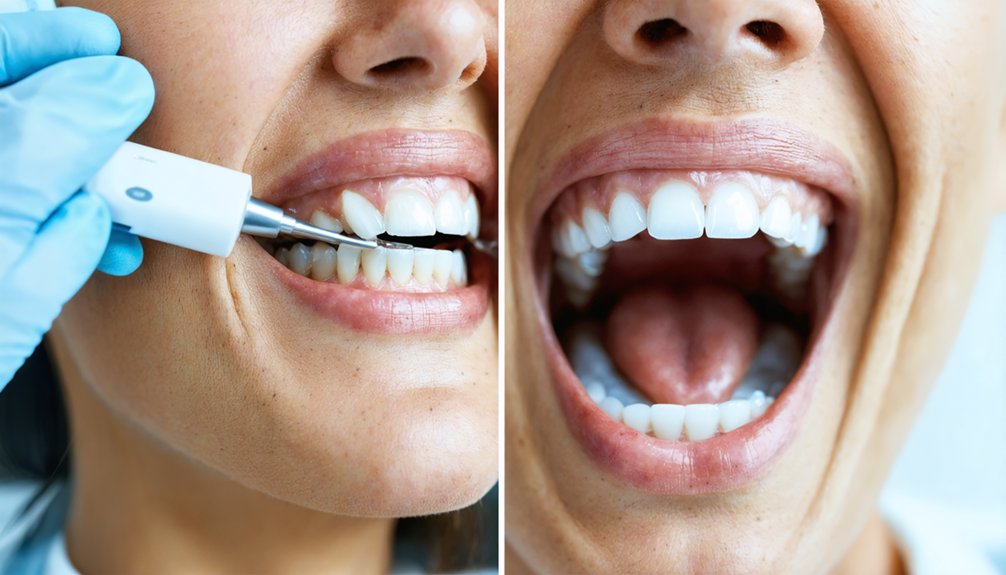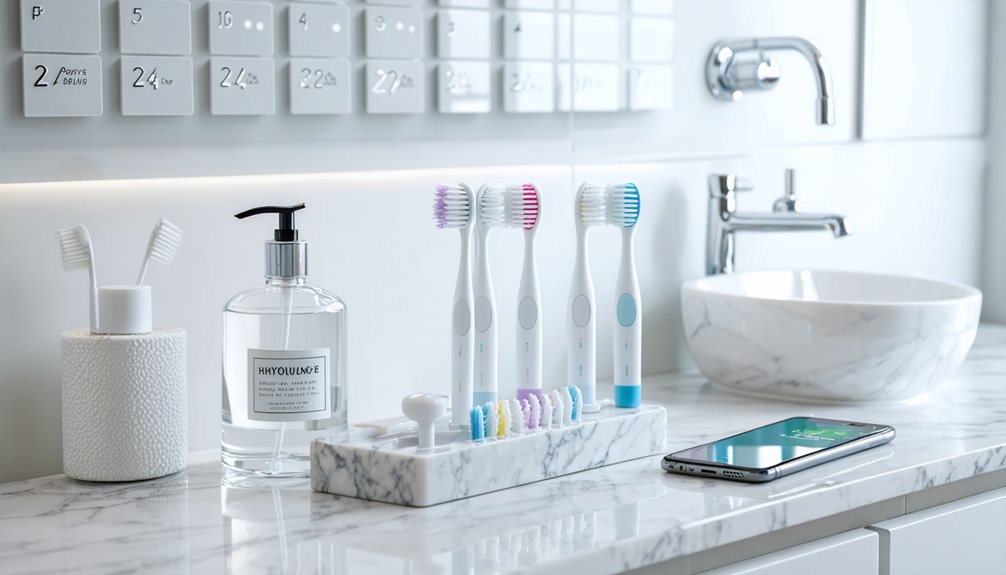
The best at-home whitening schedule starts with establishing baseline measurements, then applying whitening strips or custom trays for 30-60 minutes once or twice daily for 10-14 days. You’ll maintain your bright smile through consistent brushing with whitening toothpaste, strategic rinsing after staining beverages, and following strict dietary restrictions for 48 hours post-treatment. Touch-up frequency depends on your lifestyle—heavy coffee, tea, or wine consumption requires maintenance every 3-6 months, while minimal exposure extends intervals to 6-12 months. The sections below provide detailed protocols for optimizing your treatment outcomes.
Key Takeaways
- Start with professional cleaning, then apply whitening strips or custom trays for 30-60 minutes daily over 10-14 days for initial treatment.
- Maintain results with touch-ups every 6-12 months for minimal staining exposure or every 3-6 months for heavy coffee, tea, wine, or tobacco users.
- Brush twice daily with whitening toothpaste, floss before mouthwash, and rinse immediately after consuming staining beverages for daily maintenance.
- Follow a white diet for 48 hours minimum after whitening sessions to strengthen color results and prevent premature staining.
- Track progress by comparing current shade to baseline photos every 3-5 days and schedule professional evaluations every six months.
Understanding Your Baseline Whitening Needs
These baseline measurements enable treatment protocols evaluation throughout your whitening journey. You’ll understand exactly where you’re starting and track measurable progress toward your desired results.
Statistical analysis confirms that proper baseline documentation eliminates guesswork, allowing for controlled adjustments to your at-home regimen. This data-driven approach guarantees you’re applying the ideal carbamide peroxide concentration for your specific whitening needs.
Daily Maintenance Routines for Lasting Brightness
Once you’ve achieved your target shade, maintaining those results requires a strategic daily approach that protects your investment in whitening treatments.
Protecting your whitening investment demands a thoughtful daily routine that preserves your brilliant smile long after treatment ends.
Brush twice daily with whitening toothpaste containing gentle abrasives to whiten enamel strength without compromising integrity. Use a soft-bristled brush in circular motions for two minutes to minimize abrasive wear while effectively removing surface stains.
Floss daily before applying antibacterial or fluoride mouthwash to strengthen enamel against future discoloration. Rinse with water immediately after consuming staining beverages—coffee, tea, or wine—to prevent pigments from settling. Wait 30 minutes before brushing after acidic drinks, allowing your enamel to reharden.
Consider using a straw for dark beverages to reduce tooth contact. Chew sugar-free gum between meals to stimulate saliva production, which naturally neutralizes acids and washes away particles that cause staining.
Optimal Timing for Whitening Strip Applications
When you apply whitening strips matters as much as which product you choose, since timing directly impacts both effectiveness and comfort. Evening applications work best because they minimize post-treatment staining exposure from food and beverages. If you prefer mornings, wait 30 minutes before consuming anything.
Usage durations range from 5 to 45 minutes depending on peroxide concentration—shorter periods reduce irritation risk while longer treatments maximize results. Standard protocols recommend 30-minute sessions, though express strips deliver results in as little as 5 minutes. Before special events, one-hour express strips provide quick enhancement.
Sensitivity based adjustments include reducing application frequency to every other day or switching to lower-concentration formulas requiring only 5 to 10 minutes daily. Never exceed recommended wear times, as prolonged exposure damages enamel irreversibly.
Custom Tray and Gel Treatment Frequency
Custom tray systems deliver professional-grade whitening through personalized fit and controlled gel application, requiring specific treatment frequencies to balance effectiveness with oral health. You’ll achieve desirable results by wearing your trays twice daily for 30-60 minutes, depending on gel concentration. Proper gel application guarantees even distribution while preventing gum irritation from excess material.
Your consistent treatment routine should span 10-14 days initially, with noticeable changes appearing after 3-4 applications. You can extend treatment up to 28 days for stubborn discoloration, monitoring progress throughout. If sensitivity develops, adjust your frequency to every other day, allowing your tooth nerves time to recover.
For maintenance, you’ll only need periodic treatments a few times yearly. Custom trays ensure precise gel-to-tooth contact while refrigerating unused gel preserves its effectiveness between sessions.
Coordinating Professional Cleanings With Home Care
Your at-home whitening results depend on a foundation of professionally cleaned teeth, since surface stains and calculus deposits block bleaching agents from penetrating enamel effectively. Coordinating professional cleanings before starting whitening treatments maximizes gel contact with clean enamel surfaces. Schedule your hygiene appointment first, then begin whitening 3-7 days later once gingival inflammation subsides.
Optimize your whitening outcomes by:
- Removing tartar barriers that prevent uniform bleaching agent distribution
- Eliminating extrinsic stains through prophylaxis before applying peroxide gels
- Receiving oral hygiene evaluations to address gingivitis before tray placement
- Timing cleanings strategically every six months between whitening cycles
- Detecting cavities early that contraindicate bleaching until restored
Your dentist determines the ideal interval for cleanings based on periodontal health, risk factors, and whitening maintenance goals during detailed oral examinations.
Post-Whitening Dietary Guidelines and Restrictions
Freshly whitened teeth require immediate dietary modifications to lock in your results and protect vulnerable enamel. You’ll need to avoid all food and beverages for two hours post-treatment, then follow a strict white diet for 48 hours minimum.
During this critical window, your tooth pores remain open and highly susceptible to staining. Focus on consuming water, white proteins like chicken and fish, dairy products, and light-colored vegetables. Eliminate coffee, tea, red wine, dark sodas, berries, and acidic foods that compromise enamel integrity.
When monitoring professional whitenings and optimizing whitening regimen outcomes, extending dietary restrictions up to 14 days strengthens your color results. While systematic reviews show pigmented foods don’t affect bleaching efficacy, the white diet shields your enamel during recovery.
Managing Tooth Sensitivity During Treatment Cycles
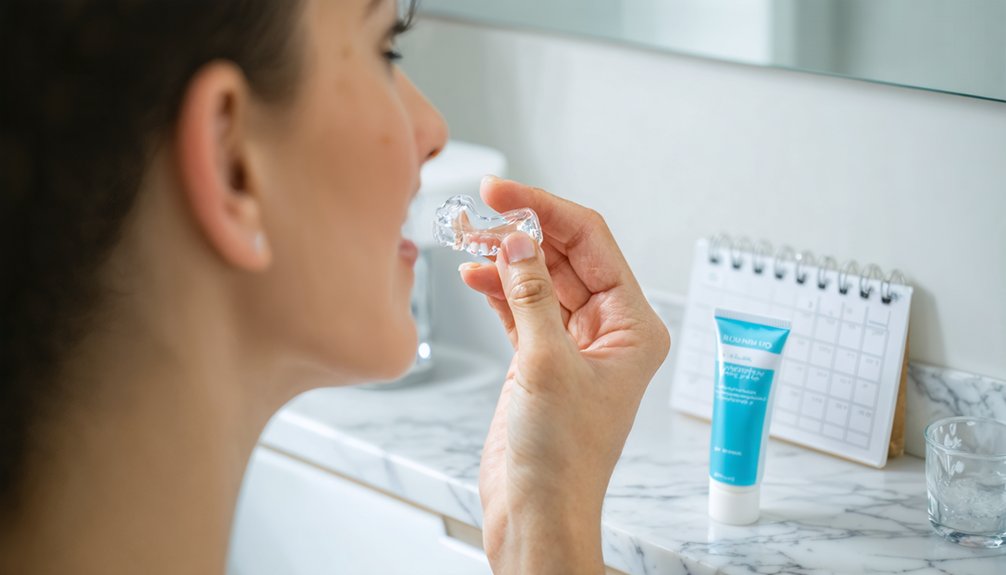
While protecting your results through dietary changes matters, sensitivity management determines whether you’ll complete your whitening treatment as planned. Minimizing peroxide exposure through strategic scheduling prevents overwhelming your enamel. You’ll maintain control by implementing these evidence-based protocols:
Strategic sensitivity management and controlled peroxide exposure are essential for completing your whitening treatment safely and effectively.
- Apply potassium nitrate toothpaste twice daily starting two weeks before treatment to block nerve pathways
- Select products with 5-6% peroxide concentrations and limit application to 5-minute intervals
- Space treatment sessions 48-72 hours apart allowing complete sensitivity resolution between cycles
- Use prescription-strength fluoride gel immediately after each session for promoting enamel protection
- Address pre-existing conditions including cavities, gum recession, and enamel erosion before beginning
Most sensitivity resolves within 24-48 hours when you follow proper protocols. Professional monitoring through regular check-ins guarantees your treatment progresses safely without compromising enamel integrity.
Touch-Up Schedules Based on Lifestyle Factors
Your lifestyle habits directly determine how often you’ll need whitening touch-ups to maintain ideal results. If you’re a heavy consumer of coffee, red wine, or tobacco products, you’ll require maintenance every 2-3 months to counteract accelerated staining from daily tannin and pigment exposure.
Conversely, if you maintain a minimal-staining lifestyle with careful dietary choices and excellent oral hygiene, you can extend touch-up intervals to every 3-6 months or even approach annual maintenance schedules.
Heavy Stain Exposure Frequency
Certain lifestyle habits dramatically accelerate tooth discoloration and necessitate more frequent whitening maintenance than standard protocols. If you’re heavily exposed to excessive staining triggers like coffee, tea, wine, or smoking, you’ll need touch-ups every 3-6 months rather than the typical 6-12 month interval. Customizing treatment intervals based on your specific habits guarantees you sustain optimal results.
High-stain lifestyles require proactive maintenance:
- Coffee and tea drinkers face visible dullness within 3-6 months
- Smokers experience set-in discoloration demanding frequent intervention
- Wine consumption triggers noticeable staining every 4-6 months
- Professional treatments yield only 6 months of brightness with heavy exposure
- Custom trays enable immediate response when new stains appear
You’ll recognize when touch-ups are needed—your teeth will signal declining brightness, empowering you to act decisively.
Minimal Staining Maintenance Plan
People with minimal exposure to staining agents enjoy the longest-lasting whitening results and require the least aggressive maintenance schedules. If you avoid tobacco, limit coffee and dark beverages, and maintain excellent oral hygiene, you’ll need touch-ups only every 6-12 months.
Your customized whitening approach involves brief 2-3 day maintenance sessions rather than full 14-day treatments, applied through your custom trays approximately twice yearly. This conservative schedule prevents sensitivity while preserving your investment in professional whitening.
You’ll maintain pristine brightness with minimal intervention by consistently using desensitizing toothpaste and rinsing with water after meals. Your dentist can adjust this timeline based on your specific lifestyle variations and desired shade maintenance.
Professional evaluations every six months guarantee your whitening protocol remains effective without compromising enamel integrity or causing unnecessary sensitivity.
Long-Term Monitoring and Adjustment Strategies
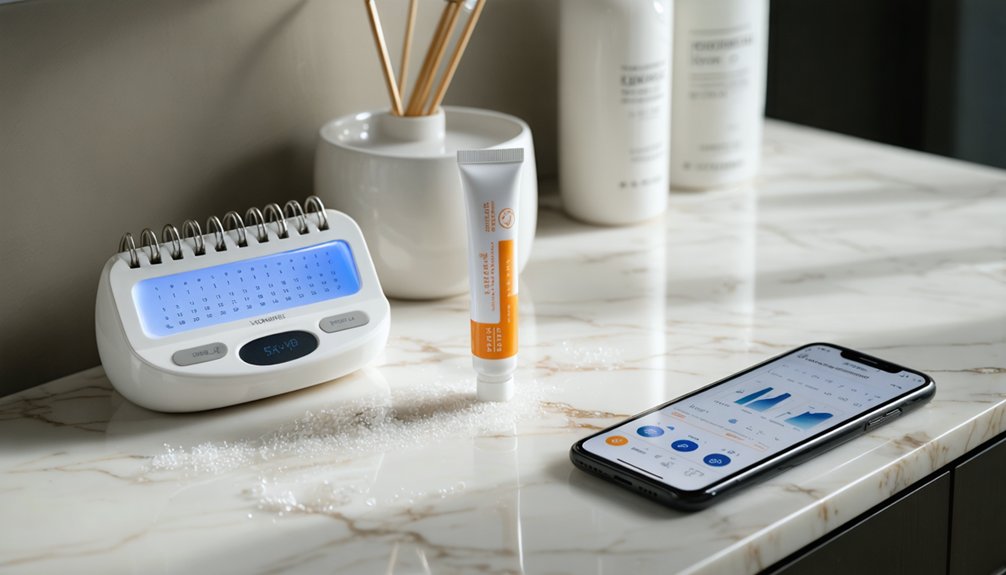
You’ll need to monitor your teeth’s brightness consistently to determine when adjustments to your whitening routine become necessary. Track visual changes by comparing your current shade to baseline photos or shade guides every few weeks, noting any dullness or yellowing that signals declining results.
Based on these observations, modify your touch-up frequency—increasing treatments if you notice faster fading or extending intervals when your teeth maintain their brightness longer than expected.
Track Visual Progress Regularly
Since subtle whitening changes often go unnoticed day-to-day, establishing a structured visual tracking system guarantees you’ll capture meaningful progress throughout your treatment journey.
Implement extensive image data collection using your DSLR or smartphone with auxiliary lighting like Smile Lite MDP2. Position your shade guide alongside teeth at baseline, then capture identical angles every 3-5 days. Apps like WhiteSmile enable precise shade comparison metrics through quantifiable scores.
For clinical-grade accuracy, integrate Optishade colorimeter measurements:
- Delta E values above 3.7 confirm visible improvement
- L increases document enhanced brightness
- areductions quantify red undertone elimination
- b* decreases track yellow pigment removal
- Documented cases show Delta E of 8.82 representing exceptional outcomes
Schedule 2-week follow-up photography sessions, maintaining consistent lighting and positioning protocols for reliable comparative analysis throughout your maintenance phase.
Adjust Treatment Frequency Accordingly
Dialing back your whitening frequency becomes essential when your teeth signal distress through sensitivity or when tracking data reveals diminishing returns. Shift from daily applications to every other or third day, allowing nerve recovery between sessions.
Heavy staining from coffee, wine, or smoking necessitates brightening boosters every 2–3 months, while minimal staining habits permit 3–6 month intervals. Professional at-home kits maintain results for 6–12 months, whereas over-the-counter products require more frequent touch-ups every 3–6 months.
Avoid back-to-back sessions within 30 days to protect enamel integrity. Schedule occasional check-ups with your dentist to evaluate tooth health before repeating treatments. Use desensitizing toothpaste between applications to manage discomfort.
Your lifestyle habits, enamel condition, and staining severity dictate ideal frequency adjustments that balance aesthetic goals with long-term dental protection.
Frequently Asked Questions
Can I Whiten My Teeth if I Have Dental Veneers or Crowns?
You’ll hit a wall with whitening: veneers and crowns won’t respond to bleaching agents. Understanding veneer whitening limitations and crown whitening considerations helps you avoid mismatched shades. Whiten natural teeth first, then replace restorations to match your desired results.
Do Natural Remedies Like Baking Soda Work as Well as Commercial Products?
Baking soda provides gentle surface stain removal but won’t match the effectiveness of whitening strips for deeper results. If you’re experiencing tooth enamel sensitivity, you’ll want to limit baking soda use and consult your dentist first.
How Does Teeth Whitening Affect Existing Dental Fillings and Restorations?
Whitening won’t alter your fillings’ color—they’ll stay their original shade while natural enamel lightens. You’ll notice minimal effects on metal fillings and no impact on porcelain restorations, potentially creating mismatched results requiring strategic replacement planning afterward.
Are There Age Restrictions for Using At-Home Whitening Products Safely?
You shouldn’t use at-home whitening products under age 14-16, as your developing enamel increases risks of sensitive teeth and permanent damage. If you’ve experienced previous tooth sensitivity, you’ll need professional evaluation before starting any whitening treatment.
Can I Whiten My Teeth During Pregnancy or While Breastfeeding?
Most dentists recommend postponing teeth whitening during pregnancy and breastfeeding due to potential risks to baby’s health. You’ll achieve safer, more predictable results by waiting. Always consult your dentist before whitening to protect both your and your baby’s wellbeing.