Your best whitening options for coffee stains depend on how deeply the tannins have penetrated your enamel. For mild surface stains, whitening toothpaste and strips with 5-10% hydrogen peroxide work effectively within weeks. Natural remedies like baking soda or oil pulling can supplement daily habits such as rinsing with water post-coffee. For stubborn, intrinsic staining, professional in-office treatments using 25-40% hydrogen peroxide deliver faster, more dramatic results. Each option ahead is broken down by stain severity so you can choose with confidence.
Key Takeaways
- Whitening toothpaste effectively handles mild coffee stains when used 2-3 times weekly, targeting surface buildup before it deepens.
- Whitening strips containing 5-10% hydrogen peroxide penetrate surface stain layers, producing noticeable results within one to two weeks.
- LED whitening kits, such as Snow or BetterWhite, deliver visible improvements for coffee stains within 7-14 days.
- In-office professional whitening uses 25-40% hydrogen peroxide, providing fast, effective results for persistent stains within one to two hours.
- Custom take-home trays with 10-16% carbamide peroxide offer a controlled, effective middle-ground treatment for moderate coffee staining.
Why Coffee Stains Teeth and Why It’s So Hard to Fix
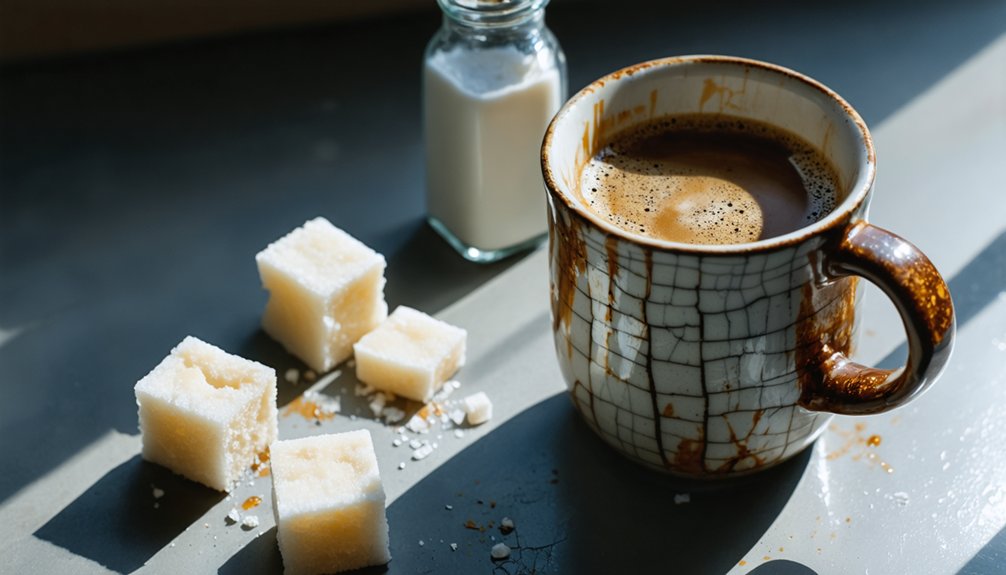
Coffee contains tannins — naturally occurring polyphenols that bind to tooth enamel and leave behind yellow or brown pigments.
Understanding coffee composition reveals why staining mechanisms run deeper than surface discoloration. Tannin effects compound over time, penetrating microscopic enamel pores and embedding chromogens into the tooth structure.
Enamel erosion from coffee’s acidity further opens these pores, accelerating pigment absorption and increasing stain persistence.
What makes whitening challenges so difficult is that lifestyle impacts — daily consumption, prolonged sipping, and dietary habits — continuously reintroduce staining compounds faster than standard hygiene removes them.
You’re fundamentally fighting a recurring cycle. Preventive strategies must address both the chemical interaction at the enamel surface and your consumption habits simultaneously.
Without tackling both fronts, even aggressive whitening treatments deliver only temporary results.
Daily Habits That Stop Coffee Stains Before They Set
Since tannins begin bonding to enamel within seconds of contact, your daily habits determine whether stains accumulate or stay manageable. Effective stain prevention starts before you take your first sip.
Drink coffee through a straw to minimize direct enamel contact, and rinse immediately with water afterward to disrupt tannin adhesion.
Preventive practices like adding milk or cream reduce coffee’s chromogen concentration, lowering staining intensity. Chewing sugar-free gum post-coffee stimulates saliva production, your body’s natural enamel protection mechanism.
Eating crunchy vegetables and fruits provides mechanical scrubbing that clears residue before it sets.
Brush twice daily with whitening toothpaste containing mild abrasives or peroxide. These consistent actions function as true coffee alternatives to reactive treatments, keeping discoloration from compounding into deeper, harder-to-reverse staining.
Natural Remedies That Remove Coffee Stains at Home
When daily habits aren’t enough to counter existing discoloration, natural remedies offer targeted, low-cost solutions you can apply at home.
Baking soda acts as one of the most effective natural scrubs — mix a teaspoon with water and brush for one to two minutes, once or twice weekly.
Diluted hydrogen peroxide works as both a rinse and enzymatic cleaner, breaking down stain compounds when swished for one minute weekly.
Oil pulling with coconut oil for 15 to 20 minutes absorbs surface tannins effectively.
Apple cider vinegar, diluted in warm water, dissolves buildup when used one to two times weekly.
Limit all these treatments to recommended frequencies — overuse erodes enamel and reverses your progress.
Rinse thoroughly after each application.
The Best Over-the-Counter Products for Coffee Stains
Natural home remedies work well for mild discoloration, but over-the-counter whitening products deliver faster, more consistent results for coffee stains. You’ll find several targeted stain removers worth considering.
Whitening toothpaste handles mild buildup effectively when used two to three times weekly.
Whitening strips containing five to ten percent hydrogen peroxide penetrate surface layers within one to two weeks, making them reliable for moderate staining.
Activated charcoal powder offers a natural yet aggressive alternative, clearing discoloration within two to three weeks of gentle use.
For accelerated results, LED kits like Snow or BetterWhite produce visible changes within seven to fourteen days with minimal sensitivity risk.
When over-the-counter options plateau, shifting to professional treatments guarantees deeper, longer-lasting control over persistent coffee staining.
When It’s Time to Stop DIYing and See a Dentist
Over-the-counter products handle surface and moderate staining well, but they hit a ceiling. When stains penetrate deeper enamel layers or discoloration persists after consistent OTC use, it’s time to schedule dental consultations.
Professional assessments identify whether you’re dealing with extrinsic staining or intrinsic discoloration—a distinction that determines your entire treatment path.
In-office whitening uses 25–40% hydrogen peroxide concentrations that no retail product can legally match, delivering results in one to two hours. Custom take-home trays with 10–16% carbamide peroxide offer a controlled middle ground for moderate cases.
Don’t waste months rotating ineffective products. If sensitivity increases, enamel looks translucent, or staining rebounds quickly, a dentist provides targeted intervention that protects your enamel while achieving measurable, lasting whitening outcomes.
How to Match Your Whitening Method to Your Coffee Stain Severity
Not all coffee stains respond to the same treatment, so you’ll need to assess your stain severity before selecting a whitening method.
If you’re dealing with mild, surface-level discoloration, over-the-counter options like whitening strips or toothpaste can deliver effective results.
On the other hand, moderate to deep stains typically require professional-grade carbamide or hydrogen peroxide treatments.
Once you’ve matched your method to your stain level, you’ll need to maintain your results through consistent oral hygiene, preventive habits, and scheduled touch-up treatments.
Identifying Your Stain Severity
How severely coffee has stained your teeth determines which whitening method will actually work for you. Stain types fall into two categories: extrinsic and intrinsic. Extrinsic stains sit on your enamel’s surface, appearing as light yellow discoloration — these respond well to over-the-counter solutions.
Intrinsic stains penetrate deeper into your dentin, producing gray or brown hues that require professional intervention.
Use these severity indicators to assess your situation accurately. Mild stains show slight yellowing after months of daily coffee consumption.
Moderate stains display noticeable discoloration resistant to standard toothpaste. Severe stains exhibit deep, persistent pigmentation that home remedies won’t touch.
Examining your teeth under natural light against a white background gives you the clearest, most accurate reading of where you actually stand.
Matching Methods To Stains
Once you’ve pinpointed your stain severity, selecting the right whitening method becomes straightforward.
Match your approach to your stain types for maximum whitening effectiveness.
For mild surface stains, whitening toothpaste or strips with 5–10% hydrogen peroxide deliver reliable results within one to two weeks.
Moderate stains respond better to LED whitening kits or custom take-home trays using 10–16% carbamide peroxide over two to four weeks.
Deep, stubborn stains require professional in-office treatments using 25–40% hydrogen peroxide for penetrating results in one to two hours.
Natural remedies like baking soda or oil pulling suit early-stage discoloration but won’t address entrenched staining.
You control the outcome by aligning treatment intensity with stain depth—mismatching wastes time and risks unnecessary enamel exposure.
Maintaining Your Whitening Results
Whitening results fade quickly without a consistent maintenance routine, so protecting your investment matters as much as the initial treatment.
Controlling your environment post-treatment determines how long brightness lasts.
- Adjust whitening frequency: Use dentist-prescribed take-home trays 1–2 nights every 3–6 months to sustain results without over-treating enamel.
- Make dietary adjustments: Drink coffee through a straw, rinse immediately afterward, and add milk or cream to reduce tannin contact with enamel.
- Reinforce daily hygiene: Brush twice daily with whitening toothpaste, apply fluoride toothpaste post-treatment to remineralize enamel, and chew gum after coffee to boost saliva production.
Schedule regular professional cleanings to remove surface buildup before stains penetrate deeper enamel layers.
How to Maintain White Teeth as a Daily Coffee Drinker
Maintaining white teeth as a daily coffee drinker requires a consistent, multi-layered approach rather than occasional whitening treatments. You’ll need to combine preventive habits, daily hygiene, and periodic whitening to stay ahead of stain buildup.
Start by modifying consumption: drink through a straw, rinse immediately after, or add milk to reduce tannin concentration. These aren’t coffee alternatives—they’re strategic adjustments that protect enamel health while keeping your habit intact.
Small adjustments—straws, milk, quick rinses—protect your enamel without sacrificing the coffee habit you’re not giving up.
Brush twice daily with whitening toothpaste, floss consistently, and use an electric toothbrush for superior plaque removal.
Incorporate whitening strips or LED kits every few weeks to address surface accumulation before it deepens. Schedule professional cleanings regularly to eliminate stubborn buildup.
Follow every whitening session with fluoride toothpaste to remineralize and fortify enamel against future staining.
Frequently Asked Questions
Can Coffee Stains Affect Dental Veneers or Crowns Differently Than Natural Teeth?
Yes, coffee stains affect veneers and crowns differently—you can’t whiten them with peroxide treatments. Prioritize veneer maintenance through consistent stain prevention: rinse after coffee, brush daily, and schedule professional cleanings to preserve their appearance effectively.
Does the Temperature of Coffee Impact How Quickly Stains Develop on Enamel?
Forsooth, coffee temperature does impact staining speed. Hotter coffee temperature accelerates enamel erosion by opening pores, allowing tannins to penetrate deeper faster. You’ll notice stains develop more rapidly when you’re drinking coffee above lukewarm temperatures.
Are Whitening Treatments Safe to Use During Pregnancy or While Breastfeeding?
You shouldn’t use whitening treatments during pregnancy or breastfeeding without consulting your dentist first. Whitening safety isn’t fully established for these stages, so pregnancy precautions recommend avoiding peroxide-based products until you’ve received professional medical clearance.
Can Certain Medications Make Teeth More Vulnerable to Coffee Staining Over Time?
Yes, certain medications can compromise your enamel health, making teeth more vulnerable to coffee staining. Medication effects like dry mouth reduce saliva, accelerating tannin absorption. You’ll want to monitor your oral hygiene routine accordingly.
Does Drinking Decaf Coffee Cause the Same Level of Teeth Staining as Regular?
Cut to the chase: decaf’s composition still contains tannins, making its staining comparison to regular coffee nearly identical. You’ll face similar discoloration risks, so you should apply the same preventive whitening strategies regardless of your coffee choice.
References
- https://www.hudsondentalco.com/post/best-teeth-whitening-for-coffee-drinkers
- https://www.brownroaddental.com/ways-to-remove-coffee-stains-from-your-teeth/
- https://thesugarlanddentist.com/blog/whats-the-safest-teeth-whitening-option-for-coffee-drinkers/
- https://www.goodrx.com/conditions/dental-care/remove-coffee-stains-teeth
- https://www.eldersburgfamilydental.com/best-teeth-whitening-tips-for-coffee-lovers/
- https://www.advancedsmilesmarion.com/resources/teeth-whitening-coffee-stains
- https://www.mydentaloffice.com/natural-whitening-remedies-for-coffee-and-wine/
- https://teethcare360.co.uk/best-whitening-for-coffee-stains-uk/
- https://www.okundentistry.com/blog/what-is-the-safest-teeth-whitening-option-for-coffee-drinkers