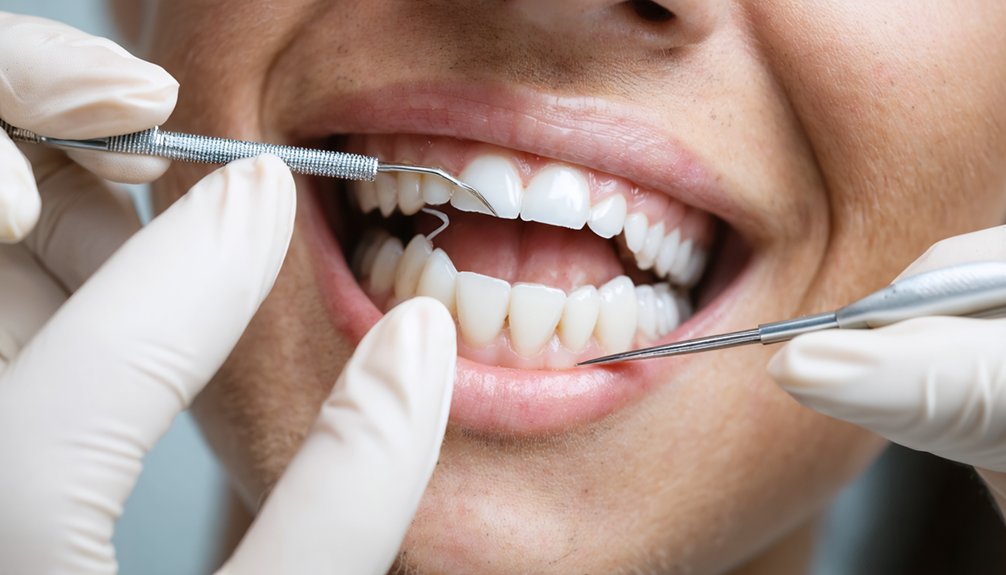
Teeth whitening improves your oral health in three key ways: it’s clinically safe long-term when you use validated peroxide concentrations, it disrupts plaque buildup that leads to gum disease and decay, and it reinforces disciplined hygiene habits like brushing and flossing. Studies confirm negligible nerve tissue effects with proper protocols. The behavioral improvements alone can increase your plaque removal by roughly 40%. Keep exploring to uncover how each mechanism works in greater detail.
Key Takeaways
- Teeth whitening encourages disciplined oral hygiene habits, improving brushing effectiveness by approximately 40% and reducing plaque buildup significantly.
- Regular whitening routines reinforce flossing and brushing behaviors that prevent periodontal inflammation and gum disease.
- Dietary modifications adopted to maintain whitening results, like reducing sugar intake, lower bacterial growth and decay risk.
- Whitening creates a positive feedback loop, motivating consistent oral care that systematically eliminates harmful bacteria.
- Incorporating whitening into dental routines promotes microbiome balance, strengthening natural defenses against decay and infection.
Is Teeth Whitening Actually Safe Long-Term?
Long-term clinical data confirms that teeth whitening is safe when applied correctly. Studies tracking 10% carbamide peroxide use over 10 years show no damage to existing restorations.
Follow-up assessments at 4.5 and 7 years confirm zero root canal procedures linked to whitening treatments.
You eliminate potential risks by staying within clinically validated peroxide concentrations—1.5% to 3% hydrogen peroxide or equivalent carbamide peroxide formulations.
Long term effects on nerve tissue remain negligible when protocols are followed precisely.
Whitening works on both extrinsic and intrinsic staining, but it won’t alter tooth-colored restorations.
You maintain control over outcomes by monitoring for adverse reactions during home treatment and seeking professional intervention immediately if sensitivity or tissue irritation develops.
How Teeth Whitening Protects Against Gum Disease and Decay
Consistent teeth whitening routines create a behavioral framework that directly reduces gum disease and decay risk. When you commit to whitening protocols, you reinforce complementary habits—regular brushing, flossing, and professional cleanings—that systematically eliminate plaque before it triggers periodontal inflammation.
Whitening routines build habits that eliminate plaque, protecting your gums and teeth from long-term disease.
Plaque accumulation is the primary driver of both gum disease and cavity progression, so disrupting its buildup protects your dental architecture at the structural level.
Cavity prevention is further supported through dietary modifications you adopt to preserve whitening results. Reducing sugar intake, limiting acidic foods, and rinsing after staining beverages simultaneously reduce bacterial growth and enamel erosion.
Balancing your oral microbiome with targeted antiseptic use—without eliminating beneficial bacteria—strengthens your mouth’s natural defenses, creating measurable, long-term protection against both decay and gingival deterioration.
How Teeth Whitening Pushes You Toward Better Oral Habits
When you invest in teeth whitening, you’re more likely to protect that investment through disciplined oral hygiene. This motivation enhancement drives measurable behavioral shifts: consistent brushing increases plaque removal by 40% compared to irregular routines, while proper flossing markedly reduces interstitial bacterial accumulation.
Habit formation accelerates when outcomes are visible. Whitening creates a feedback loop—you see results, so you maintain the behaviors that preserve them. You’ll incorporate whitening toothpaste one to two times weekly, apply antiseptic mouthwash daily, and schedule professional cleanings every six months to remove stain-absorbing plaque.
These aren’t passive improvements. You’re actively restructuring your oral care routine around a tangible goal, transforming whitening from a cosmetic procedure into a systematic framework for sustained dental health.
Frequently Asked Questions
Can Teeth Whitening Treatments Effectively Address Both Intrinsic and Extrinsic Stains?
Can whitening tackle both stain types? Yes—you’ll find treatments effectively address extrinsic discoloration and intrinsic stains, giving you clinical control over discoloration through evidence-based bleaching agents that penetrate enamel and target deeper, embedded pigmentation sources.
Does Teeth Whitening Work on Dental Restorations Like Crowns or Veneers?
Whitening agents don’t affect dental restorations—your crowns and veneers won’t respond to bleaching due to dental material compatibility limitations. You’ll need restoration color matching with your dentist to guarantee uniformity between natural teeth and existing restorations.
How Soon After Whitening Treatments Can Patients Consume Stain-Causing Foods?
After whitening, you should wait at least 48 hours before consuming stain-causing foods. This optimal waiting time minimizes post-treatment sensitivity and prevents pigments from penetrating temporarily vulnerable enamel, ensuring you maintain your whitening results effectively.
What Dietary Changes Best Complement a Professional Teeth Whitening Treatment Plan?
You’ll maximize results by implementing dietary restrictions on high-tannin beverages, acidic foods, and sugars. Incorporate natural remedies like apples, milk, and pineapple—calcium-rich choices that actively strengthen enamel, balance your oral microbiome, and prevent post-whitening staining progression.
How Frequently Should Whitening Toothpaste Be Used to Prevent Yellowing Effectively?
Using whitening toothpaste 1-2 times weekly prevents yellowing effectively. You’ll minimize dental sensitivity while optimizing whitening gel ingredients’ impact. At this frequency, you actively remove surface stains without compromising enamel integrity or disrupting your oral microbiome balance.
References
- https://www.youtube.com/watch?v=n4wCb2QLhPo
- https://www.healthline.com/nutrition/whiten-teeth-naturally
- https://pmc.ncbi.nlm.nih.gov/articles/PMC4058574/
- https://www.rejuv-health.com/cosmetic-dentistry/whiten-teeth-at-home/
- https://www.webmd.com/oral-health/teeth-whitening
- https://www.ada.org/resources/ada-library/oral-health-topics/whitening
- https://mypenndentist.org/dental-tips/2024/02/29/safe-ways-to-whiten-teeth-naturally/
- https://gloscience.com/blogs/blog/the-whole-body-health-benefits-of-teeth-whitening
- https://www.youtube.com/watch?v=i8yqDgT0tCE
- https://www.listerine.com/articles/teeth-whitening/whitening-teeth-instructions