The best whitening products for darkened teeth depend on your stain type. For surface stains from coffee or tea, peroxide-based strips like Crest 3D Whitestrips Professional Effects deliver fast, measurable results. Deeper, intrinsic discoloration responds better to custom trays with higher carbamide or hydrogen peroxide concentrations. Non-peroxide options like charcoal lack clinical evidence and can erode enamel over time. Matching the product to your discoloration depth is what drives real results—and there’s more to evaluate before choosing.
Key Takeaways
- Crest 3D Whitestrips Professional Effects are highly rated for noticeable brightness improvements and effectively treat moderate-to-severe surface discoloration.
- Hydrogen peroxide-based strips outperform toothpastes and mouthwashes by penetrating enamel to break down embedded stain molecules.
- Custom trays with 10–15% peroxide gels deliver faster, deeper whitening, showing visible results within 1–2 treatments.
- Sensitive teeth benefit from lower-peroxide formulas like Crest 3D Whitestrips Sensitive White, balancing effectiveness with reduced sensitivity.
- Charcoal and natural remedies lack clinical evidence, may erode enamel, and can paradoxically worsen yellowing over time.
Why Teeth Darken and What Type of Product Actually Fixes It
Teeth darken for several distinct reasons, and identifying the cause determines which product will actually work. Dietary influences like coffee, tea, and red wine deposit chromogens onto enamel, creating surface stains that respond well to peroxide-based strips and gels.
Intrinsic discoloration, caused by aging or medication exposure, penetrates deeper and requires stronger active ingredients like hydrogen or carbamide peroxide. Natural remedies such as charcoal or oil pulling lack clinical evidence and may worsen yellowing by eroding enamel over time.
If your darkening is surface-level, whitening strips or gels deliver measurable results fast. If it’s deeper, custom trays with higher peroxide concentrations are your strongest OTC option. Matching product type to stain origin is what separates real results from wasted effort.
Peroxide vs. Non-Peroxide: Which Whitening Ingredient Works?
Once you’ve matched your stain type to the right product category, the next decision is the active ingredient. Peroxide-based formulas—hydrogen peroxide and carbamide peroxide—consistently outperform non-peroxide alternatives in clinical testing. They penetrate enamel to break down embedded stain molecules, making them effective even when genetic factors have contributed to deeper, structural discoloration.
Non-peroxide options, including charcoal and enzyme-based products, primarily target surface buildup. They won’t address intrinsic darkening, and charcoal formulas can compromise enamel health through abrasion, paradoxically making teeth appear yellower over time.
If you’re managing sensitivity alongside discoloration, lower-concentration peroxide formulas offer a controlled middle ground. You get measurable whitening without excessive enamel stress.
The ingredient, not the delivery format, drives your results—choose accordingly.
When to Use Toothpaste vs. Strips vs. Trays
If you’re dealing with surface stains from coffee or tea, a whitening toothpaste can maintain brightness without aggressive intervention.
For deeper discoloration, you’ll need strips or peroxide-based gels, since toothpaste alone lacks the chemical strength to break down embedded stain molecules.
Matching the product to your stain severity keeps treatment effective and reduces unnecessary sensitivity risk.
Surface Stain Solutions
Choosing the right whitening format depends largely on how deep your staining runs. Surface stains affecting dental enamel respond well to targeted, lower-intensity options. Here’s how to match your solution to your stain level:
- Whitening toothpaste disrupts surface stain molecules through mild abrasives and low-concentration peroxides—best for maintenance.
- Whitening mouthwashes complement brushing but won’t correct visible darkening on their own.
- Whitening strips deliver hydrogen peroxide directly to enamel, making them effective for moderate surface discoloration within days.
- Custom trays with carbamide or hydrogen peroxide gel penetrate more effectively for stubborn or widespread staining.
If your discoloration is largely external, strips or toothpaste may suffice.
Deeper staining requires higher peroxide concentrations through trays or professional-grade gels.
Deeper Discoloration Options
When surface-level approaches fall short, the severity of your discoloration should directly determine which whitening format you use. Toothpaste targets surface stains but can’t penetrate deeper chromogens embedded in dentin.
If you’re dealing with moderate-to-severe darkening, peroxide-based strips or trays are your most effective options.
Strips deliver concentrated hydrogen peroxide directly to enamel, minimizing saliva effects that dilute active ingredients in rinses or pastes.
Custom trays go further, holding carbamide or hydrogen peroxide against teeth longer for measurable dentin-level results.
If you have existing enamel erosion, consult a dentist before using higher-concentration systems, since compromised enamel increases sensitivity risk.
Match your format to your stain depth—strips for moderate cases, trays for persistent or severe discoloration requiring extended contact time.
Matching Needs To Products
Knowing which format to use comes down to matching product strength to stain depth. Natural remedies and whitening toothpastes handle surface stains and maintenance. Strips and gels target moderate discoloration with peroxide concentrations that penetrate enamel.
If staining is severe enough that you’re considering dental veneers, consult a dentist before defaulting to OTC options.
Use this framework to guide your decision:
- Toothpaste or mouthrinse — suited for light surface stains and daily upkeep
- Whitening strips — effective for moderate discoloration using hydrogen peroxide
- Custom or semi-custom trays — best for deeper staining requiring consistent gel contact
- Professional consultation — necessary when discoloration resists OTC treatment or involves enamel damage
Match the product’s active ingredient concentration to your stain severity for measurable results.
Best Whitening Strips for Darkened Teeth
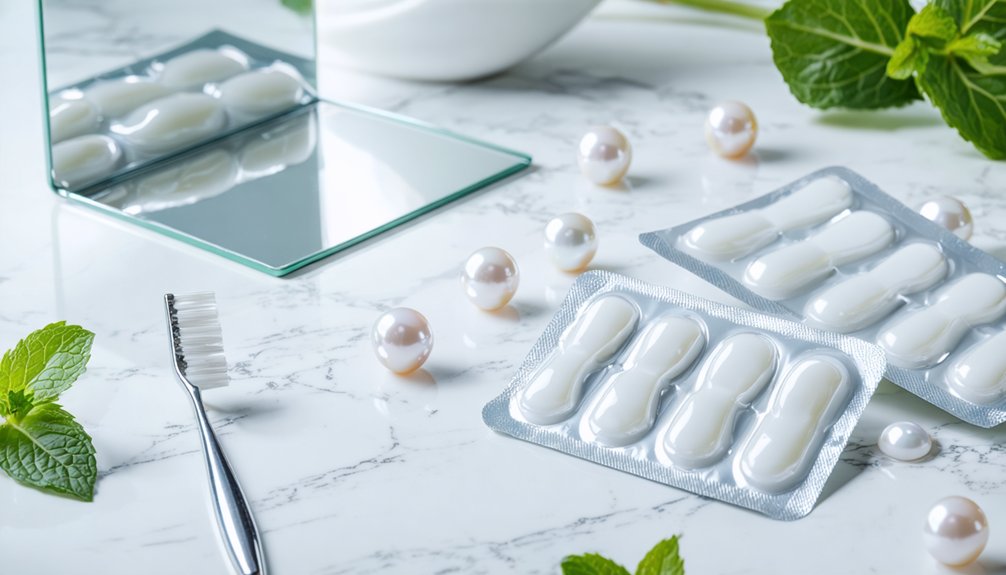
Whitening strips rank among the most effective over-the-counter options for darkened teeth, primarily because they deliver peroxide-based gels directly against the tooth surface for a sustained contact period.
Unlike natural remedies or herbal extracts, strips rely on clinically supported hydrogen peroxide concentrations that actively break down stain molecules within enamel.
Crest 3D Whitestrips Professional Effects consistently performs well in expert testing, producing measurable brightness improvements within several applications.
If you experience sensitivity, Crest 3D Whitestrips Sensitive White offers a gentler formulation without fully sacrificing efficacy.
You’ll want to prioritize strips listing hydrogen peroxide as the active ingredient, since peroxide concentration directly determines whitening outcome.
For significant darkening, strips outperform toothpastes and mouthwashes, giving you a targeted, evidence-backed intervention you can control at home.
Best Whitening Trays and Gels for Deeper Discoloration
For deeper discoloration that strips and toothpastes can’t adequately address, whitening trays and gels deliver higher peroxide concentrations with longer contact time against enamel. Unlike natural remedies, clinically formulated gels offer measurable, predictable results.
Consider these targeted options:
- Opalescence Go — prefilled trays with 10% hydrogen peroxide balance enamel protection with strong whitening performance.
- Opalescence Gel Syringes — customizable dosing lets you control concentration and treatment duration precisely.
- Carbamide peroxide gels — slower release makes them well-suited for extended wear without excess sensitivity.
- Custom tray systems — fitted trays maximize gel-to-tooth contact, improving outcomes for resistant, deeper stains.
If discoloration persists despite consistent use, consult a dentist to rule out enamel-level concerns requiring professional-strength intervention.
Best LED Whitening Kits and Whether the Light Actually Helps
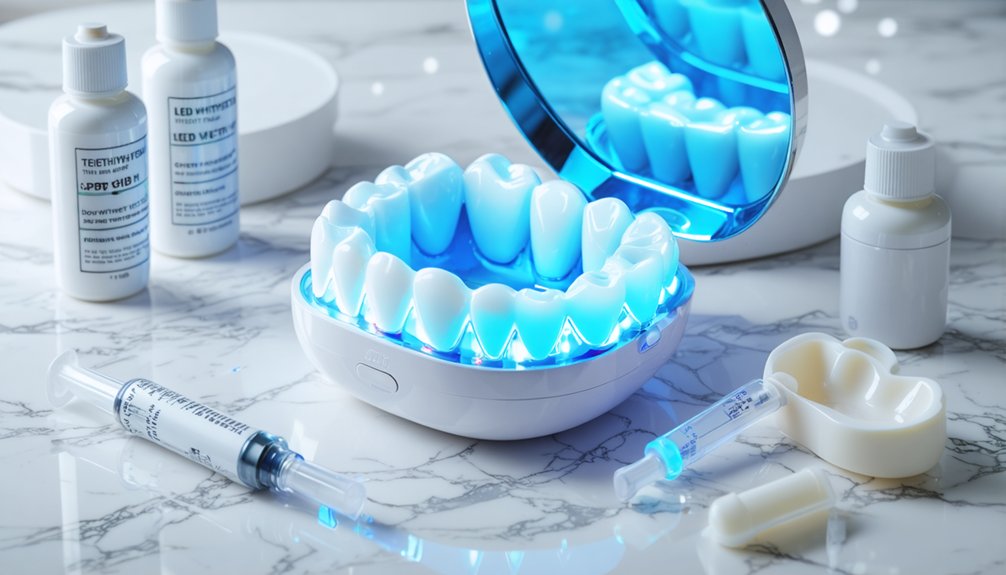
When you use an LED whitening kit, the light is designed to activate or accelerate the whitening gel applied to your teeth.
Research, however, consistently shows that the gel’s peroxide concentration drives the actual whitening outcome, not the light itself.
If you’re evaluating LED kits, you should prioritize the hydrogen or carbamide peroxide percentage in the accompanying gel rather than the LED feature.
How LED Lights Work
LED whitening kits have become a popular category, but two things determine whether they actually deliver results: the gel and its peroxide concentration. The light itself accelerates the chemical reaction slightly, but it doesn’t replace ingredient strength. Don’t let whitening trends or dental myths convince you otherwise.
Here’s how the process actually works:
- Peroxide gel is applied directly to your teeth
- The LED light activates the gel, speeding up oxidation
- Oxidation breaks apart stain molecules embedded in enamel
- Repeated sessions compound visible brightening over time
If the gel contains low or no peroxide, the light produces minimal results. You’re in control when you prioritize concentration over marketing. Always check the active ingredient percentage before purchasing any LED kit.
Gel Strength Matters More
Although LED kits dominate whitening marketing, the gel’s peroxide concentration drives actual results. You’ll achieve more measurable brightening by prioritizing hydrogen peroxide or carbamide peroxide strength over light-based features. Testing consistently shows that 10–15% peroxide formulas outperform lower-concentration alternatives, regardless of LED inclusion.
Natural remedies and charcoal-based options lack the clinical evidence to address significant darkening and may accelerate enamel wear. You’re better served by proven peroxide systems.
Diet impacts also factor into your outcomes—acidic foods and chromogenic beverages can counteract even strong whitening treatments, making dietary awareness part of your protocol.
When selecting an LED kit, read the gel’s active ingredient label first. The light may accelerate activation marginally, but concentration and contact time determine how effectively you control your results.
Best Whitening Products for Sensitive Teeth
Sensitive teeth don’t have to mean sacrificing effective whitening—several well-tested products balance peroxide-based activity with gentler formulations. Managing tooth sensitivity while maintaining dental hygiene requires selecting products with lower peroxide concentrations or buffered delivery systems.
Consider these four targeted options:
- Crest 3D Whitestrips Sensitive White – delivers effective peroxide action with a formulation designed to minimize gum and enamel irritation.
- Rembrandt 1 Week Whitening Kit – a tested sensitive-teeth system offering measurable results within a short treatment window.
- Opalescence Go (10% hydrogen peroxide) – dentist-approved gel trays that control dosage precisely.
- Sensodyne Extra Whitening Toothpaste – best suited for maintenance rather than correcting significant darkening.
Match product strength to your sensitivity threshold and stain severity for ideal outcomes.
How Fast Do Whitening Products Work on Dark Teeth?
When tackling noticeable tooth darkening, speed of results depends heavily on the product type and peroxide concentration you select. Higher-strength gels containing 10%–15% hydrogen peroxide can produce visible improvement within one to two treatments.
Strips from brands like Crest and Burst consistently demonstrate measurable brightness gains in clinical testing.
By contrast, natural remedies and holistic approaches—such as oil pulling or activated charcoal—lack strong evidence for correcting significant darkening and may actually compromise enamel integrity over time.
Whitening toothpastes work gradually, targeting surface stains rather than deeper discoloration.
If you want predictable, faster outcomes, prioritize peroxide-based strips, gels, or tray systems over low-peroxide alternatives.
Matching ingredient concentration to your stain severity gives you the most control over your whitening timeline.
How to Choose the Right Whitening Product for Your Teeth
Choosing the right whitening product hinges on two core factors: stain severity and peroxide tolerance. Deeper discoloration demands higher whitening efficacy, which peroxide-based strips, gels, or trays deliver most reliably. Protect your dental enamel by matching product strength to your actual sensitivity level.
Use these four criteria to guide your decision:
- Stain depth — Surface stains respond to toothpaste; intrinsic darkening requires peroxide concentrations of 10% or higher.
- Sensitivity tolerance — Compromised dental enamel warrants sensitive formulas with lower peroxide levels.
- Speed requirement — Strips and gel trays produce faster, measurable whitening efficacy than pens or rinses.
- Usage consistency — Choose a format you’ll actually sustain; irregular use undermines results regardless of ingredient strength.
When discoloration is severe or persistent, consult a dentist before self-selecting OTC products.
Frequently Asked Questions
Can Whitening Products Damage Existing Dental Crowns, Veneers, or Fillings?
Whitening products won’t damage your crowns or fillings, but they can’t whiten them either. You’ll risk veneer discoloration mismatches and uneven dental crown safety outcomes, so consult your dentist before starting any peroxide-based whitening regimen.
How Long Do Teeth Whitening Results Typically Last Before Retreatment Is Needed?
Results typically last six to twelve months. You’ll maintain brightness longer by avoiding staining foods, scheduling professional consultation, and following a custom treatment plan tailored to your lifestyle, habits, and original discoloration severity.
Is It Safe to Whiten Teeth During Pregnancy or While Breastfeeding?
You should avoid whitening during pregnancy due to limited safety data. Breastfeeding considerations also warrant caution, as peroxide absorption isn’t fully studied. Consult your healthcare provider before using any whitening product to maintain control over your safety.
Can Children or Teenagers Safely Use Over-The-Counter Whitening Products?
Hold your horses—Children safety is a real concern here. You shouldn’t use OTC whitening on children, and Teen whitening isn’t recommended until permanent teeth fully erupt, as peroxide may irritate developing enamel and sensitive gum tissue.
Does Diet Affect How Well Whitening Products Work on Darkened Teeth?
Yes, diet impact directly affects your results. You’ll undermine whitening treatments if you consume staining foods or drinks during treatment. Nutrient influence matters too, as acidic foods weaken enamel, reducing peroxide penetration and overall whitening efficacy.
References
- https://www.forbes.com/sites/forbes-personal-shopper/article/best-teeth-whitening-kit/
- https://www.gentledental.com/resources/articles/teeth-whitening-products
- https://www.health.com/condition/oral-health/teeth-whitening-kits
- https://www.nbcnews.com/select/shopping/best-otc-teeth-whitening-products-rcna267151
- https://www.goodhousekeeping.com/health-products/g28723133/best-at-home-teeth-whitening-products/
- https://www.healthline.com/health/dental-and-oral-health/best-teeth-whitening
- https://www.goodhousekeeping.com/health-products/g70866685/best-whitening-toothpaste/
- https://www.health.com/beauty/best-whitening-products-sensitive-teeth
- https://www.medicalnewstoday.com/articles/best-teeth-whitening