For stubborn coffee, wine, and tobacco stains, you’ll need a toothpaste with clinically proven ingredients — not just marketing claims. Colgate Optic White Advanced (2% hydrogen peroxide) and Crest 3D White Brilliance are top picks for chemically lifting embedded pigments. For sensitive teeth, Sensodyne Pronamel Gentle Whitening delivers effective results without enamel damage. Look for the ADA seal to confirm safety and efficacy. Keep exploring to find the exact formula that matches your stain type and sensitivity needs.
Key Takeaways
- Crest 3D White Brilliance and Colgate Optic White Advanced are top picks for targeting stubborn, deeply embedded stains effectively.
- Peroxide-based formulas, especially with 2% hydrogen peroxide, chemically lift embedded pigments that surface-only toothpastes cannot remove.
- Sensodyne Pronamel Gentle Whitening suits sensitive teeth while still effectively combating stubborn stains without sacrificing enamel safety.
- Look for the ADA seal, fluoride, and hydrogen peroxide on labels to confirm a toothpaste’s safety and whitening potency.
- Noticeable whitening results require consistent twice-daily use over four to six weeks for stubborn stains to visibly fade.
Best Toothpastes for Stubborn Stains, Ranked
When stubborn stains from coffee, tea, wine, or tobacco are the problem, not every whitening toothpaste will cut it. You need a formula built for deep discoloration, not just surface polish.
Here’s how the top options rank:
Here’s how the top whitening toothpastes stack up against stubborn, deep-set stains that ordinary formulas simply can’t handle.
- Crest 3D White Brilliance Deep Stain Remover – Targets stubborn stains while protecting enamel health.
- Colgate Optic White Advanced – Contains 2% hydrogen peroxide for chemical stain breakdown and reliable plaque removal.
- Crest 3D White – A consistently recommended pick for overall whitening effectiveness.
- Colgate Total Whitening – Dentist-recommended with balanced stain-fighting and enamel health support.
- Sensodyne Pronamel Gentle Whitening – The strongest sensitivity-friendly option without sacrificing plaque removal.
Peroxide-based formulas consistently outperform mild cosmetic options when deep stains are your target.
What Actually Makes a Whitening Toothpaste Work?
Don’t let whitening myths mislead you—charcoal and other natural remedies often lack clinical evidence supporting their effectiveness on stubborn stains. They may feel abrasive without delivering measurable results.
Peroxide-based formulas consistently outperform cosmetic-only options for deep stains from coffee, tea, or tobacco.
You’ll also want the ADA seal, which confirms both safety and efficacy.
Choosing based on ingredients rather than marketing gives you real control over your results.
Coffee, Wine, and Tobacco: Stains These Formulas Target
Coffee, tea, wine, berries, and tobacco are among the most chemically aggressive stain sources your enamel faces. These substances contain tannins, chromogens, and tar compounds that penetrate enamel microscopically, making surface-level stain removal tips less effective without the right formula.
You need peroxide-based toothpaste to break down embedded pigments chemically, not just polish them away.
Natural remedies like baking soda can help with mild surface discoloration, but they won’t adequately address deep tobacco tar or wine tannins. For those stain types, hydrogen peroxide formulas are clinically better positioned to lift pigment at the source.
Your best defense is consistent, twice-daily use of a proven peroxide formula before stains become embedded. Prevention remains more effective than reversal once discoloration penetrates below the enamel surface.
Best Whitening Toothpaste for Sensitive Teeth
If you have sensitive teeth, you don’t have to choose between comfort and results—Sensodyne Pronamel Gentle Whitening is a clinically supported option that addresses stain removal without aggravating enamel sensitivity.
You should look for formulas that avoid high-abrasion ingredients and instead rely on mild polishers and low-concentration peroxide to lift stains gradually.
Checking for the ADA seal helps you confirm that a sensitivity-friendly formula meets established standards for both safety and effectiveness.
Gentle Formulas That Whiten
Enamel safety is the core priority here. Sensodyne Pronamel‘s formulation strengthens enamel while gradually lifting surface stains, making it suitable for daily use without compounding sensitivity over time.
If you’re drawn to natural ingredients like baking soda, they can support mild stain removal, though they’re better suited for maintenance than deep discoloration.
For stubborn stains paired with sensitivity, prioritize clinically supported gentle formulas over trend-driven alternatives.
Brushing twice daily remains essential for consistent, measurable results.
Sensitivity-Safe Ingredient Picks
Choosing the right ingredients matters as much as choosing the right product when sensitivity is a concern. Enamel sensitivity narrows your options, but it doesn’t eliminate effective whitening.
Look for low-abrasion formulas with fluoride to strengthen enamel while lifting surface stains. Hydrogen peroxide at controlled concentrations whiten without the aggressive abrasion that triggers discomfort.
Some formulas incorporate natural ingredients like baking soda, which buffers pH and removes stains gently. Avoid charcoal-based options if sensitivity is present, since evidence supporting their safety on compromised enamel remains limited.
Sensodyne Pronamel Gentle Whitening is a clinically supported choice that addresses both enamel sensitivity and stain removal.
Always check for the ADA seal to confirm the formula meets verified safety and effectiveness standards before committing to daily use.
Hydrogen Peroxide, Abrasives, and What the Label Should Say
When scanning a toothpaste label for stubborn stains, two ingredients matter most: hydrogen peroxide and mild abrasives. Hydrogen peroxide chemically breaks down stain compounds, while abrasives physically polish surface discoloration. Together, they outperform natural ingredients for deep stain removal.
Fluoride benefits your enamel by strengthening it during the whitening process.
Look for these label indicators before purchasing:
- Hydrogen peroxide (ideally 2% concentration) for chemical stain lifting
- Mild abrasives or micro-polishers for controlled surface buffing
- Fluoride to protect enamel integrity throughout use
- ADA Seal of Acceptance as a verified safety and effectiveness marker
Avoid labels heavy on natural ingredients alone without peroxide or proven abrasives—they typically lack the potency needed for stubborn, set-in stains.
How Long Does Whitening Toothpaste Take to Work?
Whitening toothpaste doesn’t deliver instant results—most formulas require consistent use over several weeks before visible changes appear. Brushing twice daily maximizes your outcome, but you should calibrate your expectations based on stain type and depth. Surface stains from coffee or tea typically respond faster than deep, embedded discoloration.
For long-standing stains, whitening toothpaste functions as a maintenance tool within your broader oral hygiene routine, not a standalone correction. A professional cleaning may be necessary first to clear embedded buildup before any formula can work effectively.
Your dental health improves most when you treat whitening toothpaste as a preventive strategy rather than a rapid fix. Consistent application over four to six weeks gives you the clearest indication of whether a product is performing.
When Whitening Toothpaste Can’t Fix the Problem Alone
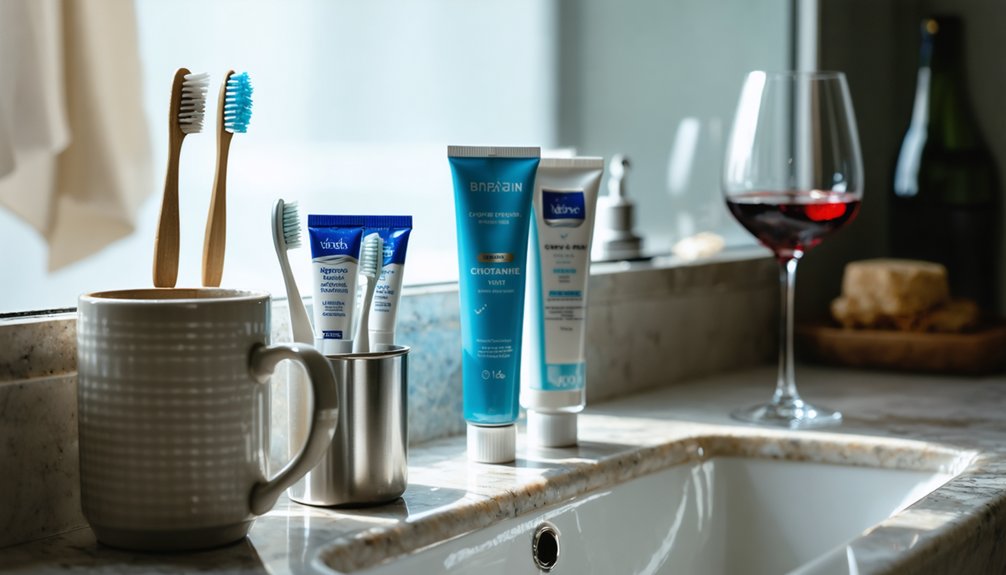
Some stains resist whitening toothpaste entirely, and recognizing that limit helps you pursue the right solution faster. Embedded discoloration from years of coffee, tobacco, or aging enamel often requires professional intervention before toothpaste can contribute meaningfully.
Consider escalating to alternative whitening methods or cosmetic dental procedures when:
- Stains persist after 4–6 weeks of consistent twice-daily use
- Discoloration originates below the enamel surface
- You’re dealing with intrinsic staining from medications or trauma
- Surface stains return immediately after brushing
A professional cleaning removes embedded buildup that toothpaste physically can’t reach. From there, in-office whitening or other cosmetic dental procedures can address deeper discoloration. Whitening toothpaste then becomes an effective maintenance tool rather than your primary treatment strategy.
Frequently Asked Questions
Can Whitening Toothpaste Damage or Wear Down Existing Dental Restorations?
Like sandpaper on silk, abrasive whitening toothpastes can gradually wear down dental restorations and tooth enamel. You’ll want to consult your dentist before use to protect your existing crowns, veneers, or fillings effectively.
Is It Safe to Use Whitening Toothpaste on Children’s Teeth?
Avoid whitening toothpaste for young children. You should prioritize children’s dental health by choosing age-appropriate fluoride safety-focused formulas instead. Consult your dentist before introducing any whitening agents, as abrasives and peroxides aren’t recommended for developing teeth.
Can You Use Whitening Toothpaste While Pregnant or Breastfeeding?
You should consult your dentist before using whitening toothpaste due to pregnancy safety and breastfeeding concerns. Limited evidence exists on peroxide absorption risks, so your provider can recommend the safest, most effective option for your situation.
Does the Order of Brushing and Rinsing Affect Whitening Results?
Yes, it does. Your brushing technique matters more, but delaying rinsing timing after brushing lets whitening agents stay on teeth longer, maximizing stain-lifting contact. You’ll get better results by waiting before rinsing.
Should Whitening Toothpaste Be Avoided After Recent Tooth Extractions?
Ironically, your whitening ambitions must pause here. After extractions, you should avoid whitening toothpaste due to post-extraction sensitivity. Let healing complete first, then reintroduce natural stain removal options gradually, ensuring you’re protecting recovery while reclaiming control over your oral health.
References
- https://www.reddit.com/r/DentalHygiene/comments/1kye2dq/whats_the_best_toothpaste_for_those_who_get/
- https://www.amazon.com/stain-removal-toothpaste/s?k=stain+removal+toothpaste
- https://www.advancedindiana.com/cosmetic-dentistry/teeth-whitening/what-is-best-whitening-toothpaste
- https://www.businessinsider.com/guides/health/best-whitening-toothpaste
- https://hygienehive.org/best-toothpaste-to-remove-stains
- https://www.independent.co.uk/extras/indybest/fashion-beauty/beauty/best-whitening-toothpaste-uk-reviews-b1783716.html
- https://implantjournal.com/best-stain-removing-toothpaste/
- https://www.cherrypicksreviews.com/toothpaste/stain-removal
- https://implantjournal.com/best-toothpaste-to-remove-stains/
- https://www.youtube.com/watch?v=HvpjIR-qrsc