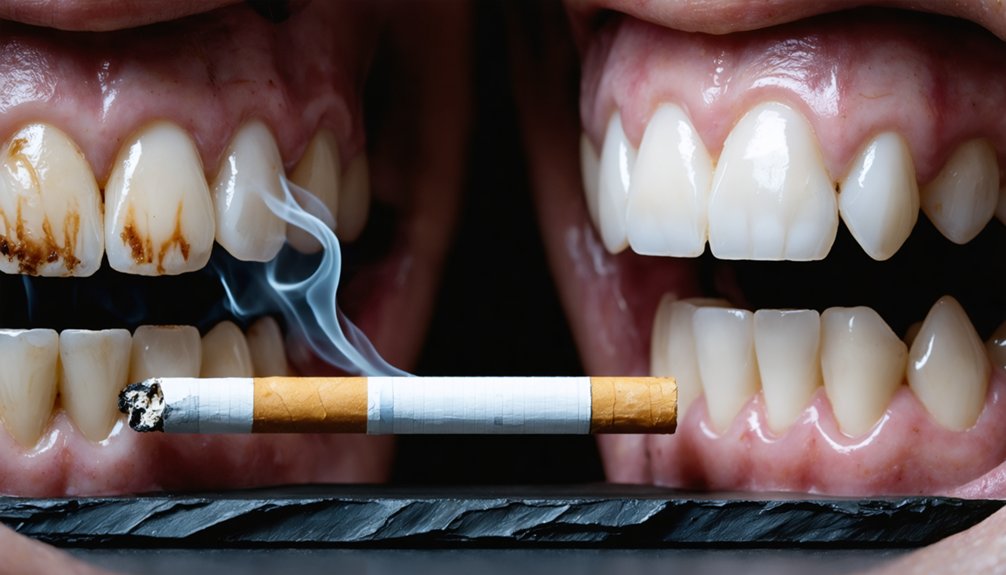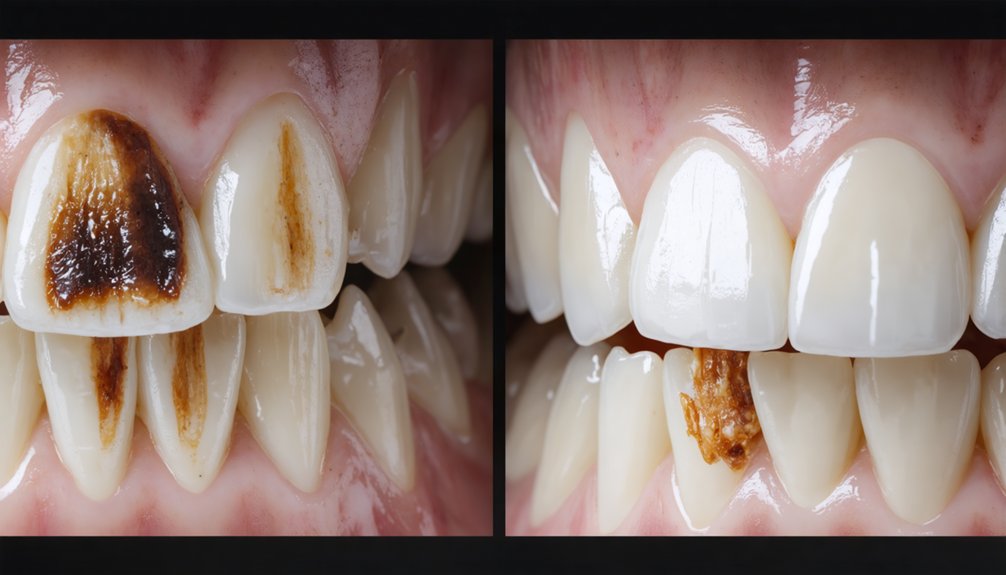
You’ll find the most dramatic results with professional in-office whitening treatments that use hydrogen peroxide gels and LED activation to achieve up to 12 shades lighter in one session. Custom take-home kits from your dentist offer professional-grade carbamide peroxide with precision-fitted trays, while advanced laser technology penetrates deep-set tobacco stains resistant to conventional methods. Daily specialized toothpaste containing PVP polymers breaks down embedded tar compounds, and dental veneers provide permanent coverage for severe discoloration. Each treatment option addresses your specific staining severity and timeline requirements.
Key Takeaways
- Professional in-office whitening treatments use hydrogen peroxide with LED activation to lighten tobacco-stained teeth up to 12 shades.
- Custom take-home kits from dentists provide professional-grade carbamide peroxide and precision-fitted trays for flexible at-home whitening.
- Advanced laser whitening combines high-concentration gels with targeted light to eliminate deep-set tobacco stains effectively.
- Specialized whitening toothpaste with PVP polymers and daily flossing help break down embedded tar compounds gradually.
- Dental veneers offer permanent cosmetic correction by covering deep nicotine and tar stains that resist other treatments.
Professional In-Office Whitening Treatments
Professional in-office whitening treatments deliver the most effective solution for ex-smokers seeking to eliminate years of tobacco-induced discoloration. During your single-session treatment, your dentist applies hydrogen peroxide-based gel after placing protective barriers on your gums. LED light activation enhances agent penetration into enamel, breaking down stubborn stain layers accumulated from smoking. The procedure takes approximately one hour, with gel applications repeated 3-4 times at 15-30 minute intervals.
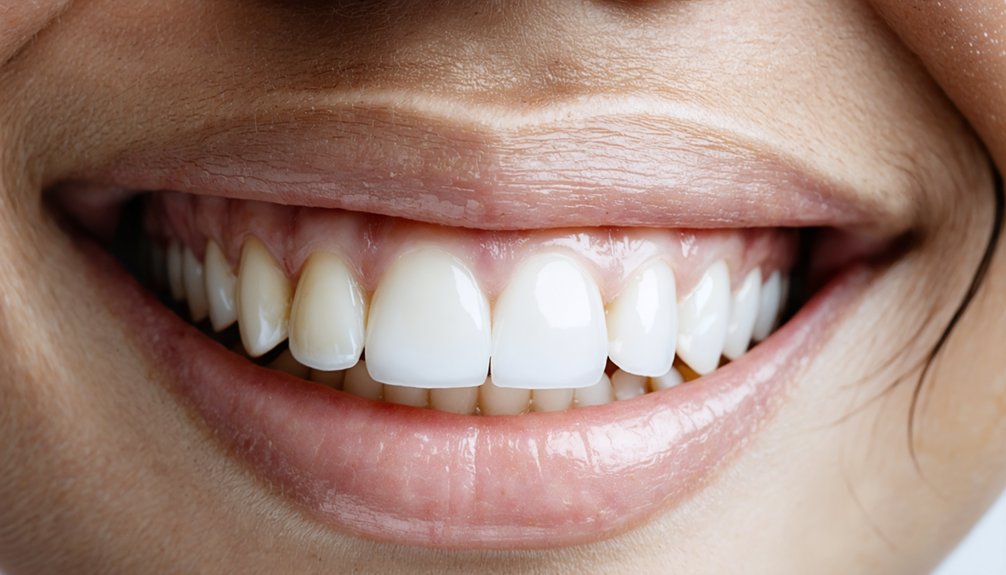
You’ll achieve ideal whitening results of up to 12 shades lighter in one appointment—significantly faster than weeks-long home treatments. Your dentist supervises the entire process, minimizing sensitivity risks while using stronger agents that penetrate deeper than over-the-counter options. Post procedure maintenance becomes critical since discontinued smoking won’t immediately prevent re-staining from other sources.
Custom Take-Home Whitening Kits From Your Dentist
When you’re seeking professional-grade whitening with greater flexibility than in-office sessions, custom take-home kits from your dentist deliver concentrated carbamide peroxide formulations (16-22%) paired with precision-fitted trays molded from digital impressions of your teeth. These heat-moldable trays guarantee complete contact with every tooth surface, eliminating gaps where tobacco stains persist. You’ll apply gel for 30-60 minutes per session over 4-6 weeks, following exact protocols to prevent sensitivity.
Treatment financing options make professional kits accessible at $30-400, versus $300-800 for in-office procedures. Tray durability enables unlimited touch-ups—you’ll only purchase refill gels ($15-49) rather than replacement systems. Your dentist provides ongoing oversight, adjusting concentrations based on your progress and sensitivity tolerance. This controlled approach delivers comparable results to office treatments while maintaining complete autonomy over your whitening schedule.
Advanced Laser Whitening Technology
Laser whitening technology combines high-concentration hydrogen peroxide gels (25-40%) with targeted light wavelengths that accelerate oxidation reactions within your enamel’s microstructure. This procedure effectively eliminates deep-set tobacco stains that resist conventional methods, delivering up to 35% greater whitening outcomes than treatments performed on active smokers.
Treatment Protocol Requirements:
- Wait minimum 30 days post-cessation before scheduling your initial session
- Complete procedure within 15-60 minutes under professional supervision
- Schedule maintenance appointments semi-annually to preserve results
The system operates through ideal safety protocols that minimize enamel compromise while maintaining controlled clinical conditions. You’ll experience minimal tooth sensitivity that resolves within 72 hours. Dentists customize laser intensity based on your specific stain severity, ensuring maximum efficacy while protecting tissue integrity throughout the one-year result cycle.
Specialized Whitening Toothpaste and Mouthwash for Daily Use
Daily maintenance whitening products deliver consistent stain management through specialized formulations that target residual tobacco discoloration in ex-smokers. You’ll achieve excellent results by selecting toothpastes containing PVP polymers and hydroxyapatite, which actively break down embedded tar compounds while restoring compromised enamel.
Implement proper brushing technique twice daily using soft-bristle toothbrushes designed for thorough surface coverage. Your flossing routine eliminates plaque-trapped stain particles between teeth that brushing alone can’t reach.
Complement your brushing technique with antiseptic mouthwashes formulated specifically for tobacco stain elimination. These solutions contain antibacterial agents that neutralize smoking-related bacterial growth while preventing new discoloration.
Replace your toothbrush every three months to maintain effectiveness. For accelerated results, rinse immediately after any tobacco exposure. Consult your dentist for product recommendations tailored to your specific stain severity and enamel condition.
Dental Veneers for Permanent Stain Coverage
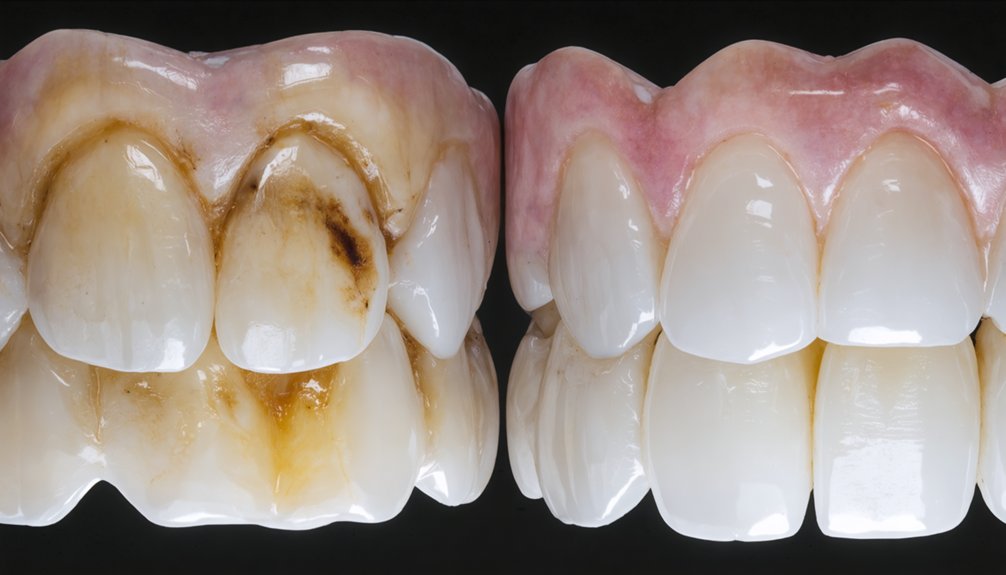
For ex-smokers with severe discoloration that resists conventional whitening methods, dental veneers provide definitive cosmetic correction through permanent stain coverage. These custom-fabricated porcelain or composite shells bond directly over stained enamel, replacing discolored surfaces with uniformly white, natural-looking material that delivers improved self confidence immediately.
Veneers offer ex-smokers permanent coverage of stubborn tobacco stains that conventional whitening treatments simply cannot remove.
The procedure requires:
- Tooth preparation – Removal of thin enamel layer under local anaesthetic
- Custom fabrication – Impressions taken for precise veneer creation; temporary shells fitted during laboratory processing
- Permanent bonding – Adhesive placement, trimming, and polishing for ideal aesthetics
You’ll experience lifestyle advantages that whitening treatments can’t achieve—veneers mask deep nicotine and tar penetration permanently. However, continued smoking post-placement compromises bonding stability and stains adhesive margins. Maintaining results requires smoking cessation, professional cleanings, and non-abrasive care protocols.
Frequently Asked Questions
How Long After Quitting Smoking Should I Wait Before Whitening Treatments?
Wait 2-4 weeks after quitting smoking before whitening treatments. You’ll need to establish a proper dental hygiene routine with effective tooth brushing techniques first. Schedule professional cleaning to remove residual stains, then proceed with whitening for ideal, controlled results.
Can Whitening Damage Teeth That Are Already Weakened From Smoking?
Yes, whitening can worsen existing enamel erosion and increased sensitivity from smoking. You’ll need a dentist-supervised approach using lower-concentration agents, remineralization protocols, and desensitizing treatments to safely restore your smile without compromising weakened tooth structure.
Will Insurance Cover Teeth Whitening for Former Smokers?
Insurance policy coverage rarely includes whitening treatment costs for cosmetic purposes, even for former smokers. You’ll need documented medical necessity from smoking-related damage. Check your plan’s specifics, consider FSA/HSA options, or explore dental savings plans instead.
How Often Should Ex-Smokers Get Professional Cleanings to Maintain Whiteness?
Think of your smile as polished marble—you’ll need regular dental checkups every three months for professional stain removal. This aggressive schedule combats accelerated plaque buildup, maintains whitening results, and gives you complete control over your oral aesthetics.
Are There Specific Foods to Avoid After Whitening Treatments?
You’ll need to avoid acidic foods like citrus and tomatoes for 48 hours post-treatment, as they’ll weaken enamel. Limit staining beverages including coffee, tea, and red wine to protect your investment and maximize whitening results.