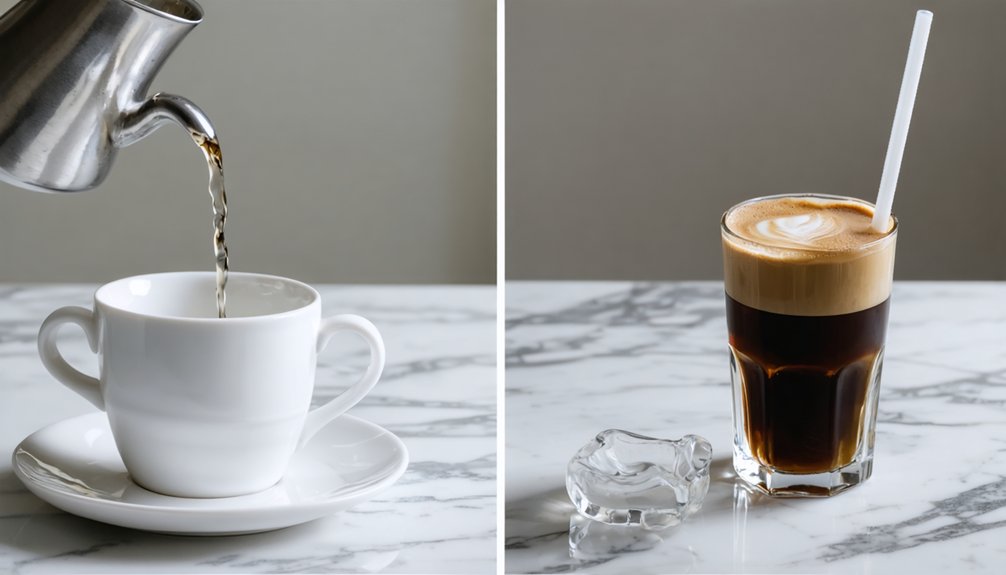
You can brighten teeth stained by coffee and tea by targeting both prevention and removal. Use a straw to minimize enamel contact, rinse with lukewarm water immediately after drinking, and brush with whitening toothpaste twice daily. At-home options like whitening strips, baking soda paste, and coconut oil pulling help lift surface discoloration. For stubborn stains, professional treatments offer deeper results. Each tip ahead builds a complete defense against persistent coffee and tea staining.
Key Takeaways
- Rinse your mouth with lukewarm water for 30 seconds immediately after drinking coffee or tea to neutralize staining polyphenols.
- Brush teeth with fluoride or whitening toothpaste using a soft-bristled toothbrush at a 45-degree angle twice daily.
- Use whitening strips or baking soda paste to target surface stains, limiting baking soda application to twice monthly.
- Drink coffee or tea through a straw positioned toward the back of the mouth to minimize enamel contact.
- Consult a dentist for persistent staining after four weeks, as professional LED bleaching safely penetrates deeply embedded enamel stains.
Why Coffee and Tea Stain Your Teeth
Coffee and tea contain chromogens—highly pigmented compounds that bond to tooth enamel—along with tannins, which are polyphenolic compounds that enhance this binding process.
These staining agents penetrate the microscopic pores within your enamel, depositing pigment that accumulates over time. Coffee’s acidity temporarily softens enamel, making it more vulnerable to chromogen adhesion, while tea’s higher tannin concentration accelerates binding efficiency.
Staining agents infiltrate enamel’s microscopic pores daily—coffee’s acidity and tea’s tannins accelerating pigment accumulation with every sip.
Your enamel’s porous surface acts as an unintended receptor for these compounds, meaning repeated daily exposure compounds the discoloration progressively.
Without intervention, these staining agents embed deeper into enamel’s structure, making removal increasingly difficult.
Understanding this mechanism gives you the foundation to implement targeted strategies that disrupt the staining process before permanent discoloration becomes your reality.
Drink Coffee and Tea Without Staining Your Teeth
You don’t have to give up your daily coffee or tea to keep your teeth white—you just need to adjust how you consume it.
Drinking through a straw minimizes direct contact between staining compounds and your enamel, while rinsing your mouth with lukewarm water immediately after neutralizes residual polyphenols before they bind to tooth surfaces.
Additionally, limiting your sipping duration to 20–30 minutes per cup reduces prolonged enamel exposure to chromogens and tannins.
Use A Straw
While coffee and tea are notorious for staining teeth, drinking them through a straw considerably reduces direct contact between pigment-rich liquids and your enamel. The straw benefits extend beyond convenience — you’re actively redirecting polyphenols and tannins away from tooth surfaces, minimizing chromogen adhesion.
When selecting straw types, consider your options carefully. Metal and glass straws offer durable, reusable solutions, while biodegradable paper straws serve as eco-conscious alternatives. Flexible silicone straws provide comfort during hot beverage consumption.
Position the straw toward the back of your mouth to maximize bypass of anterior teeth. This technique won’t eliminate staining entirely, but combined with rinsing immediately afterward with lukewarm water, you’ll substantially reduce pigment accumulation and maintain greater control over your enamel’s appearance.
Rinse Immediately After
Pairing straw use with an immediate rinse amplifies your defense against staining considerably. After finishing your coffee or tea, rinse your mouth with lukewarm water within minutes. Cold water can cause thermal sensitivity, while hot water may loosen enamel‘s protective layer, so temperature selection matters. This rinse technique mechanically displaces polyphenols and tannins before they bond chemically to enamel surfaces.
For enhanced staining prevention, swish the water actively for 30 seconds, directing it across all tooth surfaces.
Don’t brush immediately after rinsing—acidic beverages temporarily soften enamel, making abrasive brushing counterproductive. Wait at least 30 minutes before brushing.
This controlled sequence—drinking, rinsing, waiting, then brushing—systematically disrupts the staining cycle, giving you precise command over discoloration before it establishes itself permanently.
Limit Sipping Duration
Prolonged sipping exposes your teeth to repeated acid and tannin contact, accelerating enamel staining beyond what a single gulp would cause.
Controlling your sipping duration is a straightforward stain prevention strategy that limits cumulative exposure time.
Restrict each coffee or tea session using these benchmarks:
- Cap each drinking session at 20–30 minutes maximum.
- Avoid holding liquid in your mouth before swallowing.
- Finish your cup in one sitting rather than reheating and extending contact.
Each additional minute of sipping duration compounds tannin adhesion to enamel.
You’re not eliminating coffee or tea — you’re managing exposure strategically. Treat your beverage like a timed task: begin, consume efficiently, finish.
This disciplined approach preserves enamel clarity without requiring you to sacrifice your daily habit entirely.
Brush Smarter to Prevent Coffee and Tea Stains
Brushing smarter starts with the right tools and technique. Use a soft-bristled or electric toothbrush held at a 45-degree angle to your gumline. This positioning maximizes plaque removal while supporting enamel protection.
Apply gentle back-and-forth strokes across all tooth surfaces, including your tongue, for two full minutes twice daily.
Brush within 30 minutes after consuming coffee or tea to prevent chromogens from bonding to enamel. Precise brushing techniques paired with fluoride or whitening toothpaste containing hydrogen peroxide or baking soda actively polish surface stains.
Avoid aggressive scrubbing, which erodes enamel and accelerates staining vulnerability. Consistent, methodical brushing gives you direct control over stain accumulation before it becomes a deeper cosmetic issue.
At-Home Products That Remove Coffee and Tea Stains
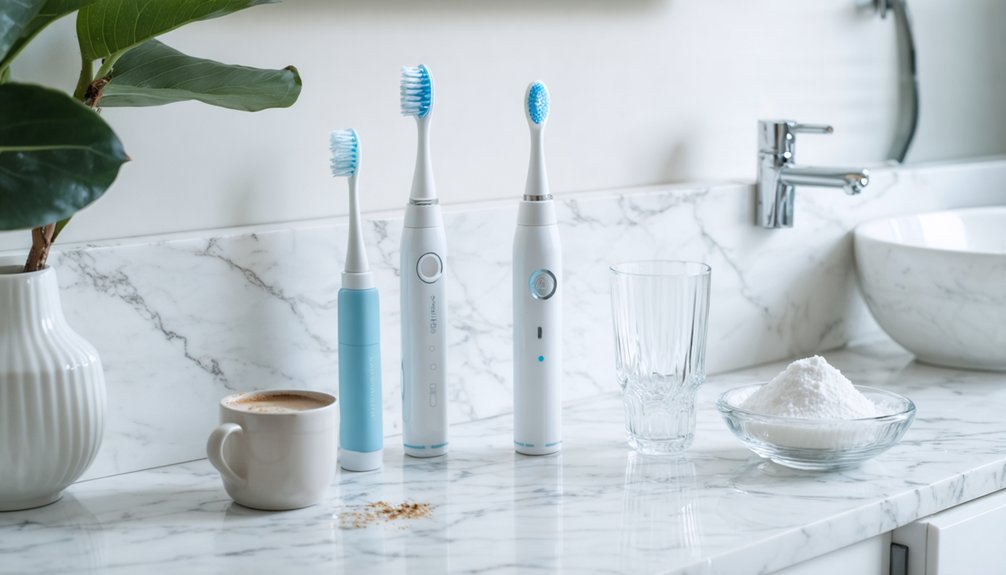
When brushing alone isn’t enough, at-home whitening products give you targeted options for removing coffee and tea stains between dental visits.
At-home whitening products target stubborn coffee and tea stains when regular brushing falls short between dental visits.
Choose products strategically based on stain severity and enamel sensitivity.
Three effective options to incorporate into your routine:
- Whitening strips — Apply directly to enamel; hydrogen peroxide penetrates surface stains within days of consistent use.
- Baking soda paste — Mix with water and brush gently; use no more than twice monthly to avoid enamel erosion.
- Whitening mouthwash — Rinse daily to dissolve pigment buildup from coffee and tea polyphenols.
Consult your dentist before selecting any product, particularly if you experience sensitivity, to guarantee you’re using the appropriate concentration for your enamel condition.
Natural Remedies to Brighten Stained Teeth
Several natural remedies can brighten coffee- and tea-stained teeth without relying on commercial whitening products.
For natural whitening, mix baking soda with hydrogen peroxide to create a mild abrasive paste, applying it several times monthly to reduce surface stains effectively.
Coconut oil pulling, practiced by swishing a tablespoon of oil for 10–15 minutes, helps dislodge staining compounds from enamel.
You can also mash fresh strawberries and brush with the pulp, as their natural fibers physically scrub discoloration away.
If using diluted lemon or orange juice, limit application to 30 seconds maximum, then rinse immediately to prevent acid erosion.
Additionally, rinsing with diluted apple cider vinegar before brushing targets persistent stains, though moderation is essential to protect enamel integrity.
Diet Habits That Prevent Coffee and Tea Staining

When you drink coffee or tea through a straw, you minimize direct contact between staining polyphenols and your enamel.
Adding milk to your beverage is another effective strategy, as milk’s fat content binds to polyphenols before they reach your teeth.
Together, these two habits greatly reduce staining without requiring you to eliminate your favorite beverages entirely.
Straw Drinking Minimizes Staining
Drinking coffee or tea through a straw is one of the simplest yet most effective habits you can adopt to minimize tooth staining. Straw benefits include redirecting liquid past your enamel, considerably reducing polyphenol contact.
Mastering sipping techniques maximizes this protection:
- Position the straw behind your front teeth to bypass enamel surfaces entirely.
- Avoid swirling liquid around your mouth after sipping.
- Use reusable metal or silicone straws for consistent, sustainable practice.
You’re not eliminating exposure entirely, but you’re dramatically reducing it.
Combine straw use with rinsing your mouth with lukewarm water immediately after finishing your drink. This dual approach removes residual pigments before they bind to enamel, keeping staining minimal and your whitening efforts effective.
Milk Binds Staining Polyphenols
Adding milk to your coffee or tea does more than adjust flavor—it actively reduces the staining potential of polyphenols before they reach your enamel.
Milk polyphenol binding occurs when casein proteins in milk attach to tannins and chromogens, neutralizing their adhesive properties. This interaction prevents these compounds from bonding to enamel surfaces during consumption.
Fat content impact matters here: whole milk outperforms skim milk because higher fat concentrations bind polyphenols more effectively. You’re fundamentally intercepting staining agents before they contact your teeth.
Plant-based alternatives like oat or almond milk offer minimal binding capability due to their protein and fat composition.
For maximum protection, add milk directly to your beverage rather than consuming it separately, ensuring thorough molecular interaction before you take your first sip.
When to See a Dentist for Stubborn Stains
Despite your best efforts with at-home whitening products and good oral hygiene, some stains simply won’t respond to DIY treatments. Stubborn stains embedded deep within enamel require professional intervention.
Schedule a dental consultation when you notice:
- Discoloration persisting after consistent use of whitening strips or toothpaste for four weeks
- Uneven staining or yellowing that at-home kits can’t address uniformly
- Sensitivity developing during at-home treatments, signaling enamel vulnerability
Your dentist delivers targeted solutions, including LED-assisted in-office bleaching that penetrates enamel without acid damage.
Professional cleanings also remove calcified surface deposits beyond any brush’s reach. Combining twice-yearly appointments with dentist-approved at-home maintenance gives you precise control over long-term results.
Don’t wait—early professional intervention prevents stains from permanently setting into enamel structure.
Frequently Asked Questions
Can Teeth Whitening Treatments Damage Existing Dental Crowns or Veneers?
Whitening treatments won’t alter your crowns or veneers, as they don’t respond to bleaching agents. You’ll need separate crown maintenance and veneer care strategies—consult your dentist to match restorations with your natural teeth’s whitened shade.
How Long Does Professional Teeth Whitening Typically Last Before Retreatment Is Needed?
Professional whitening longevity typically lasts 6–12 months before you’ll need retreatment. You can extend results with whitening maintenance tips: brush twice daily, limit coffee exposure, and schedule biannual professional cleanings to sustain peak brightness effectively.
Are Teeth Whitening Products Safe to Use During Pregnancy or Breastfeeding?
You should avoid teeth whitening products during pregnancy or breastfeeding due to unverified whitening ingredients safety data. As a pregnancy precaution, consult your dentist before use, as hydrogen peroxide absorption risks to the fetus remain insufficiently studied.
Does Teeth Sensitivity Increase Permanently After Repeated Whitening Treatments?
Repeated whitening treatments don’t permanently increase sensitivity if you manage whitening frequency carefully. You’ll minimize risks through sensitivity management strategies like spacing sessions, using desensitizing toothpaste, and consulting your dentist to protect enamel integrity effectively.
Can Children or Teenagers Safely Use Whitening Products for Stained Teeth?
You shouldn’t let children or teenagers use whitening products without consulting a dentist first. Whitening age guidelines exist due to dental health considerations, as developing enamel and roots remain vulnerable to sensitivity and potential long-term damage.
References
- https://www.barniescoffee.com/blogs/blog/a-coffee-lovers-guide-to-whiter-teeth
- https://www.monarchdentalkc.com/surprisingly-effective-teeth-whitening-hacks/
- https://www.gentledentalcaregroup.co.uk/blog/how-to-stop-tea-and-coffee-staining-teeth
- https://mariettaroswelldentist.com/blog/5-tips-to-stop-your-favorite-drinks-from-staining-your-teeth
- https://www.drdaynes.com/blog/how-coffee-and-tea-affect-teeth-whitening-and-what-you-can-do-about-it/
- https://www.arbordentalsj.com/teeth-whitening-tips-for-coffee-lovers/
- https://www.eldersburgfamilydental.com/best-teeth-whitening-tips-for-coffee-lovers/
- https://thesugarhousedentist.com/natural-ways-to-reverse-teeth-stains/
- https://www.norcofamilydental.com/blog/coffee-lover-tips-whiter-teeth-caffeine-addiction/46159