Turmeric can freshen your gums and reduce plaque, but it won’t bleach your teeth the way you might hope. Its antibacterial and anti-inflammatory properties support healthier gums, and a 2012 study confirmed curcumin can reduce gingivitis. However, the American Dental Association finds no scientific evidence supporting turmeric as a true whitening agent. Any brightness you notice likely comes from reduced plaque, not enamel lightening. Keep exploring to uncover what turmeric can and can’t realistically do for your smile.
Key Takeaways
- Turmeric has antibacterial and anti-inflammatory properties that support gum health and reduce plaque, potentially contributing to a brighter smile.
- No clinical studies confirm turmeric as a direct whitening agent; perceived brightness likely results from reduced plaque buildup.
- To use turmeric safely, brush with it, let it sit five minutes, then follow with fluoride toothpaste to remove residue.
- Overuse risks yellow pigment buildup, causing staining on teeth, gums, toothbrushes, clothing, and permanent bathroom surface discoloration.
- Turmeric should supplement, not replace, professional dental care, as hydrogen peroxide treatments deliver proven, faster whitening results.
Can Turmeric Actually Whiten Your Teeth?
Turmeric benefits your oral health differently than you might expect. Its antibacterial and anti-inflammatory properties reduce gum disease and plaque buildup, contributing to an overall healthier mouth.
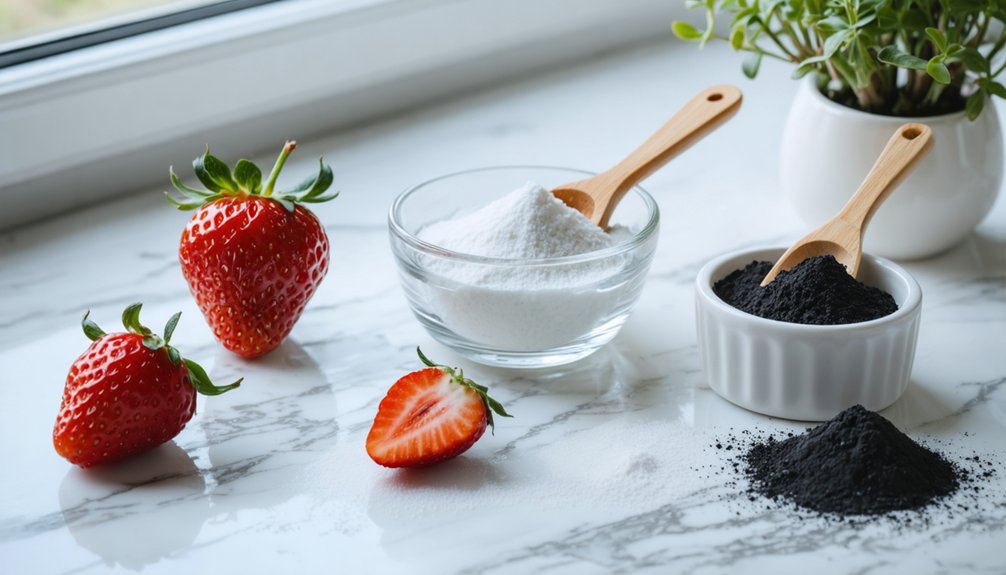
Among natural alternatives, turmeric compares to baking soda or activated charcoal in potential, but it works slower and lacks true whitening agents.
If you want genuine color change, professional treatments with hydrogen peroxide formulations remain the clinically proven solution.
What Science Says About Turmeric for Teeth and Gums
While turmeric shows genuine promise for gum health, the science doesn’t support its reputation as a whitening agent. You deserve an honest breakdown before committing to any oral hygiene routine.
Turmeric may benefit your gums, but the whitening hype isn’t backed by science. Know the difference.
Here’s what research actually confirms about turmeric benefits:
- A 2012 study found curcumin reduces gingivitis as effectively as standard mouthwash.
- A 2013 study linked turmeric to dental pain relief and potential oral cancer prevention.
- Turmeric-based rinses demonstrably reduce plaque buildup and bacteria.
- No clinical studies confirm turmeric lifts stains or alters natural enamel color.
The American Dental Association finds no scientific evidence supporting whitening claims. Any brightness you notice likely reflects reduced plaque, not actual enamel lightening.
Understanding this distinction helps you make smarter, evidence-driven decisions about your dental care.
Turmeric’s Proven Oral Benefits vs. Its Whitening Limits
Separating what turmeric actually delivers from what it can’t gives you a clearer picture of how to use it wisely.
Turmeric benefits your oral hygiene through its anti-inflammatory and antibacterial properties. Studies confirm curcumin reduces gingivitis, controls plaque, and fights bacteria comparably to standard mouthwashes. These are measurable, evidence-backed gains worth acknowledging.
However, whitening is a different story. No clinical studies confirm turmeric lifts stains or alters enamel color. The American Dental Association finds no scientific support for these claims. Any brightness you notice likely reflects plaque reduction, not actual enamel lightening.
Use turmeric strategically for gum health and bacterial control, but don’t replace proven whitening treatments with it.
Knowing its real limits lets you make smarter, more effective choices for your smile.
How to Use Turmeric on Your Teeth Safely
If you decide to try turmeric on your teeth, applying it correctly minimizes staining risks and keeps your oral routine intact. These turmeric applications work best when practiced carefully and consistently within your existing oral hygiene habits.
- Dip a wet toothbrush into turmeric powder and brush normally, letting it sit five minutes before rinsing thoroughly.
- Mix turmeric with coconut oil into a paste, massage for one minute, then rinse completely.
- Use a lukewarm water-and-turmeric rinse to help control plaque buildup.
- Always follow every turmeric application with fluoride toothpaste to remove pigment residue.
Use turmeric moderately—it won’t replace brushing, flossing, or professional care. Overuse risks yellow pigment buildup, so maintain control over frequency.
Turmeric’s Yellow Pigment Can Stain More Than You Expect
While turmeric may offer some oral health benefits, you shouldn’t overlook its intense yellow pigment, which can leave stubborn residue on your teeth if you use it too frequently.
That same curcumin compound responsible for its anti-inflammatory properties is a potent dye capable of staining not just your teeth, but also your toothbrush, sink, and towels.
To minimize pigment buildup, you’ll want to follow every turmeric application with a thorough rinse and brushing with a standard fluoride toothpaste.
Persistent Yellow Staining Risks
Turmeric’s vivid yellow pigment — curcumin — doesn’t just target your teeth; it can cling stubbornly to nearly any porous surface it contacts, including your gums, tongue, toothbrush, and even bathroom grout.
Repeated turmeric applications increase your yellow stains risk considerably. Stay in control by recognizing these four key staining hazards:
- Gums and tongue absorb curcumin quickly, producing temporary but noticeable discoloration.
- Toothbrushes retain pigment between bristles, transferring yellow stains during future brushing.
- Bathroom surfaces — sinks, grout, and countertops — stain permanently without immediate rinsing.
- Clothing and towels absorb curcumin instantly, often irreversibly.
Always follow turmeric applications with fluoride toothpaste, rinse surfaces immediately, and use a dedicated toothbrush to minimize unintended staining consequences.
Pigment Residue Concerns
Beyond the staining hazards already covered, curcumin’s residue can quietly accumulate in ways you mightn’t immediately notice. The deep yellow pigment doesn’t just settle on enamel—it seeps into grout lines around dental work, whitens composite fillings unevenly, and clings to gum tissue.
You’re fundamentally introducing a potent natural dye near delicate oral surfaces.
For effective pigment removal, always follow turmeric use with fluoride toothpaste, brushing thoroughly to lift residual deposits.
Staining prevention requires limiting application frequency and rinsing completely with lukewarm water afterward. If you wear crowns, veneers, or retainers, exercise extra caution—curcumin bonds differently to artificial materials.
Without consistent post-use hygiene, the very remedy you’re using for brightness could leave lasting discoloration you didn’t anticipate.
Turmeric vs. Professional Whitening: Which Actually Works?
When it comes to achieving genuinely whiter teeth, the gap between turmeric and professional whitening is significant. Understanding turmeric efficacy means confronting whitening myths directly.
Here’s what evidence actually supports:
- Professional kits use hydrogen peroxide formulations that remove deep-set stains effectively.
- Customized trays with professional-grade gel deliver visible results within two weeks.
- Turmeric reduces plaque and inflammation but lacks proven whitening agents.
- Clinical evidence consistently favors dentist-recommended treatments over DIY remedies.
You deserve accurate information before committing to any approach.
Turmeric offers legitimate oral health benefits, but it won’t replace professionally validated whitening methods.
If true color change is your goal, consult your dentist for tailored, clinically proven solutions.
What Oral Improvements Turmeric Can Realistically Deliver
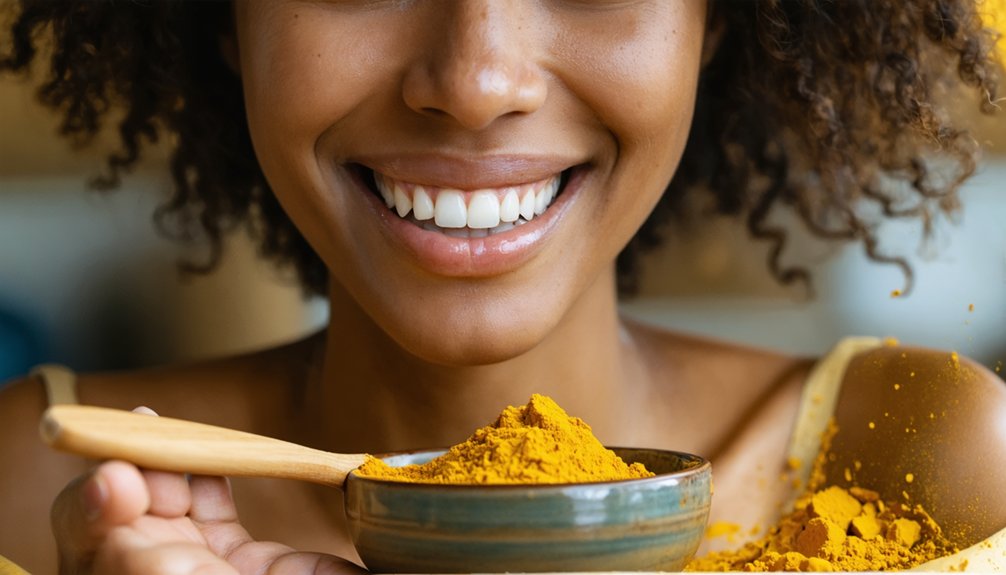
While professional whitening holds the clear advantage for color change, turmeric isn’t without value in your oral care routine. Its real turmeric benefits lie in gum health, not enamel color. Curcumin’s anti-inflammatory and antibacterial properties can reduce gum swelling, fight bacteria linked to periodontitis, and decrease plaque buildup.
A 2012 study confirmed curcumin’s effectiveness against gingivitis, rivaling standard mouthwashes. Among natural alternatives, turmeric also shows promise for freshening breath and potentially reducing oral inflammation associated with early-stage disease.
However, you shouldn’t expect cavity prevention, enamel strengthening, or permanent brightness. Use it as a supplementary tool, not a replacement for fluoride toothpaste, flossing, or professional cleanings.
Understanding what turmeric can and can’t do helps you make informed, realistic choices about your oral health.
When Turmeric for Teeth Isn’t Enough: See Your Dentist
Turmeric can support your gum health, but it can’t replace professional dental care when real problems arise. Prioritize dental consultations if you experience any of the following:
- Persistent stains — Turmeric aids stain prevention through plaque reduction, but deep-set discoloration requires hydrogen peroxide formulations only dentists provide.
- Gum disease progression — Inflammation or bleeding that won’t resolve needs clinical intervention, not spice remedies.
- Cavity development — Turmeric doesn’t strengthen enamel or prevent decay.
- Desired whitening results — Customized professional kits deliver proven outcomes within two weeks; turmeric cannot.
You’re in control of your oral health. Use turmeric as a supplemental tool, but let clinically proven treatments handle what natural remedies simply can’t.
Frequently Asked Questions
Can Children Safely Use Turmeric as Part of Their Oral Hygiene Routine?
You shouldn’t use turmeric in your child’s oral hygiene routine without consulting a dentist first. Turmeric dosage for children’s health isn’t established, and no clinical evidence supports its safe, effective use for kids.
Does Turmeric Interact Negatively With Common Dental Restorations Like Crowns or Veneers?
While turmeric won’t chemically damage your crowns or veneers, you should know its turmeric staining potential poses real risks. Dental restoration compatibility is compromised by regular use, as porous materials absorb pigment, leaving unwanted discoloration you can’t easily reverse.
How Does Turmeric Affect People With Existing Tooth Sensitivity Issues?
If you have tooth sensitivity, turmeric benefits your gum health, but it won’t address underlying sensitivity causes. You should consult your dentist before use, as turmeric lacks evidence supporting relief from tooth sensitivity discomfort.
Can Turmeric Be Combined With Other Natural Remedies for Enhanced Oral Benefits?
⚗ Like an ancient alchemist’s brew, you can combine turmeric benefits with natural remedies like coconut oil or baking soda. However, you’ll want to exercise caution, as scientific evidence remains limited and professional dental guidance is strongly recommended.
Is Organic Turmeric More Effective for Oral Care Than Standard Grocery Store Varieties?
No strong evidence supports a turmeric potency comparison favoring organic over standard varieties for oral care. While organic sourcing benefits may reduce pesticide exposure, you won’t find clinically proven differences in antibacterial or anti-inflammatory effectiveness between both options.
References
- https://www.rowleyfamilydentistry.com/blog/natural-radiance-can-i-use-turmeric-to-whiten-my-teeth/
- https://www.healthline.com/health/turmeric-teeth-whitening
- https://danforthdentistry.com/turmeric-for-teeth/
- https://www.wdentalfresno.com/blog/2025/06/14/turmeric-for-teeth-whitening/
- https://www.wacofamilydental.com/blog/2022/07/04/can-i-use-turmeric-for-teeth-whitening-according-to-my-dentist-in-waco/
- https://www.smileyfamilydentistry.com/blog/can-turmeric-be-used-as-teeth-whitening/
- https://www.colgate.com/en-us/oral-health/teeth-whitening/turmeric-for-teeth-will-a-spice-whiten-your-smile