To maintain white teeth after whitening, you’ll need to avoid staining foods and drinks for 48 hours, rinse your mouth after consuming pigment-rich items, and use a soft-bristled toothbrush with gentle flossing techniques. Switch to desensitizing toothpaste if sensitivity develops, choose ADA-approved whitening products, and eliminate tobacco immediately. Schedule professional cleanings at least twice yearly. Each of these strategies works together in ways that’ll greatly extend your results.
Key Takeaways
- Avoid coffee, tea, red wine, and dark berries for 48 hours post-whitening to prevent pigments from staining freshly treated enamel.
- Use a soft-bristled toothbrush with gentle circular motions to protect enamel and reduce gum irritation after whitening treatment.
- Switch to desensitizing toothpaste containing potassium nitrate or stannous fluoride to manage post-whitening sensitivity effectively.
- Quit tobacco immediately, as nicotine and tar stain enamel faster than dietary factors, quickly reversing whitening results.
- Schedule professional dental cleanings at least twice yearly to remove surface stains and tartar beyond at-home care reach.
Avoid Staining Foods and Drinks for 48 Hours After Whitening
After teeth whitening, your enamel remains porous and highly susceptible to pigment absorption for the first 48 hours. Following strict post treatment guidelines during this window is critical for whitening maintenance and long-term enamel protection.
Eliminate coffee, tea, red wine, berries, and dark sauces immediately. These dietary choices introduce pigments that bond directly to vulnerable enamel surfaces.
Prioritize light proteins like chicken, turkey, white fish, and tofu as safe snacks that won’t compromise your results. Incorporate plain rice, pasta, and white dairy products to support oral health without risking discoloration.
For hydration tips, drink water consistently throughout the day. Water rinses residual pigments, maintains enamel integrity, and reduces reabsorption risk.
Control your diet precisely during this phase—your results depend on it.
Rinse Your Mouth After Every Staining Food or Drink
After consuming staining foods or drinks, rinse your mouth with water immediately to flush away pigments before they bond to your enamel.
Use a straw when drinking coffee, tea, or red wine to minimize direct contact with your teeth.
Replace high-acid beverages with low-acid alternatives like herbal teas or cold brew coffee to reduce both staining risk and enamel erosion.
Rinse With Water Immediately
Rinsing your mouth with water immediately after consuming staining foods or acidic drinks is one of the simplest yet most effective habits you can adopt to protect your whitened teeth.
Rinse frequency matters — doing it within two minutes of exposure considerably reduces pigment absorption and acid erosion. Use lukewarm water, as water temperature affects enamel sensitivity; cold or hot water can aggravate post-treatment discomfort and temporarily weaken enamel structure.
Swish vigorously for 30 seconds to dislodge surface particles before they settle. Don’t substitute rinsing with brushing immediately after acidic foods, since softened enamel requires time to reharden.
Consistent rinsing between meals builds a reliable defense layer, keeping staining compounds from bonding to your enamel and extending the longevity of your whitening results.
Choose Low-Acid Drink Alternatives
Switching to low-acid drink alternatives is one of the most proactive steps you can take to preserve your whitening results long-term. Acidic beverages erode enamel, making teeth more porous and vulnerable to discoloration.
By choosing herbal tea instead of traditional black tea, you reduce both acidity and pigment exposure simultaneously. Cold brew coffee offers another strategic option, as its lower acidity compared to hot-brewed coffee minimizes enamel degradation while still delivering caffeine.
Avoid sodas and citrus-based drinks entirely during the critical post-treatment window. These substitutions aren’t passive suggestions—they’re deliberate choices that directly impact how long your results last.
Controlling what enters your mouth controls the outcome. Make these swaps a permanent part of your routine, not a temporary inconvenience.
Minimize Direct Teeth Contact
Every time you consume a staining food or drink, residual pigments begin bonding to your enamel within minutes—so rinsing your mouth with water immediately afterward is non-negotiable. This simple habit disrupts the bonding process before pigments penetrate deeper enamel layers, making it your first line of teeth protection.
For beverages like coffee, tea, or red wine, use a straw to minimize direct teeth contact entirely. Straws redirect liquids past your front teeth, considerably reducing stain prevention challenges before they start.
Don’t underestimate this mechanical approach—it’s one of the most effective, low-effort strategies available.
After consuming acidic drinks, wait 30 minutes before brushing. Brushing too soon abrades softened enamel, accelerating discoloration rather than preventing it. Control your timing, and you control your results.
Use a Soft Toothbrush and Floss Without Damaging Gums
Switching to a soft-bristled toothbrush protects your enamel from abrasion while reducing gum irritation during the post-whitening healing phase.
When you floss, use a gentle seesaw motion rather than snapping the floss against your gums to prevent tissue damage and bleeding.
Apply circular motions as you brush to thoroughly clean all tooth and gum surfaces without the excessive pressure that accelerates enamel wear.
Soft Brush Prevents Damage
Using a soft-bristled toothbrush is one of the simplest yet most effective ways to protect your enamel and gums after whitening. The soft bristle benefits extend beyond comfort—they prevent micro-abrasions that accelerate staining and sensitivity.
Apply these gentle brushing techniques consistently:
- Brush twice daily for two minutes using circular motions with minimal pressure.
- Hold the brush at a 45-degree angle targeting the gum line without scrubbing aggressively.
- Replace your toothbrush every three months or when bristles fray and lose effectiveness.
- Avoid hard-bristled brushes entirely during the initial two-week post-treatment healing phase.
Controlling your brushing method directly determines how long your whitening results last and how well your enamel stays protected.
Gentle Flossing Protects Gums
Flossing once daily removes plaque and debris from areas your toothbrush can’t reach, but the technique matters as much as the habit. Use a gentle seesaw motion to guide the floss between teeth, then curve it against each tooth in a C-shape and slide it just below the gumline.
Avoid snapping the floss against your gums, as this causes micro-tears that increase sensitivity and bleeding—especially during your post-whitening healing phase.
The flossing benefits extend beyond hygiene; consistent gentle techniques prevent gum inflammation that can compromise your whitening results over time. Inflamed gums recede, exposing unwhitened tooth roots and creating visible color contrast.
If standard floss feels too harsh, switch to floss picks or water flossers to maintain precision without sacrificing gum integrity.
Circular Motions Clean Effectively
Brushing with a soft-bristled toothbrush in gentle circular motions cleans all tooth and gum surfaces more effectively than aggressive back-and-forth scrubbing, which wears down enamel and irritates gum tissue.
Circular brushing maximizes effective cleaning while protecting your post-whitening results.
Follow these techniques precisely:
- Position the brush at a 45-degree angle toward the gumline before initiating circular strokes.
- Apply light, controlled pressure—never force the bristles against sensitive enamel.
- Clean each quadrant for 30 seconds, completing a full two-minute session.
- Replace your toothbrush every three months or when bristles show visible splaying.
Consistent circular brushing removes plaque buildup without compromising enamel integrity, ensuring your whitening investment delivers measurable, long-lasting results.
Use Desensitizing Products to Calm Post-Treatment Pain
Teeth whitening can leave your enamel temporarily sensitive, but two targeted products can manage that discomfort effectively.
First, switch to a desensitizing toothpaste for at least two weeks post-treatment. These formulas contain potassium nitrate or stannous fluoride, which block exposed dentinal tubules and deliver consistent sensitivity relief with each brush.
Second, apply desensitizing gels directly to your teeth after brushing. These gels penetrate deeper into the enamel surface, accelerating mineral recovery and reducing nerve reactivity faster than toothpaste alone.
Both products must carry the ADA seal of approval to guarantee clinical-grade safety.
If sensitivity persists beyond two weeks, contact your dentist immediately to request a professional desensitizing treatment before the condition progresses further.
Pick the Right Whitening Products to Maintain Brightness
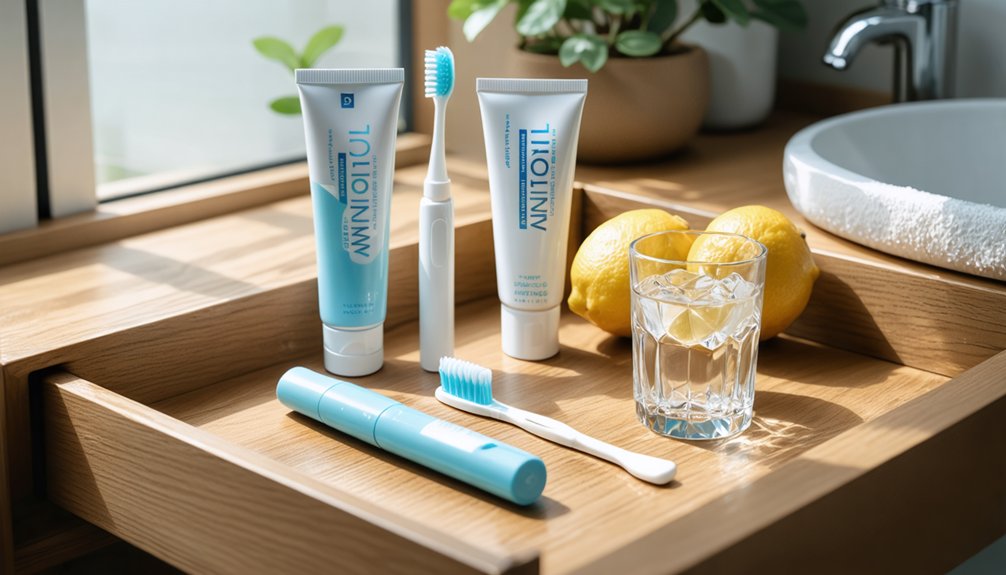
Once sensitivity subsides, 2 key product choices will determine how well you maintain your whitening results. Selecting correctly prevents over-abrasion while sustaining brightness long-term.
- Whitening toothpaste — Use it once or twice weekly, not daily, to avoid enamel damage.
- Whitening mouthwash — Choose a clear, non-dyed formula to support gum health without reintroducing stains.
- ADA-sealed products — Verify every toothpaste and mouthwash carries the ADA seal before purchasing.
- Avoid aggressive formulas — Skip products claiming overnight results; they’ll compromise healing enamel.
You’re in control of your results by rotating these products strategically. Daily whitening toothpaste use accelerates enamel wear, so discipline your routine.
Pair your whitening mouthwash with consistent brushing to lock in lasting brightness.
Cut Out Tobacco to Protect Your Whitening Results
Product choices protect your enamel, but no whitening routine survives tobacco use. Cigarettes, vapes, chewing tobacco, and e-cigarettes deposit nicotine and tar directly onto enamel, reversing whitening results faster than almost any dietary factor.
You’re not just staining your teeth — you’re actively degrading your oral health by increasing plaque buildup, gum recession, and enamel erosion.
Quitting entirely is the only effective strategy. If you’re moving away from smoking, explore tobacco alternatives like nicotine patches or gum, which deliver nicotine without direct oral contact. These options reduce staining risk while supporting cessation goals.
Understand that partial tobacco use still compromises your results. Consistency matters — every use undoes progress.
Treating tobacco elimination as non-negotiable gives you the control necessary to maintain long-term whitening outcomes.
Schedule Regular Cleanings to Make Your Results Last
Scheduling at least two professional cleanings per year keeps whitening results intact far longer than at-home care alone. Consistent dental maintenance removes surface stains and tartar that daily brushing can’t eliminate, protecting your investment.
Two professional cleanings per year preserve whitening results longer than at-home care ever could alone.
Prioritize these four steps to optimize your cleaning frequency and outcomes:
- Schedule a follow-up visit within three to four weeks post-treatment for a whitening assessment.
- Request remineralizing gel applications during routine visits to restore lost enamel minerals.
- Ask for desensitizing treatments if sensitivity persists beyond two weeks post-whitening.
- Confirm your dentist uses ADA-approved products during professional cleanings to avoid enamel compromise.
Staying proactive with dental maintenance gives you direct control over how long your results last.
Frequently Asked Questions
How Long Do Teeth Whitening Results Typically Last Before Fading Noticeably?
Your results typically last six to twelve months before fading noticeably. You’ll extend longevity by managing whitening frequency and prioritizing stain prevention through dietary choices, consistent oral hygiene, and regular professional cleanings to maintain ideal brightness.
Can Teeth Whitening Treatments Damage Existing Dental Crowns or Veneers?
“Better safe than sorry”—whitening won’t damage crowns or veneers, but it won’t lighten them either. You’ll notice crown sensitivity and mismatched shades. Protect veneer longevity by consulting your dentist before treatment to guarantee color consistency.
Is Professional Whitening Safe for Individuals With Gum Disease or Cavities?
You shouldn’t undergo professional whitening with untreated gum disease or cavities. Address these conditions first to guarantee whitening safety and ideal gum health. Your dentist must clear you before any whitening procedure begins.
How Does Saliva Production Naturally Help Protect Teeth After Whitening?
Your saliva’s natural composition actively shields your enamel protection by neutralizing acids, remineralizing softened surfaces, and flushing away pigment-causing particles—giving you a biological defense mechanism that continuously works to preserve your whitening results.
Are There Genetic Factors That Affect How Well Whitening Treatments Work?
Yes, your genetics directly influence whitening efficacy. Your genetic predisposition determines natural enamel thickness and dentin shade—factors you can’t change, yet you can maximize results by following consistent post-whitening care protocols diligently.
References
- https://www.fremontdentalgroup.com/tips-to-keep-teeth-white-after-whitening/
- https://www.smilegrovecity.com/articles/how-to-keep-your-teeth-white-after-professional-teeth-whitening
- https://westbelldentalcare.com/teeth-whitening-aftercare-how-to-maintain-white-teeth-after-treatment/
- https://favdentistry.com/whitenning-polishing/care
- https://fuquayvarinadentists.com/blog/tips-after-teeth-whitening
- https://salisburydentist.co.uk/how-to-maintain-white-teeth-after-whitening-treatments-a-research-based-guide/
- https://www.youtube.com/watch?v=pxBK4NDS0-k
- https://www.midtowndentistnewyork.com/blog/tips-teeth-white-teeth-whitening/36311
- https://thepracticetn.com/blog/how-to-maintain-teeth-after-whitening/
- https://dorfnerdentalstudio.com/what-to-do-after-teeth-whitening/