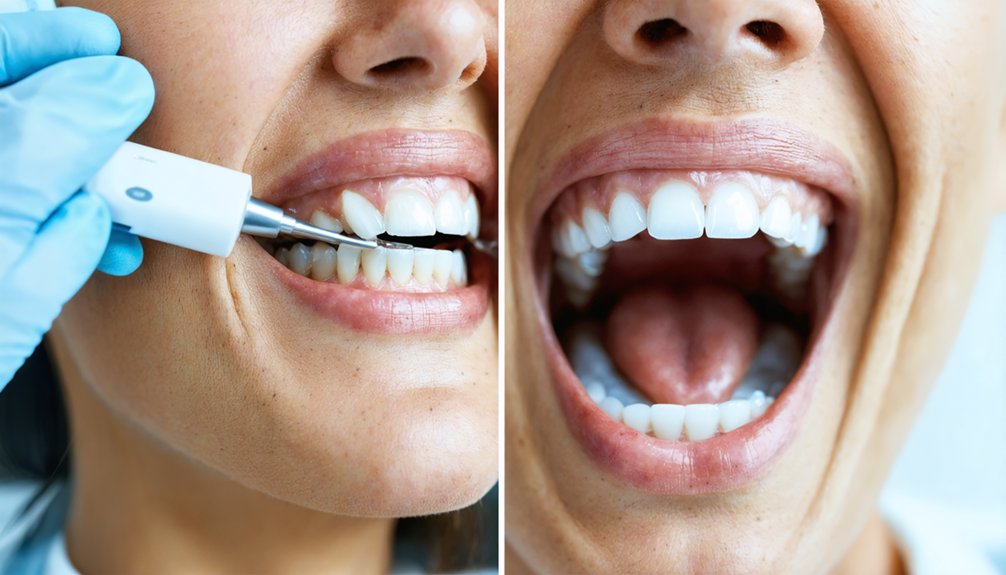
DIY teeth whitening methods pose serious risks to your oral health, including irreversible enamel erosion from abrasive ingredients like charcoal and baking soda. You’re exposing yourself to chemical burns from unregulated hydrogen peroxide concentrations that can reach dangerous levels up to 53%. These products frequently cause severe tooth sensitivity affecting 75% of users, create uneven results due to inconsistent application, and substantially increase your cavity risk through enamel demineralization. Understanding these specific complications and their long-term consequences will help you make informed decisions about whitening treatments.
Key Takeaways
- Abrasive ingredients like silica and charcoal irreversibly erode enamel, exposing yellow dentin and increasing vulnerability to decay and sensitivity.
- Hydrogen peroxide concentrations exceeding 12% can cause severe chemical burns and gum irritation, with some illegal kits containing up to 53%.
- Approximately 75% of DIY whitening users experience tooth sensitivity as bleaching agents penetrate enamel and expose nerve-rich dentinal tubules.
- Inconsistent application and non-responsive dental restorations create uneven, blotchy results that worsen with repeated use of over-the-counter products.
- Microscopic scratches and demineralization from DIY methods create pathways for bacterial invasion, significantly increasing tooth decay risk.
Enamel Erosion From Abrasive Ingredients
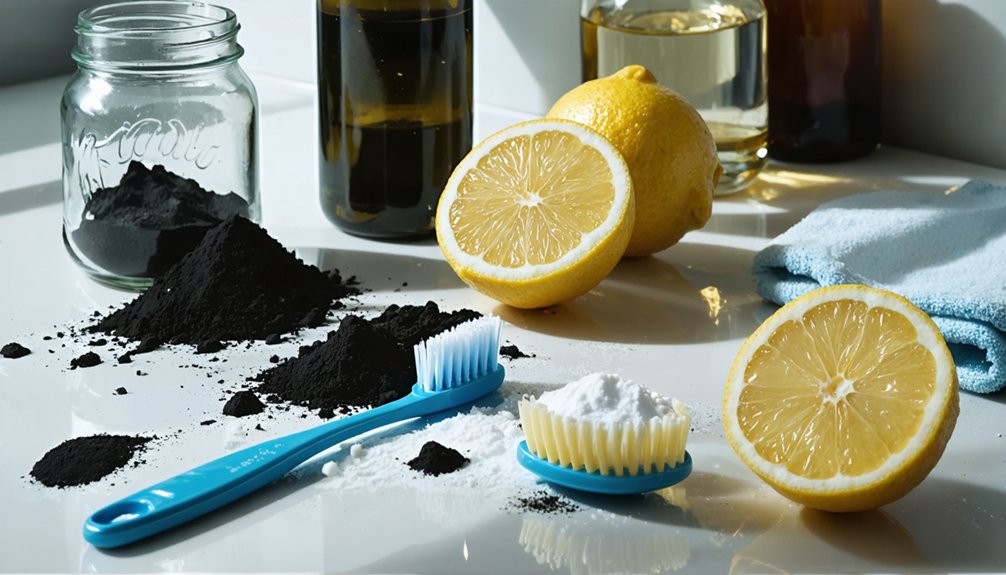
While DIY teeth whitening methods promise aesthetic improvements, abrasive ingredients in these products irreversibly erode enamel through mechanical wear. Harsh abrasives like silica and chalk physically scrub away your tooth’s protective outer layer, exposing yellow dentin beneath.
Research demonstrates that whitening toothpastes containing silica caused 3.68±1.06 μm enamel wear after just seven days of erosive-abrasive cycling. Since enamel can’t regenerate, this damage becomes permanent, creating enhanced enamel vulnerability to decay and discoloration.
The abrasive particles that remove surface stains simultaneously thin your enamel, revealing underlying dentin with nerve endings and causing increased tooth sensitivity. Even natural DIY options like baking soda contribute to this progressive wear, potentially requiring corrective procedures such as bonding or veneers to restore damaged tooth structure.
Gum Irritation and Chemical Burns
Beyond enamel damage, DIY whitening products pose severe risks to your oral soft tissues through chemical burns and gum irritation. Hydrogen peroxide concentrations above 12% cause immediate gum damage, while illegal kits contain up to 53%—exceeding the UK’s 6% legal limit for non-professionals. Even one or two drops can result in permanent tissue damage to your lips and gums.
You’ll recognize severe chemical burns through white discoloration below your teeth, indicating excessive product strength or overuse. These injuries aren’t merely uncomfortable—they’re often irreversible. Professional supervision prevents contact between high-concentration peroxide and vulnerable tissues through proper protective barriers.
Over-the-counter products lack adequate application controls, making accidental soft tissue contact highly probable. Without professional guidance, you risk chemical burns requiring medical intervention.
Heightened Tooth Sensitivity
Tooth sensitivity affects approximately 75% of individuals using DIY whitening products, manifesting as sharp, sudden pain when consuming hot, cold, sweet, or acidic substances. Bleaching agents penetrate enamel and cause demineralization, exposing dentinal tubules that connect directly to nerve-rich pulp. This structural compromise triggers prolonged pulpal irritation and loss of tooth integrity.
Your sensitivity risk escalates when:
- You apply high-concentration peroxide formulations without professional assessment of existing enamel thickness
- You extend treatment duration beyond recommended protocols, preventing adequate enamel remineralization
- You use products lacking desensitizing compounds found in clinically supervised systems
Sensitivity typically peaks within 24 hours and resolves within three days. However, persistent discomfort beyond one week indicates significant enamel damage requiring immediate dental evaluation. Without professional monitoring, you can’t adjust treatment parameters to prevent irreversible structural deterioration.
Uneven and Blotchy Results
DIY whitening methods frequently produce uneven and blotchy results due to inconsistent application techniques that leave some tooth surfaces under-treated while others receive excessive exposure. Your existing dental restorations—including fillings, crowns, and veneers—will not respond to whitening agents, creating visible color mismatches that worsen the overall appearance of your smile.
Repeated use of over-the-counter products compounds these issues, often generating the “technicolor effect” characterized by chalky white patches interspersed with darker areas that reflect underlying variations in enamel structure and stain penetration.
Inconsistent Product Application Issues
While professional whitening treatments utilize custom-fitted trays to guarantee uniform application, over-the-counter DIY kits fail to account for individual tooth morphology, resulting in inconsistent coverage and blotchy outcomes. Improper tray fit creates gaps where whitening agents can’t reach, while improper gel application leads to spillover and uneven peroxide distribution across tooth surfaces.
Generic strips and trays ignore your unique dental arch configuration, causing several critical problems:
- Poorly adhered products shift during treatment, creating patchy whitening patterns
- Non-custom applicators allow gel pooling in some areas while leaving others untreated
- Ill-fitting designs produce variable contact times across different teeth
These application inconsistencies result in unpredictable shade changes, with evidence showing ΔE values varying substantially between adjacent teeth. Without professional customization, you can’t achieve the controlled, uniform results necessary for excellent aesthetic outcomes.
Restorations Don’t Change Color
Unlike natural enamel, dental restorations—including composite fillings, porcelain crowns, ceramic veneers, and bonding materials—don’t respond to peroxide-based whitening agents, creating a critical limitation that DIY treatments consistently fail to address. While your natural teeth lighten progressively, restorations retain their original shade, producing an uneven tooth shade across your smile.
This discrepancy becomes increasingly pronounced as treatment continues, with restorations stand out conspicuously against brightened surrounding teeth. The result manifests as a blotchy, patchy appearance particularly visible in photographs and natural lighting.
Pre-treatment professional evaluation identifies existing dental work, allowing realistic outcome expectations and strategic planning. Without this assessment, you’ll likely face mismatched results requiring costly restoration replacement to achieve uniform coloration.
DIY kits can’t overcome material science limitations that prevent bleaching gel penetration into porcelain or composite structures.
Repeated Use Worsens Appearance
Beyond the permanent mismatch between treated enamel and unchangeable restorations, the repeated application of DIY whitening products compounds cosmetic problems through progressive irregularities in tooth appearance.
Multiple treatment cycles create a “technicolor effect”—chalky whiteness or bluish hues that worsen existing unevenness. High peroxide concentrations in strips trigger prolonged sensitivity, forcing you to stop treatments prematurely and locking in blotchy results. Each successive application without professional oversight increases enamel damage while failing to correct initial patchiness.
The interrupted whitening process leaves you with:
- Bright edges contrasting with darker tooth centers from poor tray fit
- Streaked patterns where strips shifted during wear
- Mismatched shades across your smile that photographs and natural light accentuate
Overuse doesn’t improve outcomes—it accelerates deterioration. Enamel dehydration creates temporary white patches that persist for weeks, making your appearance progressively worse rather than better.
Increased Risk of Tooth Decay
DIY teeth whitening methods substantially compromise enamel integrity, creating pathways for bacterial invasion and subsequent tooth decay. Abrasive agents like charcoal and baking soda create microscopic scratches that facilitate bacterial penetration into vulnerable tooth layers. Acidic components such as lemon juice induce demineralization, producing reduced mineral composition that accelerates cavity formation. Peroxide overuse softens enamel surfaces, enabling deeper bacterial infiltration and infection.
Pre-existing conditions including untreated cavities, thin enamel, or gum recession amplify these risks considerably. When whitening agents contact compromised teeth, they accelerate structural degradation and bacterial access to inner tooth layers. The permanent loss of enamel prevents natural regeneration, establishing ongoing vulnerability to decay. Exposed dentin surfaces require immediate professional intervention, as irreversible damage increases cavity incidence and necessitates restorative dental procedures.
Dangerous Unregulated Products
The proliferation of unregulated teeth whitening products has flooded online marketplaces with formulations containing dangerously excessive hydrogen peroxide concentrations—some reaching up to 30%, which is 110 times the legal 0.1% limit for over-the-counter products and five times the 6% threshold permitted for dentist-prescribed treatments. These illegal kits expose you to significant health risks through hidden marketing tactics that obscure harmful ingredients and false safety claims.
Critical hazards include:
- Carcinogenic sodium perborate and unapproved chemicals that erode enamel
- Excessive acids that dissolve tooth structure and weaken dental integrity
- Untested ingredients from unreliable sources lacking safety protocols
You’re vulnerable to gum burns, tissue damage, unpredictable outcomes, and allergic reactions. Trading Standards regularly confiscate these products, creating legal complications for sellers, yet many remain accessible through deceptive advertising promising “dentist-recommended” results despite their illegality.
Permanent Damage to Tooth Structure
Your tooth enamel can’t regenerate once eroded, making any damage from DIY whitening methods permanent and irreversible. Abrasive ingredients like baking soda and activated charcoal wear away this protective layer through repeated use, exposing the softer yellow dentin underneath.
This structural compromise drastically increases your susceptibility to cavities, sensitivity, and further decay that requires professional intervention to manage.
Enamel Erosion Is Irreversible
Although enamel ranks as the hardest substance in your body, it lacks the living cells necessary for self-repair. Once damaged through DIY whitening methods, you’ll face permanent enamel restoration challenges requiring professional intervention like bonding or sealants.
DIY approaches accelerate enamel quality deterioration through multiple mechanisms:
- Acidic substances like lemon juice directly dissolve enamel’s mineral structure
- Abrasive materials including activated charcoal and baking soda physically wear protective layers
- Excessive peroxide concentrations in unsupervised applications weaken enamel beyond recovery
You can’t reverse this damage. Eroded enamel exposes underlying dentin permanently, causing sensitivity to temperature and sweets. Thinned enamel increases translucency and yellowing that persists despite intervention. White spots progress to indentations without natural regeneration capacity. Proactive prevention remains your only defense against irreversible structural compromise that leaves teeth vulnerable indefinitely.
Weakened Teeth Invite Decay
Enamel erosion creates entry points for bacterial colonization that accelerate tooth decay exponentially. When you weaken enamel through excessive whitening, you’re compromising the protective barrier that shields dentin and pulp from decay-causing bacteria. This structural tooth weakness can’t be reversed—once enamel wears away, it’s permanently gone.
Peroxide-based products used improperly at home cause aggressive bleaching that erodes your tooth’s protective structure. Each whitening cycle compounds the damage, creating cumulative degradation rather than isolated incidents. The increased cavity susceptibility becomes progressively worse with repeated applications.
Laboratory research confirms that concentrations above FDA-approved levels cause measurable changes in tooth microstructure. You’ll notice translucent, blotchy teeth as uneven enamel loss develops. Without professional oversight, you’re risking irreversible damage that invites bacterial penetration and accelerates decay.
Abrasive Ingredients Expose Dentin
Popular DIY whitening methods contain abrasive particles that mechanically strip away enamel through repeated friction against tooth surfaces. Activated charcoal and baking soda create microscopic scratches that accumulate into enamel structure compromise. You’re removing protective layers that don’t regenerate, initiating gradual dentin exposure that permanently alters your tooth composition.
The progression follows a predictable pattern:
- Abrasive ingredients scrub away surface stains alongside enamel
- Repeated applications thin the protective outer layer progressively
- Underlying dentin becomes exposed as enamel disappears
Once dentin exposure occurs, you’ll experience heightened sensitivity and increased vulnerability to decay. The darker dentin layer creates a yellow appearance—ironically worsening the discoloration you attempted to eliminate. This permanent structural damage leaves your teeth weaker and more susceptible to staining, establishing a destructive cycle of continued enamel loss.
When to Seek Professional Whitening Treatment
Professional whitening becomes advisable when over-the-counter products fail to achieve desired results or when safety concerns arise from DIY methods. You’ll benefit from customized treatment plans when experiencing persistent sensitivity, gum irritation, or uneven whitening from at-home applications.
When at-home whitening causes sensitivity, uneven results, or gum irritation, professional treatment offers safer, customized solutions for optimal outcomes.
Professional intervention proves essential for deeper intrinsic stains that resist OTC formulas—achieving ΔE values of 3.3 versus 2.0 for at-home products.
Dentists utilize 35-40% hydrogen peroxide concentrations with protective barriers, guaranteeing against chemical burns and enamel damage. You’ll receive desensitizing agents and fluoride options to minimize side effects affecting 30-78% of DIY users.
Professional monitoring safeguards proper application duration, preventing overuse that compromises lifelong oral health. Seek treatment if you’re targeting dramatic results—up to 8 shades lighter in one session—or require maintenance strategies extending brightness beyond 12 months.
Frequently Asked Questions
Can Diet Changes Naturally Whiten Teeth Without Using DIY Products?
You’ll achieve natural teeth brightening methods through dietary modifications that provide safe teeth staining prevention. Consuming crunchy vegetables, calcium-rich dairy, and fibrous foods mechanically cleanses enamel while stimulating protective saliva production, giving you effective whitening control without risky DIY products.
How Long Does It Take for Enamel Damage to Become Noticeable?
Visible enamel deterioration typically becomes noticeable within months to years, depending on your oral hygiene and dietary habits. Gradual discoloration progression accelerates with acid exposure, making early detection pivotal for preventing irreversible damage you can’t control later.
Are There Safe Home Remedies for Removing Surface Stains Only?
You’ll find countless natural whitening methods claiming miraculous results, but only baking soda-based homemade whitening paste (used 2-3 times weekly) safely removes surface stains. You’re controlling your treatment while protecting enamel through evidence-based frequency limits.
What Insurance Coverage Exists for Repairing DIY Whitening Damage?
Most dental insurance coverage excludes cosmetic whitening damage repair, leaving you responsible for out-of-pocket whitening repair costs. You’ll typically pay $99-$1,100 for professional correction, though some plans offer limited exceptions for medically necessary enamel restoration.
Can Children Safely Use Any Over-The-Counter Whitening Products?
You’re playing with fire—children under 15 shouldn’t use OTC whitening products due to potential dental issues including sensitivity and long-term enamel effects. Their developing tooth structure requires protection until calcification completes around age 18.