Teeth whitening consultation fees range from no charge during a routine checkup to over $1,000 for standalone assessments, depending on your location and provider. The national average for dentist-supervised whitening sits at $508, but regional prices vary dramatically, from $681 in Alabama to $1,129 in Hawaii. Since dental insurance classifies whitening as cosmetic, you’ll likely pay out-of-pocket. Understanding what drives these costs helps you budget smarter and negotiate better — and there’s plenty more to uncover ahead.
Key Takeaways
- Initial teeth whitening consultations are often included in regular dental checkups, but standalone fees average $508 nationally in 2022.
- Location significantly impacts costs, with Hawaii averaging $1,129 and Alabama offering lower rates averaging $681 per treatment.
- Dental insurance typically classifies whitening as cosmetic, meaning most plans deny reimbursement for consultations and treatments.
- Hidden fees like custom tray fabrication, shade assessments, and touch-up sessions can add hundreds to your quoted price.
- Financing options like CareCredit, dental discount plans, and package deals can reduce out-of-pocket whitening costs significantly.
What Does a Teeth Whitening Consultation Actually Cost?
When you walk into a dental office asking about teeth whitening, the consultation fee can feel like a mystery—but it doesn’t have to be. Most practices bundle the initial assessment into your regular checkup at no extra charge, while standalone consultations vary widely by provider and location.
Nationally, dentist-supervised whitening averaged $508 in 2022, but consultation fees aren’t always itemized separately—they’re often absorbed into treatment costs. Pricing transparency isn’t standard across practices, so you’ll need to ask directly before committing.
California averages $982 per treatment; Alabama sits closer to $681. These regional differences affect what you’ll pay even before treatment begins.
Knowing this gives you leverage—request a written cost breakdown during your initial assessment so you control exactly what you’re agreeing to pay.
How Much Dentists Charge by Treatment Type
Three main treatment categories determine what you’ll pay for professional teeth whitening, and each comes with a distinct price range tied to method, strength, and time investment.
Understanding these treatment types and cost ranges puts you in control of your decision:
Knowing your options and their costs hands the power of the decision back to you.
- In-office whitening uses 35–40% peroxide and delivers results in 60–90 minutes, costing $300–$1,200—your fastest, most powerful option.
- Take-home dentist-prescribed kits run $100–$600, using 10–35% peroxide over two weeks, balancing affordability with professional oversight.
- Laser treatments like Zoom! average $583, ranging from $463–$1,011, combining speed with precision technology.
Each treatment type reflects a trade-off between cost, convenience, and effectiveness.
You choose how aggressively you pursue your results—and how much you’re willing to invest.
Why Dental Insurance Won’t Cover Your Whitening Consultation
When you seek teeth whitening, your dental insurance classifies it as a cosmetic procedure rather than a medically necessary treatment, which triggers an automatic coverage exclusion.
You’ll find that most plans explicitly deny reimbursement for any whitening-related services, including consultations, because insurers don’t recognize aesthetic improvements as clinically essential.
Understanding this distinction upfront lets you navigate your policy’s exclusions strategically and plan for out-of-pocket costs that typically range from $10 to over $1,000.
Cosmetic Versus Medical Necessity
Dental insurance draws a hard line between treatments that restore health and those that enhance appearance—and teeth whitening falls firmly on the cosmetic side.
Insurers classify whitening strictly as cosmetic benefits, not as addressing medical risks like decay or disease. That distinction costs you.
Understanding why helps you plan smarter:
- Insurers prioritize function over aesthetics—if your teeth aren’t causing pain or structural damage, coverage disappears entirely.
- No medical necessity means full out-of-pocket responsibility—you absorb every dollar of consultation and treatment fees.
- Cosmetic classifications are rigid—even dentist-supervised whitening for severe discoloration rarely qualifies for exceptions.
You can’t change how insurers categorize whitening, but you can control how you budget for it. Knowing this distinction upfront eliminates financial surprises.
Navigating Coverage Exclusions
Coverage exclusions aren’t accidental—insurers engineer them deliberately to limit payouts on treatments they’ve deemed non-essential. Whitening falls squarely into cosmetic classification, meaning your plan’s fine print will explicitly exclude it regardless of treatment longevity or documented effectiveness comparison against medically necessary procedures.
You need to take control of this reality rather than dispute it. Request your plan’s Schedule of Benefits and locate the cosmetic exclusion clause directly.
Then redirect your strategy: ask your dentist whether whitening consultations can be bundled within a covered preventive visit. Some practices absorb consultation fees into existing checkup appointments, eliminating the out-of-pocket exposure entirely.
Understanding precisely what your insurer excludes positions you to negotiate smarter, not harder—turning coverage gaps into strategic opportunities rather than financial surprises.
How to Pay for Whitening Without Insurance Coverage
Since dental insurance won’t cover your whitening costs, you’ll need to explore alternative payment strategies that keep treatment affordable.
Financing options like CareCredit or in-house payment plans let you spread costs over time, reducing the immediate financial burden of procedures ranging from $300 to $1,200.
Dental discount plans, meanwhile, can slash fees by 10–60%, making them a practical tool for patients who need recurring whitening treatments or consultations.
Financing Options Worth Exploring
Most dental insurance plans exclude cosmetic whitening, so you’ll need to explore alternative ways to manage the cost.
Fortunately, several financing options put you in control of your budget without sacrificing results.
Consider these practical payment plans and strategies:
- CareCredit or dental financing programs – These interest-free options let you spread costs over 6–24 months, keeping payments manageable.
- In-office payment plans – Many practices offer direct financing, eliminating third-party lenders and giving you negotiating power.
- Package deals and bundled consultations – Some providers include whitening within broader treatment packages, reducing your per-service cost considerably.
With whitening costs ranging from $150 to over $1,000 depending on treatment type, securing flexible financing options guarantees you access professional care on your financial terms.
Maximizing Dental Discount Plans
Although dental insurance rarely covers cosmetic whitening, dental discount plans offer a practical, cost-effective alternative that puts immediate savings within reach.
These membership-based programs typically reduce in-office whitening costs by 10–60%, giving you direct control over your out-of-pocket expenses.
To maximize your discount eligibility, verify that your chosen plan covers cosmetic procedures before enrolling.
Plans like Careington or DentalPlans.com frequently include whitening among their covered alternative treatments, unlike traditional insurance networks.
Strategic steps to optimize savings:
- Compare plans based on participating dentists in your area
- Stack discounts by combining membership savings with package deals
- Time treatments alongside routine checkups to reduce consultation fees
At an average national cost of $508, even a modest discount considerably lowers your financial commitment.
How Location Changes Your Teeth Whitening Consultation Fee

Where you live plays a significant role in what you’ll pay for a teeth whitening consultation. Regional pricing reflects local cost of living, clinic overhead, and market demand—factors entirely outside your control unless you plan strategically.
Cost variations across the U.S. are dramatic:
- Hawaii averages $1,129—the nation’s highest, straining budgets without careful planning.
- Alabama averages $681—proving southern states offer real savings opportunities.
- New York City ranges $99–$599—competitive markets can work in your favor.
Understanding these disparities gives you leverage. If you’re near a state border, comparing rates across regions could save you hundreds.
Don’t let geography default your decision—let it inform it.
Hidden Teeth Whitening Consultation Fees to Watch For
What looks like a straightforward whitening quote can quietly balloon once hidden fees enter the picture. Many practices charge separately for diagnostic X-rays, shade assessments, or custom tray fabrication—costs rarely mentioned upfront.
Touch-up sessions, desensitizing treatments, and post-whitening fluoride applications often carry additional price tags.
Demand consultation transparency before committing. Ask your dentist to itemize every anticipated charge, including follow-up appointments and any supplemental products. Some offices bundle these costs into attractive package deals, while others bill each component independently.
Before committing, demand a fully itemized cost breakdown from your dentist—every charge, no surprises.
Watch specifically for:
- Shade mapping fees: $25–$75
- Custom tray charges: $100–$300
- Desensitization treatments: $50–$150
- Follow-up consultations: Variable by practice
Knowing these hidden fees in advance keeps your final bill predictable and puts you firmly in control of your investment.
How Your Dentist’s Experience and Technology Affect the Price

When you choose a more experienced dentist, you’re paying for refined technique and a lower risk of uneven results, which justifies higher consultation and treatment fees.
Advanced technology—like laser or LED whitening systems—drives up costs further, with Zoom! averaging $583 and in-office peroxide treatments reaching $1,200 or more.
Rather than defaulting to the cheapest option, you should weigh the long-term value of precision equipment and skilled hands against the risk of subpar outcomes.
Dentist Experience Affects Pricing
Two key factors that directly influence what you’ll pay for teeth whitening are your dentist’s experience level and the technology they use. Understanding experience value helps you make informed decisions rather than simply choosing the lowest price.
Seasoned cosmetic dentists charge more because they deliver:
- Predictable, lasting results — their expertise minimizes costly retreatments you’d otherwise face
- Accurate assessments — they identify underlying issues before whitening begins, protecting your investment
- Pricing transparency — established practitioners clearly outline fees upfront, eliminating unwelcome surprises
You’re not just paying for a procedure; you’re paying for precision and accountability. A highly experienced dentist commands higher fees because their track record justifies it.
Demand clear, itemized cost breakdowns before committing, and treat pricing transparency as a non-negotiable standard when evaluating your options.
Technology Drives Treatment Costs
The whitening technology your dentist uses directly determines how much you’ll pay per session. Laser and LED systems like Zoom! average $583, while standard in-office treatments range from $300 to $1,200. Each technology’s cost impact stems from equipment investment, maintenance, and specialized training requirements.
You’ll notice that LED whitening at Aspen Dental averages $449, while laser procedures can reach $1,500 in high-demand markets. Understanding these differences lets you make informed decisions rather than defaulting to the most expensive option.
When evaluating whitening technology, ask your dentist specifically which system they use and why it justifies the price. Higher-tech doesn’t always mean better results for your particular level of discoloration—matching the right technology to your needs controls unnecessary spending.
Choosing Value Over Price
Use this quality comparison framework before committing:
- Experience matters: Dentists with specialized training reduce risks of sensitivity and uneven results, protecting your investment.
- Technology impacts outcomes: Zoom! laser averages $583 versus $10–$400 for over-the-counter options—the gap in effectiveness is significant.
- Package deals restore control: Bundled touch-ups and consultation inclusions lower long-term costs without sacrificing quality.
You’re not just buying whiter teeth—you’re purchasing precision, safety, and lasting results.
Prioritize providers whose credentials and equipment justify the price.
Does a Regular Checkup Include a Free Whitening Consultation?
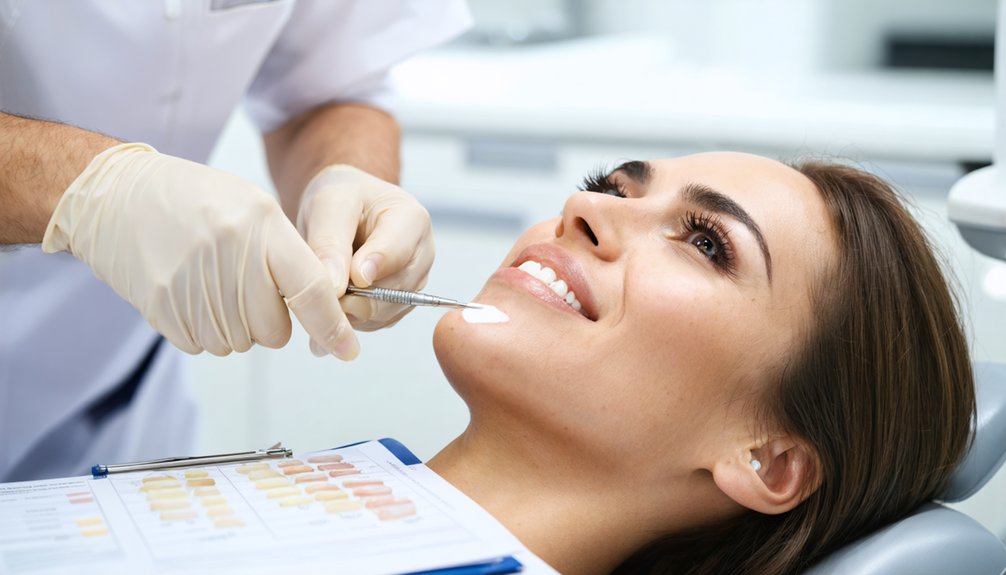
When you schedule a regular dental checkup, you might wonder whether it covers a free whitening consultation—and the answer isn’t always straightforward. Some practices bundle whitening technique discussions into routine visits, giving you insight into treatment options without extra charges.
Others bill consultations separately, particularly when evaluating complex discoloration cases requiring extended consultation duration.
To maintain control over your costs, ask your dentist’s office directly before your appointment whether whitening discussions are included. Confirm whether the conversation counts as a standalone billable service or falls under your standard visit.
Many practices keep this flexible, especially for existing patients. Knowing this distinction upfront prevents unexpected charges and helps you plan your whitening strategy more effectively, ensuring you allocate your budget where it genuinely matters.
Ways to Lower Your Teeth Whitening Consultation Costs
Lowering your teeth whitening consultation costs starts with knowing which levers to pull before you ever sit in the chair.
Price negotiation strategies and promotional offers awareness give you real leverage in controlling what you pay.
- Bundle your consultation with a scheduled checkup—many practices absorb the fee entirely.
- Ask directly about promotions—seasonal discounts and new-patient offers are rarely advertised but frequently available.
- Request package pricing—committing to a full whitening plan often reduces per-session consultation costs appreciably.
You’re not at the mercy of posted prices.
Call multiple providers, compare their structures, and negotiate openly.
Dentists expect informed patients.
Insurance won’t cover cosmetic whitening, so every dollar saved depends on the moves you make before treatment begins.
How to Compare Dentists and Get the Best Whitening Quote
Comparing dentists for whitening quotes isn’t complicated—it just requires a structured approach. Start by requesting itemized quotes from at least three local providers, ensuring each covers consultation fees, treatment costs, and any follow-up charges.
Use local dentist reviews to identify practitioners with proven track records and transparent pricing.
When evaluating options, conduct a whitening products comparison across treatment types—in-office sessions ($300–$1,200), take-home kits ($100–$600), and laser treatments averaging $583.
Confirm whether consultation fees are bundled or billed separately, as practices vary considerably.
Ask directly about package deals or discounts tied to existing checkups. Prioritize dentists who provide written estimates, since verbal quotes leave room for unexpected charges.
This disciplined comparison process puts you in full control of your final decision.
Frequently Asked Questions
Can Teeth Whitening Consultations Be Done Virtually or via Telehealth?
Like a compass guiding your journey, virtual consultations can steer your whitening path. You’ll access telehealth benefits by connecting with dentists remotely, gaining expert shade assessments and personalized treatment recommendations—putting you firmly in control.
How Long Does a Typical Teeth Whitening Consultation Appointment Take?
Your typical teeth whitening consultation lasts 30–60 minutes. You’ll discuss cost factors like discoloration extent and treatment type, so prioritize appointment preparation by documenting your dental history and whitening goals to maximize efficiency and control outcomes.
Are Teeth Whitening Consultations Available on Weekends or After Hours?
Many dental practices offer weekend availability and after hours consultations, but it varies by provider. You’ll want to call ahead, confirm their schedule, and secure your preferred time slot to maintain control of your whitening journey.
Do Dental Schools Offer Teeth Whitening Consultations at Reduced Rates?
Yes, you’ll find dental school advantages include reduced-rate teeth whitening consultations, leveraging student training under expert supervision. You’re getting quality care at notably lower costs, giving you greater control over your whitening budget without compromising professional standards.
Can a Teeth Whitening Consultation Fee Be Refunded if I Decline Treatment?
With fees averaging $508, refund policies vary widely—you’ll want to review consultation agreements before paying. You can often negotiate a refund if you decline treatment, but it’s not guaranteed.
References
- https://www.brushandfloss.com/articles/professional-teeth-whitening-cost
- https://www.carecredit.com/well-u/health-wellness/teeth-whitening-costs/
- https://dentistoftorrance.com/blog/dentist-charge-for-teeth-whitening
- https://www.gentledental.com/resources/articles/teeth-whitening-cost
- https://www.goodrx.com/conditions/dental-care/how-much-does-teeth-whitening-cost-with-insurance
- https://www.aspendental.com/dental-services/cosmetic-dentistry/teeth-whitening/teeth-whitening-cost/
- https://www.latimes.com/dentistry/general/restorative/story/professional-teeth-whitening-cost-expectations-prices
- https://www.rejuv-health.com/cosmetic-dentistry/teeth-whitening-cost/
- https://www.humana.com/dental-insurance/dental-resources/teeth-whitening