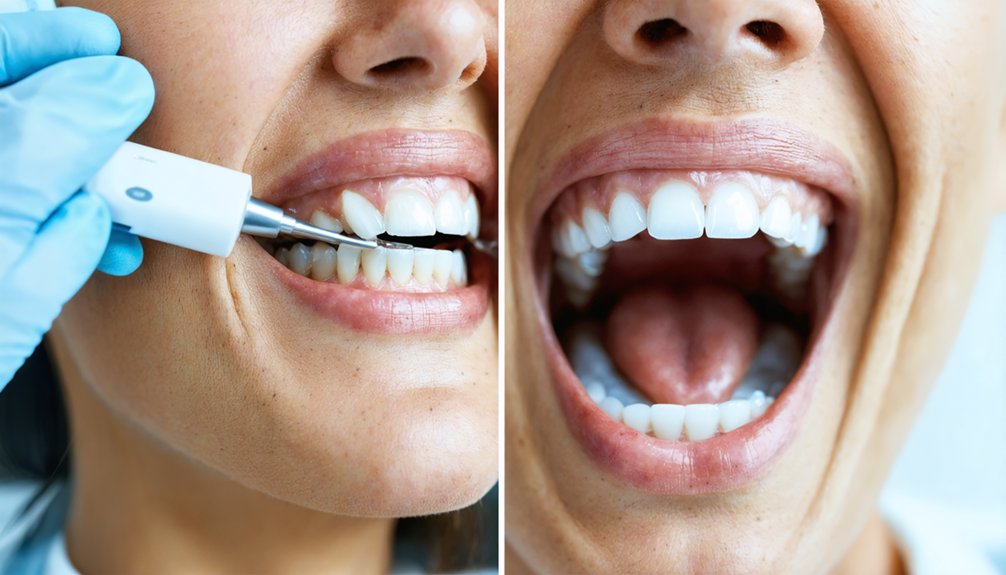
Professional teeth whitening delivers results lasting 1-3 years through clinical-grade formulations containing 35-40% peroxide concentrations that penetrate deep into your enamel’s structure. You’ll experience significant transformation—up to 12 shades brighter—as oxygen radicals break down chromophore molecules into colorless compounds. Whether you choose in-office treatments with protective barriers or custom-fabricated trays for at-home use, dental supervision safeguards optimal effectiveness while minimizing sensitivity. Understanding the science behind concentration levels, application protocols, and maintenance strategies will help you maximize your investment’s longevity.
Key Takeaways
- Professional whitening uses clinical-grade peroxide (35-40%) that penetrates enamel deeply, delivering results up to 12 shades whiter.
- In-office treatments like GLO Science and Zoom WhiteSpeed provide dramatic improvements in 16-30 minutes with supervised application.
- Custom at-home kits with prescription-strength gel (up to 22% carbamide peroxide) achieve 9 shades whiter in 5-14 days.
- Hydrogen peroxide breaks down stains by oxidizing chromophore molecules into smaller, colorless compounds for lasting lightness improvement.
- Dentist-supervised treatments use protective barriers and customized protocols to minimize sensitivity while maximizing whitening effectiveness.
What Makes Professional Teeth Whitening Different From Over-The-Counter Products
Professional teeth whitening delivers results that over-the-counter products simply can’t match—and the difference lies in clinical-grade formulations, supervised application, and customized treatment protocols. You’ll receive concentrated peroxide solutions up to 40%, compared to OTC’s 3-10%, enabling dramatic lightening of up to eight shades in one session versus gradual one-to-two shade improvements over months.
Dentists address overall safety concerns through protective gum barriers, custom-fitted trays preventing gel leakage, and pre-treatment evaluations ensuring oral health suitability. This supervised approach eliminates risks of enamel erosion, uneven whitening, or severe sensitivity common with unsupervised OTC application.
Patient satisfaction levels reflect this precision: professional treatments target deep stains from coffee, smoking, or aging with tailored protocols, while OTC products offer generic, one-size-fits-all solutions effective only for surface discoloration.
Understanding In-Office Whitening Systems and Technologies
When you’re exploring in-office whitening options, you’ll encounter five distinct technologies that dominate modern cosmetic dentistry—each engineered with specific mechanisms to accelerate peroxide activation and maximize shade improvement.
Modern in-office whitening technologies employ engineered peroxide activation mechanisms designed to deliver maximum shade improvement through accelerated chemical processes.
GLO Science delivers 12-shade improvement in 16 minutes using patented heat acceleration, while Opalescence Pro’s 40% hydrogen peroxide formula achieves comparable results through chemical activation alone.
Philips Zoom WhiteSpeed combines intense blue light with hydrogen peroxide for one-hour treatments yielding 8-shade improvements. Colgate Optic White Professional completes procedures in 30 minutes with zero sensitivity, and Zoom Whitening offers adjustable intensity settings for controlled comfort levels.
Your choice hinges on prioritizing speed of results versus comfort preferences—GLO Science provides the fastest treatment duration, while systems incorporating potassium nitrate and fluoride optimize patient comfort during high-concentration peroxide exposure.
How Whitening Agents Work to Remove Deep Stains
When you apply professional whitening agents to your teeth, hydrogen peroxide breaks down into water and highly reactive oxygen radicals that penetrate your enamel’s interprismatic spaces within 15 minutes.
These free radicals chemically oxidize chromophores—the organic pigment molecules causing discoloration—transforming long-chain stain compounds into smaller, colorless molecules that diffuse out of your tooth structure.
Professional-grade formulations use 35-40% hydrogen peroxide concentrations, delivering markedly quicker and more pronounced color transformation compared to over-the-counter products that typically contain 3-10% peroxide equivalents.
Hydrogen Peroxide Breakdown Process
At the molecular level, hydrogen peroxide’s instability drives its effectiveness as a whitening agent. The H2O2 compound lacks molecular stability, causing it to decompose rapidly into water and oxygen when exposed to light, heat, or enzymatic influences from your saliva.
This breakdown releases reactive oxygen molecules that penetrate your enamel and dentin layers.
During decomposition, these oxygen radicals target and attack the colored compounds causing discoloration. They specifically break down double bonds in organic chromogens, forcing electron loss from stain molecules. This oxidation process alters the molecular structure of pigmented compounds throughout your tooth, neutralizing both surface and deep internal stains.
The result: a measurable lightness increase averaging 19.9 degrees, achieved by systematically degrading the chromophores responsible for tooth discoloration.
Professional vs. OTC Strength
The concentration differential between professional and over-the-counter whitening agents fundamentally determines your treatment outcome. Professional treatments deliver hydrogen peroxide or carbamide peroxide at concentrations up to 40%, while OTC products remain limited to 3-10% for unsupervised safety. This strength gap directly controls penetration depth—professional formulations reach intrinsic stains embedded within enamel, while OTC products address only surface-level discoloration.
You’ll achieve eight-shade improvements in a single in-office session, versus one-to-two shades after months of OTC use. Despite product claims, lower concentrations require extended treatment frequency yet still can’t break down deep stains from coffee, tobacco, or tea. Professional-grade agents penetrate where OTC formulations fail, delivering dramatic, measurable results rather than gradual, subtle changes that disappoint your aesthetic expectations.
Professional At-Home Whitening Kits Under Dental Supervision
Professional at-home whitening kits combine custom-fabricated trays with prescription-strength bleaching agents to deliver clinical-grade results under dental supervision. Your dentist creates precision-molded trays from direct impressions of your teeth, ensuring even gel distribution and preventing irritation from poorly fitted alternatives.
These customized systems use concentrated formulations—ranging from 10-22% carbamide peroxide or 6-14% hydrogen peroxide—that aren’t available in over-the-counter products, enabling you to achieve up to 9 shades whiter in as little as 5-14 days.
Custom Tray Design Process
How does your dentist transform standard whitening gel into a precision cosmetic treatment? Through personalized tray customization that begins with capturing exact impressions of your dentition using dental putty or intraoral 3D scanning technology.
Efficient tray fabrication workflows deliver your custom solution through four critical stages:
- Model Creation – Stone mixtures poured into impressions produce precise replicas of your unique tooth architecture
- Digital Specification – Tray areas selected with whitening zone offsets that position reservoirs exactly where treatment is needed
- Thermoplastic Forming – Heated discs vacuum-sealed over your model create thin, contoured trays with strategic scalloping
- Final Adjustment – Lab-trimmed edges guarantee secure fit without gaps or movement during wear
You’ll receive clear plastic trays engineered for even gel distribution, reduced gum irritation, and reusable long-term performance that generic alternatives can’t match.
Prescribed Gel Concentration Levels
Once your custom trays arrive, your dentist selects the precise peroxide concentration that’ll transform your smile without compromising comfort. Through risk benefit analysis, they’ll prescribe hydrogen peroxide concentrations between 10-35% or carbamide peroxide formulations ranging from 15-38%, depending on your staining severity and sensitivity threshold.
You’ll achieve ideal concentration levels when your dentist matches your goals with appropriate strength. For moderate discoloration, 16% carbamide peroxide delivers 3-5 shade improvements with minimal sensitivity. More stubborn stains respond to 35% carbamide peroxide, producing 5-9 shades of lightening under professional oversight. Remember that hydrogen peroxide works three times faster than carbamide peroxide—10% hydrogen peroxide equals 30% carbamide peroxide in whitening power. Your prescribed concentration determines treatment duration, typically 2-10 hours daily for 6-28 days, balancing effectiveness against comfort.
Expected Timeline and Duration of Your Whitening Results
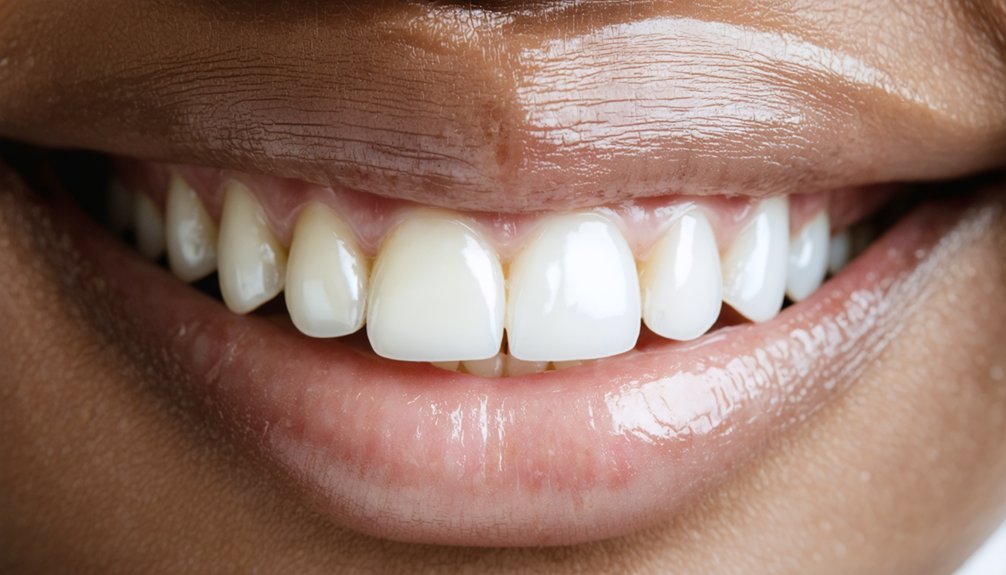
When evaluating professional teeth whitening options, understanding the expected timeline and longevity of results becomes crucial for selecting the treatment that aligns with your aesthetic goals.
In-office whitening delivers immediate transformation—lightening teeth 2-8 shades within a single 60-90 minute session. Laser-accelerated protocols achieve your brightest shade within one hour, addressing teeth whitening sensitivity and teeth whitening safety concerns through controlled application.
Take-home tray systems produce gradual changes over 7-14 days with consistent daily use, offering precise control over your whitening progression.
Duration varies considerably by method:
- In-office results last 6 months to 3 years with proper maintenance
- Take-home treatments sustain 4-6 months due to lower gel concentration
- Dietary habits and smoking accelerate color regression
- Regular touch-ups and professional cleanings extend brightness longevity
Your maintenance regimen directly influences result persistence.
Investment Costs for Professional Whitening Treatments
Touch-up sessions run $200 to $400, though many providers offer discounted rates for repeat customers.
Some practices structure payment plans to distribute costs, making professional-grade results financially accessible while maintaining treatment quality and predictable outcomes.
Maintaining Your Brighter Smile for Maximum Longevity
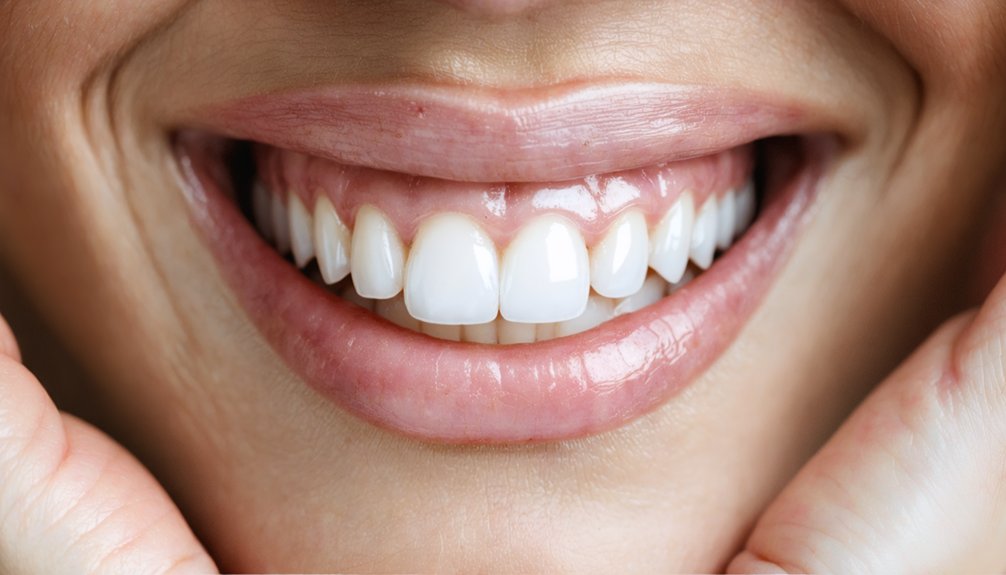
After investing in professional whitening, protecting your results requires strategic daily habits that prevent pigment accumulation and preserve enamel integrity. Your personalized maintenance routine should incorporate targeted approaches that address staining at every stage.
Core strategies for prolonged whitening effects:
- Brush twice daily with whitening toothpaste containing mild abrasives that polish surfaces and break down stains before they set
- Use straws for coffee, tea, and soda to minimize direct contact with front teeth during high-risk consumption
- Schedule professional cleanings every six months to remove hardened tartar and receive touch-ups that maintain your desired shade
- Apply at-home whitening trays every six months with professional-grade gel for 1-2 hours over multiple days
You’ll extend results from six months to two years through consistent adherence to these evidence-based protocols.
Frequently Asked Questions
Can Professional Teeth Whitening Damage Enamel or Increase Tooth Sensitivity Permanently?
You won’t cry over spilled milk—professional whitening doesn’t permanently damage enamel or cause lasting sensitivity. Tooth enamel erosion and gum irritation only occur with overuse or unsupervised high-concentration products. You’ll achieve safe, controlled results under expert care.
Are There Dental Conditions That Prevent Me From Getting Professional Whitening?
Yes, several conditions prevent professional whitening. Your tooth enamel condition must be healthy—untreated cavities, gum disease, or erosion disqualify you. Additionally, certain tooth discoloration causes like intrinsic stains, restorations, or medication-related damage won’t respond effectively to bleaching treatments.
Does Professional Whitening Work on Crowns, Veneers, or Dental Fillings?
No, professional whitening doesn’t work on dental restorations. Tooth crowns composition and veneers whitening effectiveness remain unchanged because peroxide only affects natural enamel. Your fillings, crowns, and veneers won’t lighten, potentially creating shade mismatches you’ll need to address strategically.
How Soon After Whitening Can I Consume Coffee, Wine, or Staining Foods?
You’ll need to wait 48-72 hours before consuming coffee or wine. Avoiding staining foods during this critical period guarantees ideal results, as your enamel remains porous post-treatment. Minimizing consumption of staining beverages afterward prolongs your whitening’s longevity considerably.
Is Professional Teeth Whitening Safe During Pregnancy or While Breastfeeding?
Dentist recommendations during pregnancy advise postponing professional whitening until after delivery and breastfeeding. Whitening safety concerns include potential chemical absorption through gums and increased oral sensitivity. You’ll achieve ideal results by waiting until post-pregnancy for cosmetic treatments.