UV light teeth whitening can brighten your smile, but it’s not without risks to your enamel. The UV light activates a peroxide gel to lift stains, yet repeated exposure can weaken enamel structure, increase decay risk, and cause sensitivity. Side effects like gum irritation and soft tissue burns are also possible. Safer alternatives exist, and understanding the full picture of UV whitening’s risks and benefits can help you make a smarter choice.
Key Takeaways
- UV light can weaken enamel structure over time, increasing vulnerability to decay and long-term damage that may outweigh whitening benefits.
- Repeated UV whitening sessions cause measurable enamel degradation, thinning the protective layer and raising sensitivity and discoloration risks.
- UV light accelerates peroxide activation but does not whiten teeth independently, making its enamel risks potentially unnecessary.
- Blue LED alternatives deliver comparable whitening acceleration without harmful radiation, often including remineralizing ingredients that actively support enamel health.
- ADA-approved peroxide gels with fluoride or calcium phosphate offer safer whitening by protecting and strengthening enamel during treatment.
How UV Light Teeth Whitening Works
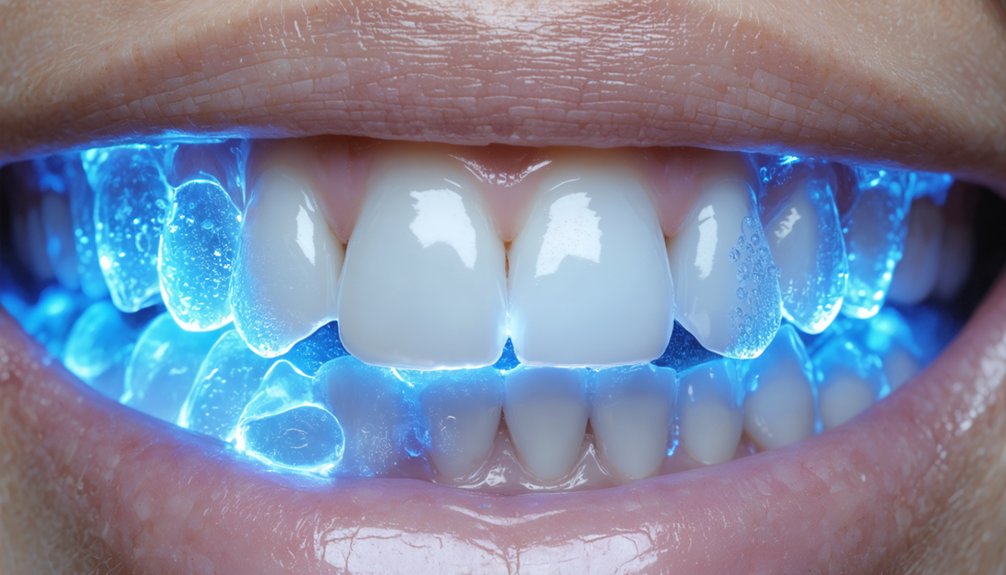
UV light teeth whitening combines a bleaching agent with light energy to accelerate the whitening process. Typically, a dental professional or at-home kit applies a peroxide-based gel to your teeth, then activates it using UV light mechanisms.
The light energy breaks down hydrogen or carbamide peroxide faster, releasing oxygen molecules that penetrate enamel and lift stains from deeper tooth layers.
While this process can enhance whitening effectiveness compared to gel alone, you should understand that the light primarily speeds activation rather than independently whitening your teeth.
Professional settings control exposure time and intensity precisely, reducing your risk of tissue damage. At-home UV kits lack these safeguards, making it harder for you to manage radiation levels safely and consistently.
Does UV Light Damage Your Tooth Enamel?
When you use UV light for teeth whitening, you expose your enamel to radiation that can weaken its structure and increase your risk of decay.
Prolonged or repetitive UV exposure gradually erodes enamel, leaving your teeth thinner, more discolored, and increasingly vulnerable over time.
High concentrations or improper application amplify these risks, meaning the long-term consequences to your enamel may far outweigh any short-term whitening benefits.
UV Light And Enamel
One of the biggest concerns surrounding UV light teeth whitening is what it does to your enamel. Research suggests that excessive UV exposure can weaken enamel structure, making your teeth more vulnerable to decay and discoloration over time.
Repeated use thins enamel progressively, and high-concentration applications without professional oversight increase that risk further.
If you’re prioritizing enamel strengthening alongside whitening, UV-based methods work against that goal. Aggressive bleaching combined with UV radiation can erode the very surface you’re trying to protect.
Fortunately, whitening alternatives using blue LED light and peroxide-based gels deliver effective results without the same enamel risks.
Many reputable kits also include remineralizing agents that actively support enamel health. Choosing these options gives you greater control over both your results and your long-term oral health.
Enamel Erosion Risks
Although enamel can’t regenerate once it’s lost, many people don’t realize that UV light whitening puts this irreplaceable layer at direct risk. Prolonged or repeated UV exposure gradually thins enamel, leaving your teeth more vulnerable to discoloration, decay, and structural compromise.
High-concentration applications or improper technique amplify these risks further, potentially weakening enamel health beyond cosmetic repair. Research remains inconclusive on safe UV exposure thresholds, which is precisely why dental professionals urge caution.
You’re fundamentally trading short-term brightness for long-term structural vulnerability. Fortunately, whitening alternatives—particularly blue LED-accelerated peroxide gels with remineralizing agents—deliver comparable results without radiation-related risks.
These options let you maintain control over your enamel’s integrity while still achieving meaningful whitening outcomes. Protecting your enamel means choosing methods backed by clearer safety evidence.
Long-Term Enamel Effects
Repeated UV whitening sessions don’t just pose immediate risks—they compound into measurable long-term enamel degradation. Each exposure incrementally thins your enamel, and since enamel doesn’t regenerate, that loss is permanent.
Over time, you’re left with teeth that are more vulnerable to discoloration, sensitivity, and decay—the very problems you’re trying to prevent.
The long term effects on enamel health extend beyond cosmetic concerns. Weakened enamel compromises your teeth’s structural integrity, increasing the likelihood of fractures and bacterial infiltration.
Research remains inconclusive on exactly how much UV exposure triggers irreversible damage, but the cumulative risk is real.
You’re better positioned making informed choices—favoring non-UV alternatives that deliver results without systematically eroding your enamel over months or years of repeated use.
UV Whitening Side Effects You Should Know About
Before committing to UV teeth whitening, you should understand the side effects that can accompany it. Beyond common whitening myths that suggest the process is entirely risk-free, UV exposure carries measurable consequences.
Tooth dehydration frequently occurs, causing temporary shade rebound and increased enamel vulnerability. Pulpal stimulation from UV light can trigger discomfort, making sensitivity management an essential consideration before and after treatment.
Tooth dehydration and pulpal stimulation are real — sensitivity management isn’t optional, it’s essential.
Prolonged or poorly controlled UV exposure may cause bleeding gums, soft tissue burns, and skin irritation around your mouth. Without proper eye protection, you also risk serious eye damage.
These aren’t minor inconveniences — they’re documented responses to excessive radiation exposure. Consulting a dental professional beforehand allows you to assess your risk level and make a genuinely informed decision about pursuing this treatment.
Are At-Home UV Whitening Kits Safe to Use?
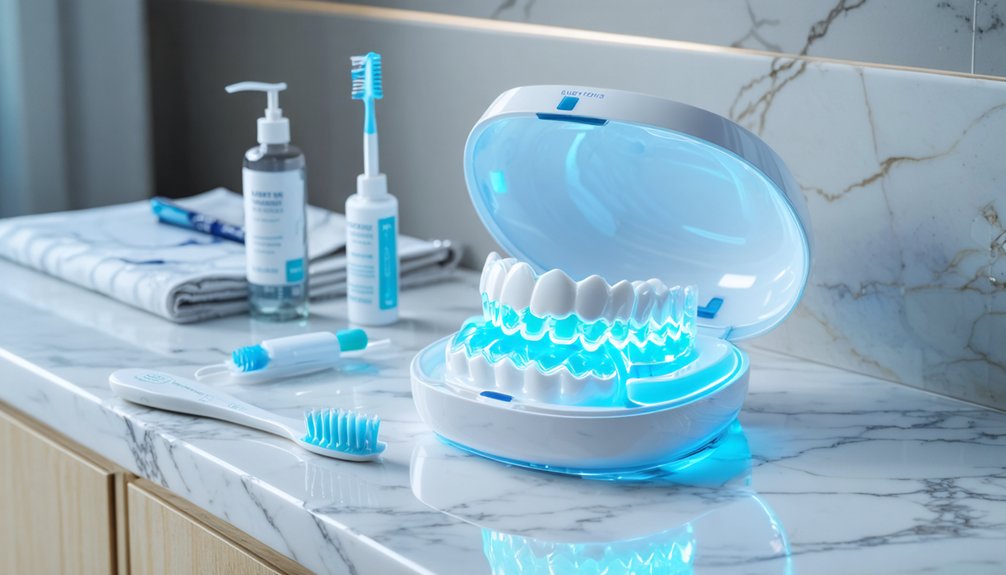
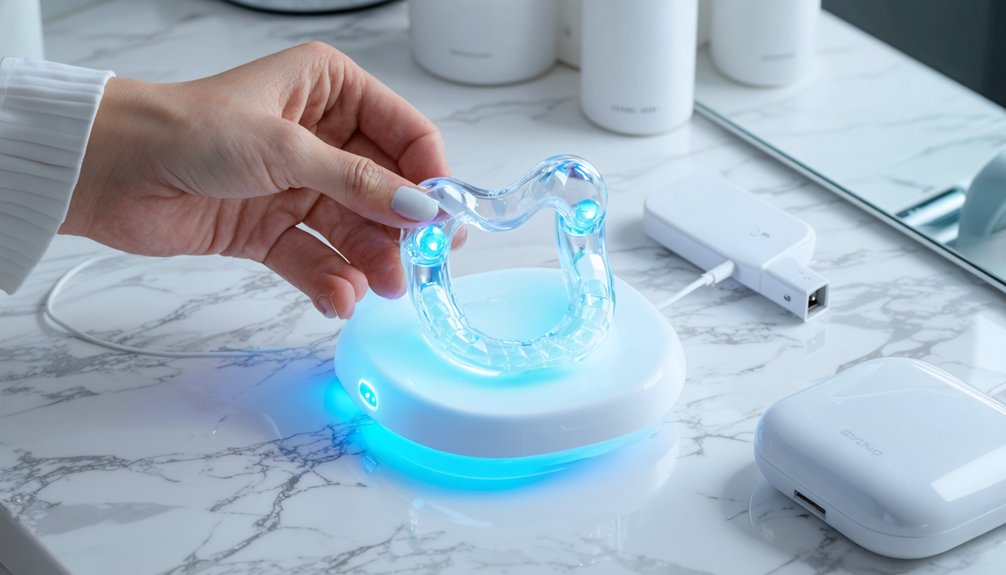
How safe are at-home UV whitening kits, really? The answer depends on what’s actually inside the box. Most reputable DIY whitening kits use blue LED light, not true UV radiation, making them considerably safer.
However, kits that do emit UV light carry real safety concerns, including potential eye damage, soft tissue burns, and gum or nerve irritation without professional safeguards in place.
Uneven gel application also risks patchy results and enamel vulnerability. You’re working without clinical oversight, which means mistakes are easier to make and harder to reverse.
Before choosing any at-home kit, look for the ADA seal of approval and confirm it uses LED rather than UV technology. Taking that extra step protects both your results and your long-term oral health.
Professional UV Whitening vs. At-Home Kits
The gap between professional UV whitening and at-home kits comes down to oversight, technology, and risk management.
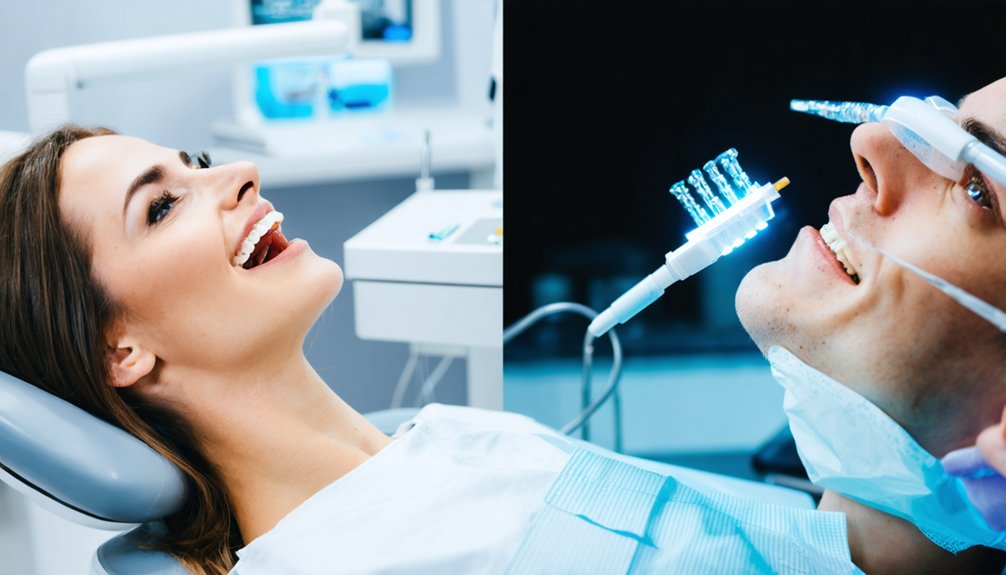
When you choose professional techniques, a trained dentist controls light intensity, gel concentration, and exposure duration — considerably reducing your risk of enamel damage or soft tissue burns.
At-home kits lack these safety guidelines entirely. You’re self-applying bleaching agents without clinical oversight, increasing your chances of uneven application, gum irritation, and nerve sensitivity.
Most reputable at-home options now use blue LED light rather than true UV radiation, which is remarkably safer.
If you’re prioritizing both results and protection, professional treatment remains the more controlled choice.
At-home kits can work, but only when you follow instructions precisely and select products carrying recognized safety certifications like the ADA seal.
Why UV Is No Longer the Whitening Gold Standard
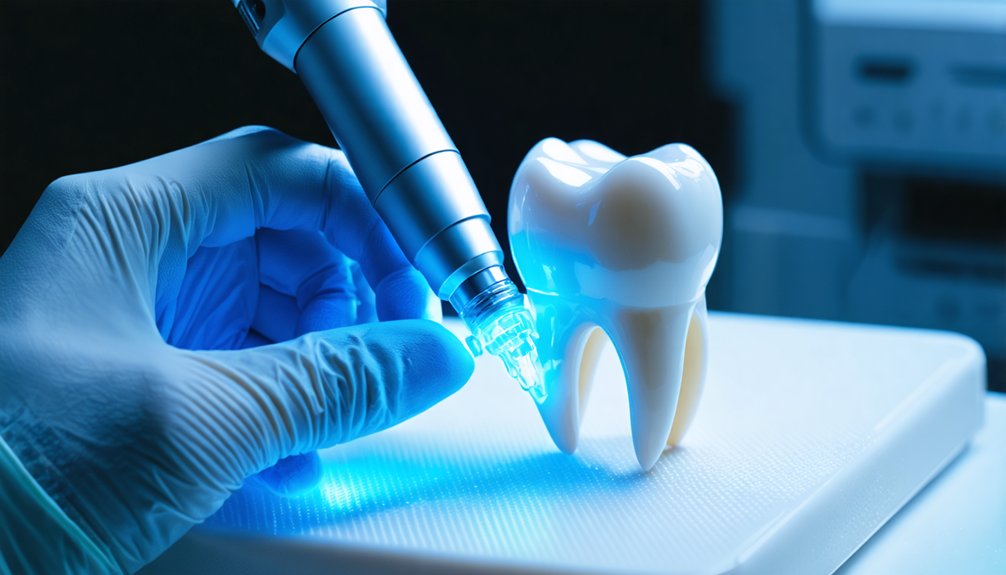
Understanding why professionals have largely moved away from UV light helps explain why today’s whitening landscape looks so different.
UV light was once considered essential for accelerating bleaching results, but growing evidence revealed its risks outweigh its benefits. Excessive radiation exposure compromises enamel preservation by weakening tooth structure and increasing sensitivity and decay susceptibility.
UV light’s risks to enamel preservation ultimately outweighed its bleaching benefits, weakening tooth structure and increasing sensitivity.
Today’s UV whitening alternatives, particularly blue LED technology, deliver comparable acceleration without harmful radiation.
These systems work alongside peroxide gels to break down stains while minimizing tissue damage. Reputable formulas also include remineralizing ingredients that actively support enamel integrity throughout the process.
You’re now making whitening decisions in a market that’s genuinely improved.
Choosing evidence-backed, non-UV options means you’re protecting your long-term oral health without sacrificing meaningful results.
Safer Ways to Whiten Your Teeth Without UV Light
If you’re looking to brighten your smile without the risks of UV exposure, blue LED light systems offer a safer, clinically supported alternative that accelerates peroxide-based whitening without emitting harmful radiation.
Hydrogen or carbamide peroxide gels break down surface stains effectively on their own, and pairing them with a blue LED device can enhance results while minimizing damage to your enamel and soft tissues.
To guarantee you’re using a product that meets established safety and efficacy standards, look for the ADA Seal of Acceptance before purchasing any at-home whitening kit.
Blue LED Light Benefits
Blue LED light has emerged as a safer, more practical alternative to UV-based whitening, offering effective results without the associated risks of radiation exposure.
Using LED technology, these devices accelerate the peroxide gel’s stain-breaking process without emitting harmful UV rays that damage enamel or soft tissue.
Key blue light benefits include:
- No UV radiation — eliminates risks of enamel erosion, gum burns, and eye damage associated with traditional UV devices
- Controlled activation — precisely targets the whitening gel without overexposing surrounding tissues
- Compatibility with remineralizing agents — many LED kits include enamel-strengthening ingredients, protecting your teeth throughout the process
You’re making a smarter, evidence-backed choice by selecting blue LED options over UV-based systems, prioritizing both effectiveness and long-term oral health.
Peroxide Gels Explained
Peroxide gels are the actual workhorses behind most professional and at-home whitening treatments, and understanding how they function helps you make safer, more informed choices.
These gels—typically hydrogen or carbamide peroxide—penetrate enamel and break down stain molecules through a controlled oxidation process. The key variable you’ll want to watch is peroxide concentration. Higher concentrations work faster but increase sensitivity and enamel vulnerability. Lower concentrations are gentler, making them more appropriate for unsupervised home use.
Proper gel application matters just as much; uneven distribution can cause spottiness or gum irritation. Reputable formulas often include remineralizing agents that help protect enamel during the process.
Always follow product instructions precisely and consult your dentist if you’re uncertain about which concentration suits your specific dental health needs.
ADA-Approved Whitening Products
Knowing which peroxide gel to use is only part of the equation—you also need to know whether the product itself has been vetted for safety and effectiveness.
ADA guidelines recommend looking for the ADA Seal of Acceptance, which confirms independent testing for both safety and efficacy.
When reviewing product recommendations, prioritize options that meet these criteria:
- ADA Seal of Acceptance — confirms the product passed rigorous independent testing
- Remineralizing ingredients — look for fluoride or calcium phosphate to protect enamel during whitening
- Age restrictions clearly stated — avoid products not explicitly approved for adults, and never use them on children under 12
Choosing ADA-approved products puts the verification process in your hands, giving you measurable confidence before anything touches your teeth.
What Dentists Say About UV Whitening Risks
Dentists generally caution against UV whitening due to its well-documented risks to enamel and soft tissue.
Dentist opinions consistently highlight that UV radiation can weaken enamel protection over time, making teeth more vulnerable to decay and sensitivity. Many professionals note that UV exposure burns gum tissue and overstimulates pulp nerves, causing lasting discomfort.
Experts also emphasize that UV isn’t the gold standard it once appeared to be. Research remains unclear on safe exposure thresholds, and the risks simply outweigh any temporary brightness gains.
Dentists strongly recommend consulting a professional before attempting any UV-based treatment at home. If you’re serious about whitening safely, your dentist can guide you toward clinically tested alternatives that protect your enamel rather than compromise it.
Frequently Asked Questions
Can UV Whitening Worsen Existing Cavities or Tooth Decay Issues?
yes, UV whitening can worsen existing cavities. It accelerates tooth sensitivity and enamel damage, making decayed areas more vulnerable. Consult your dentist before proceeding.
Is UV Teeth Whitening Safe During Pregnancy or Breastfeeding?
You shouldn’t pursue UV teeth whitening during pregnancy or breastfeeding. UV exposure risks remain poorly studied for these conditions, and pregnancy considerations demand caution. Breastfeeding effects and dental health impacts are uncertain, so consult your dentist first.
How Soon After UV Whitening Can You Eat or Drink?
Studies show enamel sensitivity peaks within 24 hours post-treatment. You’ll want to wait at least 30 minutes before eating or drinking. Prioritize post-treatment care by avoiding staining foods and acidic beverages to protect your vulnerable enamel.
Does UV Whitening Interact With Dental Crowns, Veneers, or Fillings?
UV whitening won’t change your crown sensitivity, veneer longevity, or filling durability since restorations don’t respond to bleaching agents. You should prioritize enamel integrity by consulting your dentist, as uneven results around restorations are likely.
Can Children or Teenagers Safely Undergo UV Teeth Whitening Treatments?
Studies show enamel fully matures around age 12. You shouldn’t expose children to UV whitening treatments — youth dental safety demands caution. Following whitening age guidelines, you’ll protect developing teeth from unnecessary sensitivity and long-term enamel damage risks.
References
- https://olliesmile.com/blogs/news/is-uv-teeth-whitening-safe
- https://www.advancedsmilesmarion.com/resources/slugat-home-teeth-whitening-uv-light-guide
- https://wewhiten.com/uv-light-for-teeth-whitening/
- https://www.elevatedentalmo.com/post/teeth-whitening-is-it-safe-on-tooth-enamel
- https://www.boise-dentists.com/how-diy-whitening-can-harm-your-teeth-gums/
- https://www.colgate.com/en-us/oral-health/teeth-whitening/is-uv-teeth-whitening-safe
- https://health.clevelandclinic.org/is-teeth-whitening-safe