To use a home teeth whitening kit safely, you’ll want to choose a product with hydrogen peroxide or carbamide peroxide and look for the ADA Seal of Acceptance. Always follow the manufacturer’s directions and never exceed recommended wear times. If you have cavities, gum disease, or sensitive teeth, consult your dentist first. Stick to lower concentrations if sensitivity is a concern. There’s much more you should know before you start.
Key Takeaways
- Choose a whitening kit with hydrogen peroxide or carbamide peroxide and look for the ADA Seal of Acceptance for verified safety.
- Consult a dentist beforehand to rule out cavities, gum disease, or thin enamel that could worsen with whitening treatment.
- Follow manufacturer instructions precisely, limiting use to 15-30 minutes daily for the recommended 5-14 day period.
- Reduce wear time or pause treatment if sensitivity occurs, and avoid coffee, tea, and red wine during whitening.
- Stop immediately and seek dental advice if you experience sharp pain, gum irritation, burns, or persistent discomfort.
How to Pick the Right Home Whitening Kit
Picking the right home whitening kit starts with checking the ingredient list — effective products rely on hydrogen peroxide or carbamide peroxide as the active whitening agent. Choosing ingredients carefully means avoiding kits that omit clear disclosure or lack proper usage instructions.
The right whitening kit begins with transparency — clear ingredients, clear instructions, no guesswork.
If you have sensitive teeth, opt for lower concentrations, such as 10% carbamide peroxide or 3% hydrogen peroxide, to reduce the risk of irritation.
Brand reputation matters just as much as formulation. Look for products carrying the ADA Seal of Acceptance, which confirms independent testing for both safety and effectiveness.
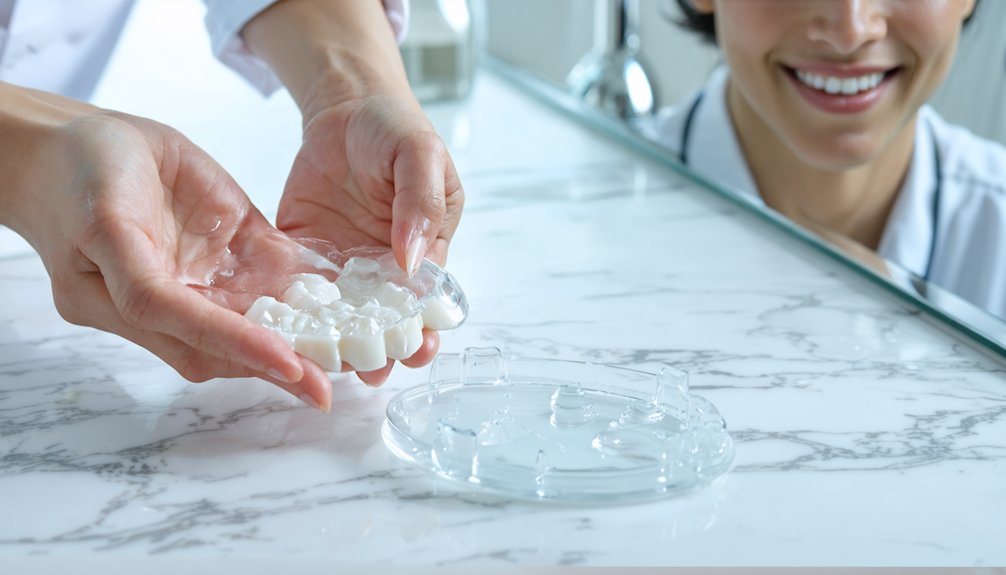
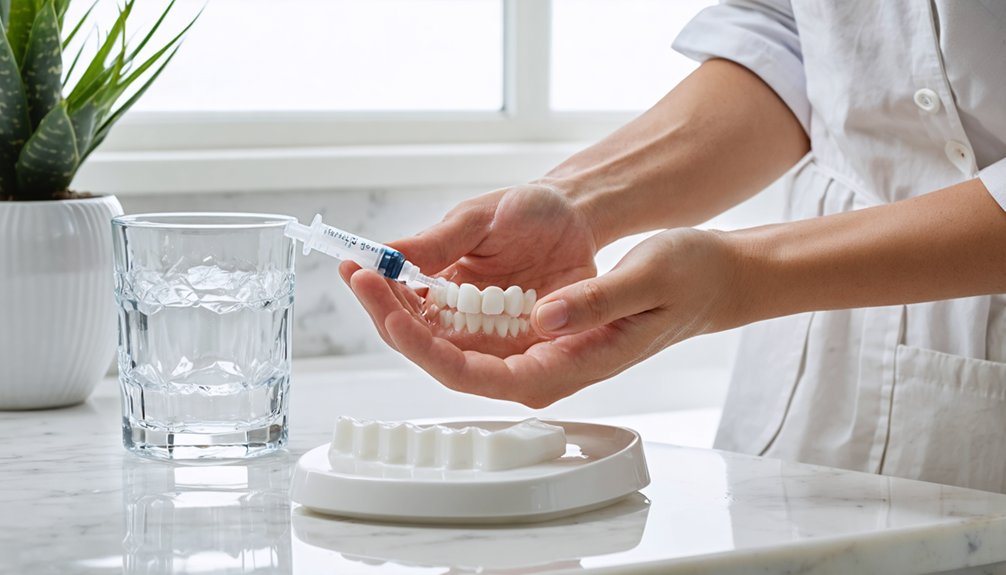
Custom-fitted trays offer better control and more consistent results compared to generic strips or gels.
When existing dental problems are a concern, consult your dentist before selecting any kit.
Should You See a Dentist Before You Start?
Once you’ve chosen a kit, checking in with your dentist before you start can prevent problems that no label warning will catch. Untreated cavities, gum disease, or thin enamel can turn a routine whitening session into a painful experience. Many whitening myths suggest that sensitivity afterward is simply normal and ignorable, but persistent discomfort may signal underlying damage worth addressing first.
Dental myths also lead people to assume all teeth respond equally to peroxide. They don’t. Restorations like crowns, bridges, and fillings won’t lighten, leaving your smile unevenly toned.
If you’re pregnant, under 16, or managing existing oral conditions, professional guidance isn’t optional — it’s protective. A brief dental consultation gives you precise information, eliminates guesswork, and puts you in full control of your outcome.
How to Use Your Whitening Kit Without Overdoing It
Reading the label isn’t optional — it’s the foundation of safe whitening. Manufacturer directions exist for a reason: exceeding recommended wear times or frequency increases your risk of sensitivity and enamel damage. Most kits call for 15 to 30 minutes daily over 5 to 14 days — stick to that window.
If sensitivity develops, reduce your wear time or pause for two to three days before resuming. Don’t compensate by using the product more aggressively later.
As maintenance tips go, limiting coffee, tea, and red wine during treatment delivers measurable results without added risk.
Alternative whitening methods — such as professional in-office treatments — are worth considering if you find home kits difficult to use correctly. Controlled use, not overuse, is what produces safe, lasting results.
Teeth Whitening Side Effects You Should Know About
Even when you use a whitening kit correctly, side effects can occur. Tooth sensitivity is the most common, typically temporary, and often triggered by peroxide penetrating the enamel.
Soft tissue irritation develops when gel contacts your gums or lips, and high-concentration formulas can cause chemical burns if misapplied. Overuse risks enamel demineralization, which worsens long-term discoloration despite short-term gains — one of the more damaging whitening myths people act on.
Peroxide-based products don’t lighten restorations like crowns or fillings, so uneven tooth staining can become more noticeable after treatment.
Eye exposure and accidental ingestion are additional risks when products are mishandled. If you experience persistent sensitivity or tissue irritation, stop use immediately and consult a dental professional before continuing.
What to Do If Your Teeth Feel Sensitive?
Sensitivity during whitening is a signal to adjust your approach, not necessarily to stop treatment entirely. First, reduce your wear time or pause for two to three days to let your enamel recover.
If sensitivity persists, switch to a lower-concentration product — 10% carbamide peroxide or 3% hydrogen peroxide are well-tolerated options for people with reactive teeth.
Check your product ingredients carefully. Some formulas include potassium nitrate or fluoride, which can help manage sensitivity during treatment.
Maintaining consistent dental hygiene — brushing twice daily and flossing once daily — supports enamel health throughout the process.
If sensitivity is severe or doesn’t resolve after pausing, stop use and consult a dentist. Continuing despite significant discomfort risks enamel damage and soft tissue irritation that’s harder to reverse.
When to Stop Whitening and Call Your Dentist
Stop whitening immediately if you experience sharp pain, significant gum irritation, chemical burns, or visible changes to your enamel.
These signs indicate your tissues are reacting beyond normal sensitivity, and continuing use risks lasting damage. Call your dentist promptly if symptoms don’t resolve within a few days or if an adverse reaction appears severe.
Signs To Stop Immediately
While mild tooth sensitivity during whitening is normal, certain symptoms signal that you need to stop treatment immediately and contact your dentist. Sharp, persistent tooth pain, severe gum irritation, soft tissue burns, or swelling require prompt professional attention—not DIY remedies or dietary restrictions meant to mask discomfort.
Stop use right away if you notice:
- Intense, lingering pain that doesn’t resolve between sessions
- White or red patches on your gums or soft tissues
- Visible gum recession or increased bleeding
- Nausea or throat irritation suggesting accidental ingestion
These reactions indicate that the product is causing harm beyond acceptable temporary sensitivity. Continuing treatment risks permanent enamel damage or soft tissue injury. Contact your dentist before resuming any whitening protocol.
When To Seek Help
Knowing when to stop whitening and call your dentist goes beyond recognizing acute warning signs—it also means understanding the broader situations where professional input protects your long-term oral health.
Seek professional consultation before starting if you have cavities, gum disease, existing sensitivity, or restorations like crowns or fillings, since whitening products won’t lighten those materials and may worsen underlying conditions.
If you’re pregnant or under 16, get dental clearance first.
Once you’ve begun a kit, stop use and pursue professional consultation if an adverse reaction occurs—including persistent sensitivity, soft tissue burns, or unusual pain.
Don’t continue beyond package directions without guidance.
You’re in control of this process, and knowing when to call your dentist is what keeps that control from becoming a liability.
Frequently Asked Questions
Can Teeth Whitening Kits Lighten Crowns, Fillings, or Dental Implants?
Whitening kits won’t lighten your crowns, fillings, or implants—they only affect natural enamel. This dental shade matching mismatch can become noticeable. If you experience tooth sensitivity during treatment, you’re still not changing your restorations’ color.
Is It Safe to Whiten Teeth While Pregnant or Breastfeeding?
Imagine you’re in your second trimester enthusiastic for brighter teeth—hold off. Pregnancy safety and breastfeeding considerations both warrant caution; you should consult your oral health professional before whitening, as current evidence doesn’t confirm it’s risk-free.
How Long Do Teeth Whitening Results Typically Last After Treatment Ends?
Your results typically last six months to two years. You’ll extend them through long-term maintenance—limiting staining foods and practicing good oral hygiene. If tooth sensitivity develops, reduce treatment frequency to protect your enamel between touch-up sessions.
Can Children or Teenagers Use Home Teeth Whitening Kits Safely?
Like a double-edged sword, whitening kits pose real risks for young users. Regarding pediatric dental safety and teenage whitening concerns, you shouldn’t use home kits if you’re under 16 without consulting a dentist first.
Should You Avoid Certain Foods or Drinks During Your Whitening Treatment?
Yes, you should follow diet restrictions during treatment. Avoid staining foods and drinks like coffee, tea, red wine, and dark berries. You’ll protect your results by rinsing after consuming them or using a straw when appropriate.
References
- https://www.forbes.com/sites/forbes-personal-shopper/article/best-teeth-whitening-kit/
- https://www.goodrx.com/conditions/dental-care/is-teeth-whitening-safe
- https://lumineuxhealth.com/products/whitening-kit-all
- https://healthcare.utah.edu/the-scope/health-library/all/2023/10/does-home-teeth-whitening-really-work
- https://health.clevelandclinic.org/is-teeth-whitening-safe
- https://www.canada.ca/en/health-canada/services/healthy-living/your-health/lifestyles/safe-use-home-tooth-whitening-kits.html
- https://www.reddit.com/r/AskReddit/comments/cyxez/reddit_dentists_are_at_home_whitening_kits_safe/
- https://www.bupa.com.au/healthlink/health-conditions/a-z/home-teeth-whitening-is-it-safe
- https://www.which.co.uk/news/article/why-you-need-to-be-wary-of-home-tooth-whitening-kits-aTig20L4lJpb
- https://www.health.com/condition/oral-health/teeth-whitening-kits