Teeth whitening results vary based on the method you choose and how well you maintain them afterward. In-office treatments last 1 to 3 years, while at-home kits typically hold for 4 to 12 months. Whitening strips and toothpaste fade fastest, lasting just 3 to 6 months. Your daily habits—like consuming coffee, tea, or tobacco—can shorten these timelines considerably. Understanding each method’s longevity and the factors that accelerate re-staining helps you make the most informed whitening decision.
Key Takeaways
- In-office whitening treatments last 1 to 3 years, with most patients maintaining results for 12 to 24 months with proper care.
- At-home whitening kits typically last 4 to 12 months, while custom gel trays can extend results up to 12 months.
- Whitening strips and toothpaste deliver shorter results, lasting approximately 3 to 6 months before noticeable fading occurs.
- Staining habits like coffee, tea, wine, and smoking can significantly shorten whitening results, sometimes within weeks.
- Touch-ups every 6 to 12 months, combined with disciplined oral hygiene, help maintain and prolong whitening results.
How Long Does Teeth Whitening Actually Last?
How long teeth whitening lasts depends on the method you choose and how well you maintain your results. In-office treatments deliver the longest outcomes, lasting one to three years with proper care.
The method you choose and how well you maintain results directly determines how long your whitening lasts.
At-home kits and gel trays average four to twelve months, while whitening strips and toothpaste fade faster, typically within three to six months.
Teeth discoloration causes—including coffee, tea, wine, smoking, and poor oral hygiene—directly shorten your results. The more you expose your teeth to staining agents, the faster re-discoloration occurs.
Controlling these factors is essential.
Whitening maintenance tips include reducing staining foods, brushing consistently, and scheduling touch-ups every six to twelve months.
You control how long your results last by managing both your lifestyle and your maintenance routine.
In-Office Whitening: Results That Go the Distance
When you choose in-office whitening, you’re investing in the longest-lasting results available. In-office techniques, performed under professional supervision, deliver outcomes lasting 1 to 3 years with proper care.
Clinical evidence confirms that most patients maintain results for 12 to 24 months before noticeable fading occurs.
Longevity factors directly influence your outcome. Smoking or regularly consuming staining agents like coffee, tea, or wine accelerates fading within 4 to 6 weeks.
Conversely, disciplined oral hygiene and avoiding these habits extend your results substantially.
Your available treatment options don’t end at the chair. Strategic maintenance tips include scheduling touch-ups every 6 to 12 months and waiting at least 6 months between sessions to prevent overexposure.
You control how long your results last through consistent, informed post-treatment habits.
At-Home Whitening Kits: How Long Do Results Actually Hold?
At-home whitening kits offer a practical middle ground between professional treatments and over-the-counter basics, though their results don’t hold as long.
At home effectiveness varies by product type, but you can typically expect results lasting 4 to 6 months with standard kits. Custom gel tray maintenance extends that window to 6 to 12 months, provided you’re consistent with oral hygiene and limiting staining foods.
Gel trays deliver maximum whitening within 2 to 4 weeks, depending on the peroxide concentration you’re using.
Professional-grade kits consistently outperform over-the-counter alternatives in both intensity and longevity. Your lifestyle directly controls how long results persist—coffee, tea, and tobacco accelerate fading.
If you want to sustain your results, plan touch-ups every 6 to 12 months.
Whitening Strips: What to Expect After the Final Treatment
Whitening strips deliver results that last up to 6 months after you complete a full treatment cycle, though longevity depends heavily on treatment completion and post-treatment habits.
Whitening strips effectiveness falls short of professional at-home kits, making your post treatment care decisions critical. Skipping sessions mid-cycle reduces both initial brightness and duration.
Whitening strips underperform professional kits, so completing every session and protecting your results afterward matters more than you think.
Once you’ve finished your final strip, avoid coffee, tea, wine, and tobacco during the first 48 hours, when enamel remains most porous. Consistent brushing and reduced staining beverages extend your results closer to that 6-month ceiling.
Without disciplined habits, fading accelerates noticeably sooner. You control the outcome by completing every scheduled treatment and maintaining strict dietary discipline afterward, maximizing whatever whitening strips effectiveness your chosen product can deliver.
Gel Trays: The Longer-Lasting At-Home Option
Gel trays outperform strips and standard at-home kits by delivering results that last up to one year or more when you maintain consistent oral hygiene. Among the key gel tray benefits is their customizable fit, which maximizes peroxide contact with your enamel, accelerating uniform whitening within one week of initial use.
Application techniques directly influence your outcome. You’ll wear the trays for several hours daily or overnight for up to four weeks, depending on peroxide concentration.
Dentist-supervised trays consistently extend results beyond over-the-counter alternatives because the formulation is calibrated to your specific discoloration level.
To preserve your results, avoid coffee, tea, wine, and tobacco. Schedule touch-ups every six to twelve months, and wait at least six months between full treatment cycles to prevent overexposure.
Whitening Toothpaste: Does It Actually Compare?
How does whitening toothpaste stack up against the methods already covered? Honestly, toothpaste effectiveness is limited. It delivers minimal whitening compared to gels, strips, or professional treatments. Its whitening ingredients, typically mild abrasives or low-concentration peroxides, address surface stains only.
Whitening toothpaste delivers minimal results—mild abrasives and low-concentration peroxides tackle surface stains only.
Here’s what you need to know:
- Timeline: You’ll need consistent twice-daily use for 2 to 6 weeks before noticing visible results.
- Duration: Effects last only 3 to 4 months, considerably shorter than gel trays or in-office options.
- Maintenance: Without continued daily use, results fade quickly.
If you’re managing minor surface staining between professional treatments, whitening toothpaste serves as a supplemental tool—not a standalone solution.
Foods, Habits, and Conditions That Fade Whitening Results Fastest
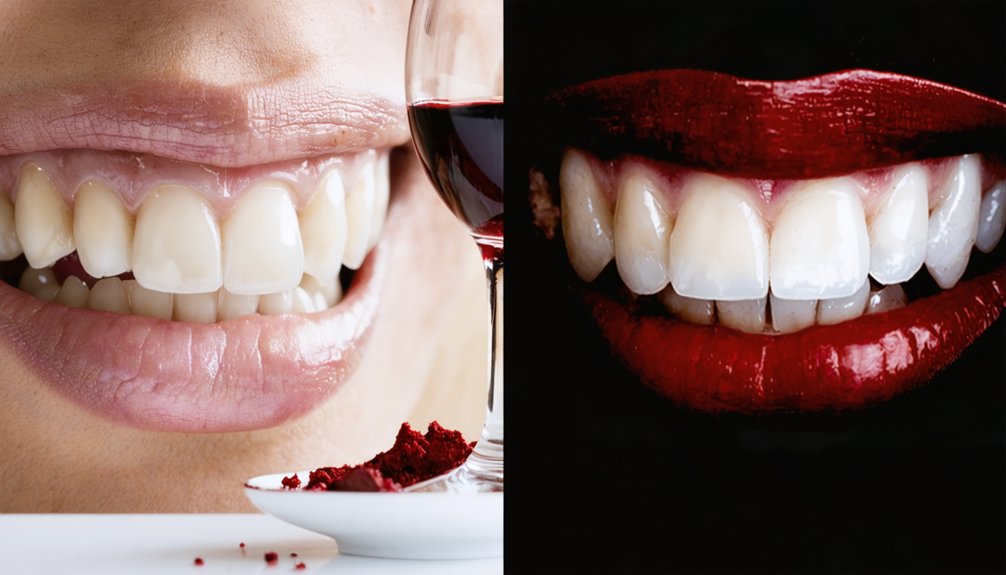
Even after achieving ideal whitening results, certain foods, habits, and conditions accelerate re-staining faster than others. Your staining habits directly determine how long whitening maintenance remains effective.
Beverage consumption—particularly coffee, tea, and red wine—degrades color intensity rapidly due to food acidity and chromogen concentration. Smoking effects compound discoloration types by embedding tar and nicotine into enamel, markedly shortening results.
Poor dental hygiene accelerates surface staining by allowing pigmented compounds to bind more aggressively. Your lifestyle choices, including frequency of staining food intake and oral care consistency, dictate re-staining speed.
Clinically, touch-ups every six to twelve months counteract these factors. Controlling what you consume and maintaining disciplined oral hygiene gives you measurable influence over how long your results persist.
How Your Daily Habits Speed Up Re-Staining
Your daily habits directly determine how quickly whitening results fade. Lifestyle choices like consuming staining foods, coffee, tea, or wine accelerate re-staining considerably. Smoking effects are particularly aggressive, reducing results within 4 to 6 weeks.
Three controllable factors drive whitening frequency needs:
- Beverage impact – Dark drinks penetrate enamel daily, demanding consistent oral hygiene practices and rinsing immediately after consumption.
- Staining foods – Berries, sauces, and acidic foods erode whitening results faster than most people realize.
- Maintenance tips – Using whitening toothpaste twice daily and scheduling touch-ups every 6 to 12 months directly extends your results.
You control the timeline. Reducing staining exposures and maintaining disciplined oral hygiene keeps re-staining slower and your whitening investment longer-lasting.
When to Schedule Your Next Whitening Touch-Up
You can recognize fading signs when your teeth begin shifting toward yellow or gray tones, typically within 6 to 12 months after treatment, depending on your whitening method and lifestyle.
If you consume coffee, tea, or wine regularly, you’ll likely need a touch-up sooner than someone who avoids heavy staining habits.
Scheduling your next session every 6 to 12 months balances effective maintenance while respecting the recommended minimum 6-month interval between treatments to prevent overexposure.
Recognizing Fading Signs
- Color shift near the gum line — Yellowing typically begins at the gumline before spreading across the tooth surface, signaling early re-staining.
- Visible contrast against dental restorations — When crowns or veneers appear brighter than your natural teeth, your enamel’s whiteness has measurably declined.
- Increased stain absorption after pigmented foods — If coffee, tea, or wine leave noticeable marks that don’t resolve with brushing, your enamel’s protective layer has weakened.
Catching these signs early lets you schedule a touch-up within the recommended six-to-twelve-month window, maintaining consistent results without overexposure risks.
Recommended Touch-Up Intervals
Scheduling touch-ups at the right intervals preserves your results without overexposing your enamel to whitening agents. Dentists recommend waiting six months between sessions to minimize sensitivity and enamel degradation.
For in-office treatments, touch up timing typically falls every twelve to twenty-four months, depending on your dietary habits and oral hygiene discipline.
At-home kit users generally need touch-ups every four to six months, while whitening strip users may require them sooner.
Key maintenance tips include reducing coffee, tea, and wine consumption, brushing twice daily, and using whitening toothpaste periodically between sessions.
If you smoke or consume heavy staining foods regularly, expect shorter intervals. Track your shade changes consistently—this data helps you schedule precisely rather than guessing.
Lifestyle Factors Affecting Timing
While touch-up intervals provide a general framework, your daily habits ultimately determine when you’ll need your next whitening session. Your lifestyle choices directly accelerate or delay re-staining, giving you measurable control over results.
Three primary factors impact your whitening timeline:
- Beverage consumption and dietary impacts — Coffee, tea, and wine stain enamel fastest; reducing intake or rinsing immediately after preserves brightness longer.
- Smoking effects — Tobacco accelerates discoloration markedly, often shortening results to 4–6 weeks without cessation.
- Oral hygiene and dental care — Twice-daily brushing and regular professional cleanings extend whitening effects considerably.
Aging factors also contribute, as enamel naturally thins over time, affecting how long results hold. Adjusting these variables lets you strategically time your next session.
Which Teeth Whitening Method Lasts the Longest?
When comparing teeth whitening methods by longevity, in-office professional treatments consistently deliver the longest-lasting results, ranging from 1 to 3 years with proper oral hygiene.
This whitening longevity advantage stems from higher-concentration peroxides applied under controlled conditions, maximizing treatment effectiveness beyond what at-home options achieve.
Custom gel trays rank second, lasting up to 12 months with consistent care.
Custom gel trays deliver results lasting up to 12 months, making them a strong runner-up among whitening methods.
At-home whitening kits follow at 4 to 6 months, while whitening strips cap results at roughly 6 months.
Whitening toothpaste offers the shortest duration, typically 3 to 4 months.
Your lifestyle choices directly influence how long each method holds.
You’ll extend any treatment’s results by avoiding coffee, tea, wine, and tobacco while maintaining disciplined daily oral hygiene between whitening sessions.
Frequently Asked Questions
Can Teeth Whitening Results Vary Based on Natural Tooth Color?
Yes, your natural tooth shade directly impacts results—severe discoloration shortens whitening effects considerably. You’ll find different whitening techniques perform variably; those with minor stains can maintain results up to three years longer than heavily stained teeth.
Does Teeth Sensitivity Affect How Long Whitening Results Last?
Sensitivity doesn’t directly shorten your whitening results, but it can affect your sensitivity management strategy. If you’re spacing out whitening products due to discomfort, you’ll likely extend treatment timelines, potentially reducing cumulative whitening effectiveness over time.
Are Whitening Results Permanent if Teeth Are Veneered or Capped?
“Nothing lasts forever.” Veneered teeth and capped teeth don’t respond to whitening—they retain their manufactured shade permanently. You’ll need replacements if discoloration occurs, as whitening agents can’t penetrate ceramic or porcelain restorations effectively.
Can Medications or Health Conditions Impact Teeth Whitening Longevity?
Yes, medication effects and health conditions can shorten your whitening longevity. Tetracycline stains, dry mouth, or enamel disorders reduce treatment efficacy. You’ll need more frequent touch-ups every six months to maintain visible results effectively.
Does Age Influence How Long Teeth Whitening Results Typically Last?
Yes, age factors influence your whitening longevity. As you age, enamel thins, accelerating re-staining. Your lifestyle habits—like coffee or smoking—compound this. Touch-ups every 6–12 months help you maintain control over lasting results.
References
- https://www.healthline.com/health/how-long-does-teeth-whitening-last
- https://www.aspendental.com/dental-care-resources/how-long-does-teeth-whitening-last/
- https://www.ahgcdental.com/blog/how-long-do-teeth-whitening-results-typically-last/
- https://www.nspali.com/how-long-does-teeth-whitening-last/
- https://www.healthysmilesgeorgetown.com/blog/long-take-whiten-teeth/
- https://www.suttonpda.com/teeth-whitening-results/