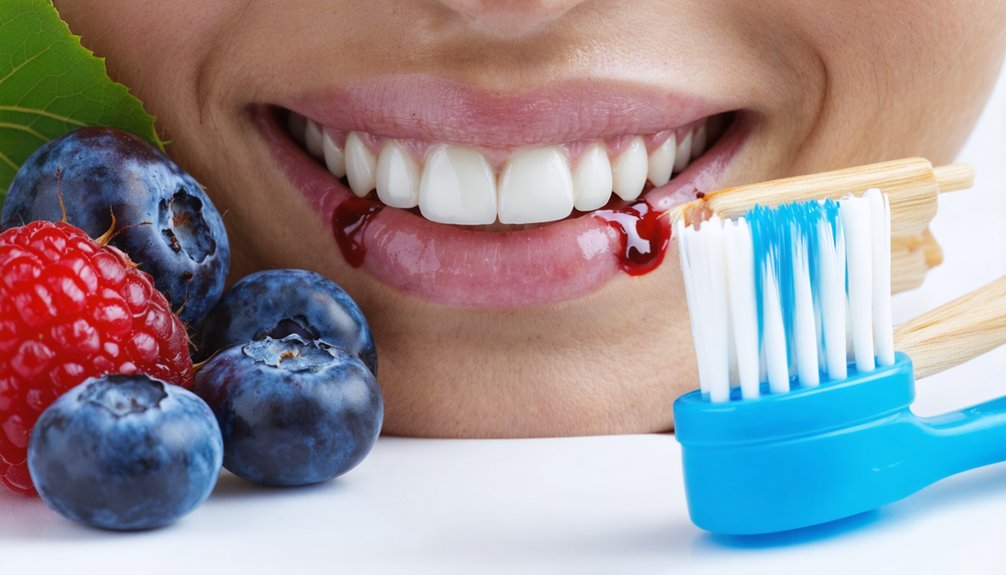
Berries and acidic sauces stain your teeth through a two-step process: chromogens bind to your enamel’s surface while acids create microscopic pores that trap pigments deep within the tooth structure. You’ll minimize discoloration by consuming protective foods like hard cheese afterward, rinsing with water immediately, and waiting 30 minutes before brushing to prevent acid-weakened enamel damage. Fluoride toothpaste and daily flossing remove surface chromogens, while xylitol gum stimulates protective saliva production. Understanding the complete biochemical mechanism reveals additional prevention strategies.
Key Takeaways
- Chromogens in berries and acids in sauces weaken enamel, allowing pigments to penetrate and create persistent discoloration.
- Berry pigments bind to plaque and enamel surfaces, with juice form coating all tooth surfaces for intensified staining.
- Acidic sauces below pH 5.5 demineralize enamel permanently, creating rough surfaces that trap pigments more effectively.
- Eat protective foods like dark greens, crunchy vegetables, and hard cheese to neutralize acids and mechanically cleanse teeth.
- Rinse immediately after eating, wait 30 minutes before brushing, and use fluoride toothpaste with daily flossing.
The Science Behind Berry and Sauce Stains on Your Teeth
Chromogens—pigmented molecules in berries and sauces—initiate tooth discoloration through a multi-stage chemical process. These compounds bind directly to your enamel’s surface, while acids simultaneously weaken your enamel’s mineral structure.
This tooth demineralization extent determines staining severity: acids leach calcium and phosphate, creating porous surfaces that trap pigments deeper within microscopic enamel channels.
Berry anthocyanins and sauce-derived chromogens penetrate these compromised pores, forming persistent discoloration. Balsamic vinegar’s density drives pigments deeper, while soy sauce’s fermentation byproducts create adherent complexes with roughened enamel.
Tomato-based sauces combine chromogen concentration with pH levels that etch your enamel, intensifying absorption.
Your stain removal techniques must address both surface-bound pigments and embedded particles. Understanding this dual mechanism—chemical adhesion plus structural porosity—enables targeted intervention before discoloration becomes permanent.
Why Dark Berries Are Among the Worst Culprits for Tooth Discoloration
Dark berries contain chromogens—color-binding molecules that penetrate weakened enamel pores and create persistent discoloration through direct chemical adhesion. Your tooth enamel’s porous structure allows these pigmented compounds to embed within the surface, particularly when berry acids temporarily soften the mineral matrix.
Whether you’re consuming whole blueberries, blackberry juice, or cranberry sauce, all forms deposit chromogens that bond to enamel proteins and resist standard brushing removal.
Chromogens Penetrate Tooth Enamel
Understanding the mechanism behind tooth discoloration requires examining how chromogens—colorless precursor substances—undergo chemical transformation and infiltrate enamel surfaces. When you consume dark berries, these chromogens adhere to your salivary pellicle and dental plaque, creating pathways for deep enamel penetration. The extent of adherence determines stain composition and intensity on your tooth surfaces.
Microbial chromogen sources amplify this process through bacterial metabolites. Actinomyces species and Prevotella melaninogenica produce pigmented compounds via hydrogen sulfide reactions with dietary iron from berries. These pigments penetrate through biofilm tenacity, increasing plaque accumulation risk. Your long term stain management strategy must address both dietary chromogen exposure and bacterial colonization patterns.
Poor oral hygiene accelerates this penetration cycle, allowing chromogenic bacteria to proliferate and deposit persistent pigments within enamel microstructures.
All Berry Forms Stain
While chromogen penetration explains the underlying mechanism, the specific characteristics of berries make them particularly problematic for dental aesthetics. You’re exposing your enamel to staining compounds regardless of berry form—whole blueberries, blackberries, and raspberries all deposit pigments directly onto tooth surfaces.
Processed berry products like jellies and jams concentrate these chromogens, intensifying discoloration risk. Berry juice stains prove especially aggressive since liquids reach interdental spaces and coat all enamel surfaces simultaneously.
The combination of dark pigmentation, enamel-eroding acidity, and tannins creates a triple threat. Blueberries and blackberries rank as worst offenders due to their deep hues and high chromogen content. Even lighter-colored strawberries produce cumulative staining effects over time. You can’t avoid the staining potential by choosing specific preparations—all berry forms compromise your enamel’s appearance.
How Acidic Sauces Break Down Enamel and Set Stains
Every time you consume acidic sauces, your tooth enamel undergoes demineralization—a chemical process that compromises your teeth’s structural integrity and creates pathways for permanent staining. When pH levels drop below 5.5, your enamel softens, allowing chromogenic compounds from sauces to penetrate deeper into the tooth structure. Vinegar-based dressings, tomato sauces, and citrus marinades pose the highest erosion risk, with pH levels approaching 2—comparable to stomach acid.
The demineralization effects create a roughened surface that traps pigments more effectively than intact enamel. Your saliva typically functions as a protective mechanism by neutralizing acidic compounds, but continuous exposure prevents this natural defense system from restoring safe pH levels. Once enamel erosion occurs, the damage remains permanent—your body can’t regenerate this protective layer, making stain prevention critical for maintaining tooth integrity.
Smart Eating Strategies to Prevent Staining Before It Starts
Before staining compounds contact your enamel, strategic food sequencing establishes a protective barrier that markedly reduces pigment adhesion. Consuming dark green vegetables like broccoli before tomato-based dishes creates a defensive film, while lettuce paired with balsamic vinegar deflects acidic condiment staining.
Implement these evidence-based mealtime sequencing protocols:
- Integrate crunchy vegetables (celery, cauliflower, carrots) directly into curry and pigmented meals to mechanically cleanse surfaces
- Consume hard cheese immediately after staining beverages to neutralize acids and fortify enamel
- Use straws for coffee, wine, and dark sodas to bypass anterior tooth surfaces
- Rinse with water post-consumption to eliminate chromogens before bonding occurs
- Reduce frequency of highly pigmented foods to minimize tannin exposure
Balanced nutrient intake emphasizing dairy, fibrous produce, and hydration sustains post-whitening results while supporting long-term enamel integrity.
Quick Actions to Take After Consuming Stain-Causing Foods
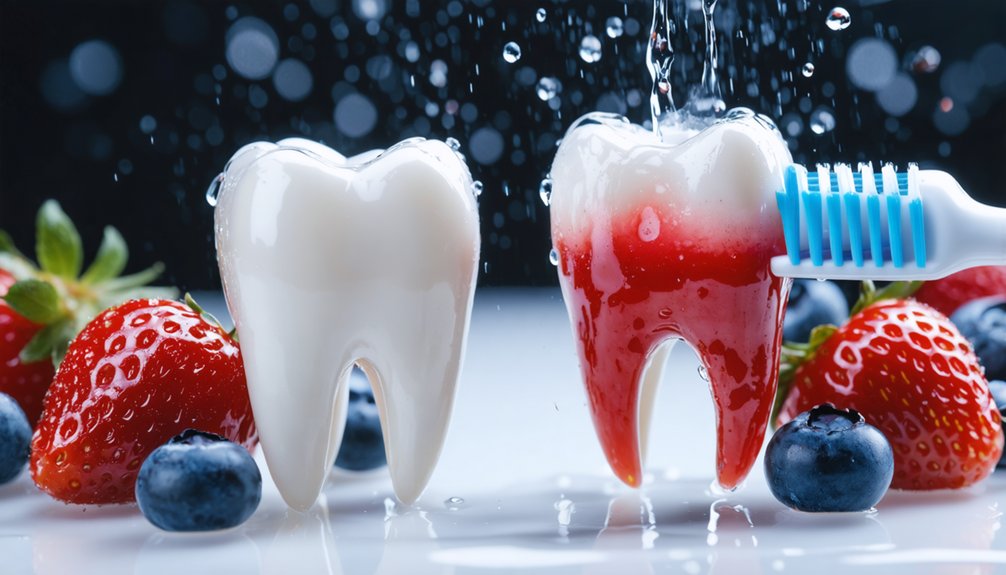
Taking immediate action after consuming berries and sauces markedly reduces chromogen and tannin adherence to enamel surfaces. You’ll minimize staining by implementing evidence-based protocols within 30 minutes of exposure to pigmented foods.
Rinsing techniques and saliva stimulation create an alkaline oral environment that prevents discoloration before it becomes embedded in tooth structure.
Rinse and Brush Immediately
When you consume berries, sauces, or other chromogen-rich foods, immediate action prevents pigments from binding to your enamel. Frequent rinsing with water neutralizes acids and removes chromogens before they adhere to tooth surfaces. This initial step washes away tannins and staining agents that cause extrinsic discoloration.
Your proper brushing routine requires:
- Wait 30 minutes post-rinse before brushing to prevent enamel erosion from softened surfaces
- Use fluoride toothpaste twice daily to maintain clean, stain-resistant teeth
- Apply whitening toothpaste containing silica or hydrogen peroxide for existing extrinsic stains
- Consider electric toothbrushes for superior plaque removal compared to manual alternatives
- Incorporate daily flossing to eliminate trapped particles between teeth
This evidence-based protocol minimizes chromogen adherence and maintains ideal oral hygiene after consuming pigmented foods.
Stimulate Saliva Production Naturally
Saliva functions as your mouth’s natural defense system against chromogenic staining by neutralizing acids, washing away pigmented particles, and remineralizing enamel surfaces. You’ll optimize enzyme secretion patterns by chewing sugar-free xylitol gum, which increases flow rates up to tenfold while preventing decay.
Consume moisture-rich foods like celery, apples, and cucumber to trigger mechanical taste bud stimulation through extended mastication. Maintain eight glasses of water daily while eliminating caffeine and tobacco that compromise production. Incorporate ginger tea or fennel seeds to activate salivary glands through bioactive compounds.
You can also create a homemade rinse using warm water, baking soda, and salt to mimic natural saliva composition. Use a bedroom humidifier to prevent nocturnal xerostomia that concentrates staining compounds overnight.
Managing Long-Term Discoloration From Regular Consumption
Although occasional exposure to pigmented foods poses minimal risk, chronic consumption of berries and sauces initiates progressive enamel discoloration through cumulative chromogen deposition and acid-mediated structural changes. You’ll notice soy sauce’s 1.33-fold increase in black-stained teeth risk demonstrates how regular intake compounds staining effects.
Modifying consumption habits prevents hydroxyapatite dissolution and porosity enhancement that facilitate pigment penetration.
- Immediate oral rinsing following berry or sauce consumption to prevent chromogen adhesion
- Strategic water intake during meals to dilute acids and flush pigments
- Whitening toothpaste application to counteract ongoing discoloration
- Substitution with lighter alternatives like white grapes instead of dark berries
- Professional whitening treatments for established staining requiring clinical intervention
Monitor consumption frequency of high-tannin, acidic foods to maintain enamel integrity and prevent irreversible chromatic alterations.
Frequently Asked Questions
Do Frozen Berries Stain Teeth Differently Than Fresh Berries?
Frozen and fresh berries stain similarly since pigments persist regardless of preparation. However, frozen berry texture prolongs acid exposure when you’re sucking them, while fresh berry juiciness washes away faster. You’ll prevent staining by rinsing immediately post-consumption.
Can Drinking Berry Smoothies Through a Straw Prevent Tooth Staining?
Yes, you’ll reduce staining by using straws positioned toward your mouth’s back. Maximize protection by avoiding excessive berry consumption, using colored straws to monitor pigment levels, and rinsing immediately afterward to control enamel discoloration effectively.
Are White Sauces Like Alfredo Safer for Teeth Than Dark Sauces?
Yes, you’ll find white sauces safer since creamy sauces’ abrasiveness remains minimal and they lack dark chromogens. However, sauce viscosity’s impact prolongs acidic contact, softening enamel. You should rinse immediately post-consumption to prevent secondary staining from other foods.
How Long Should I Wait to Brush After Eating Acidic Foods?
Wait 30 minutes before brushing after acidic foods to protect softened enamel from abrasion. Rinse with water immediately to dilute acids while saliva naturally remineralizes your teeth. You’ll prevent erosion and maintain stronger enamel this way.
Do Electric Toothbrushes Remove Berry Stains Better Than Manual Brushing?
Electric toothbrushes polish berry stains 100% more effectively than manual brushing, like professional detailing versus hand-washing your car. You’ll optimize stain removal by adjusting brush pressure settings and selecting appropriate bristle stiffness levels for your enamel’s specific needs.