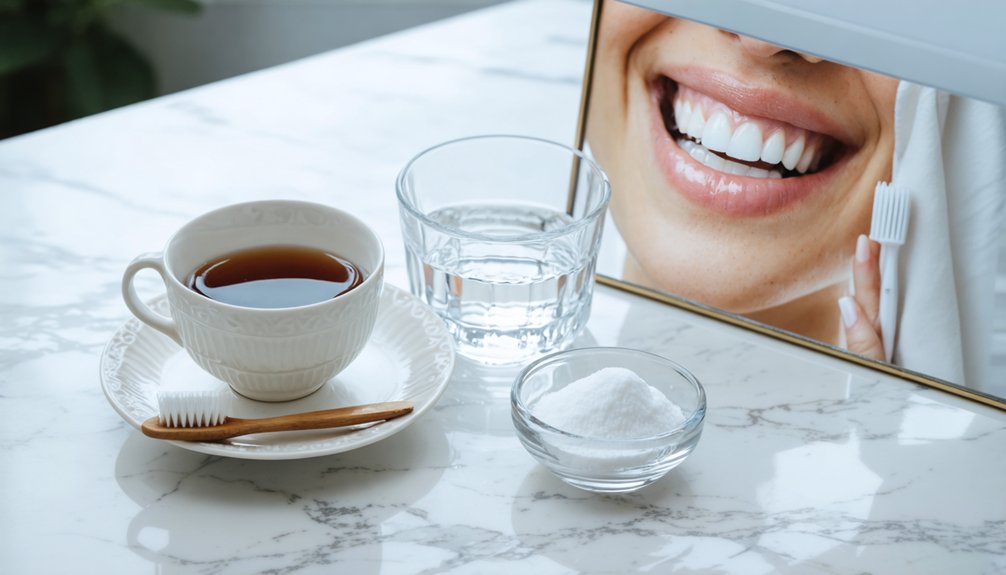
To combat teeth staining from red wine and tea, brush before drinking to reduce plaque adhesion, then rinse with water between sips to neutralize acidity. Wait at least 30 minutes after drinking before brushing to let enamel recover. Adding milk to tea binds tannins through casein proteins, while using a straw minimizes direct enamel contact. Each technique targets a specific staining mechanism, and combining them creates a powerful layered defense you’ll want to explore further.
Key Takeaways
- Brush teeth before drinking red wine or tea to remove plaque, reducing the surface area where stains can adhere.
- Rinse with room-temperature water between sips to neutralize acidity and flush away chromogens before they embed in enamel.
- Adding milk to tea introduces casein proteins that bind to tannins, significantly reducing their staining potential.
- Drinking tea through a straw minimizes direct enamel contact, while chewing xylitol gum afterward stimulates protective saliva production.
- Wait 30 minutes after drinking before brushing, as softened enamel is vulnerable to abrasion from immediate brushing.
Why Red Wine and Tea Stain Your Teeth
Both red wine and tea share a common arsenal of stain-causing compounds that work against your teeth in distinct but equally damaging ways.
Red wine delivers a triple threat: chromogens latch directly onto your enamel, tannins bind those pigments deeper into the surface, and acidity compromises your enamel strength by increasing porosity. The result is a tooth surface increasingly vulnerable with every sip.
Tea operates through a similar mechanism. Tannins adhere stubbornly to enamel, while dark pigments accumulate over time.
Staining frequency matters considerably here — the more consistently you consume either beverage, the harder those stains become to reverse. Black tea rivals red wine in its discoloration potential, while acidity compounds the damage, stripping your enamel’s natural defenses with each exposure.
What Tannins and Acidity Actually Do to Your Enamel
When tannins make contact with your enamel, they don’t simply sit on the surface — they actively bind to the calcium and proteins within it, creating stubborn molecular attachments that ordinary rinsing can’t dislodge.
These tannin effects compound over time, embedding pigments deeper with each glass or cup.
Every sip quietly deepens the stain, compounding tannin damage layer by layer until discoloration becomes difficult to reverse.
Acidity damage operates differently but equally destructively. The low pH in red wine and tea temporarily demineralizes your enamel, increasing its porosity.
This softened, roughened surface becomes far more receptive to staining agents — fundamentally opening microscopic channels for pigments to penetrate.
Together, tannins and acidity form a damaging cycle: acid weakens your enamel’s defenses, and tannins exploit that vulnerability to anchor discoloration firmly in place.
Understanding this mechanism gives you precise leverage to interrupt it.
Brush Before You Drink, Not After
Most people instinctively reach for their toothbrush after a glass of wine or a cup of tea — but that timing works against you. Red wine and tea temporarily soften enamel through acidity, and brushing immediately afterward accelerates enamel erosion rather than preventing stains.
Sound enamel care means waiting at least 30 minutes post-drink before introducing any brushing techniques.
Instead, brush before you drink. Pre-drinking brushing removes plaque — that textured, porous surface where pigments anchor themselves. Without it, tannins and chromogens have considerably less to grip.
Flossing beforehand adds another layer of protection by eliminating food debris between teeth.
This approach shifts your strategy from reactive to preventive, giving you precise control over stain adhesion before it starts.
Wait 30 Minutes Before Brushing After Wine or Tea
The 30-minute window isn’t arbitrary — it’s grounded in enamel chemistry. When you consume wine or tea, their acidity temporarily softens your enamel, leaving it vulnerable to abrasion.
Brushing during this period accelerates erosion rather than preventing stains.
Enamel recovery requires time. Saliva naturally remineralizes and rehardening your enamel’s surface, restoring its structural integrity before you introduce any mechanical pressure.
Respecting this window gives your teeth’s defenses a chance to rebuild.
Once the 30 minutes pass, apply precise brushing techniques — use gentle, circular strokes with a soft-bristled brush.
Aggressive scrubbing defeats the purpose entirely. You’re protecting a surface, not removing it.
Timing your brushing correctly transforms it from a potential liability into a deliberate, effective defense against lasting discoloration.
How Rinsing With Water Flushes Stains Before They Set
Rinsing your mouth with water between sips of red wine or tea neutralizes acidity before it softens and compromises your enamel’s surface integrity.
You’ll disrupt the bonding process of chromogens and tannins by swirling water thoroughly around your teeth, effectively flushing pigments away before they set.
This simple habit reduces your enamel’s stain susceptibility without requiring any additional products or tools.
Water Neutralizes Staining Acidity
Water is one of the simplest yet most effective tools you have against staining acidity. Both red wine and tea carry acidity levels that temporarily weaken enamel, making your teeth more porous and vulnerable to pigment absorption. By rinsing with water between sips, you’re actively neutralizing that acid before it compromises your enamel’s surface integrity.
Water works by restoring your mouth’s pH balance, reducing the window during which staining compounds penetrate weakened enamel.
If you’re exploring water alternatives, sparkling water offers an added mechanical advantage, as its carbonation helps dislodge surface pigments. However, avoid citrus-infused waters, since their acidity levels counteract your protective efforts.
Consistent rinsing keeps your enamel environment controlled, minimizing cumulative discoloration without requiring significant lifestyle disruption.
Swirling Water Between Sips
Water temperature matters considerably. Room-temperature or slightly cool water performs best; extreme cold contracts enamel pores temporarily, while hot water may accelerate pigment absorption.
Avoid temperature extremes during your swirling technique.
Execute the technique deliberately. Draw a moderate water volume, press your lips firmly together, then push water forcefully across all tooth surfaces for two to three seconds.
This mechanical action flushes tannins and chromogens toward the back of your mouth before you spit or swallow.
Consistency separates casual rinsers from those who genuinely maintain enamel clarity over time.
Best Foods That Protect Your Teeth While You Drink
You’re not just eating; you’re actively managing your enamel’s exposure to damaging pigments through precise, intentional food selection.
Does Adding Milk to Tea Really Reduce Staining?
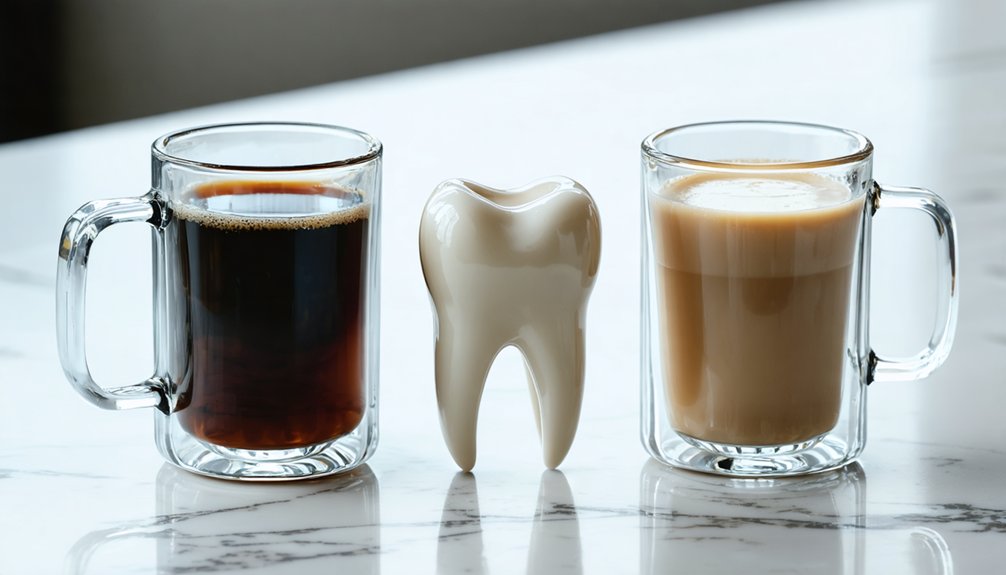
When you add milk to your tea, you’re leveraging casein proteins that actively bind to tannins before they can adhere to your enamel.
This molecular interaction neutralizes the primary staining agents, considerably reducing discoloration potential with each cup you drink.
While milk won’t eliminate staining risk entirely, it’s a scientifically supported strategy that meaningfully disrupts the tannin-to-enamel attachment process.
Milk’s Tannin-Binding Properties
Adding milk to your tea isn’t just a British tradition — it’s a scientifically grounded habit that actively works against tannin-induced staining. The milk benefits stem from a direct tannin interaction: casein proteins in milk bind to tannins before they reach your enamel, effectively neutralizing their staining potential.
When you add milk, these proteins intercept the pigment molecules mid-solution, forming complexes that prevent adhesion to tooth surfaces. The result is a chemically altered beverage with considerably reduced discoloration risk.
This mechanism works most effectively when milk is added in sufficient quantity — a small splash won’t deliver the same protective outcome.
You’re fundamentally engineering your drink’s chemistry, taking deliberate control over what contacts your enamel with every sip.
Protein Interaction With Stains
The science behind milk’s protective role raises a natural question: does this protein-tannin binding actually translate to measurable stain reduction in practice? Research confirms that protein bonding genuinely intercepts tannins before they reach enamel, offering real stain prevention benefits.
Here’s what the evidence shows:
- Casein proteins in milk bind tannin molecules directly in solution, neutralizing their adhesive capacity before contact occurs.
- Whey proteins create an additional molecular barrier, reducing chromogen concentration reaching tooth surfaces.
- Higher milk ratios produce stronger protein-tannin interactions, giving you direct control over stain prevention effectiveness.
You’re not simply diluting tea’s pigments—you’re chemically intercepting them.
Adjusting your milk quantity strategically lets you optimize this protective mechanism with precision.
Effectiveness Against Discoloration
Protein-tannin binding provides a compelling biochemical mechanism, but real-world stain reduction depends on whether that mechanism holds up under practical conditions.
Studies suggest milk does measurably reduce tea’s staining potential, with casein proteins intercepting tannins before they reach your enamel. However, the effectiveness isn’t absolute. You’re neutralizing a portion of the chromogenic load, not eliminating it entirely.
Think of milk as one layer within a broader set of preventive measures rather than a standalone stain removal solution. The ratio matters — a splash won’t deliver the same protection as a more generous addition.
Pair this habit with rinsing, strategic brushing timing, and regular professional cleanings to maximize your defense. Control comes from combining mechanisms, not relying on any single intervention.
Use a Straw, Rinse, or Chew Gum to Block Tea Stains
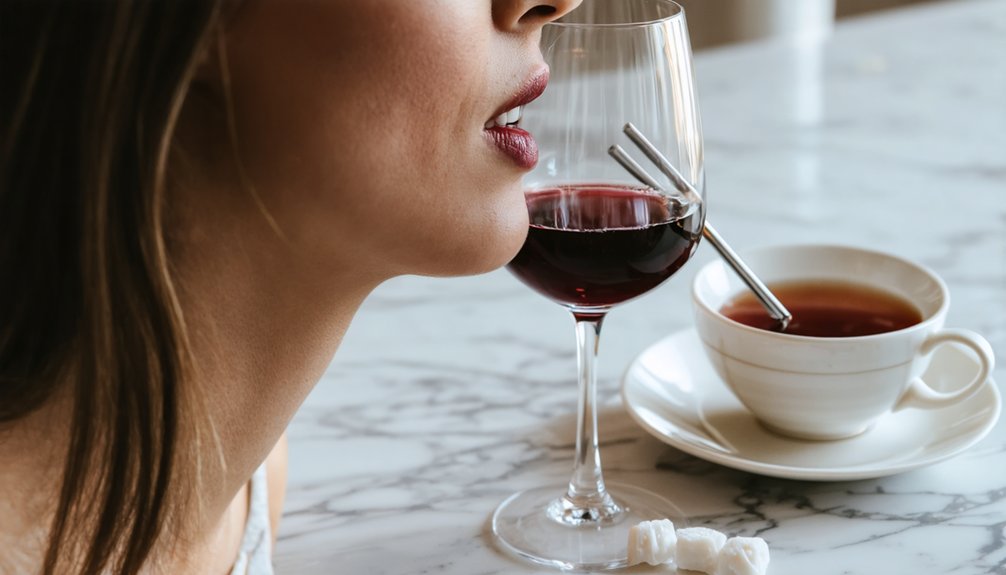
Three simple habits — using a straw, rinsing with water, and chewing xylitol gum — can greatly reduce tea’s staining impact on your enamel. Each method targets a different stage of the staining process, giving you precise control over discoloration.
- Straw benefits: Directing tea past your teeth minimizes direct enamel contact, dramatically reducing pigment and tannin exposure.
- Rinse immediately: Swirling water after drinking flushes residual pigments before they bond, neutralizing acidity simultaneously.
- Gum types matter: Sugar-free xylitol gum stimulates saliva production, which naturally clears debris and neutralizes acids — choose xylitol specifically, as it actively inhibits bacterial adhesion unlike standard gums.
Combining all three creates a layered defense, ensuring tea’s tannins never gain a stronghold on your enamel.
Daily Brushing and Rinsing Habits That Prevent Wine and Tea Stains
Daily brushing and rinsing habits form your strongest defense against the cumulative staining effects of wine and tea. For ideal staining prevention, brush before drinking rather than immediately after. Acidity temporarily softens enamel, so brushing too soon accelerates erosion.
Instead, wait 30 minutes post-consumption, then brush thoroughly to clear residual pigments.
Delay brushing 30 minutes after consuming staining beverages to protect softened enamel while still clearing pigment buildup.
Rinsing strategically amplifies your enamel health results. Alternate sips of red wine or tea with water to continuously flush chromogens and tannins from your enamel surface.
Swirling water between drinks neutralizes acidity and prevents the dry-mouth conditions that accelerate pigment adhesion. Sparkling water offers an added mechanical advantage, as its bubbles actively dislodge surface debris.
Consistent execution of these habits keeps staining compounds from achieving the prolonged enamel contact that causes lasting discoloration.
When Home Prevention Isn’t Enough: Signs You Need a Hygienist
Even with disciplined brushing, rinsing, and dietary precautions, some staining progresses beyond what home care can reverse.
Recognizing when professional stain removal becomes necessary protects both your enamel and your aesthetic results. Hygienist importance becomes undeniable when you notice these warning signs:
- Persistent grey or brown discoloration that resists whitening toothpaste after consistent use beyond four weeks.
- Rough or pitted enamel texture you can feel with your tongue, indicating acidity has compromised the surface and embedded pigments deeply.
- Visible stain accumulation near the gumline where plaque calcifies into tartar, locking wine and tea chromogens permanently without professional-grade instruments.
Don’t let avoidable damage compound.
Schedule a hygienist cleaning twice yearly — your enamel’s long-term clarity depends on it.
Frequently Asked Questions
Can Whitening Toothpaste Reverse Existing Stains From Red Wine or Tea?
Whitening toothpaste can improve stain removal, but it won’t fully reverse deep-set red wine or tea stains. Its whitening effectiveness targets surface discoloration, so you’ll need professional cleaning for stubborn, embedded pigments.
Are Certain Red Wine Grape Varieties Less Likely to Stain Teeth?
Yes, you’ll find that lighter-bodied varieties like Pinot Noir have lower tannin levels and fewer chromogens due to their grape characteristics, making them less likely to stain your teeth than fuller-bodied options like Cabernet Sauvignon.
Does the Temperature of Tea Affect How Severely It Stains Teeth?
Like Achilles’ heel, hot tea’s your vulnerability—it speeds up tannin release, intensifying the staining mechanism. Higher temperatures alter tea composition, opening enamel pores wider, so you’ll experience deeper, faster discoloration than with cooler brews.
Can Dental Sealants Provide Long-Term Protection Against Wine and Tea Staining?
Dental sealants can offer you notable sealant effectiveness by creating a barrier against pigments. For long-term benefits, you’ll want professional cleanings alongside sealants, as tannins and chromogens can still penetrate aging or compromised sealant layers over time.
How Do Genetics Influence an Individual’s Susceptibility to Teeth Staining?
Like a blueprint determining a building’s durability, your genetic factors shape enamel thickness, directly controlling stain susceptibility. Thinner enamel absorbs pigments faster, meaning you’re naturally more vulnerable to wine and tea discoloration.
References
- https://mariettaroswelldentist.com/blog/5-tips-to-stop-your-favorite-drinks-from-staining-your-teeth
- https://www.gentledentistrysparta.com/blog/2025/12/02/5-tips-avoiding-red-wine-teeth-stains-during-holidays/
- https://www.dentistbridgevillepa.com/articles/foods-and-drinks-that-can-stain-your-teeth-and-what-to-do-about-it
- https://abaudeandds.com/7-tricks-to-avoid-teeth-stains-from-red-wine/
- https://www.bupa.co.uk/newsroom/ourviews/teeth-staining-foods
- https://rutgershealth.org/news/how-prevent-wine-teeth-holiday
- https://www.colgate.com/en-us/oral-health/teeth-whitening/does-tea-stain-teeth
- https://www.healthline.com/health/foods-that-stain-teeth