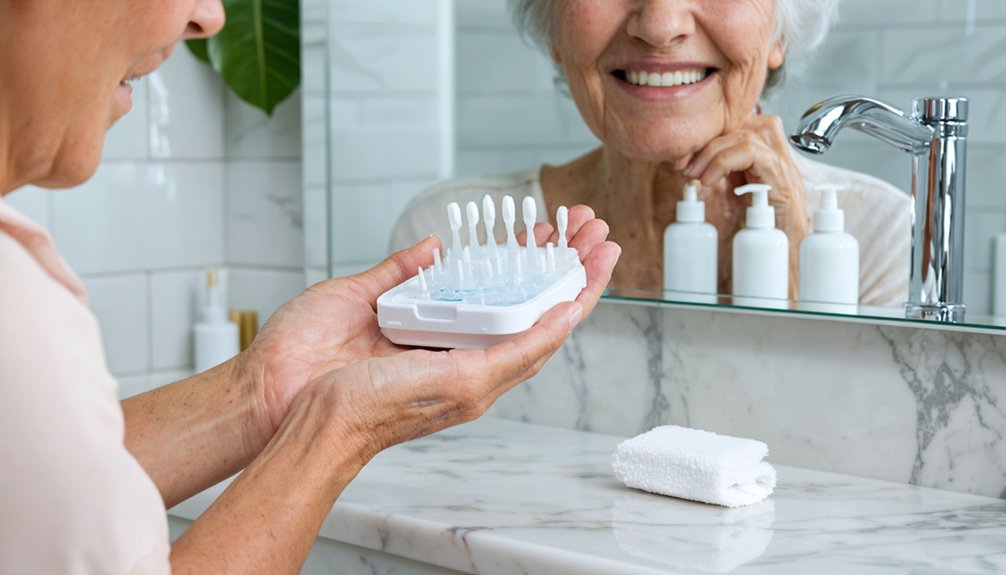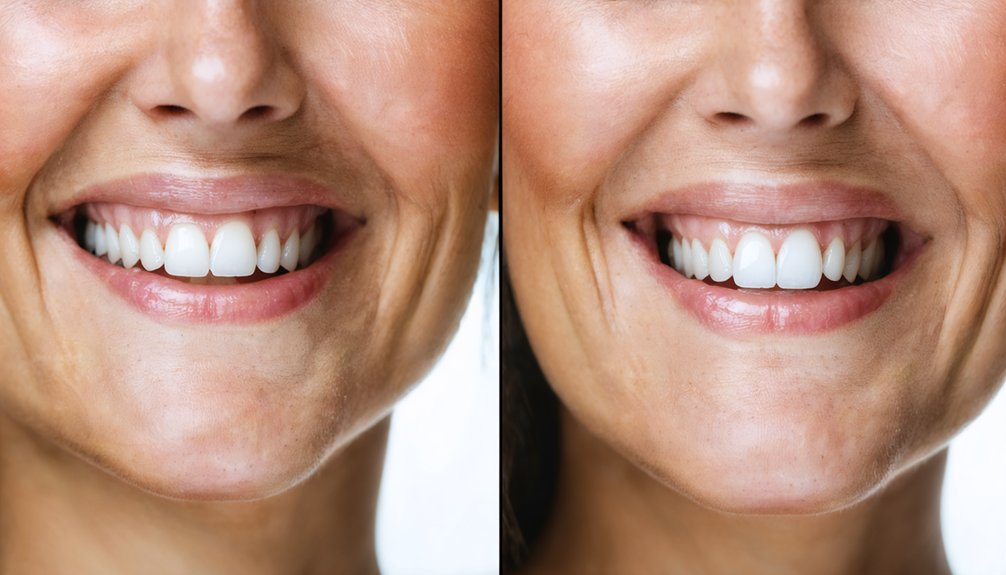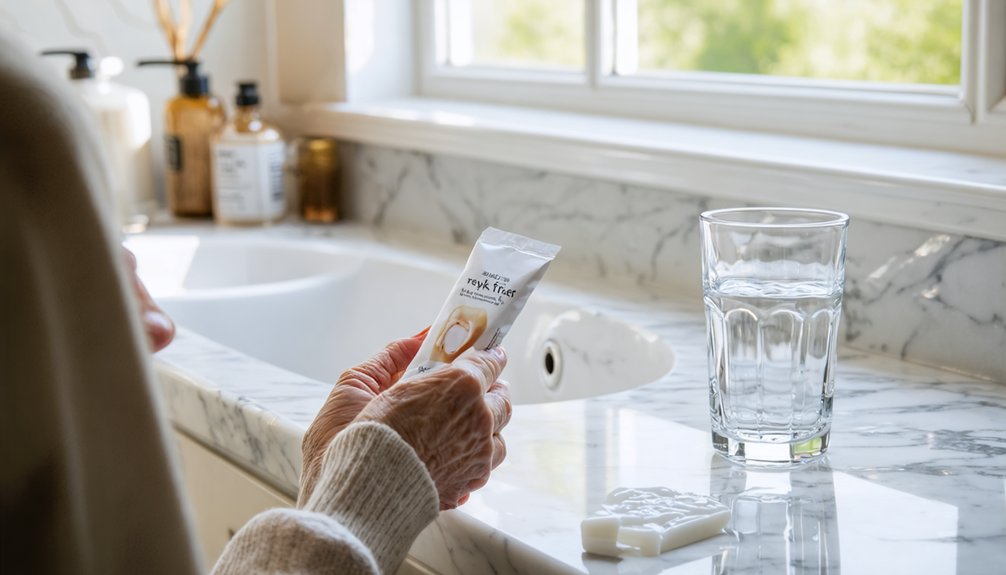
For aged teeth, your best whitening strip options include Crest 3D Whitestrips Sensitive, Lumineux Whitening Strips, and Equate 14-Day Premium Sensitive, all formulated to minimize irritation on thinning enamel. Aged teeth accumulate both extrinsic and intrinsic stains, so you’ll need strips matched to your specific discoloration type. Reduced enamel porosity and increased sensitivity make formula selection critical. Budget, stain depth, and existing restorations all influence which strip delivers the safest, most effective results for your situation.
Key Takeaways
- Crest 3D White Glamorous White and Crest 3D Professional Effects are top choices for targeting intrinsic stains common in aged teeth.
- Sensitive formulas like Crest 3D Whitestrips Sensitive or Equate 14-Day Premium Sensitive minimize irritation for aging teeth with heightened sensitivity.
- Lumineux Whitening Strips use chemical-free ingredients, making them suitable for aged teeth with compromised or thinning enamel.
- Whitening strips only affect natural enamel; restorations like crowns, fillings, and veneers will not whiten alongside natural teeth.
- Consulting a dentist before whitening aged teeth is essential to assess enamel condition, sensitivities, and existing restorations.
Why Whitening Strips Work Differently on Aged Teeth
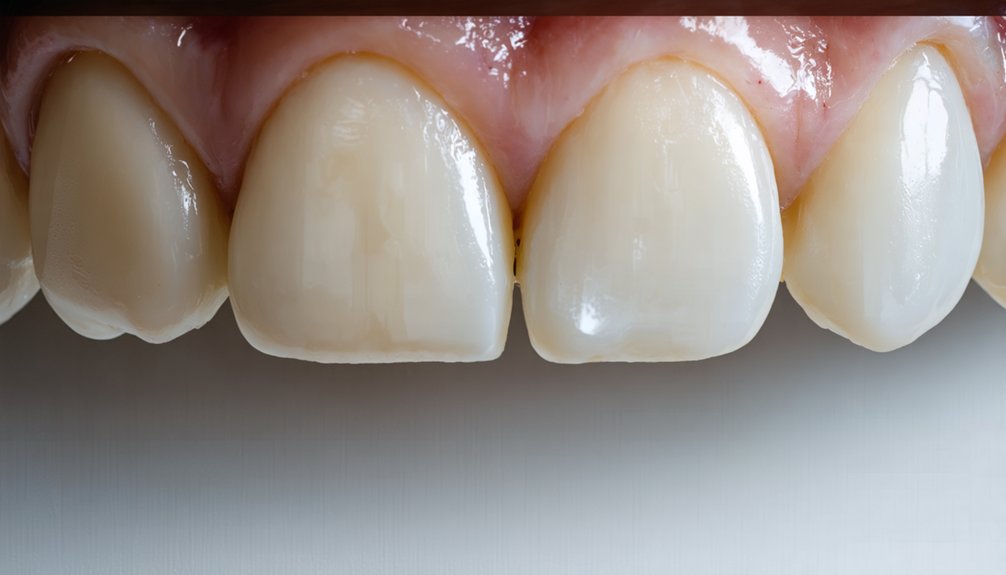
As you age, your teeth undergo structural and chemical changes that directly affect how whitening strips perform. Aging enamel thins progressively, exposing the darker dentin layer beneath.
Aging enamel thins over time, gradually revealing the darker dentin layer beneath and altering how whitening strips perform.
Simultaneously, years of chromogenic compound absorption cause intrinsic staining that surface-level strips struggle to penetrate effectively.
Your enamel’s reduced porosity also alters whitening effectiveness. Younger enamel absorbs peroxide more readily, accelerating oxidation of stain molecules.
Aged enamel resists this penetration, requiring longer contact times or higher-concentration formulas to achieve comparable results.
Additionally, dentinal hypersensitivity increases with age as enamel thins, making standard peroxide concentrations uncomfortable.
You’ll need to match strip formulations precisely to your teeth’s current condition — prioritizing sensitivity-compatible options while still targeting the deeper, age-related discoloration standard strips frequently underperform against.
How to Match Your Strip to Your Type of Age-Related Stain
Since age-related staining falls into distinct categories, you’ll need to identify your specific stain type before selecting a whitening strip formula.
Age-related discoloration causes divide into two primary groups: extrinsic stains from surface deposits and intrinsic stains embedded within dentin.
For extrinsic staining, Equate’s 10-Day Timeless White strips deliver adequate surface-level correction.
For intrinsic stains—the deeper, yellowing discoloration common in aged enamel—Crest Professional Effects targets embedded pigmentation more effectively.
If sensitivity accompanies your discoloration, select Crest’s Sensitive formula or Equate’s 14-Day Premium Sensitive strips before attempting standard concentrations.
Regarding strip application techniques, press firmly along the gumline, ensuring full contact with affected surfaces.
Inconsistent contact reduces efficacy on stubborn intrinsic stains, so precision during application directly controls your outcome.
The Best Whitening Strips for Aged Teeth, Ranked
Five whitening strips stand out for aged teeth based on sensitivity management, stain penetration depth, and formula composition.
Each product’s whitening strip ingredients and whitening duration effectiveness directly determine your results.
The ingredients in your whitening strips and how long they stay effective shape every result you see.
- Crest 3D White Glamorous White – Best overall for intrinsic stain removal.
- Crest 3D Whitestrips Sensitive – Manages age-related sensitivity without compromising formula strength.
- Crest 3D Professional Effects – Targets deep, set-in stains with 20 treatments at $44.99.
- Lumineux Whitening Strips – Chemical-free whitening strip ingredients suit compromised enamel.
- Equate 14-Day Premium Sensitive – Extended whitening duration effectiveness across 28 applications at $19.87.
Note that none of these strips work on crowns, veneers, or fillings.
Consult your dentist before starting any regimen.
Which Whitening Strips Work Best for Sensitive Aging Teeth?
If you have sensitive aging teeth, you’ll want to prioritize strips formulated specifically to minimize irritation while still delivering effective whitening.
Crest 3D Whitestrips Dental Whitening Kit Sensitive and Equate 14-Day Premium Sensitive Strips both address the heightened sensitivity common in older enamel, using gentler active-ingredient concentrations.
Selecting the right formula means you can pursue meaningful whitening results without aggravating underlying sensitivity issues.
Gentle Formulas for Sensitivity
As teeth age, enamel thins and nerve exposure increases, making standard whitening formulas more likely to trigger discomfort. You’ll want to select gentle formulations specifically engineered to minimize sensitivity while delivering effective ingredients.
Crest 3D Whitestrips Sensitive ranks as the top choice, using a lower peroxide concentration that reduces nerve irritation without sacrificing measurable results.
Equate 14-Day Premium Sensitive Strips offer a comparable alternative at a considerably lower price point, extending treatment across 28 applications to gradually whiten without overwhelming compromised enamel.
If you prefer avoiding peroxide entirely, Lumineux Whitening Strips use plant-derived effective ingredients that bypass chemical sensitivity concerns altogether.
Consulting your dentist before starting any regimen guarantees you’re selecting the formula best matched to your enamel’s current condition and sensitivity threshold.
Top Sensitive Strip Picks
Narrowing down your options to the most effective sensitive-formula strips makes the selection process more manageable.
Two strips stand out for strip effectiveness in aging teeth: Crest 3D Whitestrips Dental Whitening Kit Sensitive and Equate 14-Day Premium Sensitive Strips.
Crest’s sensitive formula directly addresses sensitivity solutions by minimizing peroxide-induced discomfort while targeting intrinsic stains common in aged enamel.
It delivers controlled whitening without compromising your comfort threshold.
Equate’s 14-Day Premium Sensitive Strips offer a 28-count treatment at $19.87, making them a cost-efficient option for prolonged regimens.
Both strips exclude fillings, crowns, and restorations, so you’ll need to account for any dental work before committing.
Consulting your dentist beforehand guarantees you’re selecting the strip that aligns precisely with your dental profile.
Why Some Aged Tooth Discoloration Won’t Respond to Strips
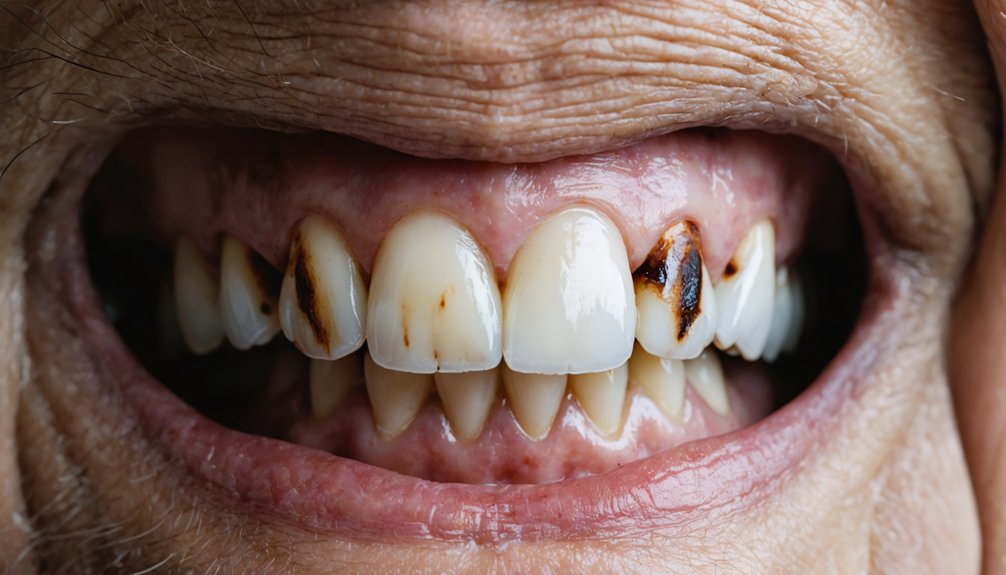
Not all aged tooth discoloration responds to whitening strips because intrinsic stains—those embedded deep within the dentin—resist the surface-level peroxide contact that strips provide.
You should also know that restorations like fillings, crowns, veneers, and dentures don’t whiten at all, since strips only affect natural tooth enamel.
If your discoloration stems from these sources, strips won’t produce the results you’re expecting, and a dentist consultation becomes necessary.
Intrinsic Stains Resist Strips
While whitening strips work well on extrinsic stains—surface discoloration from coffee, tea, or tobacco—they’re largely ineffective against intrinsic stains, which originate within the tooth’s dentin layer.
Understanding intrinsic stain causes helps you set realistic expectations for whitening strip effectiveness.
Intrinsic stains develop from aging, tetracycline exposure, fluorosis, or trauma—all conditions that alter dentin’s internal structure.
Peroxide-based strips penetrate enamel to some degree, but they can’t adequately reach or reverse deep dentin discoloration.
If your teeth appear gray, blue-gray, or uniformly dark rather than yellowed, you’re likely dealing with intrinsic discoloration.
In these cases, strips won’t deliver meaningful results. Your best options shift toward professional-grade veneers, bonding, or in-office bleaching treatments that target deeper structural changes.
Restorations Block Whitening
Beyond intrinsic stains, dental restorations present another hard barrier to strip-based whitening. If you have crowns, veneers, fillings, or dentures, you need to understand that whitening strips won’t alter these restoration types.
Strips work through peroxide penetrating natural enamel — a mechanism that simply doesn’t apply to synthetic materials. This directly limits whitening effectiveness in aged teeth, which statistically carry more restorations than younger ones.
You may apply strips correctly and still see uneven results because treated natural enamel brightens while restorations remain unchanged, creating a mismatched appearance.
Before starting any strip regimen, identify every restoration in your smile. Consult your dentist to map which teeth respond and which don’t. This prevents wasted product and gives you realistic, controllable whitening outcomes.
How to Use Whitening Strips Safely on Aged Enamel
Aged enamel requires careful handling when using whitening strips, as thinning and increased porosity can heighten sensitivity and uneven absorption. Understanding whitening strip ingredients and applying enamel safety precautions lets you maintain control over the process.
Aged enamel demands extra care—thinning and porosity make sensitivity and uneven whitening real risks worth understanding.
Follow these evidence-based guidelines:
- Limit wear time to the recommended duration—Opalescence strips require only 30 minutes daily.
- Align strips precisely with the gumline to prevent gum irritation.
- Choose sensitive formulas like Crest Sensitive or Equate Premium Sensitive to manage discomfort.
- Avoid overuse by adhering strictly to 10–14 day regimens.
- Consult your dentist before starting any drugstore kit, particularly if you’ve experienced prior sensitivity.
Results vary depending on stain type, so realistic expectations remain essential for aged enamel treatment.
Best Whitening Strips for Aged Teeth by Budget
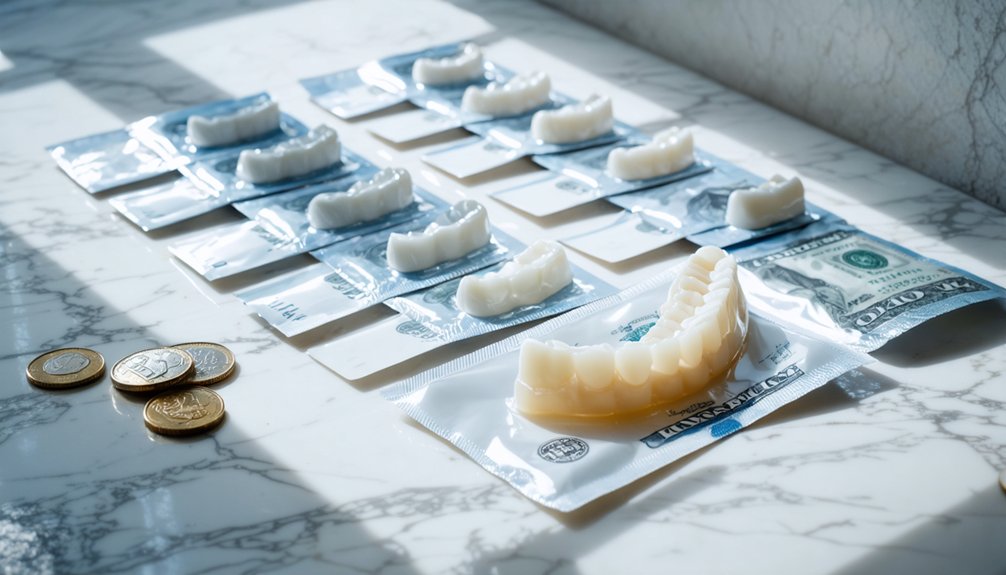
Finding the right whitening strip for aged teeth doesn’t have to strain your budget, as effective options exist across multiple price points.
For budget-conscious choices, Equate 14-Day Premium Sensitive Strips at $19.87 deliver a 28-count treatment specifically designed for sensitivity.
In the mid-range, Crest 3D White Professional Effects at $44.99 targets intrinsic stains common in aged teeth.
An effectiveness comparison reveals that higher price points often correlate with stronger formulations addressing deeper discoloration.
Affordable options like Equate still provide clinically relevant results for surface staining.
You should note, however, that strips remain ineffective on fillings or restorations regardless of cost.
Consulting your dentist before selecting any kit guarantees you’re choosing the most appropriate formula for your specific enamel condition.
When Aged Teeth Need a Dentist’s Clearance Before Whitening
Before applying any whitening strips to aged teeth, you need a dentist’s clearance to avoid complications. A dentist consultation establishes whether your enamel, restorations, or existing sensitivities can tolerate whitening treatments. It also sets accurate treatment expectations.
Before whitening aged teeth, dentist clearance isn’t optional — it protects enamel, flags sensitivities, and sets realistic treatment expectations.
Schedule a consultation first if you have:
- Crowns, veneers, or fillings — strips won’t whiten restorations, creating uneven results.
- Gum recession or exposed roots — peroxide penetrates differently on exposed dentin.
- Active cavities — whitening accelerates decay progression.
- Severe enamel erosion — strips may intensify sensitivity or cause tissue damage.
- Recent dental work — new restorations require a stabilization period before whitening.
Your dentist identifies contraindications, recommends appropriate formulas, and confirms realistic outcomes. Skipping this step risks irreversible enamel damage and unmet treatment expectations.
Frequently Asked Questions
Can Whitening Strips Be Used Alongside Other Dental Whitening Treatments?
You can combine whitening strips with other treatments, but consult your dentist first. Whitening strip compatibility varies, and combined treatment effectiveness depends on your stain type, sensitivity levels, and whether restorations like crowns or fillings are present.
How Long Do Whitening Strip Results Typically Last on Aged Teeth?
Results fade, sensitivity grows, and consistency matters—your whitening strips typically last three to six months on aged teeth. Manage teeth sensitivity by following application tips: press firmly, align carefully, and maintain regular treatments for controlled, lasting results.
Do Whitening Strips Expire, and Does Expiration Affect Their Effectiveness?
Yes, whitening strips do expire. You’ll notice expiration signs like dried gel or discoloration. Expired strips lose key effectiveness factors—the peroxide breaks down, reducing whitening power considerably. Always check dates before you apply them.
Can Aged Teeth Be Whitened While Wearing Orthodontic Retainers?
You shouldn’t use whitening strips while wearing orthodontic retainers, as retainer compatibility issues block strip adhesion, compromising whitening effectiveness. Remove your retainer first, apply strips directly to teeth, then reinsert after treatment.
Are Whitening Strips Safe to Use After Recent Dental Fillings?
You shouldn’t use whitening strips immediately after recent dental fillings. Strips won’t whiten restorations, and sensitivity concerns increase post-procedure. Follow application tips carefully, consult your dentist first, and wait until healing’s complete before starting treatment.
References
- https://www.healthline.com/health/dental-and-oral-health/best-teeth-whitening
- https://opalescence.com/products/whitening-strips
- https://nhdentistrybeverlyhills.com/press/6-of-the-best-teeth-whitening-kits-in-the-drugstore/
- https://www.walmart.com/c/best-sellers/teeth-whitening-strips