If you have sensitive teeth, you’ll need to approach whitening strategically to avoid aggravating exposed nerve pathways. Choose products labeled specifically for sensitive teeth, containing potassium nitrate or fluoride to calm nerve responses. Avoid abrasive ingredients like activated charcoal and high-concentration peroxides that accelerate enamel erosion. Apply desensitizing gel before and after sessions, limit whitening durations, and consume only room-temperature foods for 48 hours post-treatment. The full protocol goes much deeper than these essentials.
Key Takeaways
- Choose whitening products labeled for sensitive teeth, containing desensitizing agents like potassium nitrate or fluoride to minimize nerve irritation.
- Avoid abrasive ingredients like activated charcoal and high-concentration peroxides, which can permanently damage weakened enamel and intensify sensitivity.
- Apply desensitizing gel before and after whitening sessions to intercept escalating sensitivity and protect exposed nerve endings.
- Limit whitening sessions to recommended durations and avoid acidic foods beforehand to protect compromised enamel effectively.
- Consume foods and beverages at room temperature for 24 to 48 hours post-whitening to reduce thermal sensitivity triggers.
The Real Reason Whitening Hurts Sensitive Teeth
Whitening hurts sensitive teeth because peroxide penetrates the porous enamel and reaches the dentin, where microscopic tubules connect directly to nerve endings. When peroxide enters those tubules, it triggers fluid movement that stimulates nerves, producing sharp, shooting pain.
That’s the clinical reality behind the discomfort you’re experiencing.
One of the most persistent whitening myths is that sensitivity means permanent damage. It doesn’t—but ignoring your sensitivity triggers will escalate the problem.
Thin enamel, gum recession, and pre-existing microfractures all amplify peroxide’s impact on your nerves. You’re not experiencing a random reaction; you’re experiencing a predictable biological response.
Understanding this mechanism puts you in control, allowing you to make precise decisions about concentration levels, application duration, and protective protocols.
Ingredients to Avoid With Sensitive Teeth
When whitening sensitive teeth, you’ll want to steer clear of abrasive ingredients like activated charcoal and gritty pastes that physically scrape and erode enamel.
High-concentration bleaches compound this damage by penetrating weakened enamel too aggressively, triggering sharp nerve pain and long-term structural harm.
Many over-the-counter products lacking sensitivity labels combine these risks, making it critical that you scrutinize ingredient lists before committing to any whitening regimen.
Avoid Abrasive Whitening Ingredients
Protecting sensitive enamel means steering clear of certain whitening ingredients that cause more harm than brightness. Abrasive ingredients like activated charcoal physically scrape enamel surfaces, creating microscopic damage that worsens sensitivity over time.
Despite its trendy status, charcoal offers no clinical evidence supporting safe enamel protection.
Baking soda, while mildly effective, causes excessive wear with frequent use. Limit its application strictly. High-concentration bleaches and prolonged exposure sessions accelerate enamel breakdown, triggering sharp nerve responses you’ll want to avoid.
Gritty pastes produce irreversible structural loss, eliminating your ability to reverse the damage later.
Always check labels before purchasing any whitening product. Choose formulas specifically marked for sensitive teeth, containing lower peroxide concentrations and desensitizing agents.
You control what contacts your enamel—make those choices deliberately and precisely.
High-Concentration Bleach Risks
Beyond abrasive ingredients, high-concentration bleaches pose a distinct and equally damaging threat to sensitive teeth.
High concentration bleach dangers include accelerated enamel erosion, heightened nerve exposure, and prolonged post-treatment pain. When peroxide levels exceed what your enamel can tolerate, enamel damage effects become permanent — you can’t rebuild what’s been chemically stripped away.
You should avoid over-the-counter products containing bleach concentrations above 10% without professional oversight. Prolonged exposure compounds the damage, creating micro-channels in enamel that intensify sensitivity with each subsequent session.
Dentists deliberately use lower-concentration formulas with protective additives precisely because they understand these risks.
If you’re managing sensitivity, prioritize products explicitly labeled for sensitive teeth, and consult your dentist before attempting any high-strength bleaching protocol.
Harmful Over-The-Counter Products
Not all over-the-counter whitening products are safe for sensitive teeth, and some contain ingredients that cause irreversible damage. When conducting product comparisons, you’ll find that activated charcoal and high-abrasive formulas physically scrape enamel, creating permanent structural loss.
Baking soda-heavy products accelerate wear when used repeatedly, compounding existing sensitivity.
Harmful ingredients extend beyond abrasives. High-concentration peroxides in standard OTC strips overwhelm compromised enamel, triggering sharp, prolonged nerve pain.
Gritty pastes marketed as “natural” whiteners often lack sensitivity-specific formulations, making them inappropriate for your needs.
You should exclusively select products labeled for sensitive teeth, confirming they contain desensitizing agents like potassium nitrate or fluoride.
Ignoring these distinctions doesn’t just cause discomfort—it accelerates enamel degradation, reducing your long-term whitening options considerably.
Best Whitening Products for Sensitive Teeth
When sensitivity is a concern, selecting the right whitening product makes all the difference.
You’ll want effective whitening solutions that use gentle formulas designed specifically for compromised enamel.
Crest 3D White Whitestrips Gentle Routine delivers reliable brightening with lower peroxide concentrations, reducing nerve overstimulation.
Sensodyne Extra Whitening combines stain removal with potassium nitrate, actively calming nerve endings during daily use.
For professional-grade control, dentist-dispensed custom tray kits offer gradual results over two to four weeks while minimizing gum irritation.
Over-the-counter gels labeled for sensitive teeth include built-in desensitizing agents that protect enamel throughout treatment.
Always verify that your chosen product carries a sensitivity-specific label.
Skipping this step risks unnecessary discomfort and enamel damage, undermining your whitening results entirely.
Pre-Whitening Steps to Protect Sensitive Enamel
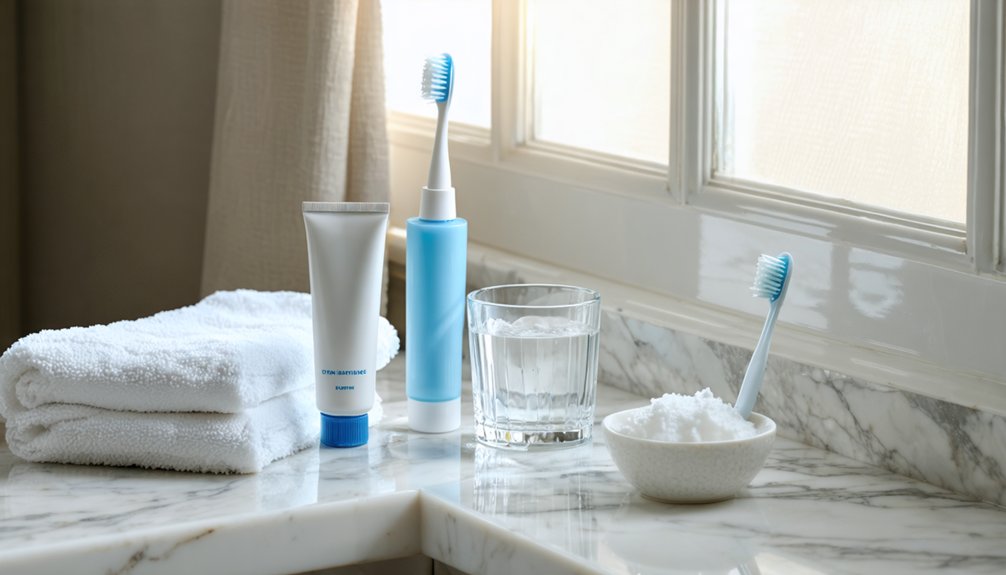
Preparing your enamel before whitening greatly reduces sensitivity and improves treatment outcomes. Implementing pre-treatment precautions and enamel fortification strategies gives you control over discomfort before it starts.
Fortify your enamel before whitening—proactive preparation minimizes sensitivity and sets the foundation for superior treatment results.
Follow these targeted steps:
- Apply desensitizing gel or fluoride treatment 30 minutes before each session to create a protective enamel barrier.
- Eliminate acidic foods and beverages—citrus, soda, and vinegar weaken enamel, amplifying sensitivity during treatment.
- Switch to a soft-bristled toothbrush using gentle circular motions to prevent micro-abrasions that compromise enamel integrity.
Incorporating fluoride mouthwash daily accelerates enamel fortification, reconstructing mineral density before sessions begin.
Scheduling a professional cleaning beforehand removes plaque buildup that intensifies sensitivity, ensuring your whitening treatment works on the cleanest, most receptive surface possible.
Safe Application Techniques That Prevent Sensitivity Spikes
How you apply whitening treatments matters as much as which products you choose. Safe application begins with timing—limit sessions to the recommended duration and never exceed them.
Apply whitening strips or gels to dry teeth for better adhesion and reduced gum contact. Keep product precisely on enamel surfaces, avoiding soft tissue exposure entirely.
For sensitivity management, use shorter initial sessions to gauge your tolerance before committing to full treatment cycles. Apply desensitizing gel immediately after each session using a custom tray, allowing active ingredients to penetrate enamel directly.
Space sessions every other day rather than consecutively to allow recovery time. If sharp sensitivity spikes occur, pause immediately and switch to sensitive toothpaste for 48 hours before resuming.
Controlled, methodical application protects enamel while delivering consistent results.
How to Calm Sensitivity After Whitening
After whitening, apply a desensitizing gel directly to your teeth or load it into your custom tray for immediate nerve relief.
You should also avoid consuming foods and beverages at extreme temperatures, as hot coffee or ice water can trigger sharp sensitivity spikes in freshly treated enamel.
These two targeted steps let you manage post-whitening discomfort without interrupting your overall whitening progress.
Desensitizing Gel Application
Desensitizing gel works by delivering active agents directly to exposed dentin tubules, blocking nerve signals that trigger post-whitening discomfort. Understanding proper gel application techniques maximizes desensitizing gel benefits and restores comfort efficiently.
Apply gel using one of these targeted methods:
- Via custom tray: Load a thin layer into your whitening tray, seat it for 10–20 minutes post-treatment, then remove and rinse thoroughly.
- Direct fingertip application: Massage gel onto sensitive surfaces using circular motions, allowing full absorption before rinsing.
- Brush-on technique: Use a soft-bristled brush to coat each tooth precisely, targeting the most reactive areas.
Consistency determines outcomes. Apply gel immediately after whitening sessions to intercept sensitivity before it escalates.
Don’t delay treatment—early intervention protects enamel integrity and keeps your whitening protocol on schedule.
Avoiding Temperature Extremes
Blocking nerve signals with desensitizing gel addresses immediate post-whitening discomfort, but what you eat and drink in the hours that follow directly affects how quickly sensitivity resolves.
Temperature regulation becomes a critical variable in your recovery protocol. Freshly whitened teeth have temporarily compromised enamel, making exposed nerve endings highly reactive to thermal extremes.
Hot beverages like coffee and tea trigger sharp pain responses, while ice-cold drinks produce identical results.
Implement strategic dietary adjustments by consuming foods and liquids at room temperature for at least 24 to 48 hours post-treatment.
Avoid soups served piping hot, frozen desserts, and iced beverages entirely during this window.
You control how fast sensitivity diminishes by eliminating thermal triggers that repeatedly stimulate already-inflamed nerve pathways and delay complete enamel recovery.
Frequently Asked Questions
Can Whitening Treatments Permanently Damage Nerves in Sensitive Teeth?
Like a storm that passes, whitening won’t permanently damage your nerves. Dispelling whitening myths, you’ll find temporary sensitivity is common, but proper care actively protects your nerve health and prevents lasting harm.
Are There Genetic Factors That Make Some People More Sensitive to Whitening?
Yes, your genetic predisposition directly influences whitening sensitivity. If you’ve inherited thinner enamel thickness, you’ll experience heightened discomfort during treatments. Consult your dentist to customize protocols that account for your unique genetic profile and minimize sensitivity.
How Does Pregnancy Affect Teeth Sensitivity During Whitening Treatments?
Pregnancy hormones heighten your dental health sensitivity, making whitening treatments riskier. You should avoid bleaching agents during pregnancy, as they can intensify nerve responses and potentially harm developing tissue. Consult your dentist before proceeding.
Can Children or Teenagers Safely Use Whitening Products for Sensitive Teeth?
Like Pandora’s box, rushing whitening risks irreversible harm. You shouldn’t use whitening products on children; their enamel’s still developing. Seek professional recommendations and explore safer whitening alternatives, like fluoride treatments, until adulthood guarantees enamel maturity.
Does Teeth Sensitivity From Whitening Worsen With Age Over Time?
Yes, teeth whitening sensitivity can worsen as age effects thin your enamel over time. You’ll notice increased discomfort, so you must use lower peroxide formulas, desensitizing agents, and consult your dentist to maintain control.
References
- https://www.sierrasmiles4u.com/teeth-whitening-for-sensitive-teeth-best-methods-practical-tips/
- https://www.parkcreekdentalcare.com/blog/teeth-whitening-for-sensitive-teeth-safe-options-that-work/
- https://snc.dental/blog/how-to-safely-whiten-sensitive-teeth/
- https://www.stadiumfamilydentistryannarbor.com/teeth-whitening-tips-and-tricks-for-sensitive-teeth/
- https://mypremiumdental.com/how-to-avoid-sensitivity-during-teeth-whitening-treatments/
- https://www.sensodyne.com/en-us/oral-health-tips/whitening-sensitive-teeth/what-to-know/
- http://www.goochlanddentistry.com/whats-the-best-teeth-whitener-for-sensitive-teeth/
- https://precisiondentalnyc.com/10-tips-for-dealing-with-sensitivity-after-teeth-whitening/
- https://www.suttonpda.com/sensitivity-safety-teeth-whitening/