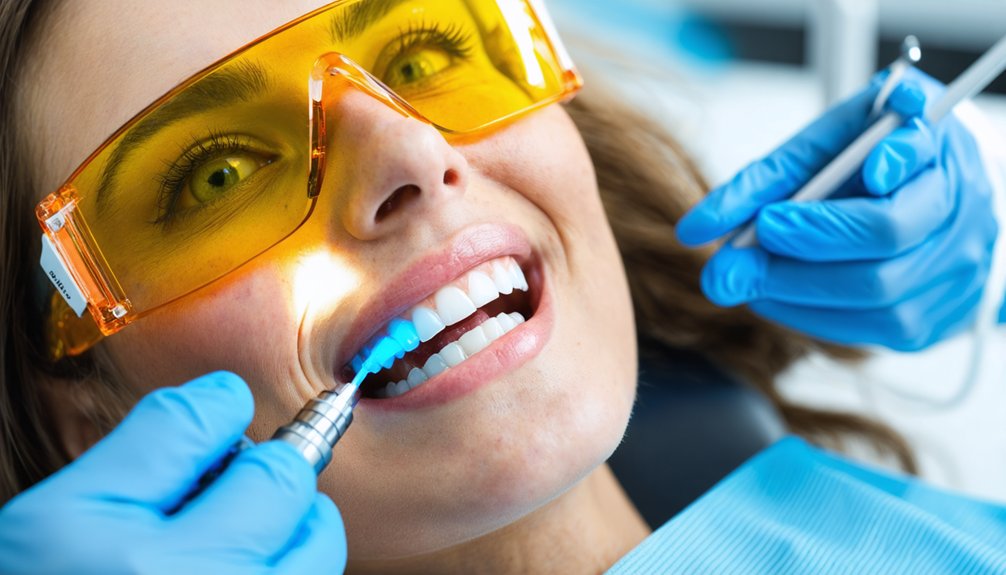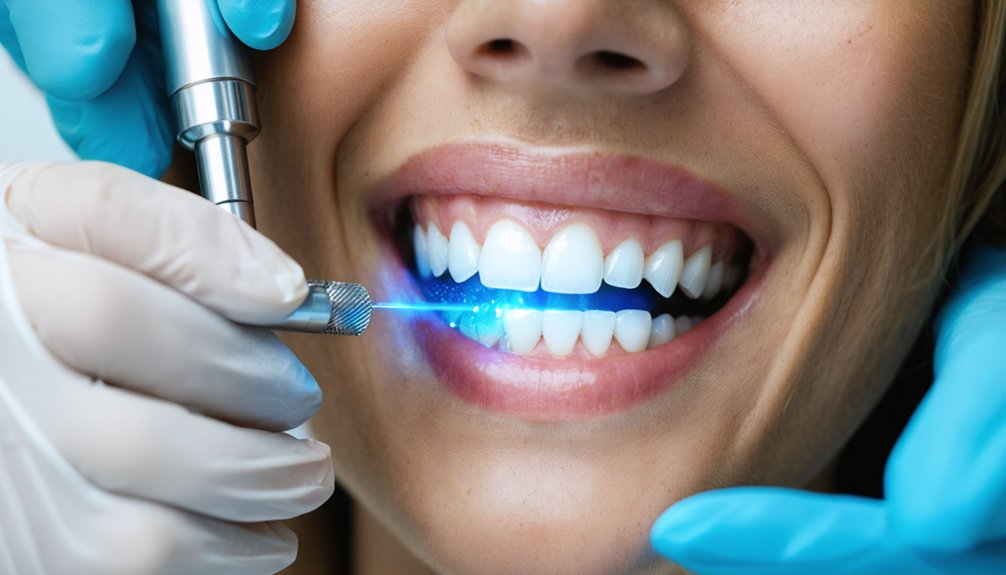
Laser teeth whitening delivers faster, more predictable results than strips or trays by using focused light energy to activate peroxide gel in a single 60–90 minute session. You’ll find options ranging from diode and argon to CO2 systems, each targeting different stain types at costs between $500 and $1,000. Results can last up to 36 months with proper maintenance. The right system depends on your stain type, sensitivity history, and budget—and everything you need to choose confidently is covered ahead.
Key Takeaways
- Laser teeth whitening uses focused light energy to activate peroxide gel, delivering results in 60–90 minutes versus days with at-home methods.
- Diode, Argon, and CO2 lasers target different stain types, making professional consultation essential for choosing the most effective treatment option.
- Laser whitening typically costs $500–$1,000 per session, with pricing influenced by laser type, clinic location, and stain severity.
- Results last 12–36 months depending on dietary habits, oral hygiene consistency, enamel condition, and frequency of professional touch-up treatments.
- Extrinsic stains respond well to diode or argon lasers, while intrinsic discoloration may require CO2 or YSGG lasers for deeper treatment.
How Laser Whitening Works Faster Than Strips and Trays
When you use whitening strips or trays at home, the peroxide gel works slowly through passive contact with enamel.
At-home alternatives rely on prolonged exposure to compensate for lower energy input, which can increase treatment sensitivity without delivering consistent shade improvement.
Laser whitening accelerates the chemical reaction differently.
Focused light energy activates the peroxide gel directly, driving oxidation deeper into enamel and breaking down stain compounds faster.
You’re not waiting days or weeks for gradual results.
Professional recommendations consistently favor laser systems when speed and predictability matter.
A single 60-to-90-minute session can achieve what at-home methods require weeks to approach.
For long-term maintenance, you’ll also need fewer corrective sessions because the initial treatment produces a stronger baseline shade improvement from the start.
Why Diode Lasers Are the Most Common In-Office Whitening Option
Diode lasers dominate in-office whitening because they deliver controlled, targeted energy that activates peroxide gel efficiently without generating excessive heat. Their diode advantages include precise wavelength calibration, which lets your clinician direct energy exactly where stain oxidation needs to occur.
This precision directly supports whitening efficiency by accelerating the chemical breakdown of chromogens embedded in enamel without compromising surrounding soft tissue.
You’re also getting a system that’s adaptable. Clinicians can adjust intensity based on your enamel condition and stain severity, giving you a more personalized protocol than fixed-output alternatives.
Diode systems are also compact and reliable, making them a practical standard across dental offices.
When speed, control, and clinical precision matter to you, diode laser technology consistently outperforms less targeted whitening systems.
How Argon Laser Whitening Targets Deep Yellow Stains
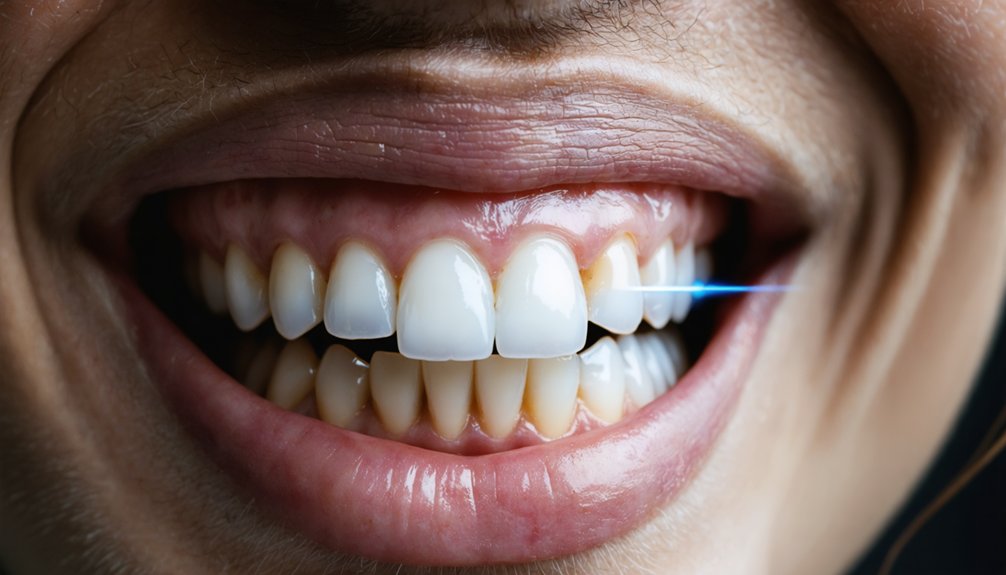
Argon lasers emit blue light at approximately 488 nm, a wavelength that yellow stain pigments absorb with particular efficiency. This selective stain absorption means the laser’s energy concentrates directly within discolored molecules rather than dispersing across surrounding enamel.
When you combine argon laser activation with a professional-grade peroxide gel, the oxidation reaction accelerates markedly, breaking down deep chromogens responsible for stubborn yellow discoloration.
You’ll find this approach especially effective when dietary stains from coffee, tea, or tobacco have penetrated beyond surface enamel. Because the argon laser targets pigment selectively, surrounding tissue exposure remains controlled during treatment.
Clinically, this precision translates into more predictable shade improvement compared to broadband light systems, giving you measurable results within a single appointment.
How CO2 Lasers Use Infrared Energy to Speed Up Whitening
CO2 lasers operate at an infrared wavelength of approximately 10,600 nm, targeting water molecules within the whitening gel and enamel rather than stain pigments directly. This infrared energy generates controlled thermal activation, accelerating peroxide diffusion into enamel tubules.
Understanding the CO2 laser benefits helps you make a precise, informed decision.
The mechanism works through four sequential actions:
- Infrared energy heats water molecules within the applied whitening gel.
- Thermal elevation accelerates peroxide breakdown into active oxygen radicals.
- Oxygen radicals penetrate enamel tubules, oxidizing embedded stain compounds.
- Controlled heat exposure promotes faster diffusion without excessive enamel dehydration.
You’re choosing a system backed by measurable thermal physics.
CO2 laser treatment delivers predictable acceleration of the whitening reaction, giving you faster, clinically verifiable results within a single session.
How YSGG Laser Whitening Handles Stubborn Stains Other Systems Miss
Where other laser systems rely primarily on thermal activation or specific light absorption wavelengths, YSGG lasers operate at approximately 2,790 nm to promote oxidation of stains through direct peroxide activation. This wavelength targets molecular bonds within stain pigments that CO2 and diode systems frequently leave intact, making it one of the stronger stubborn stain solutions currently available in clinical settings.
Among the documented YSGG advantages, its capacity to initiate oxidation without excessive thermal transfer stands out.
You’re less likely to experience pulp sensitivity or soft tissue irritation compared to higher-heat alternatives. This precision makes YSGG particularly effective against deep intrinsic discoloration that resists conventional whitening protocols.
If your staining history includes treatment-resistant pigmentation, YSGG’s mechanism offers a measurably different and more targeted approach.
LED Whitening vs. Laser Whitening: How the Results Compare
Though both LED and laser systems activate peroxide-based whitening gels, the mechanisms driving their results differ enough to affect your final shade outcome.
LED effectiveness relies on broad-spectrum light with lower heat output, while laser precision targets specific stain types with focused energy wavelengths.
Here’s how they compare across critical factors:
- Session duration: Laser whitening typically completes in 60–90 minutes; LED sessions vary widely.
- Stain types: Lasers address deeper intrinsic discoloration more effectively than LED alternatives.
- Sensitivity issues: LED systems generally produce less post-treatment discomfort.
- Cost comparison: LED home alternatives average far less than the $500–$1,000 laser range.
Professional supervision and treatment customization ultimately determine whitening safety and outcome predictability.
If you want controlled, measurable results, laser protocols deliver stronger clinical evidence.
Zoom Whitening vs. True Laser Whitening: Which Delivers Stronger Results?
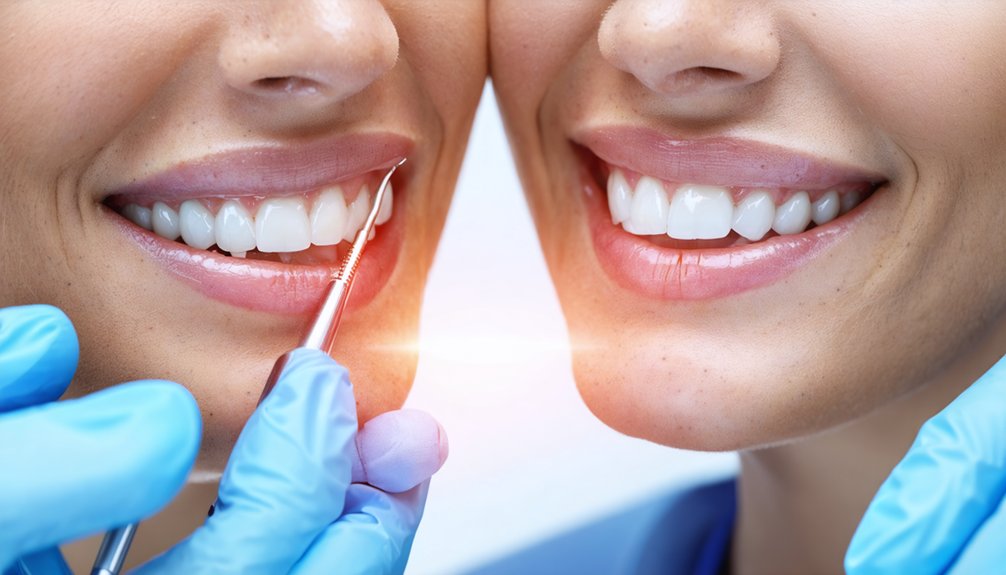
When comparing Zoom whitening and true laser whitening, understanding how each system activates peroxide gel determines which delivers stronger, more predictable results.
Zoom uses a proprietary LED-based lamp, not a true laser, making the Zoom comparison with diode or argon laser systems a meaningful distinction.
True laser systems deliver focused, wavelength-specific energy that penetrates enamel more precisely, accelerating peroxide oxidation at a deeper level.
For whitening effectiveness, true laser whitening typically produces more dramatic shade changes, particularly for stubborn intrinsic stains.
Zoom can deliver solid results in a single session, but it lacks the wavelength precision that lasers provide.
If you’re prioritizing maximum control over your outcome, true laser whitening gives you a clinically superior advantage over broad-spectrum light activation systems like Zoom.
How Much Does Laser Teeth Whitening Actually Cost?
When you’re budgeting for laser teeth whitening, you can expect to pay somewhere between $500 and $1,000 per session, depending on the provider and treatment protocol.
Several variables influence that final number, including the type of laser system used, the geographic location of the practice, and the severity of your staining.
Understanding these cost drivers helps you evaluate whether the investment aligns with your whitening goals and timeline.
Typical Session Price Ranges
Most patients pay between $500 and $1,000 per laser teeth whitening session, though the final cost varies depending on the dental practice, geographic location, and the specific laser system used. Understanding session pricing helps you plan effectively:
- Urban clinics typically charge more due to higher overhead costs.
- Advanced laser systems, like diode or CO2 units, often command premium pricing.
- Dental insurance rarely covers cosmetic whitening, making out-of-pocket budgeting essential.
- Package deals combining multiple sessions may reduce your per-session cost considerably.
You should request an itemized quote before committing, confirming exactly what’s included.
Some practices bundle post-treatment sensitivity care or touch-up kits, which affects overall value.
Comparing providers strategically guarantees you’re paying for measurable results, not reputation alone.
Factors Affecting Treatment Cost
Several variables drive the final price of laser teeth whitening beyond the base session rate. Geographic location greatly influences cost, with urban dental practices typically charging more than suburban or rural clinics.
The laser system selected—diode, argon, CO2, or YSGG—affects pricing due to equipment investment and operational costs. Treatment duration directly impacts your total, since stubborn intrinsic stains often require extended or multiple sessions.
Your provider’s credentials and clinical experience command higher fees but deliver more predictable outcomes. Patient comfort measures, including desensitizing agents or customized protective barriers, add marginal costs but substantially reduce procedural risk.
Pre-treatment assessments and post-treatment touch-up protocols also factor into final pricing. Understanding these variables lets you evaluate quotes critically and negotiate a treatment plan aligned with both your budget and clinical needs.
How Long Do Laser Whitening Results Last?
Laser teeth whitening results typically last between 12 and 36 months, though your individual outcome depends on several controllable and biological factors.
You can extend longevity by limiting stain-causing foods and beverages like coffee, tea, and tobacco while maintaining consistent oral hygiene.
Your enamel condition, the severity of original staining, and adherence to periodic touch-up treatments all directly influence how long your whitened shade holds.
Typical Results Duration
Although laser teeth whitening delivers rapid cosmetic improvement, results aren’t permanent—you can typically expect them to last anywhere from 12 to 36 months before noticeable fading occurs.
Several variables directly influence results longevity:
- Dietary habits – Regular consumption of coffee, tea, or tobacco accelerates staining.
- Oral hygiene consistency – Diligent brushing and flossing preserves whitening effects longer.
- Enamel condition – Thinner or compromised enamel may show fading more rapidly.
- Treatment frequency – Periodic professional touch-ups extend and maintain your results.
You control how long your whitening lasts by managing these factors strategically.
Scheduling touch-up sessions every 12 to 18 months keeps your shade optimized. Understanding this timeline allows you to plan treatment frequency around important personal or professional commitments confidently.
Factors Affecting Longevity
How long your laser whitening results last depends on a combination of biological, behavioral, and environmental factors that work together to either preserve or accelerate enamel discoloration.
Your enamel’s porosity, saliva composition, and natural tooth color all influence baseline longevity.
Behaviorally, frequent consumption of coffee, tea, red wine, and tobacco greatly shortens results.
Practicing whitening maintenance tips like rinsing immediately after consuming staining agents and using whitening toothpaste extends your outcome.
Stain prevention strategies, including limiting chromogen-rich foods and scheduling periodic professional touch-ups every six to twelve months, help you maintain visible brightness longer.
Oral hygiene consistency also matters considerably.
You control the majority of variables that determine whether your results last closer to twelve months or extend toward thirty-six.
How to Choose the Right Laser Whitening System for Your Stain Type and Budget
Choosing the right laser whitening system starts with understanding your stain type, because not all systems perform equally across different discolorations. A thorough stain assessment guides your selection effectively.
- Extrinsic stains from coffee or tobacco respond well to diode or argon laser systems.
- Intrinsic discoloration may require CO2 or YSGG lasers for deeper peroxide diffusion.
- Budget considerations matter: professional laser sessions typically run $500–$1,000, while LED-based alternatives cost less but deliver reduced precision.
- Sensitivity history should influence your choice, as certain wavelengths generate more heat and increase post-treatment discomfort.
Consult your dentist before selecting a system.
Matching the laser’s wavelength to your specific stain type and financial parameters gives you the most predictable, controlled outcome.
Frequently Asked Questions
Can Laser Teeth Whitening Damage Existing Dental Crowns or Veneers?
Laser whitening won’t alter your crowns or veneers, but you should monitor crown sensitivity post-treatment. It won’t improve their color either. Protect veneer longevity by consulting your dentist before proceeding with any laser whitening protocol.
Is Laser Teeth Whitening Safe During Pregnancy or While Breastfeeding?
Postponing procedures protects you best. You shouldn’t undergo laser teeth whitening during pregnancy or breastfeeding due to safety concerns. Follow pregnancy precautions and consult your dentist and OB-GYN before considering any whitening treatment postpartum.
How Many Days Before a Special Event Should Whitening Be Scheduled?
Schedule your whitening frequency at least 7–14 days before event preparation begins. This gives your enamel time to stabilize, sensitivity to subside, and results to fully develop, ensuring you’ll achieve ideal, confident results by your target date.
Does Dental Insurance Ever Cover Any Portion of Laser Whitening Costs?
Like a locked door, insurance coverage rarely opens for laser whitening, as it’s deemed cosmetic. You’ll need to fund it yourself, so explore whitening alternatives like at-home trays to manage costs strategically.
Are There Foods or Drinks to Avoid Immediately After Laser Whitening Treatment?
After laser whitening, you’ll want to avoid dark-pigmented foods and acidic drinks for 48 hours. Effective post-treatment care and sensitivity management require eliminating coffee, red wine, and citrus to protect your newly whitened, temporarily porous enamel.
References
- https://www.mylifesmiles.com/teeth-whitening-clinic/what-are-the-best-laser-teeth-whitening-methods
- https://www.luxedentalcentre.com/top-10-professional-teeth-whitening-options/
- https://tempefamilydentistry.com/best-teeth-whitening-top-treatments-ranked-for-fastest-results/
- https://www.health.com/condition/oral-health/teeth-whitening-kits
- https://www.rejuv-health.com/cosmetic-dentistry/teeth-whitening-cost/
- https://www.forbes.com/sites/forbes-personal-shopper/article/best-teeth-whitening-kit/
- https://www.allure.com/story/best-led-teeth-whiteners
- https://www.fletcherfamilydentistry.com/laser-teeth-whitening-vs-other-methods/
- https://deandentalsolutions.com/discover-if-laser-teeth-whitening-is-right-for-you/
- https://www.byrdie.com/best-teeth-whitening-products-8703754