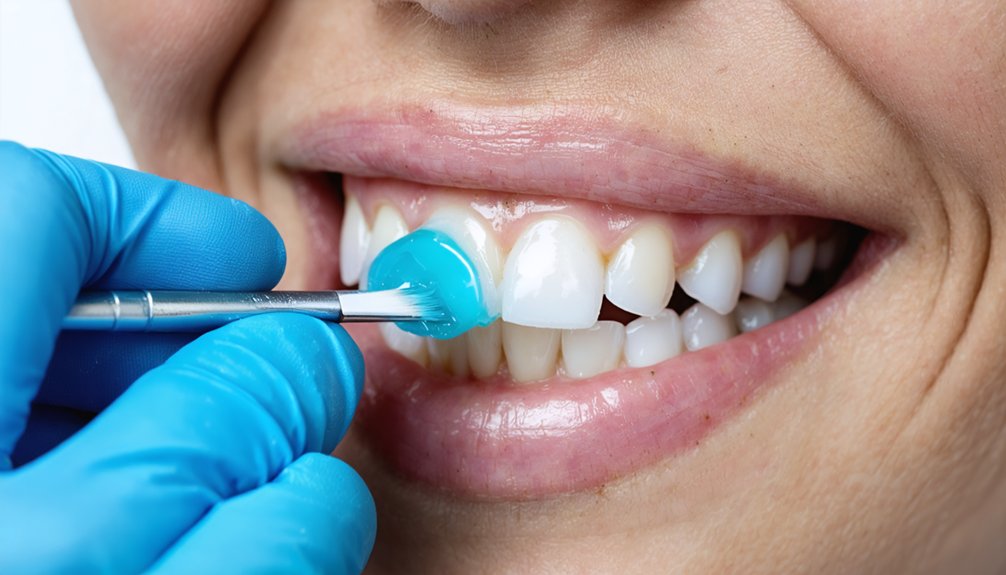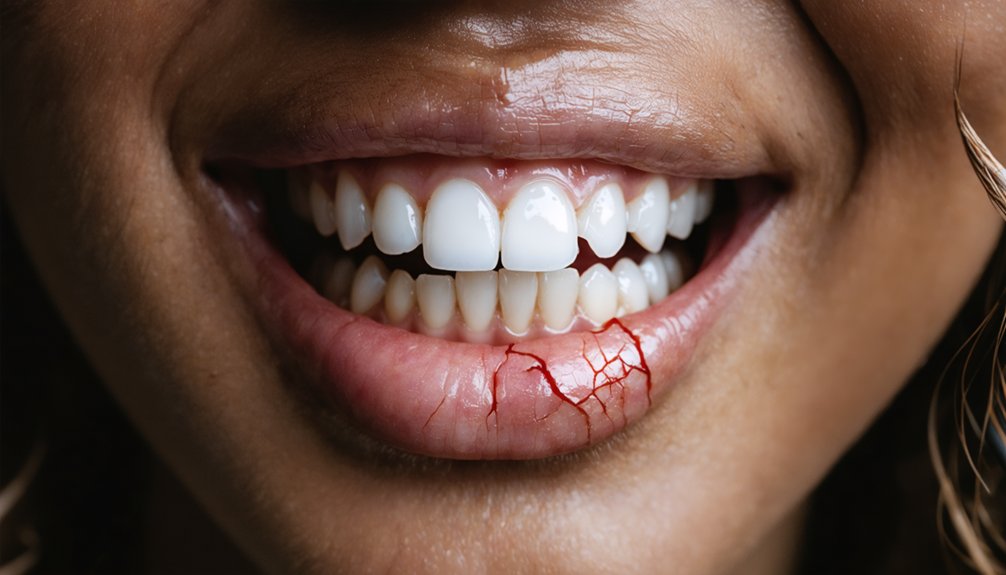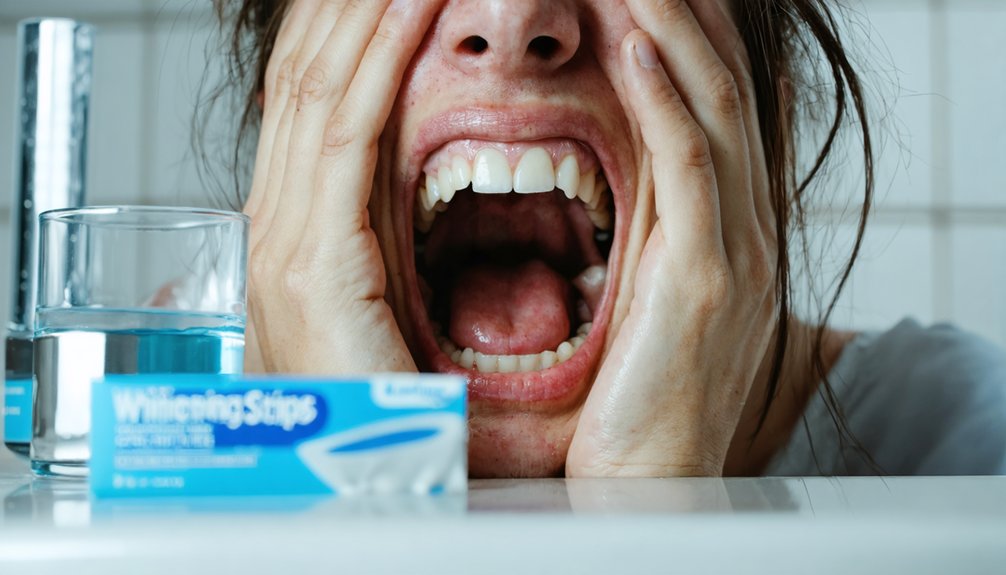
Avoiding the dangers of overusing whitening strips starts with following label instructions precisely and limiting each course to 10–14 days. Don’t leave strips on longer than directed, and don’t start back-to-back treatments without pausing for several months. Excess peroxide exposure softens enamel, irritates gums, and causes sensitivity that won’t resolve between sessions. More product doesn’t mean better results — it means compounding damage. Everything you need to protect your teeth is covered ahead.
Key Takeaways
- Follow product label instructions precisely, limiting each whitening course to 10–14 days with several months between repeat treatments.
- Never leave strips on longer than directed, as excess peroxide exposure increases harm without improving whitening results.
- Stop treatment immediately if you experience prolonged sensitivity, gum irritation, or translucent and blotchy enamel.
- Avoid gumline contact during application, as repeated peroxide exposure can cause gum recession and burn-like lesions.
- Use fluoride toothpaste twice daily after whitening and avoid acidic foods to support enamel remineralization during recovery.
What Does Overusing Whitening Strips Actually Mean?
Overusing whitening strips isn’t simply a matter of using them too often — it encompasses several specific behaviors that exceed manufacturer and clinical guidelines.
You’re overusing strips when you leave them on longer than directed, start back-to-back treatment courses without waiting periods, or whiten continuously for months without breaks.
Overusing strips means leaving them on too long, skipping rest periods, or whitening for months without breaks.
Dismissing these boundaries often stems from whitening myths — the false belief that more product equals better results.
The peroxide facts tell a different story: cumulative hydrogen peroxide exposure beyond recommended limits increases harm without improving outcomes.
Clinical and dental-society sources are clear — overuse includes exceeding stated application time, daily frequency beyond the intended course length, and ignoring mandatory rest intervals.
Understanding these distinctions puts you in control of both your results and your oral health.
Signs You’re Giving Your Teeth Too Much Peroxide
When whitening strips are overused, your body signals the problem clearly and early. Recognizing these signs lets you intervene before permanent damage occurs. Proper whitening frequency and sensitivity management depend on your ability to read these physical cues accurately.
Watch for these three indicators:
- Prolonged sensitivity — Cold air, liquids, or food trigger sharp discomfort lasting beyond two days, signaling peroxide penetration past safe thresholds.
- Gum irritation — Red, swollen, or burning gum tissue indicates chemical exposure from improper strip placement or excessive whitening frequency.
- Translucent or blotchy enamel — Edges appearing see-through or uneven confirm structural enamel compromise that won’t reverse itself.
If you’re experiencing any combination of these signs, stop treatment immediately.
Sensitivity management starts with recognizing when your whitening regimen has crossed from cosmetic into damaging territory.
What Overusing Whitening Strips Does to Your Enamel
When you overuse whitening strips, you expose your enamel to repeated peroxide contact that softens its crystalline structure and raises its permeability to acids and abrasion.
Because enamel can’t regenerate, any micro-damage you accumulate is permanent, leaving your teeth progressively more vulnerable to erosion and decay.
Peroxide also breaks down collagen-containing proteins in the underlying dentin, meaning the structural compromise extends beyond the surface you can see.
Enamel Damage Explained
Enamel, unlike most tissues in your body, can’t regenerate once it’s damaged—making it uniquely vulnerable to repeated peroxide exposure. Overusing whitening strips accelerates enamel erosion through three clinically documented mechanisms:
- Increased permeability – Peroxide effects weaken enamel’s crystalline structure, allowing acids and abrasive foods to penetrate more deeply with each exposure.
- Disrupted remineralization – Frequent treatments prevent saliva from depositing essential minerals back into softened enamel, compounding structural loss over time.
- Dentin protein breakdown – Research confirms that hydrogen peroxide degrades collagen within dentin, compromising the supportive layer beneath your enamel.
You’re not just whitening your teeth—you’re chemically altering their architecture.
Once that threshold is crossed, you’re managing permanent damage, not temporary sensitivity.
Dentin Breakdown Risks
While enamel takes the first hit, hydrogen peroxide doesn’t stop there—it penetrates to the dentin beneath, where newer research confirms it breaks down collagen, the protein matrix that gives dentin its structural integrity.
When you overuse whitening strips, cumulative peroxide effects compromise dentin health at a structural level, not just a surface one.
Dentin can’t regenerate collagen once it’s degraded. That means each excessive whitening session compounds the damage already done.
A weakened dentin layer increases your susceptibility to fractures, decay, and chronic sensitivity that won’t resolve between treatments.
You’re not just chasing a cosmetic result—you’re trading long-term tooth stability for short-term brightness.
Controlling your whitening schedule isn’t optional; it’s the only way to protect what lies beneath the surface.
How Repeated Whitening Strips Use Damages Your Gums
Repeated exposure to peroxide-laden whitening strips doesn’t just affect your teeth—it can cause measurable harm to the soft tissues surrounding them.
Whitening strips don’t just brighten teeth—they can inflict measurable damage on the soft tissues surrounding them.
When gel contacts your gums directly, it triggers gum irritation and, in concentrated or prolonged cases, chemical burns that are slow to heal.
Three documented gum risks from overuse:
- Chemical tissue damage — Peroxide leaking onto the gumline causes redness, swelling, and burn-like lesions that intensify with each repeated session.
- Impaired tissue recovery — Daily or extended use prevents soft tissues from fully healing between treatments, compounding cumulative damage.
- Gum recession — Chronic peroxide exposure weakens gingival tissue integrity, accelerating recession and increasing long-term sensitivity.
Controlling strip placement and strictly following usage intervals are your most effective defenses against irreversible soft-tissue harm.
Why Sensitivity Is Your Early Warning to Stop
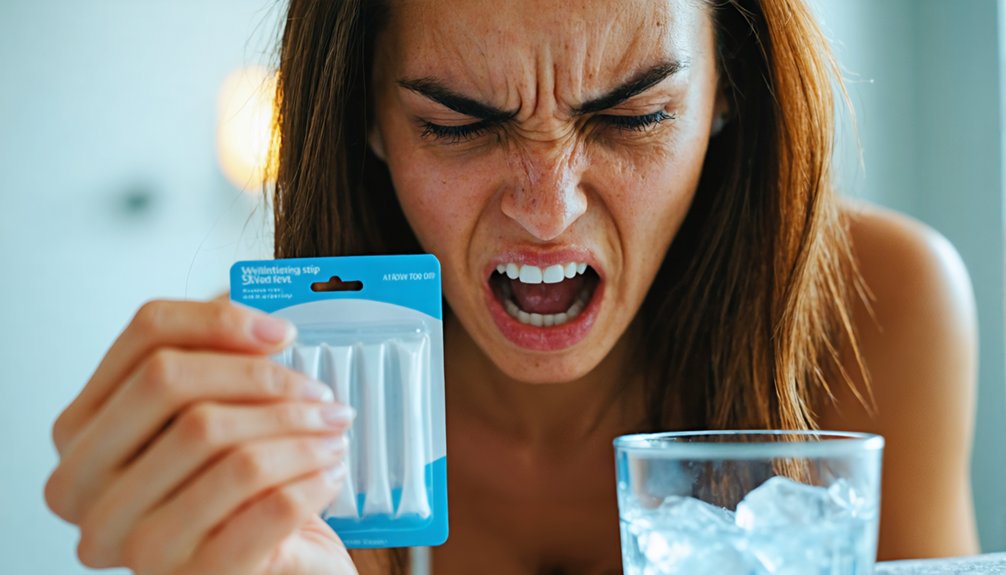
When you notice tooth sensitivity during a whitening course, your body is signaling that peroxide exposure has reached a threshold your enamel and dentin can’t comfortably tolerate.
Research shows that sensitivity lasting more than three days—or worsening with each session—strongly indicates overuse, and you should stop treatment immediately.
Continuing to apply strips despite persistent discomfort compounds structural damage that saliva alone can’t reverse.
Sensitivity Signals Overuse
Tooth sensitivity after whitening is normal, but it becomes a warning sign the moment it overstays its welcome.
Effective sensitivity management starts with recognizing when temporary discomfort has crossed into a clinical red flag.
Watch for these three overuse indicators:
- Sensitivity persisting beyond 72 hours — If your teeth remain reactive to cold air, water, or food after three days, stop treatment immediately.
- Worsening sensitivity per session — Each application shouldn’t feel worse than the last; escalating pain signals cumulative peroxide overexposure.
- Throbbing or unprovoked pain — Spontaneous aching without a cold or pressure trigger indicates nerve irritation requiring professional evaluation.
You’re in control here.
Recognizing these signals early prevents irreversible enamel and dentin damage before it compounds.
When To Stop Whitening
Sensitivity is your body’s clearest signal to stop whitening before structural damage sets in. If discomfort persists beyond three days or intensifies with each session, you’ve exceeded your enamel’s tolerance threshold. At that point, continuing doesn’t accelerate results — it accelerates harm.
Stop immediately if you notice any of the following: throbbing pain during or after application, gum lesions, blotchy or translucent edges on your teeth, or sensitivity that disrupts eating and drinking. These aren’t minor inconveniences; they’re clinical indicators of overexposure.
Adjust your whitening frequency by building mandatory treatment breaks into your regimen — typically several months between courses. Your enamel can’t regenerate, so recovery time isn’t optional.
Stopping when your body signals distress is the only evidence-based strategy that protects long-term dental integrity.
How to Use Whitening Strips Without Overdoing It
Using whitening strips responsibly starts with reading the product label and following it exactly—no exceptions. Safe application and consistent whitening strip techniques are your primary defenses against enamel damage and gum irritation.
Follow these three non-negotiable rules:
- Limit each course to 10–14 days, then pause several months before repeating—back-to-back courses compound peroxide exposure.
- Apply strips only to tooth surfaces—trim edges so they don’t overlap your gumline, and wipe off any gel that contacts soft tissue immediately.
- Never exceed the recommended wear time—leaving strips on longer doesn’t accelerate results; it accelerates damage.
If sensitivity persists beyond three days, stop treatment and consult your dentist before continuing.
What to Do Between Whitening Courses to Protect Enamel
Once you’ve completed a whitening course, what you do during the recovery period determines how well your enamel holds up before the next one.
Peroxide temporarily increases enamel permeability, so the weeks following treatment are critical for structural recovery.
Prioritize enamel remineralization techniques by using fluoride toothpaste twice daily and avoiding acidic foods and drinks that exploit weakened surfaces.
Professional fluoride treatments applied at your dental cleaning accelerate mineral redeposition into compromised enamel zones.
Wait a minimum of several months before starting another course; this interval allows salivary minerals to harden softened enamel and reduces cumulative peroxide exposure.
Skipping this recovery window doesn’t just slow remineralization—it compounds structural damage with each subsequent course, increasing your long-term risk of erosion, sensitivity, and decay.
Frequently Asked Questions
Can Whitening Strips Interact Badly With Dental Fillings or Crowns?
Like mismatched puzzle pieces, whitening strips don’t whiten restorations—fillings compatibility issues arise since peroxide won’t alter their color. You’ll also notice crowns sensitivity increases, as surrounding natural enamel whitens unevenly, creating visible contrast requiring professional reassessment.
Are Children or Teenagers More Vulnerable to Whitening Strip Damage?
Yes, children and teenagers face heightened risks. Their developing enamel health is more porous, amplifying tooth sensitivity. Age factors demand you strictly limit usage frequency—most dental authorities recommend avoiding whitening strips entirely before age 18.
Does Diet During a Whitening Course Affect How Strips Perform?
Like painting a wall while someone splashes mud on it, acidic foods undermine your strips’ results. Your dietary impacts directly affect enamel health—you’ll accelerate erosion and staining, neutralizing whitening gains entirely.
Can Whitening Strips Worsen Existing Cavities or Untreated Tooth Decay?
Yes, whitening strips worsen existing cavities. Peroxide penetrates decayed enamel, accelerating dental health risks by irritating exposed dentin and pulp. Prioritize whitening strip safety—address untreated decay with your dentist before you start any whitening regimen.
Do Prescription-Strength Strips Carry Higher Overuse Risks Than Store-Bought?
Yes—prescription-strength strips carry higher overuse risks. Their elevated peroxide concentrations amplify sensitivity reactions and accelerate enamel erosion faster than store-bought options, so you’ll need stricter adherence to dosing intervals and professional oversight to protect your teeth.
References
- https://cambridge-dental.com/blog/are-teeth-whitening-strips-safe/
- https://foresthillsdentistry.com/dental-health/warnings-and-consequences-of-using-too-many-whitening-strips/
- https://www.dndc.ca/patient-education/teeth-whitening-strips-mistakes-to-avoid
- https://www.drbobsdentalcare.com/are-whitening-strips-bad-for-your-teeth/
- https://www.webmd.com/oral-health/features/can-teeth-whitening-become-an-addiction
- https://www.smiledmd.com/blog/the-dangers-of-overusing-diy-teeth-whitening-products/
- https://petersonfamilydentistry.com/the-hidden-risks-of-over-the-counter-whitening-strips-what-chattanooga-patients-need-to-know-before-using-them/
- https://dentalcarefree.com/blogs/Using-Whitening-Strips-Incorrectly–Understanding-the-Risks.html
- https://perforacare.com/blogs/teeth-whitening/teeth-whitening-strips
- https://www.purpleplumdentistry.com/post/can-whitening-strips-damage-gums