You’ll need specialized whitening products because tobacco’s tar and nicotine penetrate deep into your enamel’s microscopic pores, creating molecular bonds that standard formulations can’t break. Conventional OTC products contain only 5-10% carbamide peroxide, which targets surface stains rather than the embedded chromogens unique to tobacco use. Smoker-specific kits feature higher-concentration peroxides, LED activation technology, and custom-fitted trays designed to address the dual-action staining mechanism. Understanding the specific features and treatment protocols will help you achieve ideal results.
Key Takeaways
- Tobacco’s tar and nicotine create dual-action staining that penetrates enamel pores more deeply than typical surface stains.
- Standard whitening products contain only 5-10% carbamide peroxide, leaving 20% of nicotine deposits after treatment.
- Specialized smoker kits use higher-concentration peroxide formulas to break molecular bonds between tobacco compounds and tooth structure.
- Professional treatments with 35% hydrogen peroxide remove embedded tar from deeper dentin layers beneath enamel.
- Smokers require more frequent touch-up treatments every 6 months due to ongoing tobacco exposure and stain reaccumulation.
How Tobacco Stains Differ From Regular Tooth Discoloration
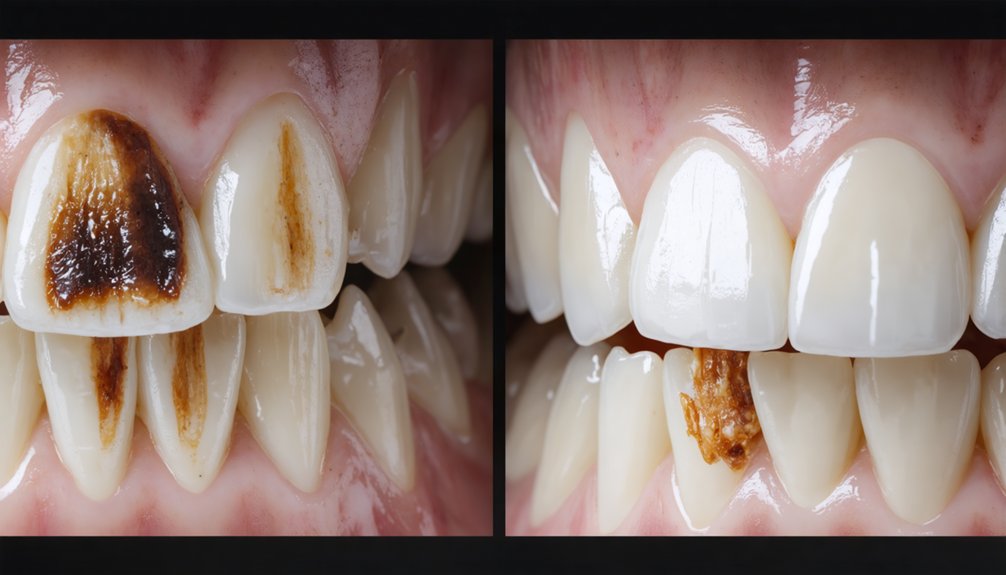
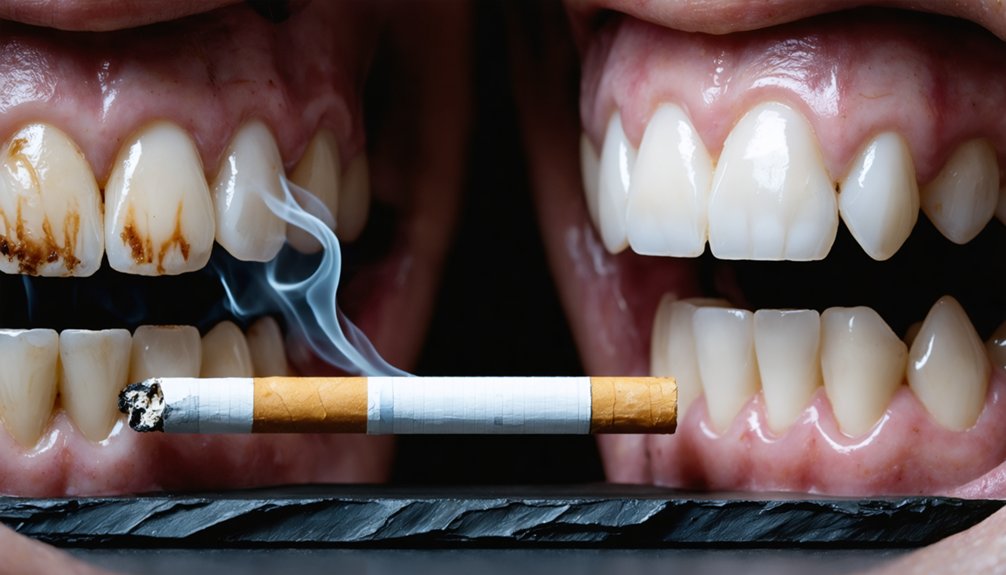
Tobacco stains penetrate tooth enamel through a distinct chemical mechanism that sets them apart from conventional dietary discoloration. Unlike coffee or tea residues that sit primarily on the surface, tobacco’s tar and nicotine compounds seep into microscopic enamel pores, creating both extrinsic and intrinsic stain composition.
When nicotine oxidizes, it transforms from colorless to yellow, while tar deposits brownish-black residue that adheres tenaciously to tooth surfaces. This dual-action staining produces considerably more intense discoloration than other sources—measuring ∆E 25 units compared to coffee’s 19 units.
The particulate matter from combustion embeds eight terpenoid compounds directly into enamel, resisting removal through standard brushing. Additionally, reduced saliva production compromises your natural defense mechanism, making even a diligent smoker oral hygiene routine insufficient against persistent tobacco-derived discoloration.
Standard Whitening Products Fall Short on Tobacco Stains
Given these distinct chemical characteristics, conventional whitening products encounter significant limitations when addressing tobacco-induced discoloration. Standard over-the-counter formulations target surface-level stains rather than the embedded deposits created by nicotine absorption dynamics and tar accumulation patterns within your enamel structure.
Professional-strength treatments demonstrate superior efficacy through:
- Higher concentration bleaching agents (15% carbamide peroxide versus 5-10% in OTC products)
- Extended contact time with custom-fitted trays ensuring thorough gel distribution
- Laser activation techniques that penetrate deeper than gel applications alone
- Specialized formulations designed to break molecular bonds between nicotine and tooth structure
Studies indicate approximately 20% nicotine content remains after standard bleaching. Additionally, if you continue smoking, OTC whitening effects fade within months compared to three-year results achievable with professional treatments for non-smokers.
Key Features That Make Smoker Whitening Kits More Effective
While standard whitening formulations provide adequate results for ordinary surface stains, specialized smoker whitening kits incorporate distinct technological features that address the unique molecular challenges of nicotine and tar deposits.
You’ll find higher-concentration carbamide or hydrogen peroxide gels that penetrate porous enamel to break down deep intrinsic stains effectively. LED light activation accelerates gel action, delivering up to 8 shades of improvement within 7-10 days.
Custom-fitted trays guarantee even distribution across tobacco-stained surfaces while minimizing gum exposure during extended wear. These systems offer controlled whitening intensity through graduated treatment protocols.
Professional-grade formulations include protective enamel safeguards that prevent chemical burns during aggressive stain removal. Precision application tools—including whitening wands and desensitizing gels—target compromised enamel while maintaining structural integrity throughout treatment.
Comparing Professional Treatments to At-Home Smoker Solutions
When evaluating whitening options, you’ll encounter fundamental differences between professional dental procedures and at-home treatments—differences that become particularly significant for tobacco users. Professional in-office bleaching employs 35% hydrogen peroxide concentrations with laser activation, penetrating deep tobacco stains that over-the-counter products can’t address. These procedures include prior oral health assessment and dental office oversight to manage complications in restored teeth.
Consider these outcome distinctions:
- Treatment efficacy: Professional agents remove embedded tar and nicotine from dentin layers, while at-home kits only lighten superficial discoloration
- Duration: In-office results last approximately one year for continuing smokers versus weeks for OTC products
- Side effects: High-concentration bleaching causes universal tooth sensitivity and enamel demineralization
- Investment: Professional treatments justify higher costs through superior chromogen removal
Your selection depends on stain severity and desired permanence.
Realistic Results Timeline and Long-Term Maintenance Strategies
Understanding the temporal dynamics of whitening outcomes enables you to set evidence-based expectations and ideal treatment investments. You’ll observe noticeable lightening within the first week, with peak results stabilizing at weeks three to four. Professional in-office treatments deliver dramatic shade shifts in one appointment, while at-home kits require 10-14 days of consistent application. Customized treatment durations account for smoking intensity—heavy tobacco users typically need multiple sessions for supreme results.
Maintaining brightness demands strategic intervention. Your enamel remains highly porous for 48 hours post-treatment, making this period critical for stain prevention. Personalized maintenance schedules typically include touch-up treatments every six months and professional cleanings quarterly. Reducing tobacco consumption extends whitening longevity from six months to potentially three years, while continued smoking accelerates stain rebound and necessitates more frequent maintenance protocols.
Frequently Asked Questions
Can Vaping Cause the Same Type of Tooth Staining as Traditional Cigarettes?
Like phantom smoke without tar’s grip, vaping won’t replicate traditional cigarette staining. However, you’ll experience e-cigarette vapor buildup on enamel and reduced saliva production, causing yellowing—though less severe than combustible tobacco’s immediate, stubborn discoloration.
Will Teeth Whitening Products Work on Secondhand Smoke Stains?
Yes, whitening products can address secondhand smoke stains, though you’ll need professional-strength treatments for embedded discoloration. Customized whitening formulas with higher peroxide concentrations penetrate deeper, while enhanced stain resistance protocols help you maintain results long-term.
Are Smoker Whitening Products Safe for People With Sensitive Teeth?
You’ll find specialized smoker whitening products safe if you choose lower peroxide concentrations (8% or less). However, they carry risks of increased gum sensitivity and potential enamel damage, requiring strict adherence to instructions and professional consultation beforehand.
How Soon After Quitting Smoking Should I Start Whitening Treatments?
You’ll need a waiting period before whitening of 2-4 weeks after quitting smoking. This recommended whitening timeline allows your enamel to stabilize and reduces sensitivity risks, ensuring ideal treatment outcomes when you’re ready to proceed.
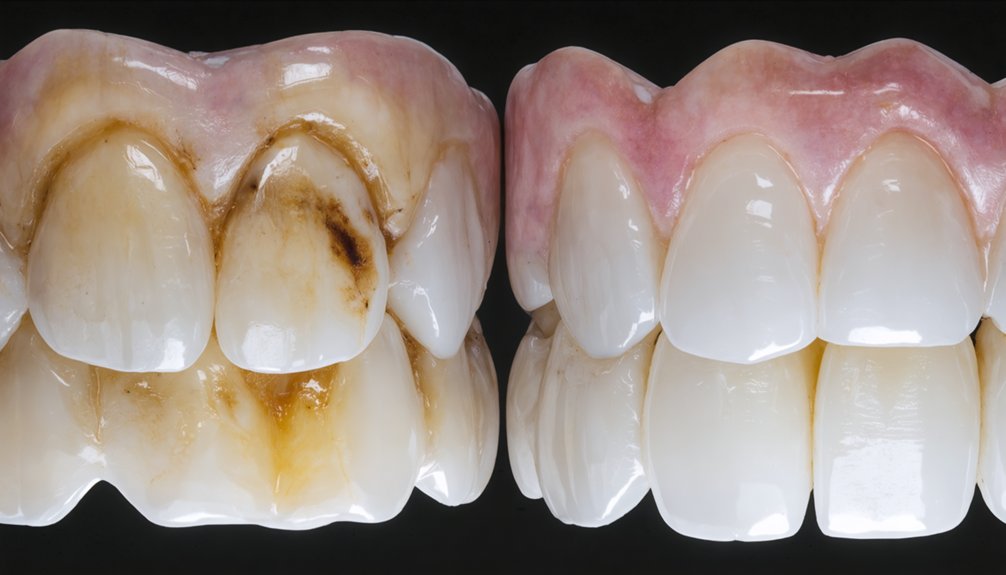
Do Smoker Whitening Kits Remove Stains From Dental Crowns or Veneers?
Studies show zero color alteration occurs in prosthetic restorations during bleaching procedures. You won’t remove dental crown discoloration or veneer discoloration with whitening kits—these products only target natural enamel, requiring professional polishing for restoration stain removal.