Long-lasting teeth whitening works for sensitive teeth because it uses lower peroxide concentrations (typically 3%) that penetrate enamel more slowly, reducing nerve irritation while still delivering results. You’ll experience gradual whitening through shorter application sessions with recovery periods, allowing your enamel to rehydrate between treatments. Protective agents like potassium nitrate and sodium fluoride shield nerve pathways and seal microscopic tubules. Custom trays guarantee controlled gel distribution, preventing gum irritation. This thorough approach addresses the underlying causes of sensitivity while achieving your desired whitening outcome.
Key Takeaways
- Lower 3% peroxide concentrations diffuse slowly to nerves, reducing irritation while still achieving whitening results over time.
- Shorter daily applications with recovery days allow enamel tubules to rehydrate and remineralize between treatments.
- Desensitizing agents like potassium nitrate and fluoride block nerve signals and seal tubules without stopping whitening action.
- Custom trays prevent gel leakage onto gums and ensure even distribution, eliminating major sources of discomfort.
- Gradual approach balances whitening effectiveness with nerve tolerance, allowing safe completion of treatment protocols.
Understanding the Science Behind Tooth Sensitivity During Whitening
When you apply whitening gel to your teeth, it immediately begins opening microscopic tubules in your enamel—tiny channels that lead directly to the nerve-rich pulp inside. The gel’s peroxide penetrates these pathways within 5-15 minutes, triggering reversible dentinal fluid flow that transmits pain signals when you consume hot, cold, or acidic substances.
This sensitivity stems from the gel’s acidic pH attacking your enamel’s calcium and phosphate crystals, causing temporary demineralization. Your tooth surface softens slightly, increasing roughness and tubule exposure. However, this process reverses itself. As your teeth rehydrate over several days, mineralization based desensitization occurs naturally—tubules reclose and your enamel’s protective barrier restores itself.
Understanding this temporary disruption helps you anticipate and manage sensitivity effectively during treatment.
How Lower Peroxide Concentrations Reduce Nerve Irritation
Because peroxide molecules follow Fick’s Law of diffusion, they naturally migrate from areas of high concentration to low concentration—meaning the strength of your whitening gel directly determines how quickly these molecules penetrate through your enamel and dentin toward the nerve-rich pulp chamber.
Lower concentrations fundamentally alter peroxide diffusion kinetics in your favor:
- Reduced penetration velocity: 3% hydrogen peroxide formulations take longer to reach the pulp chamber compared to 35-40% professional strengths
- Decreased free radical formation: Less peroxide means fewer oxidative agents irritating nerve tissue
- Minimized pH disruption: Lower concentrations produce gentler chemical environments around sensitive pulp
Clinical data confirms this mechanism—patients using 3% hydrogen peroxide report sensitivity below 1.3 on numerical rating scales, while maintaining whitening efficacy. You’re controlling pulp chamber penetration through concentration management, not eliminating whitening power.
The Role of Gradual Application in Minimizing Discomfort
Concentration management addresses one dimension of sensitivity control—treatment timing provides the second. You’ll minimize discomfort by implementing shorter application times rather than prolonged exposure sessions. Products designed for 10-30 minutes daily allow gradual stain removal without overwhelming nerve pathways. Starting with reduced durations builds tolerance progressively, letting your teeth adapt before advancing to standard protocols.
Dentin recovery intervals between sessions prove equally critical. Alternate-day application prevents cumulative irritation by allowing dentin tubules to settle and rehydrate. This spacing—common in custom tray systems—maintains whitening progress while giving nerves time to recover. Two-week pre-treatment fluoride use further prepares enamel for graduated sessions. The combination of controlled exposure duration and strategic recovery periods enables you to achieve results without triggering the sensitivity cascade that derails traditional whitening approaches.
Desensitizing Agents That Protect Teeth During Treatment
How do you prevent sensitivity while maintaining whitening effectiveness? Desensitizing agents create a protective barrier that doesn’t compromise your results. These treatments work through two mechanisms: blocking dentinal tubules or desensitizing nerve endings, enhancing patient compliance while minimizing side effects.
Your dentist can apply these proven agents before bleaching:
- 5% Potassium Nitrate – Depolarizes nerves and reduces dentin sensitivity through direct ion action
- 2% Sodium Fluoride – Forms calcium fluoride crystals that occlude tubules without hindering peroxide penetration
- Glutaraldehyde-HEMA (Gluma) – Partially obliterates tubules while allowing hydrogen peroxide to penetrate for effective whitening
Anti-inflammatory agents further reduce discomfort by blocking prostaglandins and ATP release from pulp tissue. This pretreatment approach gives you control over sensitivity while achieving ideal whitening outcomes.
Custom Tray Systems for Controlled Whitening Sessions
Custom tray systems deliver professional-grade whitening with unprecedented control over sensitivity management. These trays, fabricated from impressions of your teeth, feature a sealed design that prevents gel leakage onto gum tissue—the primary cause of irritation. You’ll experience uniform gel distribution across all tooth contours, eliminating uneven whitening and missed spots common with generic alternatives.
The controlled approach allows you to adjust wear time based on your sensitivity response. You can modify treatment pacing by alternating days or reducing session length while maintaining professional results. Your dentist matches hydrogen peroxide concentration to your specific tolerance levels.
The reusable design supports long-term maintenance through periodic touch-ups, preventing aggressive retreatment cycles. Professional oversight manages proper application techniques and monitors your response, addressing concerns before they escalate into significant discomfort.
Pre-Treatment Assessments That Identify Risk Factors
Before any whitening treatment begins, your dentist conducts a thorough examination to identify conditions that could trigger severe sensitivity or compromise results. This cautious risk assessment evaluates your enamel condition, gum health, existing restorations, and baseline sensitivity levels.
A comprehensive dental examination before whitening identifies potential sensitivity triggers and ensures your mouth is healthy enough for optimal treatment outcomes.
The thorough oral examination detects cavities requiring filling, gum disease needing treatment, and defective restorations demanding replacement before bleaching proceeds.
Your risk profile includes:
- Periodontal conditions that increase hydrogen peroxide irritation potential
- Receding gums or pre-existing tissue injury vulnerable to peroxide corrosion
- Lifestyle factors like tobacco use that exacerbate sensitivity
Identifying these factors enables your dentist to resolve oral health issues first, adjust whitening protocols, or recommend alternative approaches. This pre-treatment screening guarantees you avoid unnecessary discomfort while achieving ideal results tailored to your specific dental profile.
Protective Barriers and Professional Monitoring Techniques
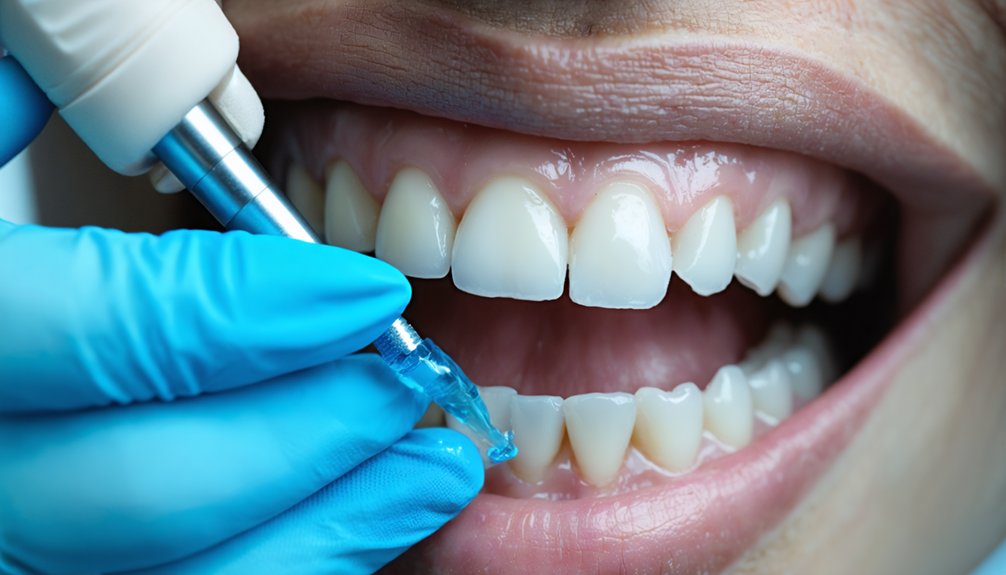
When your dentist applies high-concentration whitening agents, protective barriers become your primary defense against gum irritation and chemical burns. These light-cured shields form a resilient seal over your soft tissues, blocking hydrogen peroxide and carbamide peroxide from causing redness, swelling, or blanching.
Precise barrier application technique involves isolating your teeth with cotton rolls, then meticulously painting gel around each tooth base. Your dentist hardens this coating with a curing light, creating a firm shield that maintains gum tissue integrity throughout treatment.
Professional monitoring occurs at every stage. Your dentist conducts pre-treatment health checks, inspects barrier coverage for voids, and watches for leakage during the session. This systematic oversight enables safe use of stronger concentrations while protecting your tissues, ultimately delivering superior whitening results with minimal sensitivity risks.
Why Personalized Treatment Plans Deliver Better Results
Your teeth whitening results depend heavily on how well the treatment matches your individual biology and sensitivity threshold. Customized dosing schedules address your specific enamel thickness, staining type, and gum health—factors that determine which peroxide concentration you’ll tolerate. A personalized approach means you’ll receive 6-10% hydrogen peroxide or 10% carbamide peroxide instead of aggressive 35% formulations that cause 78% sensitivity rates.
Personalized peroxide concentrations matched to your enamel thickness and sensitivity prevent the discomfort that aggressive formulations cause in most patients.
Personalized whitening timelines optimize three critical variables:
- Concentration levels matched to your pain tolerance without sacrificing efficacy
- Application durations calibrated between 30 minutes to 10 hours based on your schedule
- Treatment phases extended or shortened according to your shade improvement goals
Custom-fitted trays guarantee precise gel contact while professional monitoring adjusts protocols when sensitivity emerges. This tailored strategy delivers comparable shade improvements to in-office treatments while maintaining your comfort throughout the process.
Frequently Asked Questions
Can I Whiten Teeth Immediately After Dental Restoration Work?
You shouldn’t whiten immediately after dental restoration work. The timing of whitening after restoration requires waiting 2 weeks minimum. Effects of whitening on restorations won’t damage them, but residual peroxide compromises bonding strength and creates color mismatches you’ll want to avoid.
How Long Does Post-Whitening Sensitivity Typically Last?
You’ll experience sensitivity for 24-72 hours, peaking within the first day. The time needed for sensitivity reduction is typically one week maximum. Managing post-whitening discomfort involves using desensitizing toothpaste and avoiding temperature extremes during recovery.
Are Natural Whitening Alternatives Effective for Sensitive Teeth?
Natural whitening alternatives offer gentler results for sensitive teeth compared to over the counter whitening strips. You’ll find natural toothpaste options like those containing hydrated silica effectively remove surface stains while protecting enamel, giving you controlled, gradual whitening without harsh chemicals.
What Foods Should I Avoid During Whitening Treatment?
You’ll want to avoid dark beverages, acidic drinks, and pigmented sauces during treatment. Surprisingly, crunchy fruits and acidic beverages both compromise enamel differently—one mechanically, one chemically—yet they’re equally problematic. You’re protecting your investment by controlling your diet.
How Often Can I Safely Repeat Whitening Treatments?
You can safely repeat professional whitening once or twice yearly, with six months minimum between treatments. The frequency of treatments depends on your sensitivity level, so schedule a consultation with your dentist to establish your personalized whitening schedule.