Mint tea causes minimal tooth yellowing compared to traditional teas because it contains negligible tannin levels—the polyphenolic compounds responsible for enamel discoloration. Unlike black or green teas from *Camellia sinensis*, which contain 0.0436-0.3317g tannins per gram, peppermint tea’s flavonoid-rich composition doesn’t bind considerably to your tooth enamel’s protein pellicle layer. Additionally, mint tea‘s neutral pH (6.0-7.5) stays above the critical 5.5 threshold where enamel demineralization occurs, preventing the porous surface conditions that facilitate chromogen penetration. Understanding the specific mechanisms behind tea-related staining will help you make informed beverage choices for ideal dental health.
Key Takeaways
- Mint tea contains negligible tannin levels compared to traditional teas, significantly reducing its capacity to bind and stain tooth enamel.
- The pH range of mint tea (6.0-7.5) remains above the critical demineralization threshold, minimizing enamel softening and chromogen penetration.
- Mint tea lacks catechins, theaflavins, and thearubigins—the primary pigmented polyphenols responsible for discoloration in conventional teas.
- Its flavonoid-rich composition exhibits minimal protein-binding activity, preventing adhesion to the salivary pellicle layer covering tooth enamel.
- Mint tea’s light liquor color indicates low polyphenol concentration, resulting in substantially lower staining potential than black or pu-erh teas.
Understanding Tannins and Their Role in Tooth Discoloration
Tannins function as polyphenolic compounds that naturally occur in mint tea and other plant-based beverages, producing the characteristic bitter and astringent taste you experience when drinking. These molecules bind to salivary proteins through hydrogen bonding, creating the dry-mouth sensation that reduces your saliva’s natural cleansing capacity.
While tannin levels in herbal teas vary by preparation method and steeping duration, mint tea’s polyphenolic content enables direct adhesion to your enamel’s hydroxyapatite structure via ionic bonds. The astringent flavor profile impacts on staining by complexing with proteins and forming pellicle-like layers on tooth surfaces.
With molecular weights ranging from 500 to 3000 Da, tannins penetrate your enamel’s microscopic pores and ridges, accumulating through repeated exposures and establishing persistent discoloration pathways that intensify over time.
How Mint Tea Differs From Traditional Teas in Tannin Content
When you compare mint tea to traditional Camellia sinensis varieties, you’ll find significant compositional differences in tannin content.
Pure peppermint and spearmint herbal infusions contain negligible tannins because they lack the catechins that oxidize into theaflavins and thearubigins during black tea processing.
While traditional teas derive their astringency and staining potential from these polyphenolic compounds, mint teas present a flavonoid-rich profile with minimal tannic acid presence.
Negligible Tannins in Peppermint
Unlike traditional teas derived from Camellia sinensis, peppermint tea contains negligible tannin levels due to its herbal origin from peppermint plant leaves. The absence of Camellia sinensis eliminates the primary polyphenolic compounds responsible for tooth discoloration in black, green, and oolong varieties. You’ll find the tea tannin composition in peppermint classified as minimal regardless of processing methods or steeping duration.
This distinction greatly reduces enamel-binding potential compared to true teas, where tannins adhere to tooth surfaces and cause yellowing proportional to content. Additionally, peppermint antibacterial qualities offset any theoretical staining risk from trace tannins. When you’re managing tannin-related dental effects, selecting herbal infusions like peppermint provides antioxidant benefits without the high polyphenolic content that interferes with nutrient absorption and promotes discoloration.
Herbal Versus Traditional Composition
The fundamental compositional divergence between mint tea and traditional tea varieties stems from their botanical origins, which determines their respective tannin profiles and staining capacity. Traditional teas derived from *Camellia sinensis* exhibit quantifiable tannin variations, with black teas containing 0.0436-0.0710 g per gram, green teas 0.1228-0.1972 g, and white teas reaching 0.3317 g maximum.
Conversely, peppermint tea, classified as herbal, contains negligible tannins since it lacks *Camellia sinensis* compounds like theaflavins and thearubigins. This compositional difference directly impacts dental staining potential and absorption effects on nutrient bioavailability. You’ll experience minimal protein-binding activity with mint tea compared to traditional varieties, where tannins contribute to astringency and enamel discoloration.
Processing-induced oxidation further elevates tannin concentrations in conventional teas, amplifying their chromogenic properties absent in herbal peppermint infusions.
The Science Behind Tea Stains on Tooth Enamel
Why does your morning cup of mint tea leave lasting yellow marks on your teeth? The process involves tannin adsorption to enamel, where polyphenolic compounds bind directly to your tooth surface through chemical interactions. Your enamel’s porous microstructure traps pigmented molecules, enabling chromogens to penetrate microscopic ridges and valleys.
Understanding the staining mechanism requires examining four critical factors:
- Tannin protein complexation occurs when polyphenols bind to protein-rich pellicle layers on enamel
- Surface irregularities in enamel provide binding sites for pigment retention
- Cumulative exposure builds successive tannin layers that intensify discoloration
- Brew concentration determines pigment density and adhesion potential
You’ll notice darker stains develop when tannins accumulate on plaque-covered surfaces versus smooth enamel. Controlling brewing strength and consumption frequency directly reduces pigment deposition rates.
Acidity Levels in Mint Tea and Enamel Vulnerability
While tannins create the visible discoloration on your teeth, mint tea’s pH profile determines how susceptible your enamel becomes to these pigmented compounds. Mint tea maintains pH stability between 6.0-7.5, residing in the neutral-to-slightly-acidic range that protects enamel integrity.
This pH level exceeds the critical threshold of 5.5, below which demineralization initiates. Unlike black tea (pH 4.9-5.5) or fruit teas (pH 2.0-3.0), mint’s caffeine content remains negligible while its acidity poses minimal erosive risk.
Your enamel remains less vulnerable compared to consuming acidic beverages that soften the protective layer, creating porous surfaces where chromogens penetrate deeper. Brewing temperature and steeping duration affect pH values, though mint tea consistently demonstrates lower titratable acidity than coffee or citrus-based drinks, maintaining dental surface resistance to staining mechanisms.
Comparing Staining Potential Across Different Tea Varieties
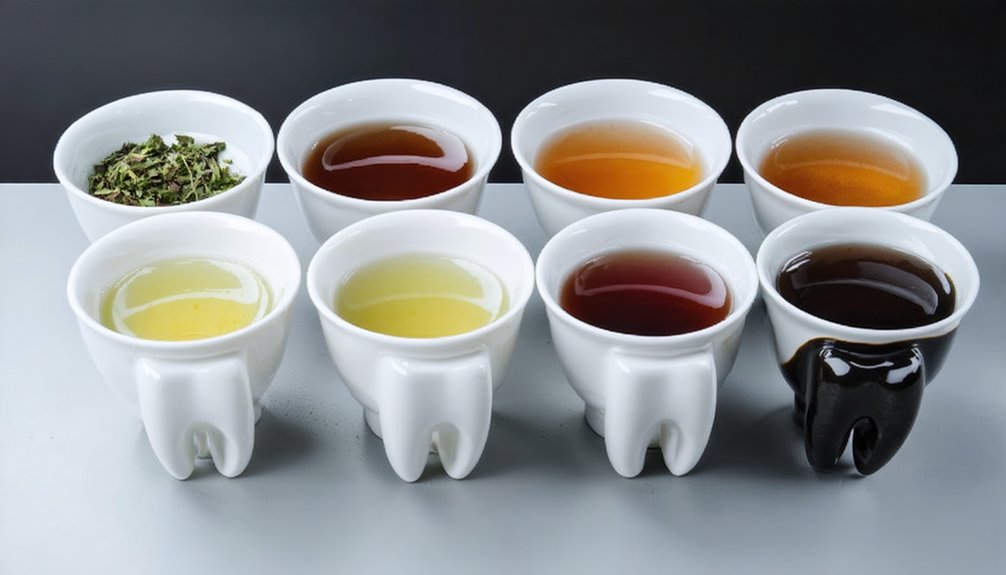
Oxidation levels fundamentally determine each tea variety’s capacity to discolor dental enamel, with processing methods creating distinct staining hierarchies. The impact of enzyme activity during fermentation directly correlates with pigment development. Understanding chemical composition variations empowers you to make informed beverage selections.
Staining Potential Rankings:
- White Tea – Unfermented processing preserves minimal polyphenols, offering negligible staining risk to enamel surfaces.
- Green Tea – Light oxidation produces limited theaflavins, reducing discoloration compared to fermented varieties.
- Black Tea – Complete oxidation generates maximum theaflavins and thearubigins, creating high-affinity compounds that bind tooth pellicle aggressively.
- Pu-erh Tea – Extended fermentation develops unique theabrownins, producing the most persistent pigmentation effects.
Darker tea liquor color reliably indicates elevated polyphenol concentration and enhanced enamel adhesion potential.
Why Peppermint Tea Is Less Likely to Cause Yellowing
Unlike Camellia sinensis-derived beverages, peppermint tea originates from herbal plant leaves that inherently lack the tannin compounds responsible for enamel discoloration. You’ll find this infusion produces minimal pigmentation transfer to tooth surfaces, as its light color contains fewer chromogens capable of bonding with enamel.
The antimicrobial properties actively reduce bacterial load, preventing plaque accumulation that facilitates stain adherence. Peppermint tea’s absence of the tannin-chromagen double-staining mechanism eliminates the compounding effect observed in traditional teas. If you’re implementing reduced coffee intake strategies, peppermint serves as a dental-friendly alternative without sacrificing beverage satisfaction.
Consider pairing consumption with chewing gum stimulation to enhance saliva production, further protecting against potential discoloration. This herbal option presents negligible staining risk even with frequent consumption patterns.
The Mechanism of Chromogen Adhesion to Teeth
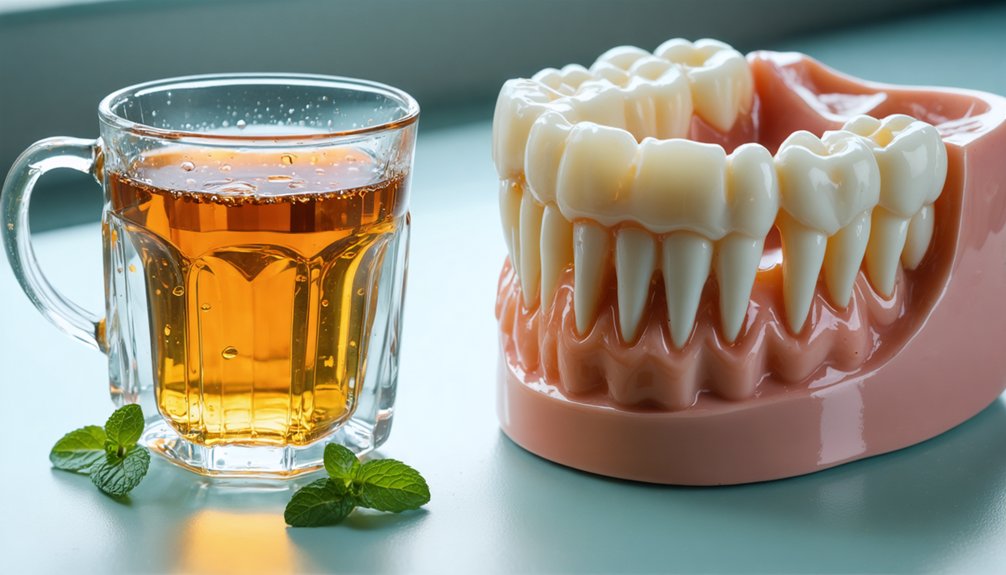
Chromogens adhere to your dental surfaces through a multi-stage process initiated by the acquired pellicle—a thin protein film that forms on enamel within minutes of cleaning. This pellicle composition effects chromogen enamel interactions by providing specific binding sites for tannins and polyphenols from mint tea.
The adhesion mechanism follows these stages:
- Pellicle Formation: Salivary proteins adsorb onto hydroxyapatite creating binding sites
- Chromogen Binding: Tea polyphenols attach to pellicle proteins through electrostatic forces
- Plaque Integration: Chromogens incorporate into developing biofilm matrices
- Chemical Stabilization: Metal ions react with chromogens forming resistant complexes
Your stain severity depends on bond strength between chromogenic compounds and pellicle proteins. Frequent exposure allows chromogen accumulation, while cationic substances like chlorhexidine enhance adherence by bridging dietary pigments to tooth surfaces.
Protective Measures to Minimize Tea-Related Staining
You can greatly reduce tea-related dental staining through three evidence-based strategies that target tannin-enamel interaction.
Adding milk to your tea allows casein proteins to bind with chromogenic tannins, preventing their adhesion to enamel surfaces (P<0.0001).
Drinking through a straw minimizes contact with your anterior teeth, while rinsing with water immediately afterward dilutes and removes residual tannins before they penetrate enamel pores.
Add Milk to Tea
While mint tea naturally contains tannins that discolor enamel, incorporating milk into your beverage creates a protective barrier against staining through a precise biochemical mechanism. Casein proteins bind to theaflavins and thearubigins, preventing these pigmented compounds from adhering to tooth surfaces.
Research demonstrates milk’s effectiveness through these measurable outcomes:
- Milk fat content directly correlates with stain prevention—full-fat varieties provide superior protection compared to skim options
- Color change reduction comparable to professional essential bleaching treatments after 24-hour exposure
- Greater efficacy than whitening toothpastes in blocking tea-related discoloration
- Milk alternatives like soy and almond lack casein, offering zero stain reduction
You’ll achieve ideal protection by selecting dairy milk with higher fat percentages, as lipids enhance casein-tannin binding affinity for maximum enamel defense.
Rinse After Drinking
Beyond modifying your tea’s composition, implementing strategic post-consumption protocols offers another layer of defense against dental discoloration. Immediate rinsing with water effectively washes away tannins before they adhere to your enamel, preventing pigment integration into tooth proteins.
You’ll maximize protection by completing this rinse promptly after finishing your tea, limiting bacterial growth and chromogen settlement. Strategic timing requires you to wait 30 minutes before brushing, as premature abrasion on acid-softened enamel accelerates wear and increases stain vulnerability.
Alcohol-free mouthwash enhances your rinsing efficacy by cleansing residual tannins from enamel pores while freshening your oral cavity. This systematic approach—combining immediate water rinsing with properly timed brushing—creates consistent defense against tea-induced yellowing without compromising your enamel integrity.
Use a Straw
Strategic straw placement constitutes one of the most practical interventions for reducing tannin contact with your anterior tooth surfaces. When you position the straw beyond your incisors, you’ll bypass the most visible enamel regions susceptible to chromogenic compounds. The ideal straw position directs liquid toward your posterior oral cavity, greatly reducing exposure duration.
To maximize protection and minimize surface contact:
- Position the straw behind your front teeth to shield anterior surfaces from direct tannin flow
- Angle toward the back of your mouth to prevent beverage coating on enamel
- Ensure liquid doesn’t touch teeth during swallowing by maintaining posterior placement
- Use narrower straws for hot mint tea to cool the beverage and prevent thermal injury
This technique substantially decreases staining agent interaction with your enamel while requiring complementary oral hygiene practices for thorough prevention.
Antimicrobial Properties of Mint and Oral Health Benefits
Peppermint’s antimicrobial compounds actively inhibit bacterial growth on tooth surfaces, creating a cleaner oral environment that supports enamel health. These essential oils reduce oral pathogens responsible for plaque formation and combat enamel-adhering bacteria that produce tooth-damaging acids. You’ll benefit from decreased biofilm accumulation when consuming peppermint tea regularly, as its natural agents limit proliferation of stain-causing microbes.
The odor combating abilities of mint directly target bacteria responsible for halitosis while minimizing gum inflammation from microbial activity. Unlike black or green teas, peppermint contains negligible tannins and chromogens that bind to enamel pores. This low-tannin profile prevents yellow-brown discoloration even with frequent consumption. The antimicrobial action further counteracts residue from any beverage, while reduced bacterial adhesion prevents tannin-enhanced plaque development that exacerbates staining.
Frequently Asked Questions
Can Whitening Toothpaste Remove Existing Yellow Stains From Mint Tea?
Mint tea rarely causes yellowing, but whitening toothpaste can remove existing stains through mild abrasives. You’ll achieve better results using baking soda treatments or applying whitening strips, which effectively target extrinsic discoloration on enamel surfaces through controlled chemical action.
How Long Does It Take for Mint Tea to Stain Teeth?
Staining surfaces slowly over several weeks with daily consumption habits. You’ll notice discoloration after consistent exposure, though brewing temperature effects and tannin concentration influence accumulation rates. Regular clinical monitoring helps you maintain ideal enamel integrity and prevent visible chromogenic deposits.
Does Drinking Mint Tea Through a Straw Completely Prevent Staining?
Using reusable straws substantially reduces your impact on staining but won’t completely prevent it. You’ll still experience minimal contact during swallowing, so combining straw usage with proper oral hygiene provides excellent stain control.
Are Professional Cleanings Necessary to Remove Mint Tea Stains?
No, professional cleanings aren’t necessary for mint tea stains since peppermint’s minimal tannin content causes negligible discoloration. However, you’ll still need regular dental exams and professional polishing to maintain ideal oral health and address other potential staining sources.
Does Adding Honey to Mint Tea Increase Tooth Yellowing Risk?
Yes, adding honey increases yellowing risk. The honey content promotes bacterial plaque formation, which enhances the staining process by facilitating tannin adhesion to enamel and creating conditions for chromogen retention, ultimately worsening tea-related discoloration.