Your teeth’s whitening response varies based on several key factors. Extrinsic stains on enamel lighten effectively with peroxide-based treatments, while intrinsic stains within the dentin layer resist standard protocols. Your enamel’s thickness and density affect how deeply bleaching agents penetrate, creating different results across tooth surfaces. Existing crowns and fillings won’t change color, leading to mismatched shades. Age-related enamel wear and your lifestyle choices—like consuming tannin-rich beverages or tobacco—significantly impact both initial results and long-term maintenance. Understanding these variables helps optimize your treatment outcomes.
Key Takeaways
- Stain location matters: extrinsic stains on enamel whiten effectively, while intrinsic stains in dentin resist standard whitening treatments.
- Enamel thickness and density vary per tooth, directly affecting bleaching agent penetration depth and whitening responsiveness.
- Dental restorations like crowns and fillings don’t respond to whitening agents, creating color mismatches with treated natural teeth.
- Darker baseline tooth shades produce more dramatic initial whitening results compared to naturally lighter teeth.
- Age-related enamel wear increases transparency and yellowing, making older teeth respond differently than younger, healthier enamel.
The Role of Stain Type in Whitening Success
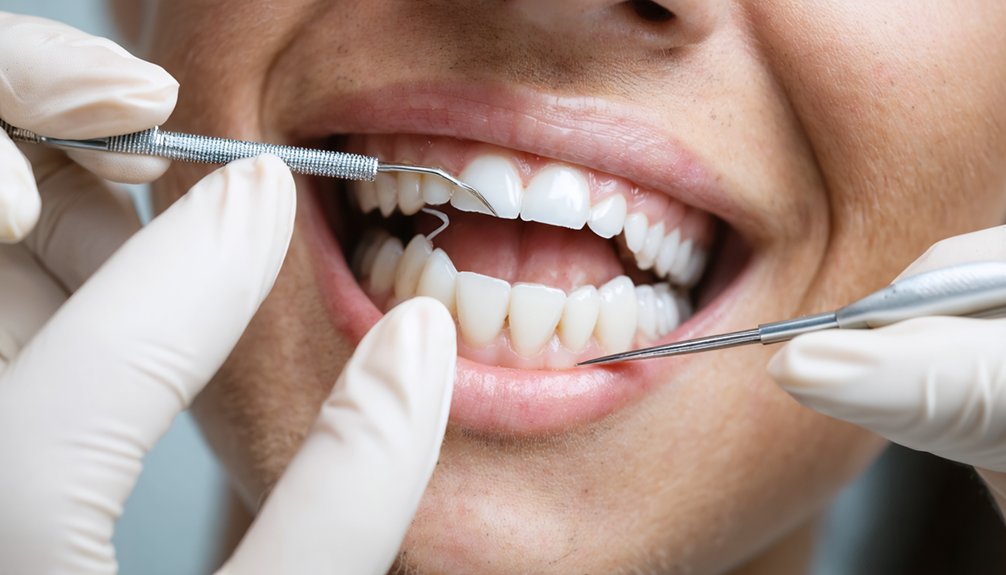
When evaluating why certain teeth respond more favorably to whitening treatments, the distinction between extrinsic and intrinsic stains becomes paramount. Extrinsic stains, appearing on your enamel surface from coffee, tea, wine, and tobacco, respond exceptionally well to hydrogen peroxide or carbamide peroxide agents. These whitening compounds effectively break down the pigment complexity of surface discoloration.
Conversely, intrinsic stains develop within your tooth structure, affecting the dentin layer through trauma, tetracycline exposure, or excessive fluoride. Standard whitening penetrates enamel but offers limited improvement due to the stain composition being embedded deeper. While professional-strength agents can partially lighten some intrinsic discoloration, severe cases often resist treatment entirely. You’ll achieve ideal results when your dental professional assesses your specific stain type and recommends appropriate protocols—whether professional whitening or alternative restorations.
How Your Natural Tooth Color Affects Treatment Duration
Your baseline tooth shade fundamentally determines both the visual impact of whitening treatment and the maintenance schedule you’ll need to preserve results. If you’re starting with darker teeth due to genetic predisposition, you’ll experience more dramatic initial results but require more frequent touch-ups to maintain brightness.
Your enamel’s porous structure allows stain intensity to rebuild gradually through dietary exposure, regardless of your starting shade. Younger patients typically sustain results longer due to healthier enamel integrity, while age-related degradation accelerates color regression.
Professional treatments deliver results lasting six months to two years, with immediate post-treatment brightness stabilizing as enamel rehydrates. Strategic maintenance through professional cleanings, consistent oral hygiene, and periodic touch-ups enables you to control long-term outcomes and preserve your investment in whitening therapy.
Enamel Quality and Its Impact on Bleaching Results
The structural composition of your enamel determines how effectively bleaching agents penetrate and lighten your teeth, creating significant variations in treatment outcomes between patients.
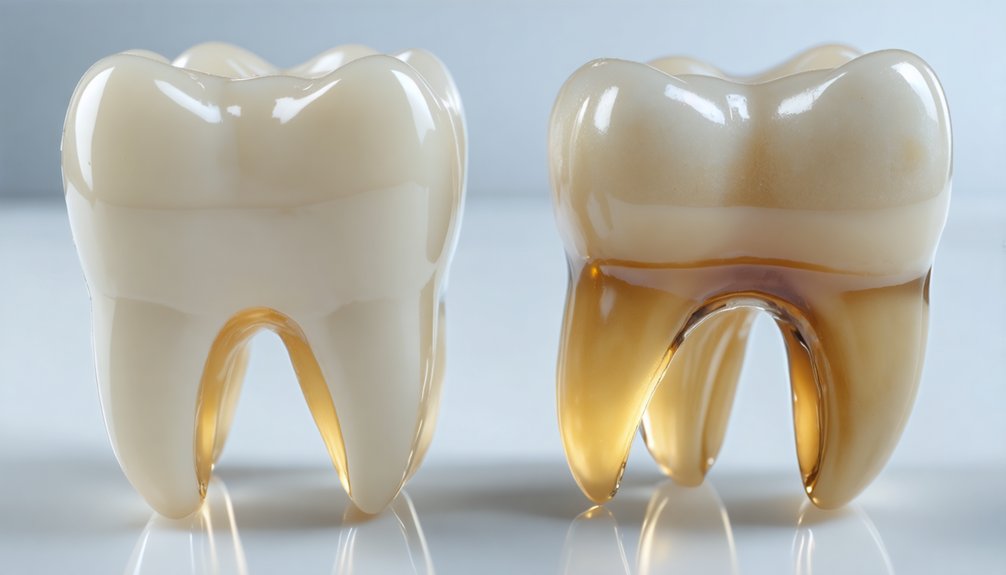
Enamel thickness variations directly influence your tooth’s natural whiteness—thicker enamel reflects more light, appearing whiter, while thinner areas expose the yellowish dentin beneath. Enamel density patterns affect how bleaching agents reach the discolored dentin layer, with denser structures requiring longer treatment protocols.
Your individual enamel characteristics create differential whitening responses across each tooth surface. Age-related enamel wear increases transparency, making your teeth appear progressively yellower.
Professional evaluation of your enamel quality allows for customized treatment plans that adjust whitening intensity based on your specific thickness and density measurements, protecting enamel integrity while maximizing results through controlled concentrations and precise application techniques.
Why Dental Restorations Create Uneven Whitening Outcomes
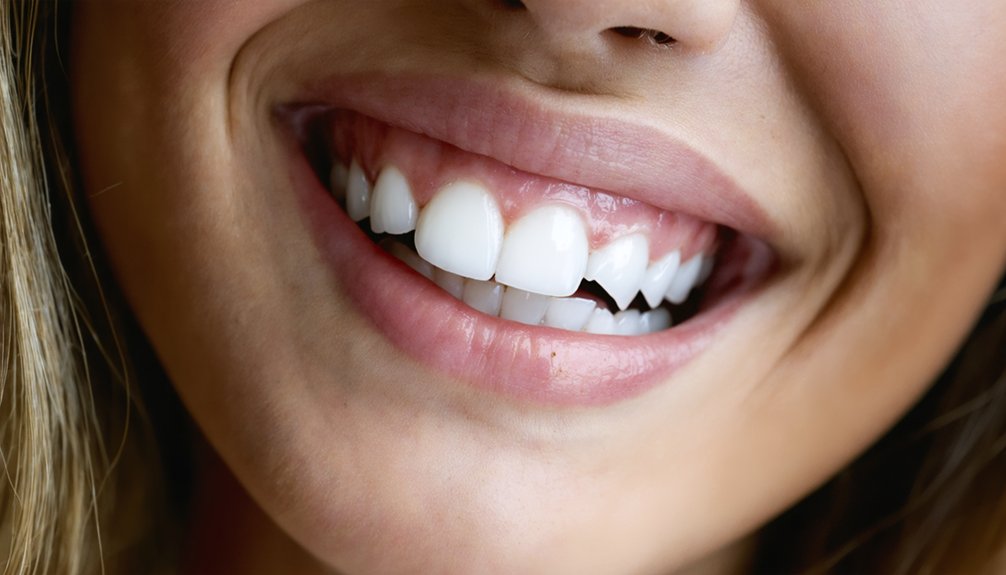
Unlike natural tooth enamel, dental restorations remain completely unresponsive to whitening agents, creating visible color disparities after bleaching treatments. Your crowns, veneers, composite fillings, and bridges retain their original shade while surrounding natural teeth lighten several levels.
Dental restorations don’t respond to whitening treatments, causing noticeable color mismatches between natural teeth and crowns, veneers, or fillings after bleaching.
This restoration sensitivity issue becomes particularly noticeable on front teeth, where mismatched shades produce blotchy, streaked results. The ADA confirms whitening gels affect only natural enamel, leaving porcelain and composite materials unchanged.
You’ll need strategic bleaching treatment timing to manage these outcomes successfully. Consult your dentist before whitening to evaluate existing restorations. After completing bleaching procedures, replace outdated fillings with shade-matched versions or adjust crown colors to achieve seamless aesthetics.
Professional supervision prevents disappointing mismatches, especially when multiple restorations complicate your treatment plan. Proper planning guarantees controlled, predictable results.
Lifestyle Choices That Determine Treatment Effectiveness
Daily consumption patterns greatly impact how well your teeth respond to whitening treatments and maintain their brightness over time. Your habits determine whether you’ll achieve ideal results or require frequent touch-ups.
Key lifestyle modifications for enhanced whitening effectiveness:
- Dietary adjustments – Limit tannin-rich beverages like coffee, tea, and red wine that penetrate enamel. Wait thirty minutes after consuming acidic foods before brushing to prevent additional enamel damage.
- Tobacco elimination – Smoking causes severe discoloration through nicotine staining, dramatically reducing treatment longevity and necessitating more frequent interventions.
- Oral hygiene routine modifications – Brush gently after meals using enamel-safe toothpaste while avoiding over-brushing that increases susceptibility to staining agents.
- Regular dental check-ups – Professional cleanings eliminate tartar and plaque that compromise whitening results, while hydration through adequate water intake neutralizes acids and prevents stain settlement.
Frequently Asked Questions
Can Teeth Whitening Damage My Enamel Permanently?
When you follow proper protocols, whitening won’t permanently damage enamel. However, overuse causes irreversible demineralization and enamel discoloration. You’ll maintain whitening treatment effectiveness and protect your enamel by adhering to professional guidelines and avoiding excessive applications.
How Long Do Whitening Results Typically Last?
Unlike Cinderella’s midnight deadline, your whitening treatment duration varies: professional results last 1-3 years, at-home kits 3-12 months. You’ll maintain ideal brightness by establishing a whitening maintenance schedule with touch-ups every 6-12 months based on your lifestyle choices.
Is Professional Whitening Safer Than Over-The-Counter Products?
Yes, professional whitening’s safer due to controlled application and protective barriers. In-office whitening options address tooth discoloration factors while minimizing sensitivity and gum damage risks you’d face with unsupervised over-the-counter products lacking customized concentration levels.
What Can I Do to Reduce Sensitivity During Whitening?
You’ll reduce sensitivity by using desensitizing products containing potassium nitrate for 10-14 days before treatment. Apply whitening slowly with lower peroxide concentrations (5-6%), shorter exposure times, and gradual intervals between sessions to maintain control over your comfort.
When Should I Replace Restorations After Whitening Treatment?
You should wait 10–14 days after whitening treatment before replacing restorations. This timing allows tooth color stabilization and ideal bonding. Existing restorations won’t lighten with whitening, so you’ll need replacement to match your new shade seamlessly.