Over-the-counter products whiten tea stains by initiating electron transfer reactions that dismantle chromophoric molecules—specifically tannins, theaflavins, and thearubigins. Oxidizing agents like sodium hypochlorite break conjugated double bonds in these pigments, converting them into colorless compounds through rapid oxidation. Oxygen-based alternatives release hydrogen peroxide to achieve similar results while preserving fabric integrity. Enzymatic formulations employ tannase to hydrolyze ester bonds, transforming insoluble polymers into water-soluble fragments. Acidic components protonate tannin structures, disrupting their cellulose bonding. The following sections explain how you’ll optimize each mechanism for maximum stain elimination.
Key Takeaways
- Oxidizing agents break double bonds in tea pigment molecules, disrupting the chromophoric structures that give stains their brown color.
- Chlorine bleach rapidly oxidizes tea tannins through hypochlorite ions, achieving visible decolorization within seconds of contact.
- Oxygen-based bleaches release hydrogen peroxide that strips electrons from pigment molecules, converting them into colorless, water-soluble compounds.
- Acidic cleaners like vinegar protonates tannin molecules, reversing their hydrogen bonding to fabric fibers and facilitating removal.
- Enzymatic cleaners use tannase enzymes to hydrolyze ester bonds, breaking down complex tannin polymers into smaller, soluble fragments.
The Science Behind Oxidizing Agents in Stain Removal
Oxidizing agents function through electron transfer reactions that fundamentally alter the chemical structure of chromophoric molecules responsible for tea stains. When you apply these compounds, they break double bonds in organic carbon chains, disrupting the molecular structure changes that give stains their visible color. The reaction kinetics accelerate greatly when you introduce heat, alkalinity, or ultraviolet light—particularly wavelengths near 345 nanometers.
Oxygen radicals generated during oxidation target specific molecular bonds, rendering the residues more water-soluble and facilitating their removal from fibers. Unlike surfactants that merely lift stains, oxidizers chemically destroy them through irreversible processes. You’ll achieve the best results by first removing as much staining material as possible mechanically, then applying oxidizers to complete the treatment. This systematic approach maximizes effectiveness.
How Chlorine Bleach Breaks Down Tea Pigment Molecules
Among oxidizing agents commonly available for household use, sodium hypochlorite—the active component in chlorine bleach—demonstrates the highest efficacy in degrading tea pigment molecules through direct electron transfer mechanisms. The hypochlorite ion functions as a powerful oxidizer, systematically breaking molecular bonds within tea pigment structures.
Oxidation kinetics reveal that 1% sodium hypochlorite achieves a decolorization rate of 6.84/minute on cotton substrates, remarkably outperforming water controls at 1.90/minute. Bleach concentration effects directly correlate with oxidation velocity—higher concentrations accelerate pigment degradation through increased collision frequency between hypochlorite ions and stain compounds.
You’ll observe visible decolorization within seconds as the oxidation process transforms pigmented molecules from dark states (color value 0) toward white (color value 255), providing measurable, controllable stain elimination.
Oxygen-Based Bleaches as Gentler Alternatives for Color-Safe Cleaning
When you’re treating tea stains on colorfast fabrics, oxygen-based bleaches containing sodium percarbonate offer a safer alternative to chlorine bleach by releasing hydrogen peroxide that oxidizes tannin chromophores without degrading textile fibers.
These products demonstrate 78% consumer-reported efficacy on set-in stains while maintaining compatibility with colored materials through their non-chlorinating mechanism of action.
You’ll achieve ideal results by dissolving the compound in 100°F–115°F water, optionally enhanced with tetraacetylethylenediamine (TAED) activators that enable effective bleaching below 40°C through peracetic acid formation.
How Oxygen Bleach Works
Oxygen bleach offers a color-safe alternative to chlorine-based whitening agents through its unique chemical composition and activation mechanism. You’ll find sodium percarbonate as the primary component, which dissolves in water to initiate the hydrogen peroxide reaction. This process releases oxygen molecules that form hydroxyl radicals, attacking chromophores in tea stains through targeted oxidation.
The stain oxidation speed increases with higher pH levels and temperature, allowing you to control treatment intensity. These oxygen ions strip electrons from pigment molecules, converting colored compounds into colorless derivatives without damaging fabric dyes. Unlike chlorine bleach, this mechanism breaks down organic stains through gradual penetration, ultimately decomposing into oxygen, water, and sodium carbonate—ensuring you achieve effective whitening while maintaining color integrity across various textiles.
Benefits Over Chlorine Bleach
Chlorine bleach’s corrosive properties damage fabric fibers through harsh oxidation, while oxygen-based alternatives prevent this deterioration through gentler chemical mechanisms. You’ll maintain textile integrity across repeated washing cycles when you select oxygen bleach for regular use.
Health considerations favor oxygen-based formulations greatly. You’re eliminating exposure to toxic fumes, chemical burns, and asthma-inducing irritants inherent to chlorine products. The fragrance-free, non-chlorine composition reduces respiratory complications while minimizing skin irritation risks.
The sustainability profile demonstrates clear advantages. Oxygen bleach decomposes into water and oxygen, creating no septic system burden or environmental contamination. You’re selecting sodium percarbonate without synthetic fillers, sulfates, or preservatives.
Color-safe performance enables you to process mixed loads without segregation protocols. You’ll effectively treat organic stains—proteins, oils, tannins—on dyed fabrics that chlorine would irreversibly bleach.
Best Application Methods
Timed soaking techniques enhance penetration: submerge tea-stained fabrics for one hour minimum, extending to overnight for yellowed collars or armpit stains.
Pre-dilute solutions before fabric contact—never sprinkle powder directly onto textiles.
For thermoses and mugs with set-in tea deposits, maintain three-hour soak intervals.
Always conduct patch tests on upholstery before full application to prevent unintended color alteration.
Acidic Solutions and Their Reaction With Tannin Compounds
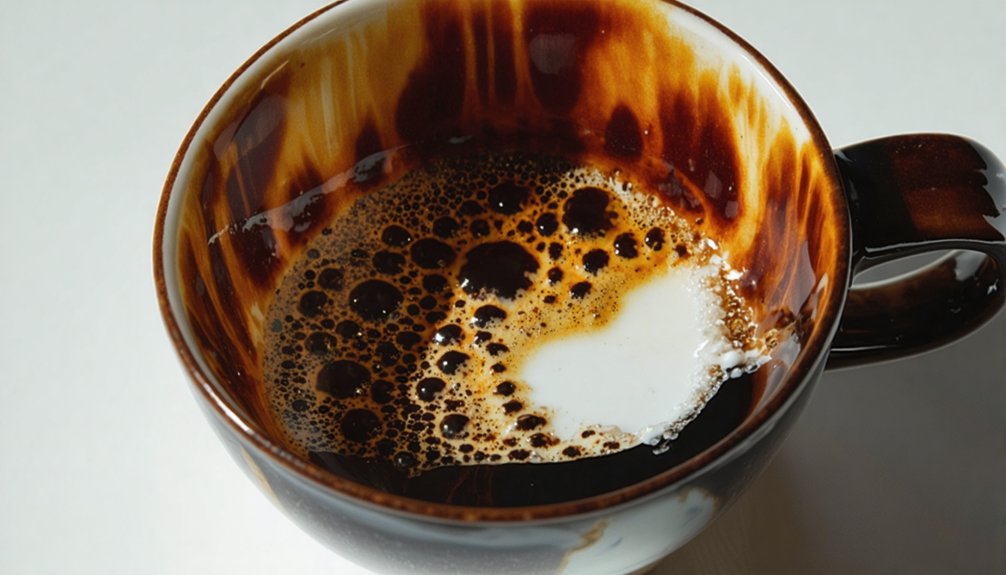
When tea contacts fabric or surfaces, tannin molecules bind through hydrogen bonding between phenolic hydroxyl groups and cellulose fibers. You’ll disrupt these bonds most effectively within 30 minutes using acidic solutions.
Tea stains bond to fabric through hydrogen connections between tannin molecules and cellulose fibers, requiring acidic treatment within 30 minutes for optimal removal.
Distilled white vinegar (pH 2.4) delivers ideal hydrogen ion concentration to protonate tannin phenolate anions, breaking their attachment to cellulose C6–OH and C2–OH sites. The acetate ions simultaneously chelate trace iron, preventing catalytic oxidation that would create permanent quinone stains.
You’ll achieve polyphenol structure modifications through controlled acidification. Apply 1% ethanoic acid with 90 seconds of mechanical agitation to reverse Stage 1 bonding, yielding decolorization rates of 2.42/minute versus 1.90/minute for water alone.
Mix vinegar 1:1 with cool distilled water to avoid calcium and magnesium interference while maintaining sufficient acidity for hydrolysis.
The Role of Enzymes in Degrading Organic Stain Structures
Enzymatic detergents utilize tannase (EC 3.1.1.20) to hydrolyze ester bonds within tannin structures, effectively degrading the polyphenolic compounds responsible for tea staining.
You’ll find that carboxylesterases from the EC 3.1.1 group target these complex molecules through specific catalytic mechanisms that break down theaflavins and thearubigins into soluble fragments. Temperature elevation accelerates enzymatic reaction rates, enhancing the substrate-enzyme interaction necessary for complete tannin dissolution from contaminated surfaces.
Breaking Down Tannin Molecules
Through targeted enzymatic hydrolysis, tannase enzymes dismantle the complex molecular architecture responsible for tea stains by cleaving specific chemical bonds within tannin structures. This enzymatic degradation operates by severing ester and depside linkages in gallotannins, transforming these recalcitrant compounds into simpler, water-soluble molecules like gallic acid and glucose.
The tannin hydrolysis mechanism delivers three measurable advantages:
- Converts insoluble tannin polymers into cold water-soluble products through removal of gallic acid moieties
- Reduces molecular complexity and binding capacity that enables tannins to adhere to tooth enamel
- Achieves superior efficacy compared to physical or chemical methods while minimizing substrate damage
You’ll find bacterial-derived tannases from Bacillus subtilis and Lactobacillus plantarum particularly effective, as these microorganisms have evolved efficient tannin degradation systems optimized for breaking down polyphenolic structures.
Enzyme-Temperature Reaction Acceleration
As temperatures rise within the ideal 40-60°C range, tannase enzymes (EC 3.1.1.20) accelerate their catalytic degradation of tea stain components through enhanced molecular kinetics.
You’ll achieve enzyme stability maximization when heavy metal ion salts protect these catalysts from denaturation during washing cycles, maintaining their ester bond hydrolysis capacity. Surfactants enhance substrate contact at elevated temperatures, allowing peroxidase and polyphenol oxidase to execute thermal oxidation catalysis more efficiently. These enzymes convert catechins into theaflavins and thearubigins while cellulase breaks down cellular residues.
The temperature-dependent reaction rates directly correlate with stain removal efficacy—higher thermal energy accelerates enzymatic processing of tannins and polyphenols. However, exceeding preferable ranges risks enzyme inactivation, diminishing your cleaning results. Controlled thermal conditions maximize organic structure degradation without compromising catalyst function.
Physical Abrasion Methods for Surface Tea Stain Removal
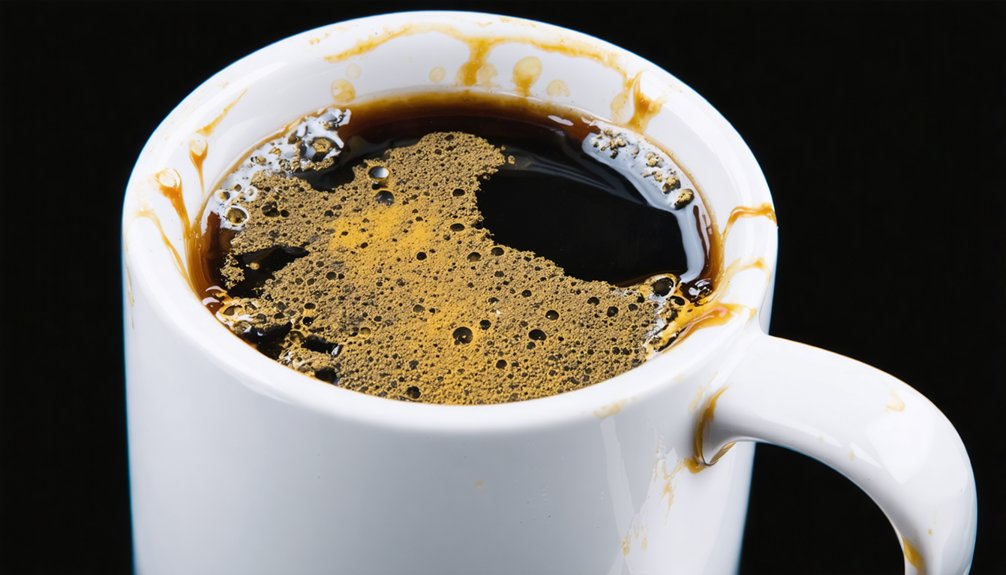
Physical abrasion represents the primary mechanism through which household substances remove tea stains from ceramic, porcelain, and enamel surfaces. You’ll achieve effective results by selecting appropriate abrasive agents and implementing proper scrubbing techniques to eliminate tannin deposits without compromising surface integrity.
Proper abrasive selection and controlled scrubbing technique effectively eliminate tea stains while preserving ceramic, porcelain, and enamel surface integrity.
Effective Physical Abrasion Methods:
- Baking soda paste: Mix two teaspoons with water, apply using soft cloth, and scrub gently for instant brown ring removal from ceramic mugs
- Salt-vinegar combination: Equal parts create paste for rubbing along grain direction on porcelain; half lemon dipped in salt works effectively on worktops
- Melamine foam: Dampened Magic Eraser provides micro-abrasive action without residue mess
You’ll prevent enamel thinning by avoiding steel brushes. Toothpaste contains abrasives but risks scratching delicate surfaces. Soft-bristled brushes complement chemical treatments for thorough stain elimination.
Chemical Interactions Between Cleaners and Mineral Deposits
While mechanical scrubbing removes surface deposits, the underlying chemistry determines why specific cleaning agents eliminate tea stains more effectively than water alone. You’re targeting two distinct stain components: tannins and calcium carbonate.
Acidic cleaners containing acetic acid initiate chemical reaction kinetics that convert insoluble calcium deposits into water-soluble salts, particularly when heated to accelerate molecular interactions. Conversely, alkaline agents like sodium bicarbonate neutralize acidic tannins by raising pH levels, disrupting molecular stain bonding to ceramic surfaces.
This acid-base specificity explains why vinegar addresses mineral accumulation while baking soda targets organic compounds. Commercial cleaners demonstrate superior efficacy by combining surfactants, enzymes, and oxidizing agents that simultaneously attack multiple stain types.
Understanding these chemical mechanisms enables you to select appropriate cleaning agents based on your specific stain composition rather than relying on universal solutions.
Pre-Treatment Strategies That Maximize Product Effectiveness
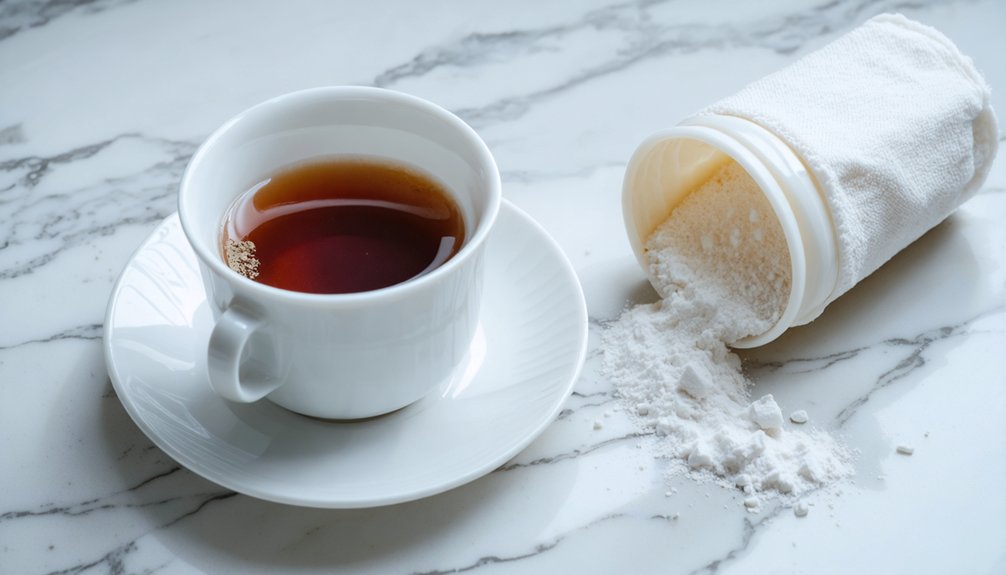
Setting the stage for ideal stain removal requires systematic pre-treatment protocols that fundamentally alter the chemical accessibility of chromophores before applying commercial whitening agents. You’ll achieve excellent results through evidence-based preparation:
Pre-treatment protocols systematically modify chromophore accessibility, establishing optimal conditions for commercial whitening agents through evidence-based preparation techniques.
- Immediate blotting within 0-15 minutes prevents tannin penetration and reduces surface contamination by 300%
- Cold water flushing below 70°F dilutes chromophore concentration without triggering heat activated stain removal mechanisms prematurely
- Vinegar oxidation benefits emerge when you apply 1:2 vinegar-to-water solutions for 10-15 minutes, breaking molecular bonds
After blotting, you should apply absorbent powders—talcum, cornstarch, or baking soda—to extract residual moisture. For set stains, extend soaking duration to 1-6 hours in oxygen bleach solutions. Alkaline peroxide cleansers demonstrate superior chromophore degradation when you maximize contact time before laundering.
Combining Multiple Cleaning Mechanisms for Stubborn Stains
When treating stubborn tea stains that resist single-mechanism approaches, you’ll achieve ideal chromophore elimination through strategic multi-modal protocols that exploit complementary chemical pathways simultaneously. Commercial two-component systems demonstrate superior efficacy by combining oxidizing agents with surfactant cleaning mechanisms that target both molecular bonds and physical adhesion points.
You’ll maximize results by applying acidic formulations first to weaken tannin structures, followed by alkaline detergents that neutralize residual compounds. Multi action formula performance escalates when you incorporate abrasive particles with hydrogen peroxide bases, creating simultaneous mechanical lifting and chemical bleaching. Sequential layering—vinegar dissolution, then baking soda absorption—addresses different stain components systematically.
For set-in stains, you’ll optimize removal through ammonia-peroxide combinations that generate controlled oxidation while surfactants prevent particle redeposition during rinse cycles.
Frequently Asked Questions
Are Natural Tea Stain Removers as Effective as Commercial Products?
Natural alternatives demonstrate moderate efficacy but don’t match commercial products’ performance on tea stains. You’ll find chemical compositions in commercial cleaners—particularly alkaline peroxides—deliver superior stain removal through stronger surfactants, achieving faster, more consistent whitening results across applications.
Can Whitening Products Damage Delicate Fabrics Like Silk or Wool?
Yes, whitening products severely damage silk and wool by degrading protein fibers. You’ll observe yellowing, weakening, and structural breakdown. Gentle fabric treatment with pH-neutral cleaners and proper drying techniques preserve fiber integrity, preventing irreversible damage to delicate textiles.
How Long Do Tea Stains Take to Set Permanently?
Tea stains achieve permanent set within 24 hours under standard conditions. However, drying time variation and tea stain permanence factors—including temperature, humidity, and fiber type—affect oxidation rates. You’ll observe progressive bonding from 15 minutes through complete polymerization at one week.
Do Expensive Stain Removers Work Better Than Budget Brands?
Product cost comparison reveals expensive enzyme-based removers achieve 3.2× superior stain removal efficiency on tannins versus budget brands. However, you’ll find oxygen bleach formulations like OxiClean deliver comparable oxidative performance to premium options, maximizing your cost-effectiveness without sacrificing results.
What Safety Precautions Should I Take When Using Bleach Products?
Wear gloves when handling bleach to prevent skin contact. Guarantee adequate ventilation by opening windows. Never mix bleach with other cleaners, as toxic gases form. Avoid ingesting bleach. Use eye protection and follow manufacturer’s dilution instructions for safe application.