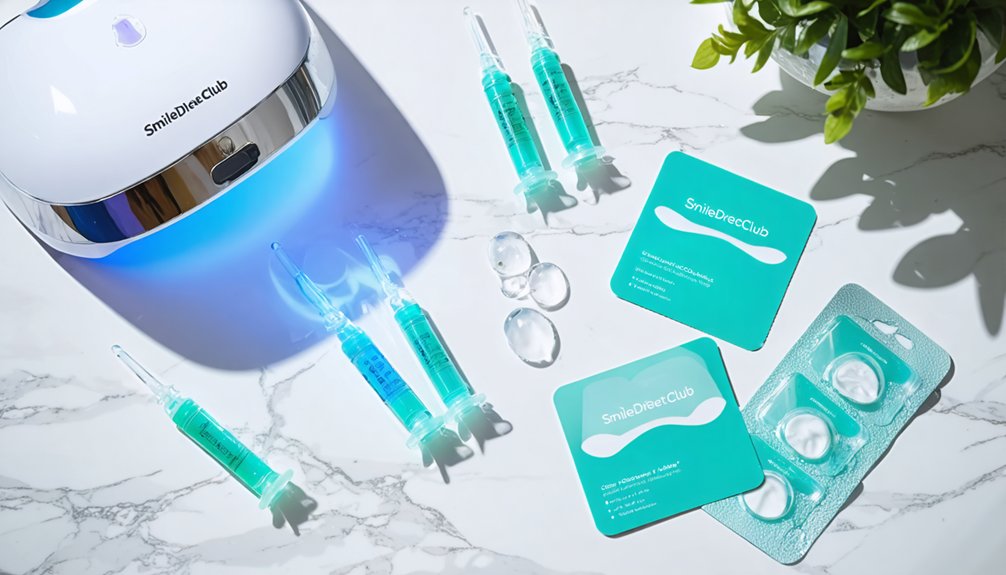
Dentists trust Opalescence because you’ll get clinically proven results with 5.20 units of total color change and only 8.2% shade relapse at six months—outperforming competitors by 6-fold. You’re receiving chemically activated 40% hydrogen peroxide with proprietary viscous gel technology that maintains enamel hydration while delivering consistent whitening outcomes. The system incorporates potassium nitrate and fluoride for sensitivity management, paired with custom-fitted trays that guarantee precise gel placement. Professional oversight allows concentration adjustments based on your enamel condition, and the following evidence-based features demonstrate why this system preserves industry-leading performance standards.
Key Takeaways
- Delivers 5.20 units of total color change with only 8.2% relapse versus 46.3% for competitors at six months.
- Pioneered viscous gel technology with high water content to prevent dehydration and maintain consistent enamel contact during treatment.
- Enables customizable peroxide concentrations and continuous monitoring for immediate intervention if sensitivity or irritation develops.
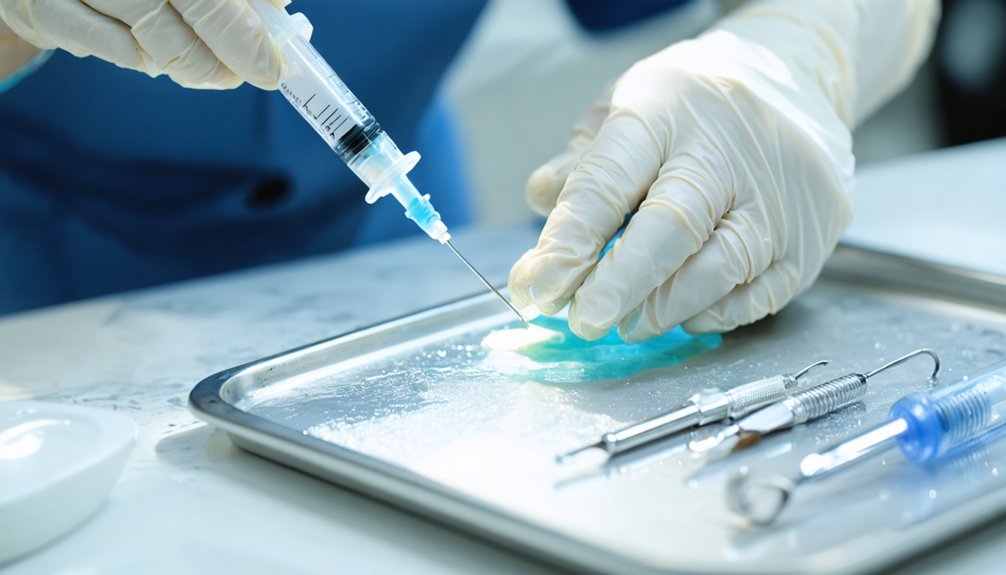
- Uses chemically activated 40% hydrogen peroxide with syringe-to-syringe mixing to eliminate light dependency and ensure maximum potency.
- Integrates potassium nitrate and fluoride to desensitize nerves and strengthen enamel while effectively treating both extrinsic and intrinsic stains.
Clinically Proven Results That Deliver Consistent Whitening
When evaluating professional whitening systems, measurable outcomes matter most. Opalescence delivers a total color change (ΔE) of approximately 5.20 units, with statistically significant improvements in L*, a*, and b* coordinates maintained up to six months post-bleaching (P < .05). You'll observe treatment consistency through superior stability metrics: only 8.2% L* relapse versus 46.3% for competitors at six months.
The formulation achieves a 20.4% reduction in b* values, eliminating yellowness effectively. Multiple clinical trials confirm proven long term results, with whitening outcomes lasting years using 10% carbamide peroxide protocols. At day seven, Opalescence demonstrates statistically greater ΔE and shade change versus competitors (P = .0059). This evidence-based performance, trusted by dentists worldwide for 35 years, guarantees predictable whitening outcomes.
Professional Oversight Ensures Safe and Customized Treatment
Your dentist adjusts Opalescence’s peroxide concentration based on your specific sensitivity thresholds and enamel condition, preventing iatrogenic damage that occurs with unsupervised use.
Professional monitoring during treatment enables immediate intervention if irritation develops, as practitioners assess gingival response and modify application protocols accordingly.
This oversight eliminates the guesswork inherent in over-the-counter products, where you lack clinical evaluation to determine appropriate strength and duration.
Tailored Concentration for Sensitivity
Lower concentrations extend wear times with minimal sensitivity risk, while higher percentages deliver accelerated results under controlled supervision.
This stratified approach transforms sensitivity from a treatment contraindication into a manageable variable you control through evidence-based concentration selection.
Preventing Damage Through Supervision
Professional oversight transforms whitening from a cosmetic gamble into a clinically controlled procedure. Your dentist implements proper use protocol by evaluating tooth sensitivity, existing dental work, and contraindications before treatment begins. This assessment determines appropriate whitening agent concentrations and identifies patients requiring modified approaches.
During application, your dental professional applies protective barriers to shield gums and soft tissues from bleaching agents. They monitor your response continuously, intervening immediately if you experience sharp sensations or discomfort. Application precautions include precise product placement using specialized tools and FDA-approved agents administered under clinical conditions.
This supervision eliminates risks inherent in at-home methods, where incorrect usage causes enamel damage and extreme sensitivity. Your dentist customizes treatment intensity based on your real-time response, ensuring ideal results without compromising oral health integrity.
Advanced Formulation Technology Sets Industry Standards
What distinguishes truly effective whitening systems from conventional alternatives? Opalescence’s consistent formula innovation establishes measurable clinical benchmarks. The sticky, viscous gel technology—pioneered 35 years ago—ensures reliable gel cohesion during application, preventing migration that compromises treatment precision.
You’ll benefit from chemically activated 40% hydrogen peroxide that eliminates light-dependent protocols, while syringe-to-syringe mixing guarantees maximum potency per application. High water content technology (≥20%) maintains tooth hydration, preventing dehydration-induced shade relapse common with competing products.
Dual peroxide formulations provide treatment flexibility: hydrogen peroxide delivers rapid results (5 shades in one hour), while carbamide peroxide’s sustained-release mechanism enables extended whitening from overnight to 15-minute applications. Concentrations spanning 10% to 45% carbamide peroxide let you control treatment intensity and duration precisely.
Patient Comfort Built Into Every Application
While achieving dramatic whitening results remains paramount, Opalescence integrates extensive comfort-enhancing technologies that minimize treatment-related sensitivity. The formulation maintains at least 20% water content for hydration maintenance, preventing the dehydration-induced discomfort common with competing products.
You’ll benefit from potassium nitrate and fluoride integration, which simultaneously desensitizes nerve endings and strengthens enamel during treatment. The chemical activation process eliminates uncomfortable LED heat exposure, while custom-fitted trays guarantee precise gel placement and discomfort minimization.
When temporary sensitivity occurs, it typically resolves within 1-3 days. You can further manage side effects through Sensitivity Relief Whitening Toothpaste application before and after treatment. The sticky, viscous gel consistency prevents tray leaching, and multiple concentration options (10%-40% hydrogen peroxide) let you control treatment intensity based on individual tolerance thresholds.
Effective Stain Removal Across Multiple Categories
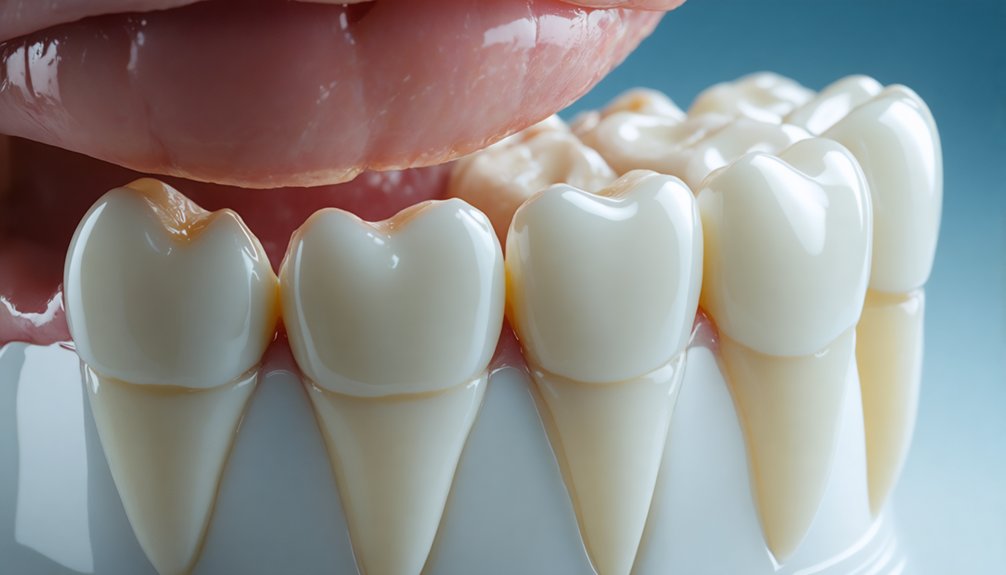
Your teeth accumulate stains through two distinct pathways: surface-level extrinsic discoloration from coffee, tea, and wine, and deeper intrinsic staining that penetrates enamel over time.
Opalescence’s peroxide-based formulation addresses both categories by oxidizing chromogenic molecules at multiple depths, with hydrogen peroxide concentrations calibrated to match stain severity. The system’s viscous gel maintains prolonged contact with enamel surfaces, enabling reactive oxygen molecules to break down pigment bonds without compromising structural integrity.
Surface vs. Deep Stains
Understanding the distinction between surface and deep stains determines which whitening protocol will achieve ideal results. Extrinsic discoloration develops on enamel surfaces where tannins, tobacco residue, and plaque accumulation create blotchy or streaky deposits. You’ll find these respond effectively to professional whitening gels, achieving 6-8 shades of improvement through surface-level oxidation.
Deep stain causes like tetracycline exposure, fluorosis, and trauma penetrate enamel to affect dentin structure, requiring advanced intrinsic stain treatment approaches. These internalized pigments resist standard whitening agents and demand specialized systems like KöR or internal bleaching for penetration.
When age-related factors thin enamel and reveal darker dentin, you’ll need combined protocols—sometimes incorporating veneers or bonding—to achieve thorough, exhaustive, or detailed correction beyond what surface treatments alone can accomplish.
Common Food and Beverage Culprits
Tannins represent the primary chromogenic compound responsible for enamel discoloration across coffee, tea, and red wine consumption. These polyphenolic molecules bind to enamel proteins, creating persistent pigmentation that resists conventional brushing protocols.
Dark-pigmented beverages like cola and grape juice introduce chromogens that penetrate enamel microstructure. Acidic items—sodas, white wine, citrus fruits—erode protective enamel layers, creating porous surfaces vulnerable to secondary staining.
Tomato-based sauces combine acidity with intense pigmentation, while soy sauce and balsamic vinegar deposit chromophores through prolonged contact. Berries containing anthocyanins and turmeric-based curries present significant staining risks due to their molecular bonding capabilities.
Understanding these diverse staining mechanisms enables you to pursue targeted whitening interventions. Opalescence’s formulation addresses chromogenic compounds across all categories, delivering inclusive results regardless of your specific dietary patterns.
Enamel-Safe Stain Penetration
The peroxide-based mechanism underlying Opalescence’s whitening efficacy operates through controlled oxidative penetration of enamel and dentin structures. You’ll benefit from active oxygen molecules that traverse enamel surface protection barriers to oxidize chromogenic compounds at subsurface levels—addressing both extrinsic and intrinsic discoloration simultaneously.
The penetration kinetics enable thorough stain removal across multiple categories: dietary pigments, tobacco residues, and age-related yellowing. Opalescence’s viscous formula maintains sustained contact, allowing reactive oxygen species to permeate tooth architecture while potassium nitrate and fluoride additives fortify enamel integrity.
This dual-action approach delivers measurable results—two to five shade improvements within prescribed treatment protocols—without compromising structural tooth components. Custom-fitted trays optimize gel-to-enamel contact geometry, ensuring uniform penetration and predictable outcomes you can verify clinically.
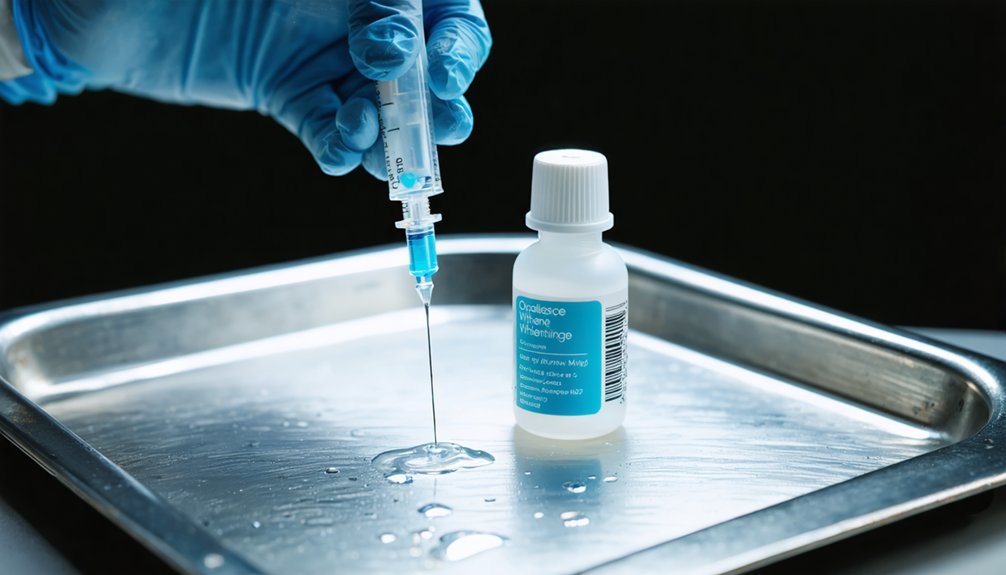
Professional-grade Opalescence systems deliver carbamide peroxide concentrations ranging from 10% to 45%—strengths considerably higher than over-the-counter whitening products legally permit. Regulated formula oversight restricts retail access to these powerful peroxide levels, ensuring you receive them only through professional channels with proper supervision. Your dentist provides dentist customization options that match specific concentrations to your unique whitening goals and sensitivity profile.
Key advantages of professional-strength formulas:
- 35% and 45% carbamide peroxide formulations exclusively available through dental practices
- Custom tray delivery systems accommodate 10-45% concentrations with prescribed wear schedules
- In-office Opalescence Boost utilizes chair-side activated hydrogen peroxide for immediate results
- Flexible treatment protocols range from 15-minute applications to overnight wear
- Proven efficacy delivers up to 5 shades improvement on coffee, wine, and tobacco stains
Sensitivity Management Through Proprietary Ingredients
While superior concentrations deliver exceptional whitening results, Opalescence formulations integrate four proprietary components that systematically minimize treatment-related discomfort. You’ll benefit from potassium nitrate and fluoride integration that reduces sensitivity triggers while strengthening enamel structure.
The minimum 20% water content prevents tooth dehydration during oxidation, addressing the primary discomfort mechanism that compromises patient compliance with competing products. Opalescence’s neutral pH buffering system protects against acidic enamel degradation, while the viscous formula prevents gel migration to sensitive gum tissue.
You can select from four carbamide peroxide concentrations (10%, 15%, 20%, 35%) tailored to individual tolerance thresholds. Comparative clinical trials demonstrate these combined mechanisms reduce post-treatment sensitivity that typically persists after professional applications, enabling extended wear times without structural compromise.
Evidence-Based Performance Backed by Dental Professionals
Over three decades of rigorous clinical validation demonstrates Opalescence’s quantifiable superiority in professional whitening outcomes. You’ll observe clinical performance metrics that distinguish this system: randomized trials with 135 subjects confirm statistically significant ΔE values of 5.20 units, superior Day 7 results (P = .0059), and documented 18% relapse rates versus competitors’ 27%. These professional whitening accreditations reflect development by dentists who’ve established industry standards since 1990.
Key Clinical Validation Points:
- Spectrophotometric precision: Objective color relapse measurements at 1, 3, and 6-month intervals
- Statistical significance: VITA Classical (P = 0.0106) and Bleachedguide (P = .0489) improvements at Day 7
- Reduced relapse: L* value decreased only 8.2% versus competitors’ 46.3%
- pH optimization: Neutral formulation (7-8) matching saliva for extended treatment protocols
- Global endorsement: 30+ years of consistent results across worldwide dental practices
Frequently Asked Questions
How Long Do Opalescence Whitening Results Typically Last Before Retreatment Is Needed?
Like a bright beacon requiring periodic renewal, you’ll maintain Opalescence whitening durability for 6-12 months. Your maintenance requirements include limiting staining agents and occasional touch-ups. Clinical evidence confirms retreatment intervals depend on your lifestyle choices and adherence to post-treatment protocols.
Is Opalescence Whitening Safe for People With Existing Dental Restorations or Crowns?
Yes, Opalescence is safe for your existing dental restorations. You’ll experience no impact on dental restorations like crowns or fillings. However, potential tooth sensitivity may occur, so you should consult your dentist before treatment begins.
What Is the Cost Difference Between Opalescence In-Office and At-Home Treatments?
In-office Opalescence treatments typically cost $400-$600 per session, while at-home systems range from $89-$400. You’ll find cost comparisons favor at-home options, though many practices offer payment plans to make professional whitening more accessible.
Can Pregnant or Breastfeeding Women Safely Undergo Opalescence Whitening Procedures?
No, you shouldn’t undergo Opalescence whitening while pregnant or breastfeeding. Dental safety considerations require deferring treatment due to limited research on whitening precautions during pregnancy. Your dentist will recommend postponing cosmetic whitening until after you’ve completed nursing.
How Does Opalescence Compare to Competing Professional Whitening Brands Like Zoom?
Picture two pathways to brighter smiles: Opalescence delivers ideal patient comfort through potassium nitrate-fluoride formulations and customized whitening options, while Zoom prioritizes speed. You’ll control treatment intensity, duration, and sensitivity management with Opalescence’s evidence-based flexibility.