You’ll experience considerably less tooth sensitivity with peroxide-free whitening kits, as clinical studies show sensitivity rates below 3% compared to 43-80% with traditional hydrogen peroxide formulas. These alternatives work through surface-level stain removal rather than the deep oxidative penetration that triggers nerve inflammation and enamel demineralization. Non-peroxide agents like PAP and color correctors preserve your tooth structure’s integrity while delivering comparable whitening results, making them safer for frequent home use. Understanding how these gentler mechanisms protect your dental health can help you select the most appropriate whitening approach.
Key Takeaways
- Peroxide-free kits cause sensitivity in less than 3% of users compared to 43-80% with traditional peroxide-based products.
- Non-peroxide formulas work on surface stains without penetrating enamel, avoiding nerve irritation and pulp inflammation.
- These alternatives preserve enamel integrity by eliminating demineralization and microstructural damage caused by hydrogen peroxide oxidation.
- Safe for frequent use without waiting periods, as they don’t trigger free radical generation or TRAP1 activation.
- PAP and sodium percarbonate alternatives deliver comparable whitening effectiveness while reducing gum irritation and tissue damage.
Understanding the Safety Benefits of Non-Peroxide Whitening
While peroxide-based whitening products have dominated the market for decades, non-peroxide alternatives offer distinct safety advantages that warrant serious consideration. You’ll experience enhanced gum comfort with non-peroxide formulations, as they demonstrate markedly lower irritation rates than conventional products. Clinical studies document that 35% peroxide concentrations cause dental irritation, whereas non-peroxide agents avoid harsh chemical reactions that damage soft tissue.
These alternatives preserve your enamel through mild chemical processes rather than oxidation, reducing sensitivity by nearly half compared to peroxide-based strips. You’ll avoid microscopic surface damage that allows oxygen radicals to penetrate toward dental nerves. Most importantly, you’ll benefit from reduced soft tissue irritation while achieving comparable whitening effectiveness—particularly valuable if you have sensitive teeth or require frequent maintenance treatments without compromising tooth structure integrity.
How Peroxide-Free Formulas Minimize Tooth Sensitivity
Peroxide-free whitening formulas eliminate the oxidative stress that hydrogen peroxide inflicts on dental nerves, preventing the inflammation responsible for sensitivity in 43-80% of traditional whitening users.
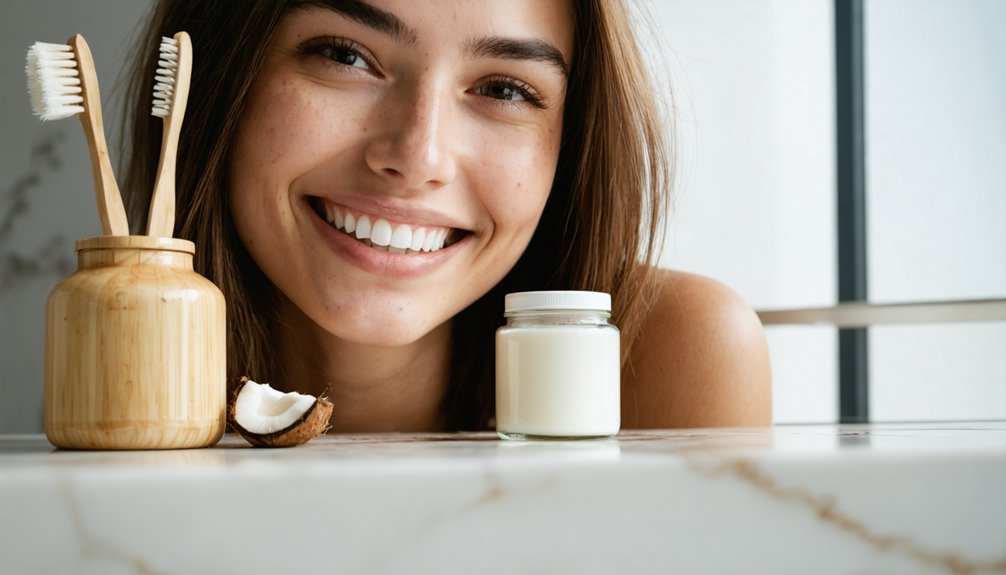
You’ll experience reduced discomfort during treatment because natural ingredients like coconut oil and sage oil don’t penetrate enamel to expose dentin tubules or trigger nerve irritation.
These formulas’ gentle mechanism allows you to maintain regular use without the temporary pain cycles associated with peroxide-based products, making them clinically appropriate for patients with pre-existing sensitivity.
Avoiding Nerve Inflammation
Although peroxide-based whitening products deliver noticeable results, they achieve this effect through a chemical oxidation process that frequently triggers nerve inflammation and sensitivity. Hydrogen peroxide’s low molecular weight enables free radicals to penetrate enamel, traverse dentin, and reach the pulp chamber, causing reversible pulpitis. You’ll experience this inflammatory response because peroxide exposure demineralizes enamel, exposing dentinal tubules—microscopic channels connected directly to tooth nerves.
Peroxide-free formulas protect against these complications by minimizing enamel weakening through surface-level stain removal that doesn’t require structural penetration. You’re inhibiting pulp inflammation by eliminating the free radical generation responsible for inflammatory mediator release. Without chemical oxidation, your enamel maintains its integrity, dentinal tubules remain protected, and you’ll avoid the temporary nerve inflammation that necessitates desensitizing agents or post-treatment management.
Reduced Discomfort During Treatment
Because hydrogen peroxide’s molecular structure allows free radicals to diffuse through enamel and reach the pulp chamber, you’ll experience considerably more discomfort with peroxide-based formulas than with peroxide-free alternatives. Clinical trials demonstrate that 35% hydrogen peroxide causes sensitivity in all cases, while lower concentrations still risk nerve irritation through dentin tubule exposure.
Peroxide-free formulas represent a safer whitening approach by utilizing surface-level mechanisms—baking soda, activated charcoal, and fruit enzymes remove stains without penetrating enamel or exposing underlying nerves. PAP-based systems particularly demonstrate minimized discomfort levels compared to peroxide treatments in comparative studies. You’ll maintain control over your whitening regimen without requiring pre-treatment desensitizing gels, temperature-sensitive dietary restrictions, or post-treatment recovery periods. This allows immediate results through 10-minute daily applications while preserving your oral comfort throughout the process.
Safe for Regular Use
Clinical data consistently demonstrates sensitivity incidence below 3% with hydrogen peroxide-free color correctors (HPFCC), representing a marked safety advantage over conventional peroxide-based systems. You’ll find these formulations maintain enamel integrity across multiple in vitro studies, with one 60-premolar investigation showing 15% increased dentin nano-hardness rather than degradation. The absence of peroxide degradation products prevents pulpal inflammation and TRAP1 activation—key mechanisms underlying sensitivity responses.
For repeated whitening cycles, peroxide-free options eliminate the microstructural changes you’d otherwise need to wait to reverse. This safety profile enables customized whitening approaches tailored to your tolerance and schedule. When combined with personalized treatment recommendations accounting for your baseline enamel condition, HPFCC formulas provide controlled whitening without compromising oral tissue health or requiring extended recovery periods between applications.
Protecting Your Enamel With Gentler Whitening Agents
Hydrogen peroxide whitening agents can compromise enamel integrity through demineralization and surface microstructural changes with prolonged exposure.
Peroxide-free formulas utilizing phthalimidoperoxycaproic acid (PAP) and sodium percarbonate offer effective whitening while demonstrating reduced enamel erosion risk, though conflicting research indicates PAP’s safety profile requires further investigation.
You’ll find that non-peroxide alternatives combined with remineralizing agents like hydroxyapatite provide a more conservative approach to long-term enamel preservation during home whitening treatments.
How Peroxide Damages Enamel
When peroxide-based whitening agents contact your teeth, they initiate an oxidation reaction that extends beyond simple stain removal. The hydrogen or carbamide peroxide penetrates your enamel’s porous surface, dehydrating the tissue and increasing its permeability. This process strips essential minerals like calcium, temporarily weakening your tooth’s protective layer.
Studies document measurable consequences: decreased surface hardness, increased roughness, and random fragmentation of the protein matrix. You’ll likely experience heightened sensitivity as the compromised enamel exposes underlying dentin to temperature changes and acidity.
Gradual enamel erosion occurs with repeated applications, while cumulative structural damage manifests through reduced tensile strength and microhardness losses reaching 14.2% with certain formulations. Though saliva provides some remineralization between treatments, excessive exposure can permanently thin your enamel, creating translucency that reveals the darker dentin beneath.
Non-Peroxide Enamel Safety
Given peroxide’s documented risks to enamel integrity, manufacturers have developed alternative whitening agents that claim superior safety profiles. PAP (phthalimidoperoxycaproic acid) represents the most studied non-peroxide option, demonstrating effective whitening in controlled trials. However, you’ll encounter inconclusive enamel safety results across research.
One Journal of Applied Oral Science study found PAP didn’t affect enamel microhardness, while a British Dental Journal investigation documented potential enamel damage despite color improvement. Laboratory testing revealed that low pH formulations containing PAP and sodium chlorite reduced enamel microhardness in vitro. The seven-day human study (n=60) confirmed whitening efficacy but yielded mixed enamel integrity data.
Current evidence provides insufficient certainty about non-peroxide products’ protective claims, leaving you with enamel microhardness concerns that require additional clinical validation before definitive safety conclusions.
Long-Term Enamel Preservation
How can you maintain enamel integrity during extended whitening regimens? Peroxide-free formulations offer enhanced enamel durability through gentler mechanisms that avoid the microstructural damage associated with hydrogen peroxide. Studies demonstrate that PAP-based treatments preserve enamel microhardness while achieving comparable whitening results, and sodium percarbonate maintains enamel structure preservation even during 14-day nightly applications.
Key advantages of peroxide-free options for long-term use:
- HPFCC treatments increase surface microhardness by 18 VHN versus traditional peroxide methods
- PAP molecules target surface stains exclusively, preventing dentin penetration
- Neutral pH formulations reduce erosion risk during repeated applications
- Remineralizing agents actively strengthen enamel throughout the whitening process
- Violet LED protocols achieve ΔE values up to 5.20 without compromising tooth structure
These formulations enable sustained whitening without cumulative enamel compromise.
The Science Behind Non-Oxidizing Stain Removal
Not all whitening mechanisms rely on oxidative chemistry to alter tooth color. Non-oxidizing agents utilize stain chromogen displacement through competitive binding.
Polyphosphates like sodium hexametaphosphate (SHMP) attach to calcium sites on your enamel surface, removing existing chromogens and creating a protective barrier against new stain adhesion. This dentifrice chemical action targets extrinsic discoloration without penetrating enamel pores.
You’ll find these methods particularly effective for surface-level staining from dietary sources. The negatively charged SHMP molecules compete with negatively charged chromogens for positively charged calcium ions, effectively displacing discoloration. Combined with controlled abrasive systems, this approach removes stains mechanically and chemically while preserving enamel integrity. However, you won’t achieve intrinsic stain modification since these agents don’t diffuse through interprismatic spaces to reach dentin-level chromophores.
Why Non-Peroxide Kits Excel for Regular Home Use
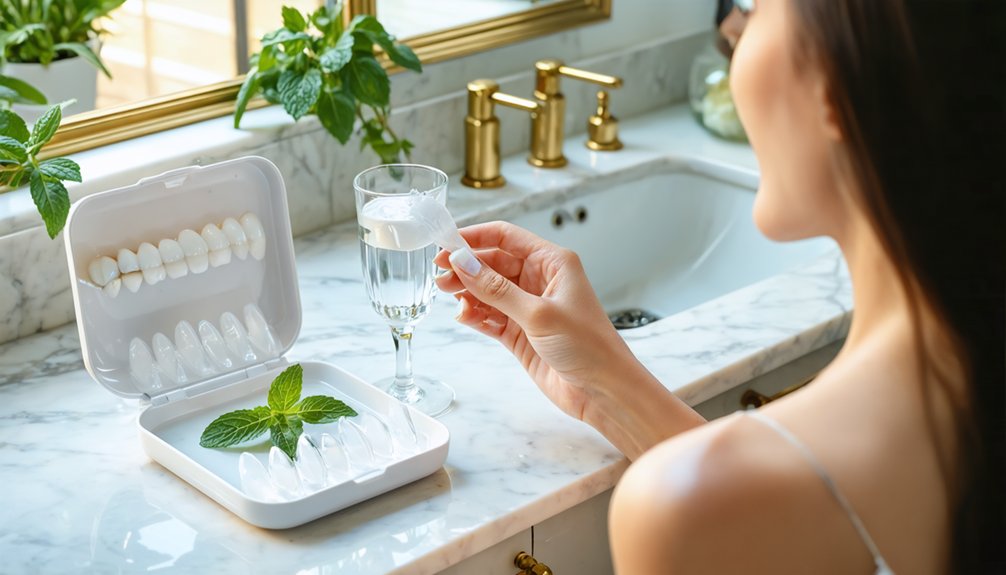
When considering home whitening options, non-peroxide formulations offer distinct advantages for consistent, long-term use. These systems accommodate personalized dental conditions while delivering reliable results through safer chemical mechanisms.
Key benefits include:
- Reduced sensitivity risk: Clinical studies demonstrate markedly fewer complaints of tooth sensitivity, oral burning, and gum soreness compared to peroxide-based alternatives
- Extended treatment flexibility: Less abrasive compositions permit safe daily application without enamel compromise
- Comparable efficacy: Controlled trials show no substantial whitening difference between peroxide and non-peroxide strips over 14-day periods
- Affordability considerations: Lower risk profiles eliminate potential costs associated with sensitivity management or enamel repair
- Broader accessibility: Enzyme-based and natural formulations accommodate individuals with gum sensitivity or medical contraindications to peroxide exposure
You’ll maintain whitening results through regular touch-ups without compromising oral health integrity.
Comparing Whitening Results: Peroxide vs. Non-Peroxide Options
While non-peroxide formulations offer enhanced comfort profiles, the clinical evidence reveals substantial performance disparities between whitening systems. Hydrogen peroxide demonstrates superior color change, achieving mean ΔE*ab values of 11.0 at one week posttreatment, compared to non-peroxide strips‘ minimal 2.4-2.9 range.
You’ll find peroxide-based agents effectively remove superficial stains while lightening natural enamel color, whereas non-peroxide products primarily address surface discoloration. However, peroxide based limitations include greatly elevated sensitivity rates, oral burning, and increased dehydration susceptibility.
Non-peroxide alternatives produce fewer adverse effects, with sodium percarbonate formulations achieving moderate 3.6-shade improvements. While potassium nitrate effectiveness can mitigate peroxide-induced sensitivity, you must balance whitening efficacy against tolerance thresholds when selecting your best treatment protocol for home application.
Choosing the Right Non-Peroxide Whitening Solution for Your Needs
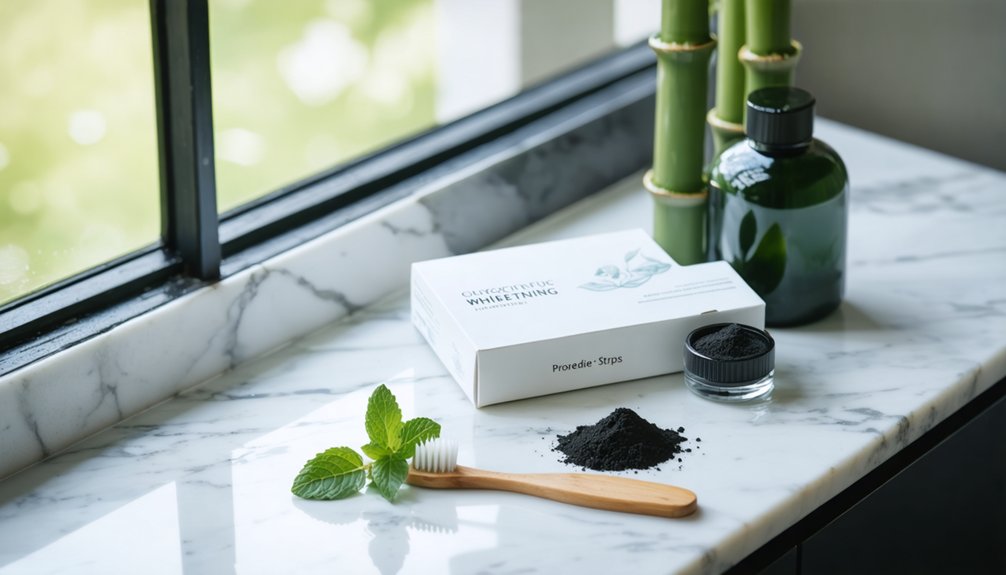
Selection of appropriate non-peroxide whitening solutions requires systematic evaluation of your individual oral health status, stain characteristics, and tolerance parameters. Clinical evidence indicates that matching product formulation to your specific discoloration type optimizes treatment outcomes. A holistic approach incorporates lifestyle factors affecting tooth color maintenance.
Consider these evidence-based selection criteria:
- Sensitivity history: Non-peroxide formulations demonstrate markedly fewer hypersensitivity reports, making them preferable if you’ve experienced previous discomfort
- Stain origin: Surface discolorations respond effectively to natural enzyme-based products, while intrinsic stains may require extended treatment periods
- Active ingredients: Activated charcoal, Dead Sea salt, and fruit enzymes offer varying mechanisms for stain removal
- Treatment timeline: Expect 14-day application periods for noticeable results versus immediate peroxide-based effects
- Enamel integrity: Long-term non-peroxide use presents lower abrasion risk
Frequently Asked Questions
How Long Do Results From Peroxide-Free Whitening Kits Typically Last?
You’ll practically wait forever for long lasting results with peroxide-free kits—they typically fade within 3-4 months. While they address tooth sensitivity concerns effectively, you’ll need consistent reapplication to maintain brightness compared to peroxide-based alternatives.
Can Non-Peroxide Whitening Work on Dental Restorations Like Crowns or Veneers?
Non-peroxide whitening doesn’t work on dental restorations like crowns or veneers—only natural teeth respond to treatment. You’ll need to ponder the appearance of existing restorations, though sensitivity concerns with non-peroxide whitening remain minimal compared to peroxide-based alternatives.
Are Peroxide-Free Kits Safe During Pregnancy or While Breastfeeding?
Peroxide-free kits better accommodate pregnancy’s hormonal changes—up to 75% of expectant mothers experience gingivitis. You’ll avoid irritating sensitive gums and tooth sensitivity. They’re considered safer during pregnancy than peroxide options, and generally appropriate while breastfeeding.
What’s the Recommended Frequency for Using Non-Peroxide Whitening Kits at Home?
You can typically use non-peroxide whitening kits for daily usage during 1-2 week treatment cycles, then switch to periodic application every few months for maintenance. However, you’ll need to follow your specific product’s instructions carefully.
Do Peroxide-Free Products Require Refrigeration or Special Storage Conditions?
Unlike their temperature-sensitive counterparts, peroxide-free products don’t require refrigeration. Proper storage requirements involve cool, dry locations away from direct sunlight. This simplified maintenance extends potential lifespan of results while you’ll maintain control over your whitening regimen effortlessly.