You should choose enamel-friendly whitening toothpaste because your enamel can’t regenerate once damaged—it’s a permanent decision for your dental health. These specialized formulations combine low-abrasive agents like hydrated silica with remineralizing fluoride to remove stains without compromising your enamel’s structural integrity. They maintain RDA values below safety thresholds while incorporating potassium nitrate to prevent dentin hypersensitivity during the whitening process. Understanding the technical standards, ingredient mechanisms, and proper application protocols will help you achieve ideal whitening results while preserving your enamel’s protective barrier.
Key Takeaways
- Enamel cannot regrow once lost, making gentle whitening formulations essential for preserving tooth structure and long-term oral health.
- Low-abrasive ingredients like hydrated silica remove stains effectively while specialized compounds prevent sensitivity by blocking exposed dentin tubules.
- Products meeting ADA standards ensure safe whitening with RDA values below 250 and adequate fluoride for enamel remineralization.
- Dual-action formulas combine mechanical polishing with chemical oxidation to target chromogenic stains without damaging enamel’s protective layer.
- Consistent use extends professional whitening results by continuously removing emerging stains while strengthening enamel with fluoride and repair agents.
Preserving Your Tooth Enamel’s Natural Protection
Because tooth enamel contains no living cells, you’ll never regrow what’s lost to erosion or decay. Your enamel—95-98% hydroxyapatite crystals—serves as the hardest mineralized barrier protecting underlying dentin from bacteria, acids, and thermal stimuli. Once worn away, it’s permanently compromised.
Your saliva production directly impacts enamel preservation by neutralizing bacterial acids and delivering calcium, phosphate, and fluoride for remineralization. Dehydration reduces this protective flow, increasing erosion susceptibility.
Dietary deficiencies in calcium, phosphates, and vitamin D weaken your enamel’s structural integrity and remineralization capacity. When mouth pH drops below 5.5, hydroxyapatite dissolves unless adequate minerals from saliva and diet maintain the supersaturated environment necessary for crystal stability.
Selecting toothpaste with fluoride strengthens this natural defense system by creating acid-resistant fluorohydroxyapatite while supporting remineralization of early damage.
Reducing Sensitivity While Achieving Whiter Teeth
While whitening toothpastes effectively remove extrinsic stains through controlled abrasion and chemical agents, they can trigger dentin hypersensitivity when enamel microabrasion exposes dentinal tubules or when peroxide-based formulations penetrate to the pulpal tissue.
You’ll find specialized products like Sensodyne Pronamel employ potassium nitrate and stannous fluoride to occlude tubules while maximizing comfort during your whitening regimen. Advanced delivery systems such as Crest Whitening Emulsions utilize targeted application methods that minimize sensitivity risk through reduced contact time with dental structures.
Enamel-strengthening formulations create a protective barrier that prevents exposure of sensitive inner layers, ensuring daily consistency in your routine. Select products with RDA values below 249 and twice-daily application protocols to achieve 24-hour stain prevention without compromising pulpal health or triggering adverse sensory responses.
Understanding Safety Standards and Regulatory Guidelines
- ADA Acceptance Requirements: RDA values ≤250 prevent excessive wear, while 80% fluoride release within one minute guarantees therapeutic efficacy.
- FDA Monograph Compliance: Manufacturers must demonstrate enamel solubility reduction and maintain 1150 ppm fluoride limits for children under six.
- International Toothfriendly Criteria: Stricter RDA ≤150 and REA ≤15 thresholds using radiotracer methodology for enhanced enamel protection.
- Ongoing Verification Protocols: Three-year re-evaluation cycles and mandatory clinical evidence submissions validate continued safety claims.
These standards empower you to select whitening products backed by quantifiable performance metrics rather than marketing assertions alone.
How Enamel-Safe Formulas Remove Stains Effectively
Modern enamel-safe whitening formulations employ a dual-mechanism approach that combines controlled mechanical abrasion with targeted chemical dissolution. You’ll find hydrated silica functioning as a low-abrasive polishing agent, ensuring stain removal without compromising enamel integrity. Chemical agents like phthalimidoperoxycaproic acid and hydrogen peroxide target chromogenic compounds at the molecular level, breaking down discoloration through oxidation rather than erosion.
The critical advantage lies in minimizing abrasion while maximizing remineralization. Formulations containing 1450PPM fluoride and strontium chloride actively repair microdamage during the whitening process, locking minerals into acid-weakened enamel surfaces. This simultaneous restoration enables you to achieve documented results—100% more stain removal within three days—while maintaining structural enamel strength. Clinical evidence confirms zero sensitivity occurrence, validating the efficacy of this balanced approach for daily application.
Extending the Results of Professional Whitening Treatments
Following professional whitening procedures, your treatment outcomes will typically maintain ideal luminosity for 6 months to 2 years, with clinical studies demonstrating retention of 4-6 shade improvements at the one-year mark. Proper maintenance techniques determine whether you’ll achieve maximum longevity or experience accelerated fading.
Professional whitening results last 6 months to 2 years when proper maintenance protocols are consistently followed to prevent premature fading.
Strategies to preserve your investment:
- Apply customized at home regimens using professional-grade whitening toothpaste twice daily to combat surface stain accumulation
- Minimize exposure to chromogenic substances including coffee, red wine, and tobacco products during the critical first 48 hours
- Schedule refresh sessions every 9-12 months to counteract natural enamel darkening processes
- Maintain rigorous oral hygiene protocols with regular professional cleanings to prevent extrinsic discoloration from compromising your results
Enamel-friendly whitening toothpaste extends professional outcomes by continuously removing emerging stains before they penetrate dentin layers.
The Role of Fluoride in Strengthening Enamel
While whitening toothpaste removes surface stains, fluoride works at the molecular level to fortify your enamel’s crystalline structure against future damage. It converts hydroxyapatite to fluorapatite—a mineral with substantially lower acid solubility that resists demineralization when pH drops below 5.5.
You’ll achieve ideal protection through consistent exposure, as fluoride absorption rates depend on maintaining therapeutic fluoride concentration levels in your saliva and plaque. This promotes rapid remineralization of weakened enamel surfaces while simultaneously inhibiting bacterial acid production.
Clinical evidence demonstrates you can reduce cavity risk by 25-43% with regular use. The topical mechanism strengthens your outer enamel layer, making it measurably harder to dissolve during acid attacks from dietary sugars or bacterial metabolism.
Choosing the Right Whitening Approach for Long-Term Oral Health
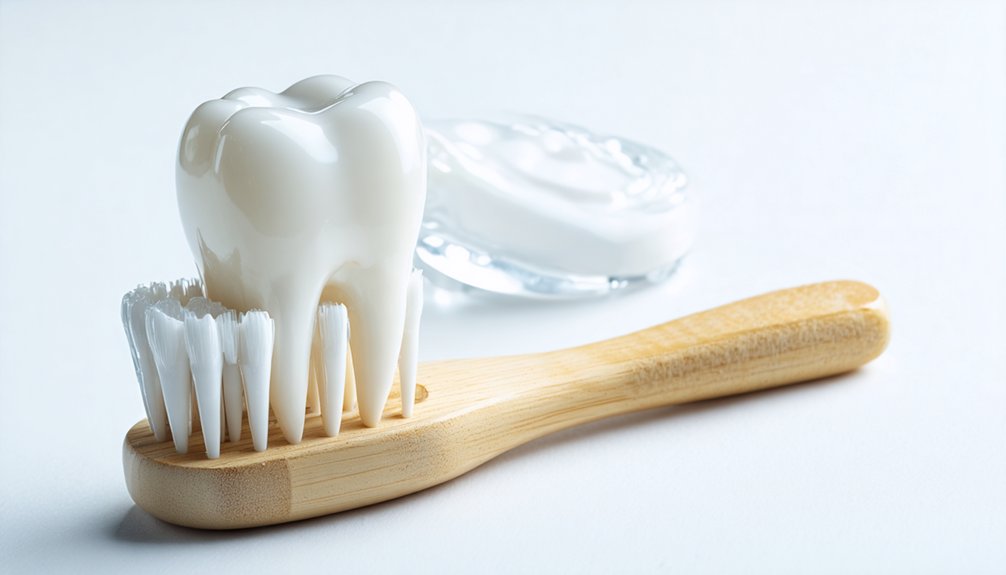
How can you determine which whitening method will protect your enamel while delivering the aesthetic results you’re seeking? Your selection requires evaluating specific product characteristics against your individual tooth conditions:
- Verify ADA Seal of Acceptance to confirm the formulation has undergone rigorous safety testing for daily enamel contact
- Prioritize proper abrasive selection through calcium carbonate or hydrated silica rather than harsh compounds that accelerate protective layer erosion
- Implement consistent product use over 2-6 weeks instead of aggressive treatments that compromise structural integrity
- Seek professional guidance to assess enamel thickness and sensitivity thresholds before initiating any whitening regimen
Whitening toothpaste removes extrinsic stains through mechanical cleaning without penetrating tooth structure, unlike hydrogen peroxide bleaching systems. This surface-focused mechanism preserves enamel while preventing tartar accumulation through pyrophosphate technologies.
Frequently Asked Questions
How Long Does It Take to See Whitening Results From Enamel-Safe Toothpaste?
Rome wasn’t built in a day—you’ll observe noticeable results timeframe of 2-4 weeks with twice-daily application. The gradual whitening process removes surface stains progressively, delivering clinically measurable improvements when you maintain consistent brushing protocols throughout treatment duration.
Can Children Safely Use Enamel-Friendly Whitening Toothpaste?
Yes, you’ll find children ages 2+ can safely use enamel-friendly whitening toothpaste formulated specifically for pediatric patients. Guarantee proper brushing technique with pea-sized amounts and consistent usage under supervision, avoiding harsh abrasives and excessive fluoride ingestion.
What’s the Difference Between Whitening Toothpaste and Bleaching Treatments?
Whitening toothpaste uses mild abrasives and low-concentration peroxides for surface stain removal without altering tooth enamel composition, while bleaching treatments employ high-concentration whitening agents (25-40%) that penetrate enamel. You’ll control whitening agent safety better through professional supervision.
How Often Should I Brush With Enamel-Safe Whitening Toothpaste Daily?
You’ll find enamel-safe whitening toothpaste permits twice-daily application when you’ve healthy teeth. Employ proper brushing technique with ideal brushing duration of two minutes per session. You’re maintaining control over whitening while protecting enamel integrity through clinically-approved formulations.
Does Enamel-Friendly Whitening Toothpaste Work on Dental Restorations Like Crowns?
No, enamel-friendly whitening toothpaste won’t alter your crown’s color due to non-porous materials resisting chemical agents. However, you’ll experience reduced impact on tooth sensitivity compared to abrasive formulas, while your natural teeth may whiten, creating color mismatch.