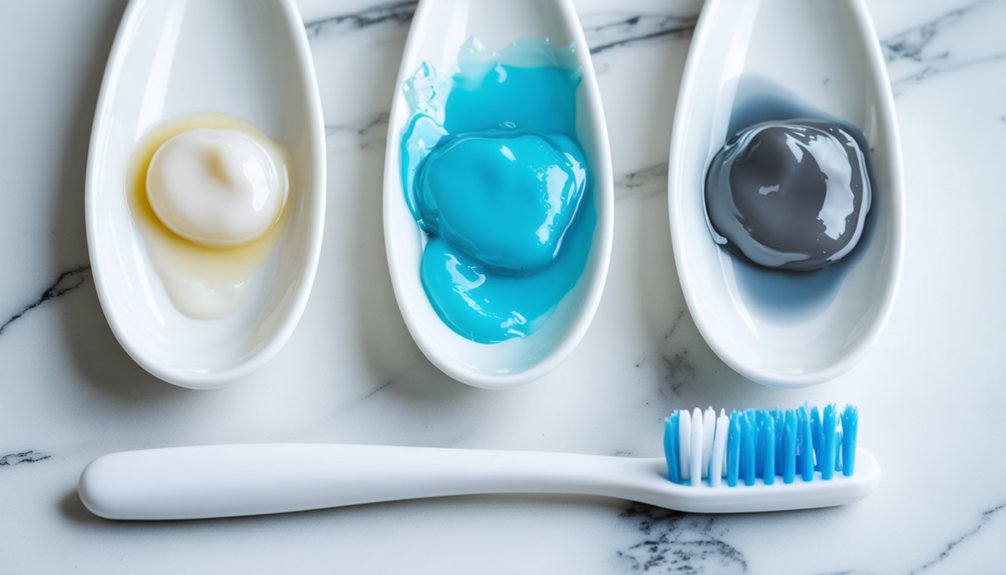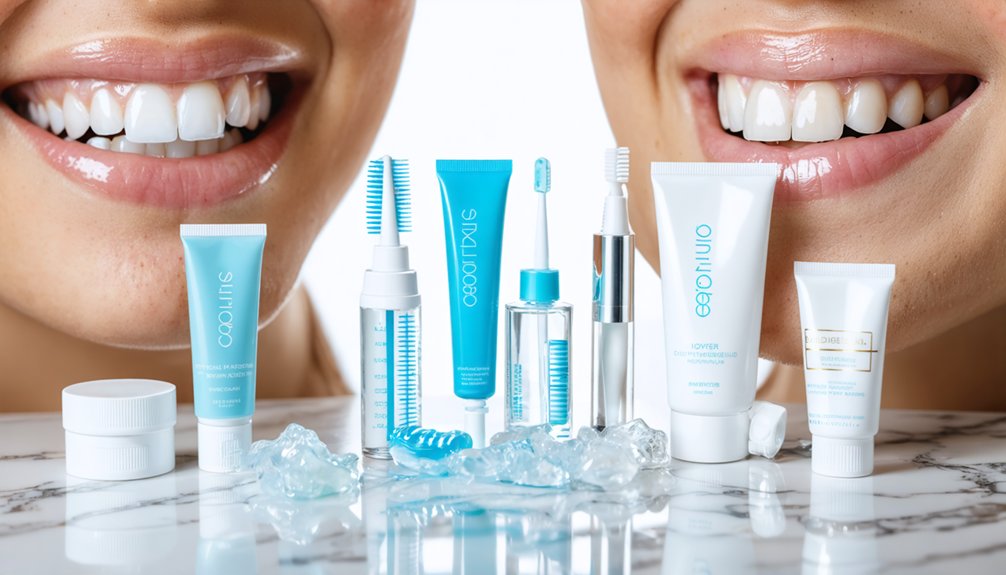
DIY whitening treatments appeal to you because they cost $20-$100 compared to $500-$1,000 for professional sessions, while offering immediate accessibility without appointments. You’ll see results within 3-7 days using over-the-counter products containing 3-10% carbamide peroxide, though professional-grade concentrations up to 44% are available through dentist-dispensed systems. The convenience of managing your own treatment schedule, combined with widespread retail availability and household ingredient options, makes these solutions attractive—despite varying effectiveness and potential enamel damage risks that proper guidance can address.
Key Takeaways
- DIY treatments cost $5-$400 compared to $500-$1,000 for professional sessions, offering significant savings.
- OTC products are immediately accessible at retail stores without appointments, allowing treatment on personal schedules.
- Home-based systems provide flexible application timing and discreet storage without requiring professional supervision.
- Natural household ingredients like baking soda and hydrogen peroxide offer accessible whitening with minimal initial investment.
- Dentist-dispensed take-home kits deliver professional-strength results (15-44% carbamide peroxide) with custom-fitted trays and protocols.
At-Home Treatments Cost Hundreds Less Than Professional Whitening
While professional in-office whitening treatments typically cost $500-$1,000 per session, at-home alternatives provide comparable results at a fraction of the price. You’ll find OTC whitening strips at $20-$50 per box, while gel kits range from $30-$100. The value proposition becomes clear when comparing these costs to premium in-office procedures like Zoom, which can reach $1,500.
Product differentiation exists across at-home options. Whitening toothpaste costs just $5-$15 for maintenance, while take-home professional kits with custom trays run $200-$500. Even premium DIY systems from Smile Direct Club or Byte at $100-$400 remain considerably cheaper than clinical treatments.
You’re able to achieve gradual whitening through strategic product selection, maintaining control over both treatment intensity and financial investment while managing potential sensitivity risks.
No Appointment Needed: Convenience of Over-the-Counter Solutions
You can purchase over-the-counter whitening products—including strips, gels, and LED kits—directly from retail locations like Walmart without requiring dental appointments or consultations. This immediate accessibility allows you to begin treatment on your own schedule, eliminating coordination with professional office availability that typically delays the whitening process.
The at-home application flexibility has driven significant market growth, with U.K. sales of whitening kits increasing nearly 87% during the pandemic as consumers sought convenient self-directed solutions.
Immediate Access Without Scheduling
Unlike professional whitening procedures that require advance booking and clinical visits, over-the-counter products deliver immediate accessibility through widespread retail distribution channels. You’ll find whitening strips, gels, pens, and LED kits with 7–12% peroxide concentrations available in supermarkets, hypermarkets, convenience stores, and online platforms—no scheduling required. This on-demand purchasing model enables you to initiate treatment at your discretion, contrasting sharply with clinical appointments that may involve weeks of delay.
The consistent supply across mass retail outlets supports impulse acquisition, with products ranging from $5 to $100. During the pandemic, at-home kit sales surged 87% in the U.K. as consumers bypassed closed dental offices. However, you should recognize that while accessibility empowers self-directed care, OTC formulations contain lower peroxide concentrations than professional-grade treatments, potentially affecting efficacy timelines.
Home-Based Treatment Flexibility
Beyond the convenience of purchasing without appointments, over-the-counter whitening products grant you autonomous control over treatment timing, frequency, and duration within your home environment. You’ll manage DIY application methods independently—whether applying strips, trays, gels, or toothpastes—without requiring professional supervision. These products feature simple storage requirements, fitting discreetly in bathroom cabinets at room temperature.
You determine your treatment schedule based on personal commitments, applying peroxide agents during convenient intervals to break down stains gradually. This self-directed approach enables consistent repeated use essential for visible results, typically achieving one-to-two shade improvements on the 16-shade scale.
However, recognize that lower peroxide concentrations in OTC formulations necessitate extended treatment periods compared to professional alternatives, demanding disciplined adherence to manufacturer protocols for ideal outcomes.
Visible Results Appear Within Days or Weeks
When initiating DIY whitening treatments, most patients observe initial changes within three to seven days of consistent application, though the timeline varies based on stain severity and treatment concentration. Surface stains lift first, with visible results detected sooner in lighter discoloration cases—typically one to two shades within week one.
The gradual whitening process accelerates during weeks two through four, when deeper enamel pigments respond to treatment. Custom trays applied 30-60 minutes daily can deliver up to eight shades of improvement by week two, while severe staining may require three to four weeks for ideal outcomes.
Your starting tooth color and gel strength directly influence progression speed. Peak results stabilize in week three, ensuring uniform tone development without enamel compromise.
Common Culprits Behind Yellow Tooth Discoloration
Understanding what causes tooth discoloration allows you to select appropriate whitening methods and set realistic expectations for treatment outcomes. Extrinsic stains develop from dietary sources—coffee, tea, red wine, and chromogen-rich foods like curry and dark berries—which penetrate enamel through acidic erosion.
Tobacco products deposit nicotine and tar, creating stubborn yellow-brown discoloration requiring professional intervention. Intrinsic factors include age-related enamel degradation exposing yellowish dentin, genetic predisposition to thinner enamel layers, and medical conditions affecting tooth structure.
Certain medications, particularly tetracycline antibiotics during childhood development, chemotherapy treatments, and excessive fluoride exposure cause permanent discoloration. Bruxism affects 8-10% of adults, accelerating enamel wear. Recognizing whether you’re addressing surface stains or deeper structural discoloration determines which DIY treatments prove effective versus requiring professional dental procedures.
Natural Ingredients Already in Your Kitchen Cabinet
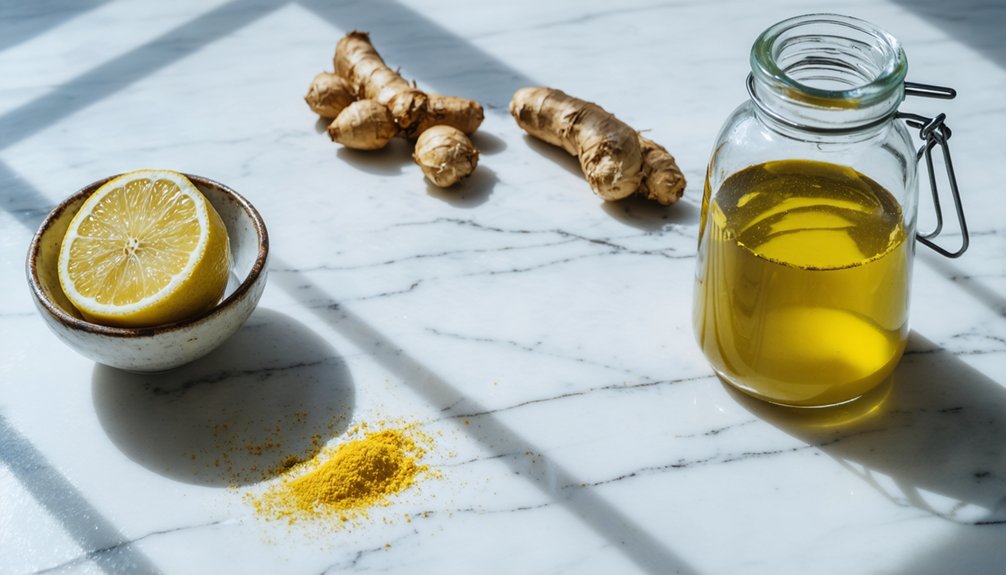
You likely have several natural whitening agents in your kitchen cabinet, though understanding their mechanisms and limitations is essential before application. Baking soda, hydrogen peroxide, and certain fruits contain compounds that can reduce surface stains through chemical or physical action, but these remedies differ greatly in effectiveness and safety.
While these household ingredients offer cost-free alternatives to commercial products, you must recognize that they carry risks including enamel erosion, gum irritation, and inconsistent results when used improperly.
Common Household Whitening Agents
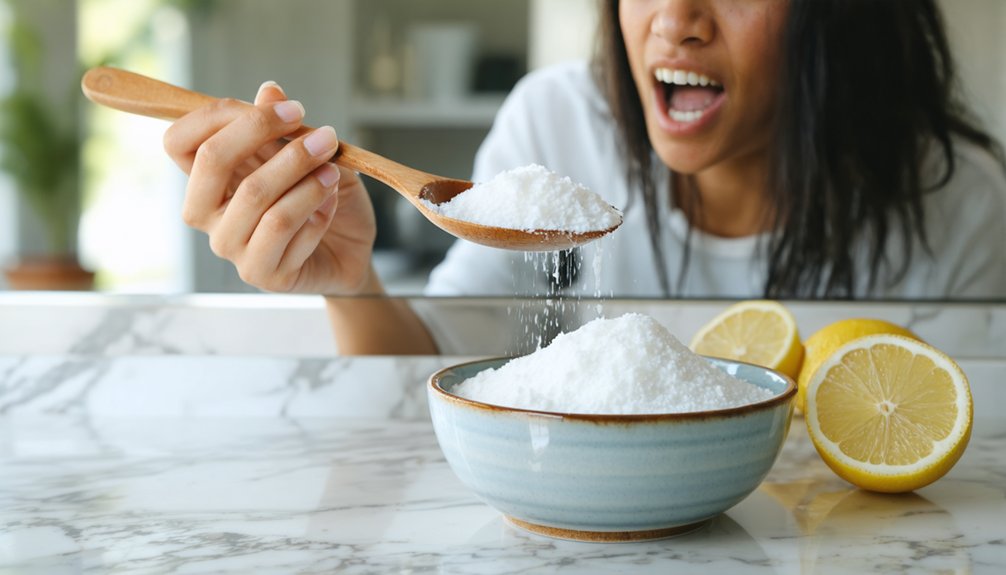
Before investing in expensive whitening kits or professional treatments, several evidence-backed household ingredients merit consideration for their documented stain-removal properties. Baking soda‘s mild abrasiveness demonstrates remarkably whitening in vitro studies while creating alkaline conditions that inhibit bacterial growth. Hydrogen peroxide, a natural bleaching agent, shows enhanced whitening at higher concentrations in 2020 clinical trials, though you’ll need to dilute 3% solutions to 1.5% for safe application.
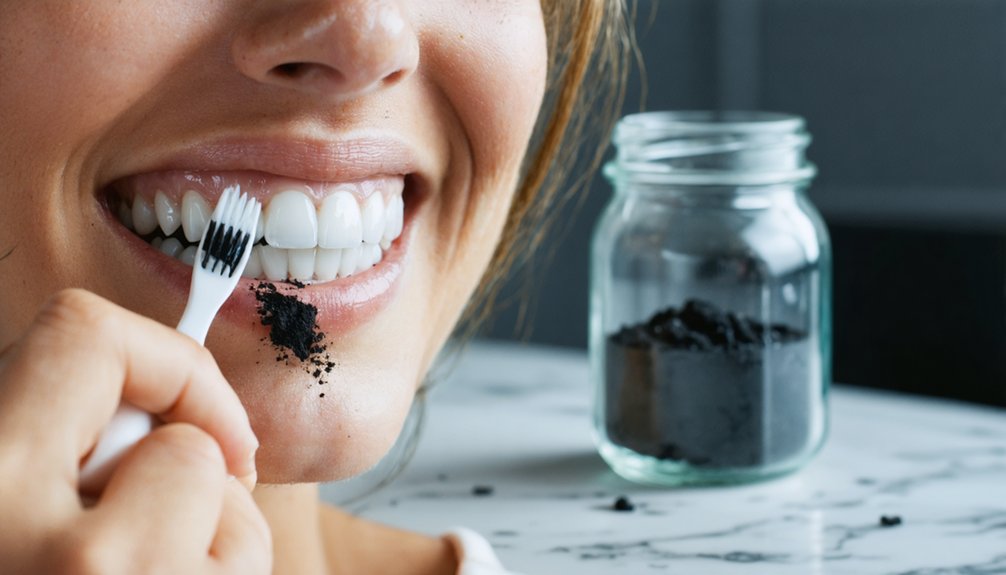
Activated charcoal absorbs surface stains but requires gentle application to prevent enamel wear. When evaluating these options, ingredient safety demands careful attention—overuse risks enamel erosion. Product formulation quality varies noticeably; combining agents (such as baking soda with hydrogen peroxide) may enhance effectiveness but necessitates strict frequency limits of once or twice weekly.
Cost-Free Natural Remedy Options
The same kitchen cabinet housing your everyday cooking essentials likely contains several ingredients that clinical research suggests can reduce tooth discoloration without monetary investment. Coconut oil’s lauric acid provides antimicrobial action against plaque when used in 15-20 minute pulling sessions, though you’ll need consistent application for measurable results.
Apple cider vinegar’s acidic properties break down surface stains, but you must dilute properly and rinse thoroughly to prevent enamel erosion. Crunchy vegetables like carrots and celery mechanically scrub plaque through their fibrous texture, while strawberries deliver malic acid for stain prevention. These sustainable household ingredients offer accessible whitening options with minimal side effects when you follow proper protocols—though effectiveness varies considerably compared to professional treatments, and overuse risks permanent enamel damage.
Marketing Claims and Social Media Influence Consumer Choices
Social media platforms have fundamentally transformed teeth whitening from an aesthetic option into a perceived lifestyle necessity, with TikTok hashtags alone generating over 9 billion views and driving younger adults under 45 to whiten their teeth at twice the rate of older demographics. However, you’re maneuvering unsubstantiated efficacy claims when vendors promise 7–10 shade changes without providing usage instructions (50% of cases) or disclosing sensitivity risks affecting 67% of users.
The marketplace presents undisclosed financial risks, evidenced by 30.6-day delivery windows and documented cases of undelivered products. Additionally, 83.3% of websites emphasize safety while only 16.7% include precautionary statements, and incomplete ingredient lists are universal. You’re traversing a $10.6 billion projected market where marketing prioritizes rapid results over transparent risk communication.
Professional-Grade Peroxide Concentrations Available for Home Use
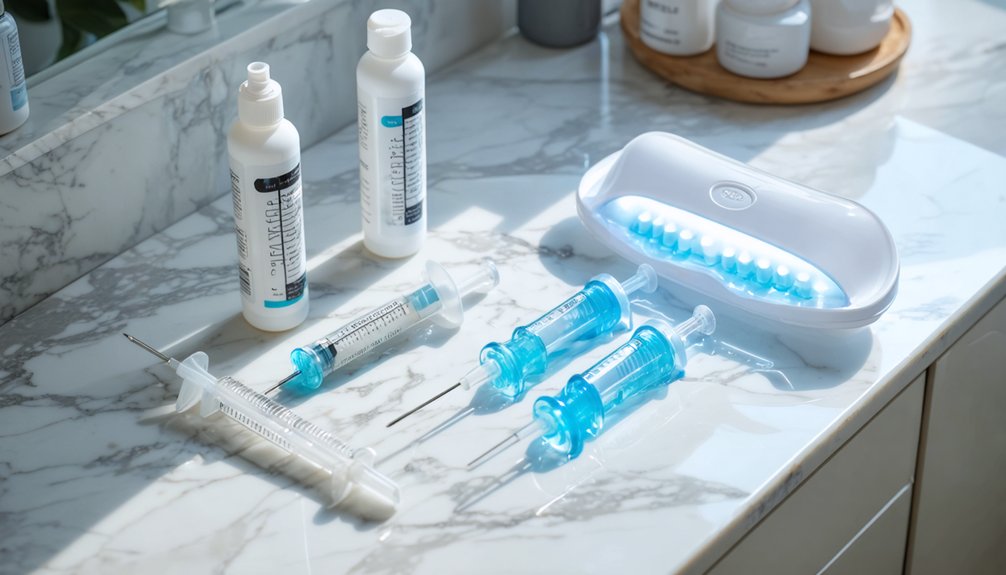
While over-the-counter whitening products typically contain 3-10% carbamide peroxide, dentist-dispensed take-home systems provide access to prescription-strength formulations ranging from 15-44% carbamide peroxide and 6-36% hydrogen peroxide—concentrations that deliver accelerated results but require professional oversight to mitigate tissue damage risks.
You’ll find adjustable dosage options through products like Opalescence PF (10-45% carbamide peroxide) and Beaming White (6-36% hydrogen peroxide), allowing customization based on your stain severity and tolerance. Custom-fitted trays guarantee precise gel delivery while protecting soft tissues from chemical burns.
Carbamide peroxide formulations offer reduced risk of sensitivity compared to equivalent hydrogen peroxide concentrations due to slower oxidation kinetics. Professional dispensation includes application protocols, wear-time specifications, and gum barrier techniques that maximize efficacy while controlling adverse effects you’d encounter with unsupervised high-concentration use.
Frequently Asked Questions
Are DIY Whitening Treatments Safe for Sensitive Teeth or Existing Dental Work?
DIY whitening treatments are catastrophically risky for sensitive teeth. You’ll experience severe gum irritation from improper hydrogen peroxide application and heightened tooth sensitivity from acidic ingredients like lemon juice. Existing dental work requires professional evaluation before any whitening procedure.
How Long Do At-Home Whitening Results Typically Last Before Retreatment Is Needed?
Your whitening treatment duration typically lasts 6-12 months with proper maintenance. You’ll need an ideal retreatment schedule of 1-2 days every six months to maintain results, though habits like smoking accelerate fading to 4-6 weeks.
Can Overuse of DIY Whitening Products Permanently Damage Tooth Enamel?
Like sandpaper on glass, you’ll cause unintended enamel erosion through overuse. Studies confirm potential long-term consequences include irreversible demineralization and permanent structural weakening. You’re risking lifelong sensitivity and decay vulnerability when you exceed recommended usage protocols without professional supervision.
Do Dentists Recommend Any Specific Over-The-Counter Whitening Products Over Others?
Dentists’ professional recommendations consistently favor Crest 3D White Whitestrips and ACT Whitening Mouthrinse, products with ADA Seal of Acceptance. You’ll find consumer reviews validate their efficacy, though you should verify proper peroxide concentrations to minimize enamel erosion risks.
What Side Effects Should I Watch for When Using Home Whitening Treatments?
Watch for tooth sensitivity within 1-3 days, potential irritation causing gum redness or swelling, and rare allergic reactions like facial swelling. You should discontinue use immediately if you experience chemical burns or severe discomfort requiring professional evaluation.