Some DIY teeth whitening hacks are safe because they use low-concentration peroxides (1.5%–3%) and mild abrasives like baking soda that target surface stains without chemically attacking enamel. You reduce damage risk further by limiting contact time to 1–2 minutes and restricting use to 2–3 times weekly. These methods work specifically on extrinsic stains from coffee, tea, and tobacco. Understanding exactly how each technique works helps you apply them correctly and avoid the ones that cause irreversible harm.
Key Takeaways
- Baking soda’s mild abrasiveness polishes surface stains without chemically dissolving enamel, making it a safe DIY whitening option.
- Using 1.5%–3% hydrogen peroxide limits oxidative exposure, keeping chemical contact at tissue-safe concentrations.
- Restricting DIY whitening to 2–3 times weekly preserves long-term enamel integrity while gradually improving appearance.
- Brushing for only 1–2 minutes and rinsing immediately minimizes cumulative chemical damage to enamel and soft tissues.
- Coconut oil pulling contains no acidic compounds, safely removing surface debris and providing gradual cosmetic whitening effects.
What Actually Makes a DIY Whitening Method Safe?
Not every whitening hack you find online meets the same safety threshold, and understanding what separates the safer options from the harmful ones helps you make smarter choices.
Not every whitening hack is created equal—knowing what makes one safer than another changes everything.
When evaluating natural remedies, four criteria consistently determine safety: acidity, abrasiveness, concentration, and contact time.
Methods that preserve your mouth’s pH balance protect enamel from erosion, which is why acidic options like lemon juice are problematic despite their popularity.
Abrasiveness matters equally—excessive scrubbing degrades enamel over time.
Concentration controls oxidative exposure, keeping chemical reactions within tissue-safe limits.
Finally, limiting contact time reduces cumulative damage.
Safe DIY methods share all four characteristics simultaneously.
If a method fails even one criterion, the risk of enamel damage, gum irritation, or increased sensitivity rises considerably.
Which Stains DIY Whitening Can and Cannot Treat
When you use DIY whitening methods, you’re targeting extrinsic stains—surface discoloration from coffee, tea, tobacco, and certain foods—which respond to mild abrasives and low-concentration peroxide.
Intrinsic stains, which originate within the tooth’s dentin layer from trauma, medications, or fluorosis, don’t respond to at-home treatments and require professional intervention.
Understanding which category your staining falls into determines whether a DIY approach is a reasonable option or simply a delay in getting effective care.
Extrinsic Stains DIY Treats
Before reaching for a DIY whitening remedy, it’s important to understand which types of stains actually respond to at-home treatment. Extrinsic stains, which form on your tooth’s outer surface, are what natural remedies can realistically address.
These stains typically develop from coffee, tea, red wine, and tobacco exposure over time.
Methods like baking soda paste, diluted hydrogen peroxide rinses, and oil pulling work by targeting this surface-level discoloration through gentle polishing or oxidation.
You’ll see the most measurable results when the staining hasn’t penetrated deeper enamel layers.
It’s worth noting that natural remedies aren’t a substitute for professional whitening when discoloration runs deeper.
If your stains respond poorly to consistent at-home efforts, that’s your clearest signal to consult a dental professional instead.
Intrinsic Stains Require Professionals
What separates a DIY success from a DIY dead end often comes down to stain type. Extrinsic stains — those caused by coffee, tea, or tobacco — respond to low-concentration peroxide and mild abrasives because they’re surface-level.
Intrinsic stains, however, originate within the dentin layer and don’t respond to DIY methods.
Attempting to treat intrinsic discoloration at home typically leads to overuse of abrasives or high-concentration peroxide, which increases your risk of enamel erosion and tooth sensitivity without producing meaningful results.
You’re not whitening deeper — you’re damaging the outer layer protecting it.
Professional treatments like veneers, bonding, or in-office bleaching are clinically designed to address internal discoloration safely.
Recognizing this distinction helps you avoid unnecessary damage and make treatment decisions grounded in evidence, not optimism.
Common Stain Sources Targeted
Knowing intrinsic stains fall outside DIY reach naturally raises a follow-up question: which stains can these methods actually target? DIY whitening works exclusively on extrinsic stains — surface discoloration caused by coffee, tea, tobacco, and certain foods. Baking soda, diluted peroxide, and whitening toothpaste address these through mild abrasion or oxidation.
Dental myths often exaggerate what’s possible, leading you to expect results that only professional treatment can deliver. Similarly, enamel myths surrounding activated charcoal and acidic remedies falsely frame aggressive approaches as effective. They aren’t — they cause wear without meaningfully lifting deeper color.
If your staining originates from medications, trauma, or aging, no evidence-based DIY method resolves it. Matching the right method to the right stain type is what determines whether your approach is genuinely effective.
Why Baking Soda Polishes Stains Without Eroding Enamel
When you use baking soda on your teeth, its mild abrasive particles physically buff away surface stains through gentle polishing rather than chemical bleaching. This makes it a fundamentally different mechanism than acidic alternatives like lemon juice or apple cider vinegar, which erode enamel over time.
Unlike those acidic remedies, baking soda doesn’t introduce acid into the oral environment, so it won’t compromise enamel integrity when you use it correctly.
To minimize wear risk, you should limit use to a few times per week rather than scrubbing daily.
Mild Abrasive Action Explained
Because baking soda sits low on the Mohs hardness scale, it polishes away surface stains without cutting into enamel the way harsher abrasives do. Its particles are soft enough to dislodge pigment from coffee, tea, and tobacco while leaving the enamel surface structurally intact.
This mechanical action is fundamentally different from acidic damage, where compounds like lemon juice or apple cider vinegar chemically dissolve enamel over repeated exposure. Baking soda doesn’t introduce acid, so you’re not accelerating enamel erosion each time you use it.
When you apply it correctly — a few times per week as a paste mixed with water — you maintain control over stain removal without compromising your enamel’s long-term integrity. That balance of effectiveness and safety is what separates it from riskier DIY alternatives.
Baking Soda Versus Acidic Alternatives
While baking soda removes stains through gentle mechanical polishing, acidic alternatives like lemon juice and apple cider vinegar work through a fundamentally different — and far more destructive — mechanism.
These acidic substances dissolve tooth enamel, the irreplaceable outer layer protecting your teeth. Once enamel erodes, it doesn’t regenerate, making every acidic application a permanent compromise to your oral health.
Baking soda, by contrast, has a mildly alkaline pH that doesn’t chemically attack enamel. It lifts surface stains through friction rather than dissolution, preserving structural integrity while still improving appearance.
A 2017 research review confirmed baking soda’s safety profile when used appropriately.
When you choose between these options, you’re not choosing between two whitening methods — you’re choosing between protecting your enamel and actively destroying it.
Safe Usage Frequency Guidelines
Although baking soda polishes rather than chemically dissolves, that mechanical action still carries cumulative abrasive risk if you overuse it. For best dental health, limit baking soda use to a few times per week rather than daily scrubbing.
The same principle applies to the peroxide-and-baking-soda combination paste — restrict it to two or three sessions weekly, brushing for no longer than one to two minutes each time.
Coconut oil pulling carries lower cumulative risk, making daily use acceptable within a routine oral care protocol.
If you’re integrating multiple methods, stagger them rather than combining them in a single session.
In cosmetic dentistry, frequency control is what separates safe extrinsic stain management from enamel degradation — disciplined, time-limited application protects your results without compromising structural integrity.
What Hydrogen Peroxide Concentration Is Safe to Use at Home?
For context, ADA-recognized whitening products typically use concentrations equivalent to roughly 3.6% hydrogen peroxide, derived from 10% carbamide peroxide formulas. That’s your upper boundary for safe exposure.
The safest at-home application is a diluted rinse used briefly before brushing — not a prolonged soak. Extended contact time increases your likelihood of gum irritation and enamel compromise.
Home measurement is inherently imprecise, so purchasing a pre-diluted 3% solution from a pharmacy gives you the most reliable concentration control without guesswork.
How to Use a Baking Soda and Peroxide Paste Correctly
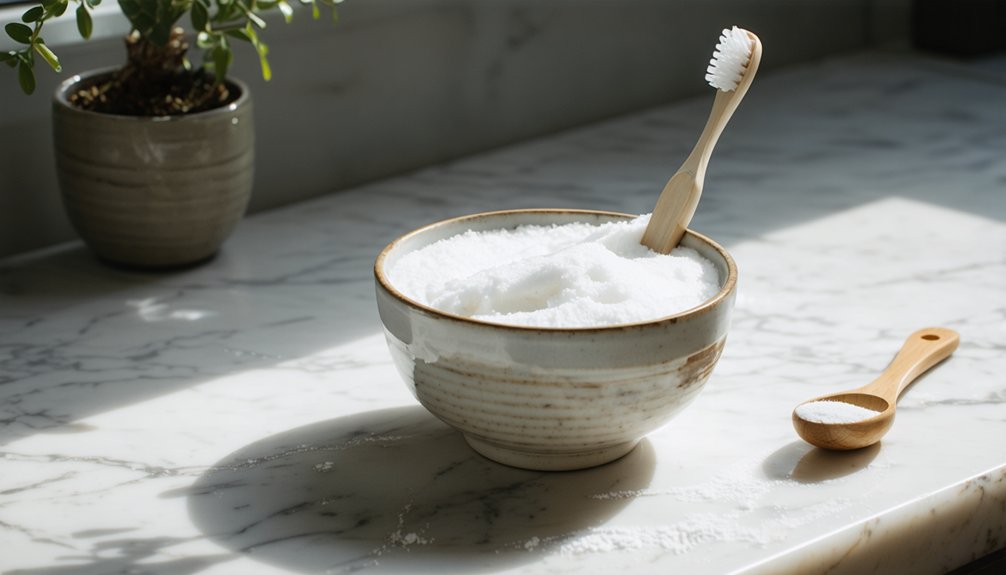
Combining baking soda with hydrogen peroxide creates a short-term whitening paste that targets extrinsic stains from coffee, tea, or tobacco — but only when you use it correctly. Unlike professional treatments, this natural remedy requires strict protocol to avoid enamel damage.
Baking soda and hydrogen peroxide can whiten teeth — but only if you follow the right protocol.
Follow these evidence-based guidelines:
- Use 1.5%–3% hydrogen peroxide only
- Mix equal parts baking soda and peroxide into a paste
- Brush gently for 1–2 minutes maximum
- Rinse thoroughly immediately after
- Limit use to 2–3 times per week
Prolonged contact or higher concentrations increase your risk of sensitivity and gum irritation.
This method addresses surface discoloration — not intrinsic staining, which requires professional treatments. Controlling your application technique is what separates a safe natural remedy from one that causes irreversible damage.
Why Coconut Oil Pulling Works as a Daily Whitening Habit
Not every effective whitening habit requires abrasives or peroxide. Coconut oil pulling offers a low-risk addition to your oral hygiene routine precisely because it avoids the two main causes of enamel erosion: acid and harsh abrasion.
You swish roughly one tablespoon of coconut oil for 10 to 20 minutes, then spit it out before brushing.
Because coconut oil contains no acidic compounds, you can practice it daily without compromising enamel integrity.
The whitening effect works by loosening surface debris and reducing plaque accumulation rather than chemically bleaching.
Don’t expect dramatic results comparable to peroxide-based methods; the benefit is gradual and primarily cosmetic.
What it does provide is a sustainable, daily-use option that supports long-term oral hygiene without introducing the risks associated with stronger DIY treatments.
The Case for ADA-Approved Whitening Toothpaste Every Day
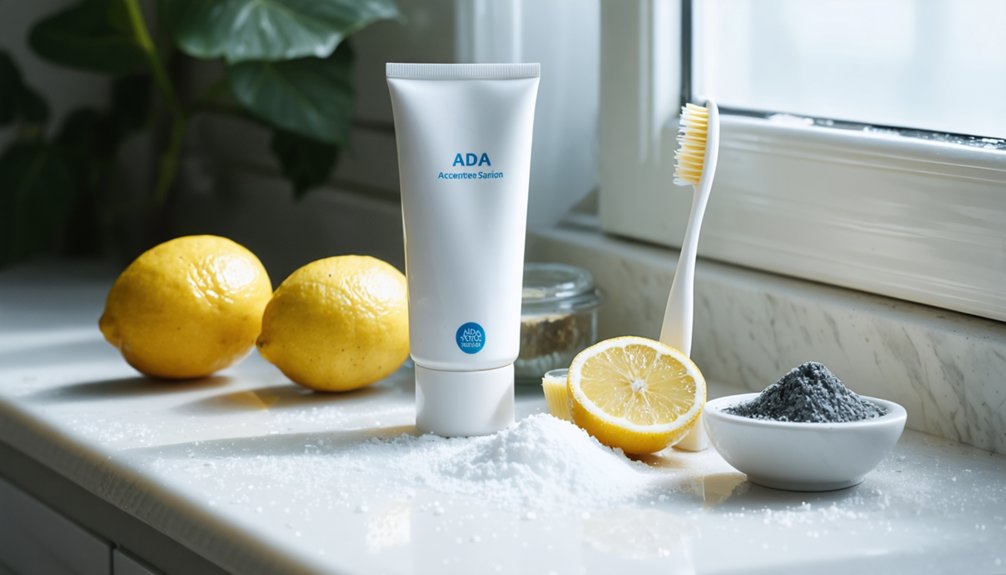
If you’re looking for a whitening method you can use every day without risking enamel damage, ADA-approved whitening toothpaste is your most reliable option. It relies on gentle polishing agents to lift surface stains from coffee, tea, and tobacco rather than harsh abrasives or acids that compromise enamel integrity.
Because its formula is standardized and clinically tested, you can incorporate it into your daily routine with far more confidence than most viral DIY hacks.
Daily Safety Benefits
When you’re looking for a whitening method you can use every day without risking enamel damage, ADA-approved whitening toothpaste stands out as the most consistently safe option. Its standardized formulas support consistent dental hygiene while minimizing tooth sensitivity risks.
Key daily safety benefits include:
- Uses gentle polishing agents rather than harsh abrasives
- Specifically formulated to remove surface stains without enamel erosion
- Reduces reliance on unregulated DIY mixtures
- Clinically tested for routine daily use
- Helps maintain whitening results between stronger treatments
Unlike viral hacks involving acid or excessive abrasion, these toothpastes undergo rigorous testing before reaching shelves. You’re working with a controlled, predictable formula every time you brush, giving you measurable confidence in both safety and performance.
Gentle Stain Removal
Although many DIY whitening methods rely on abrasion or acid to lift stains, ADA-approved whitening toothpaste takes a more controlled approach through gentle polishing agents that target extrinsic discoloration without compromising enamel integrity.
Unlike natural remedies such as lemon juice or apple cider vinegar, which accelerate enamel erosion through repeated acid exposure, whitening toothpaste is formulated and tested for daily use. You’re working with a standardized product rather than an improvised mixture, which gives you measurable consistency in both safety and results.
It removes surface stains from coffee, tea, and tobacco without introducing variables that damage soft tissue or enamel. For long-term stain management, it’s one of the most reliable options you can incorporate into your daily routine without clinical supervision.
How Keeping Contact Time Short Protects Your Enamel
One of the simplest ways to protect your enamel during DIY whitening is limiting how long active ingredients stay in contact with your teeth. Contact duration directly influences enamel protection — shorter exposure reduces erosion risk without sacrificing surface stain removal.
Control your results by following these evidence-based guidelines:
- Brush with a baking soda or peroxide paste for 1 to 2 minutes maximum
- Rinse thoroughly immediately after to halt continued chemical activity
- Restrict peroxide-based applications to 2 to 3 times per week
- Use low concentrations — 1.5% to 3% hydrogen peroxide — to minimize tissue irritation
- Avoid prolonged soaking methods, particularly with ill-fitted trays that increase gum exposure
Brief, controlled contact targets extrinsic stains effectively while preserving enamel integrity over time.
DIY Whitening Hacks That Damage Teeth Instead of Cleaning Them
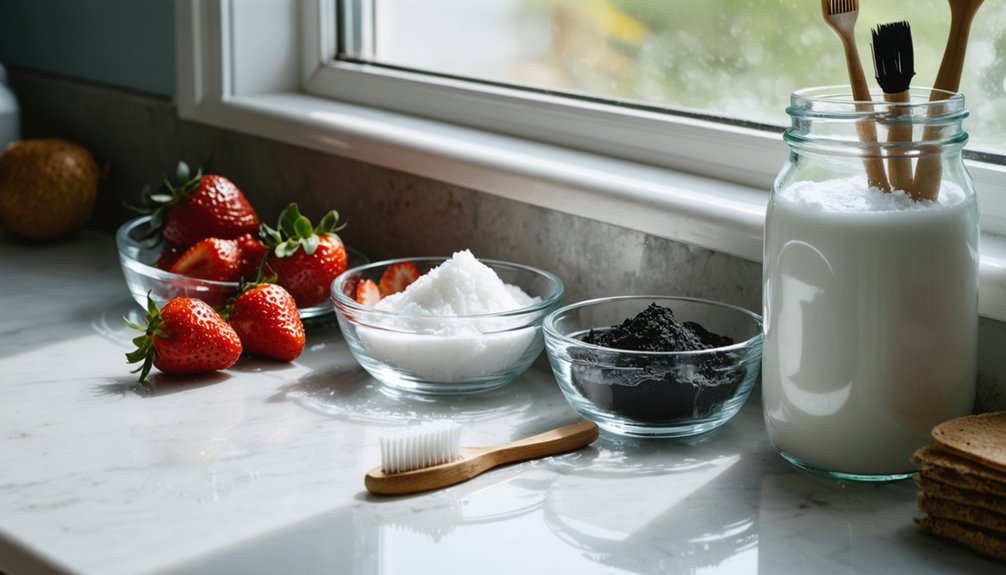
Not all DIY whitening methods are created equal — some actively harm your enamel rather than clean it. Lemon juice, apple cider vinegar, and activated charcoal are among the most commonly shared hacks that erode or abrade enamel over time, increasing sensitivity and long-term damage.
Activated charcoal, despite its popularity, is too abrasive for routine use. Unfitted mouthguard hygiene matters here too — peroxide used in ill-fitting trays leaks onto gum tissue, causing irritation and chemical burns.
These methods also can’t address intrinsic staining, making them ineffective beyond surface-level claims. Maintaining dental flossing alongside any whitening routine helps control the bacterial environment, reducing the need for aggressive treatments.
Stick to low-acid, low-abrasion, low-concentration methods — your enamel doesn’t regenerate, so protecting it’s non-negotiable.
When DIY Methods Stop Working and You Need a Dentist
DIY whitening methods work best on extrinsic stains from coffee, tea, or tobacco — but when discoloration persists despite consistent, appropriate use, it’s a signal that the staining is intrinsic and beyond what any home remedy can address.
Natural remedies and enamel preservation strategies have limits. Recognize when professional intervention becomes necessary:
- Staining remains after 4–6 weeks of evidence-based DIY use
- You’re experiencing increased sensitivity or visible enamel wear
- Discoloration originates from medication, trauma, or fluorosis
- Gum irritation develops from repeated peroxide exposure
- Whitening toothpaste and baking soda pastes produce no measurable change
Continuing aggressive DIY attempts past these thresholds risks enamel damage without results. A dentist can identify the stain type and deliver clinically controlled whitening that targets the actual cause.
Frequently Asked Questions
Can DIY Whitening Methods Interact With Dental Crowns or Veneers?
Yes, DIY whitening methods don’t whiten crowns or veneers—they only affect natural enamel. You risk uneven results and crown damage risks from dental material reactions, making professional consultation essential before attempting any whitening treatment.
How Long Does It Take to See Results From DIY Whitening?
With consistent use 2–3 times weekly, you’ll typically notice results from home remedies using natural ingredients within 2–4 weeks. These methods target extrinsic stains gradually, so you’re managing realistic, measurable progress rather than overnight transformation.
Are DIY Whitening Hacks Safe to Use During Pregnancy?
You should avoid DIY whitening hacks during pregnancy due to pregnancy safety concerns. Dental health considerations recommend consulting your dentist first, as peroxide exposure and abrasive agents haven’t been adequately studied for safe prenatal use.
Can Children or Teenagers Safely Use These DIY Whitening Methods?
You shouldn’t let children or teenagers use these DIY whitening methods. Their developing enamel heightens teeth sensitivity risks, and chemical reactions from peroxide or abrasives can cause irreversible damage. Consult a pediatric dentist for age-appropriate, clinically supervised options instead.
Should DIY Whitening Be Avoided After Recent Tooth Extractions?
Yes, you should avoid DIY whitening after recent extractions. Post-extraction sensitivity makes tissues vulnerable, and peroxide or abrasives can disrupt healing process considerations, delaying recovery and increasing complication risks. Wait until your dentist confirms complete healing.
References
- https://www.healthline.com/nutrition/whiten-teeth-naturally
- https://www.urmc.rochester.edu/news/publications/health-matters/diy-teeth-whitening-too-good-to-be-true
- https://www.youtube.com/watch?v=0mD9wyPs4vU
- https://www.youtube.com/watch?v=qGkzrHzJUBU
- https://www.youtube.com/watch?v=6VxphLA7LD8
- https://www.norcofamilydental.com/blog/homemade-teeth-whitening-hacks-work/50924
- https://www.yazdanidental.ca/diy-teeth-whitening-tips/
- https://www.womansworld.com/beauty/whiten-teeth-diy
- https://www.grandedentistry.com/top-homemade-remedies-for-teeth-whitening/
- https://www.medicalnewstoday.com/articles/322421