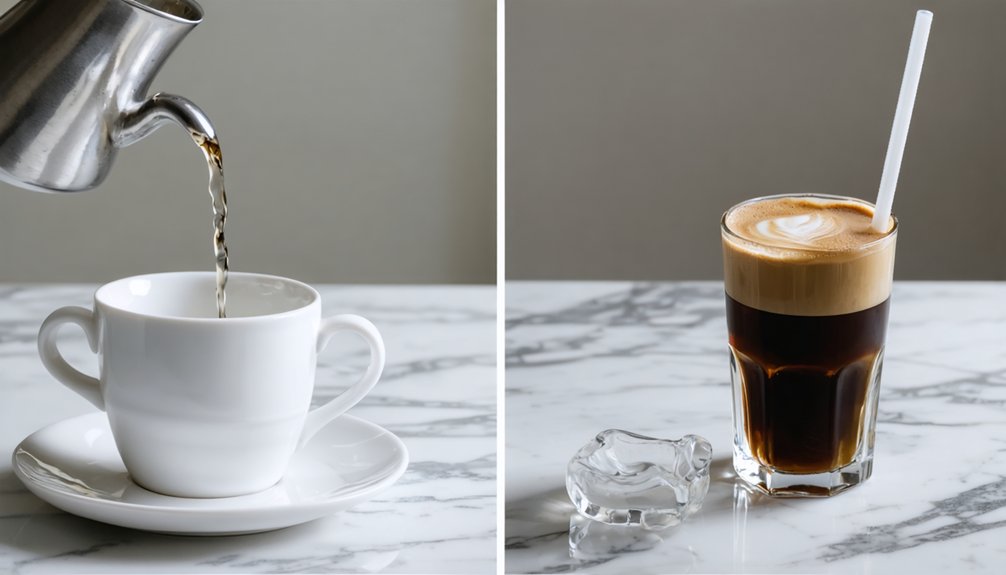
You’ll achieve excellent results by combining professional and at-home whitening techniques. Start with preventative measures like drinking tea through a straw and rinsing immediately afterward, as tannins bond quickly to enamel’s porous surface. At-home whitening products containing hydrogen peroxide or charcoal-based formulations can remove surface stains effectively. For deeper discoloration, professional dental polishing eliminates stubborn deposits, while in-office whitening treatments using 25-40% hydrogen peroxide concentrations penetrate enamel to oxidize embedded pigments. The following evidence-based strategies will help you develop a thorough whitening protocol.
Key Takeaways
- Whitening toothpastes with hydrogen peroxide, baking soda, or charcoal effectively remove surface tea stains through oxidation and abrasive action.
- Peroxide-based strips and gels penetrate enamel to oxidize tea tannins, providing one-to-two-shade whitening improvement at home.
- Professional dental polishing uses prophy cups or air powder systems to eliminate stubborn surface stains in 30-60 minutes.
- In-office whitening with 25-40% hydrogen peroxide delivers dramatic results by breaking down deep intrinsic and extrinsic tea stains.
- Daily prevention through straw use, rinsing after tea, and adding milk reduces future staining alongside whitening treatments.
Understanding How Tea Stains Develop on Tooth Enamel
Tea stains develop through a complex biochemical interaction between tannins—plant-based polyphenols—and the microscopic structure of tooth enamel. These compounds exploit enamel’s naturally porous surface, infiltrating tiny ridges and irregularities where pigments accumulate. You’ll experience age dependent enamel vulnerability as protective surfaces develop fine lines and crevices over time, creating additional adhesion sites for tannin molecules.
The staining mechanism accelerates when tea’s mild acidity temporarily softens enamel, increasing porosity and enabling deeper pigment penetration. Existing plaque and tartar serve as binding agents, allowing tannins to adhere before infiltrating underlying enamel layers. Black tea presents the highest risk due to elevated tannin concentrations, while green tea produces grayish discoloration. Microscopic structure changes progress gradually, with frequency and brewing strength directly determining stain severity and penetration depth.
Simple Daily Habits to Prevent Tea Staining
While professional treatments effectively address existing discoloration, strategic behavioral modifications provide superior cost-effectiveness and reduce cumulative staining exposure. You’ll achieve ideal prevention by drinking tea through straws, which directs tannins away from your anterior teeth.
Implementing enamel protective rinses immediately after consumption removes residual staining agents before they bond to tooth surfaces—wait 30 minutes before brushing to avoid damaging acid-softened enamel. Adding milk neutralizes tannins through casein binding, simultaneously preventing discoloration and strengthening enamel.
Limit tea consumption to concentrated periods rather than sipping throughout the day, as prolonged exposure accelerates staining. Consider consuming tea alternatives when possible. Maintain twice-daily brushing with fluoride toothpaste and daily flossing to eliminate stain-retaining plaque buildup, ensuring professional cleanings address accumulated deposits.
Effective At-Home Whitening Products for Tea Stains
You can achieve noticeable tea stain removal through strategic use of at-home whitening products that target surface and subsurface discoloration. Evidence-based options include whitening toothpastes with mild abrasives, peroxide-based strips and gels that penetrate enamel, and naturally abrasive foods that mechanically scrub stain deposits.
Selecting appropriate products based on your stain severity and enamel sensitivity will maximize whitening effectiveness while minimizing potential damage to tooth structure.
Whitening Toothpaste Options
Active whitening agents in toothpaste formulations deliver measurable results through distinct pathways:
- Hydrogen peroxide (found in Colgate Optic White Pro Series and Crest 3D White) breaks down tea tannin molecules, reducing discoloration within one to two weeks
- Baking soda and silica in Arm & Hammer Advance White mechanically polish surfaces without enamel erosion
- Charcoal-based options like Crest 3D White Charcoal provide superior surface stain lifting
- Sodium tripolyphosphate in Sensodyne True White chelates metal ions, preventing pigment adhesion
Strips and Gel Applications
Beyond daily brushing with specialized formulations, peroxide-based strips and gel applications provide targeted intervention for tea-related discoloration through direct enamel contact. The peroxide gel penetrates enamel pores, oxidizing tea tannins into smaller particles that reflect light more effectively. You’ll observe one-to-two-shade improvement within 3-14 days, depending on stain severity.
Crest 3DWhite Classic Vivid strips demonstrate measurable results after three days, while Gentle Routine formulations accommodate sensitivity concerns with five-minute applications. Safety considerations include temporary gum irritation and increased enamel sensitivity when you exceed recommended contact times. Professional trays outperform over-the-counter strips for stubborn staining.
Prolonged exposure effects create vulnerability to re-staining post-treatment, requiring behavioral modification regarding tea consumption frequency. Results persist longer when you minimize continued pigment exposure through lifestyle adjustments.
Natural Stain-Scrubbing Foods
While peroxide-based treatments modify enamel chemistry, certain whole foods mechanically remove tea stains through abrasive textures and enzymatic action. Natural stain prevention relies on these mechanisms:
- Crunchy vegetables (carrots, celery) function as natural toothbrushes, with fibrous strands sweeping between teeth while stimulating saliva production to neutralize staining compounds
- Apples contain malic acid—the same whitening agent in commercial toothpastes—combined with crisp texture that scrubs enamel surfaces clean
- Pineapple delivers bromelain enzyme that breaks down protein films and reduces plaque adhesion, preventing pigment accumulation from tea
- Strawberries offer gentle polishing through natural enzymes, though you’ll need to rinse immediately due to acidic content
Diet based tooth whitening works best when you consume these foods as meal finishers, maximizing their cleaning action before pigments set.
The Role of Whitening Toothpaste in Stain Removal
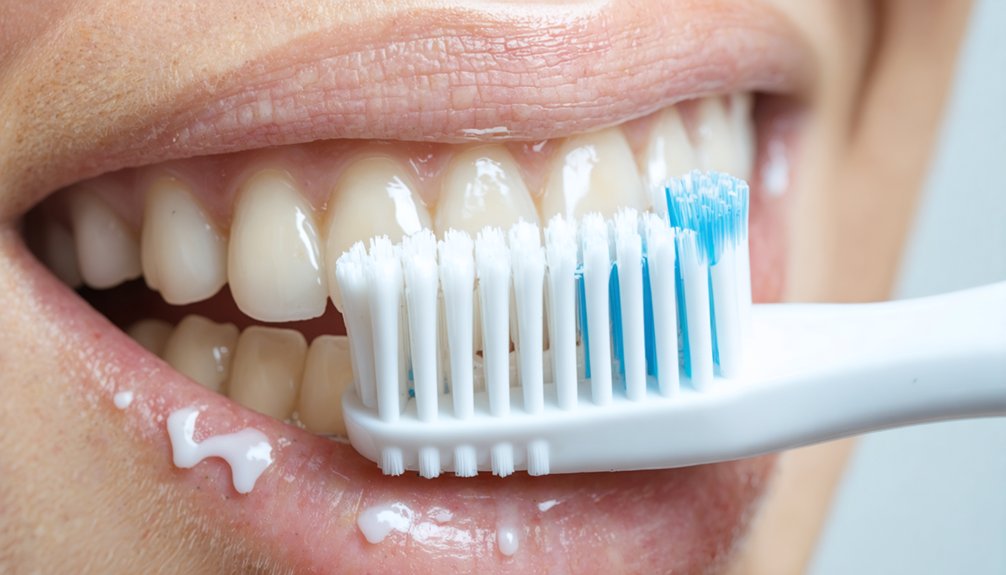
Toothpaste formulation determines whitening effectiveness. Charcoal-based variants demonstrate superior performance by binding tannins through porous structures, while hydrogen peroxide dissolves enamel stains without deep penetration. Pearl powder provides mechanical abrasive action, though it shows least efficacy after two weeks.
You’ll observe statistically significant results (p < 0.05) within 1-2 weeks of consistent daily application. Research confirms rapid whiteness deviation reduction during initial weeks, with enhanced effects continuing through week two.
These products excel at removing mild-to-moderate extrinsic tea stains but can’t address intrinsic discoloration or aging-related yellowing. They complement professional treatments while preventing future staining through regular use.
Professional Dental Polishing for Surface Stain Elimination
When home whitening methods prove insufficient against persistent tea stains, professional dental polishing provides targeted intervention through three primary modalities: motor-driven coronal polishing, air powder systems, and ultrasonic preparation. Your dental professional selects techniques based on stain severity and enamel integrity.
Professional dental polishing targets stubborn tea stains through motor-driven, air powder, and ultrasonic techniques tailored to your enamel’s specific condition.
Motor-driven polishing employs:
- Prophy cup dynamics at 3,000 rpm to optimize stain removal while minimizing surface damage
- Paste abrasiveness selection ranging from medium to fine grit based on discoloration depth
- Contra-angled instruments for posterior access
- Selective application only on stained surfaces
Air powder systems deliver controlled sodium bicarbonate or glycine sprays at 2-7 mm nozzle distance, removing extrinsic stains with minimal abrasion. Ultrasonic preparation precedes these methods, breaking up accumulated biofilm through rapid vibrations. Treatment duration spans 30-60 minutes, costing $60-$120 per session.
In-Office Whitening Treatments for Dramatic Results
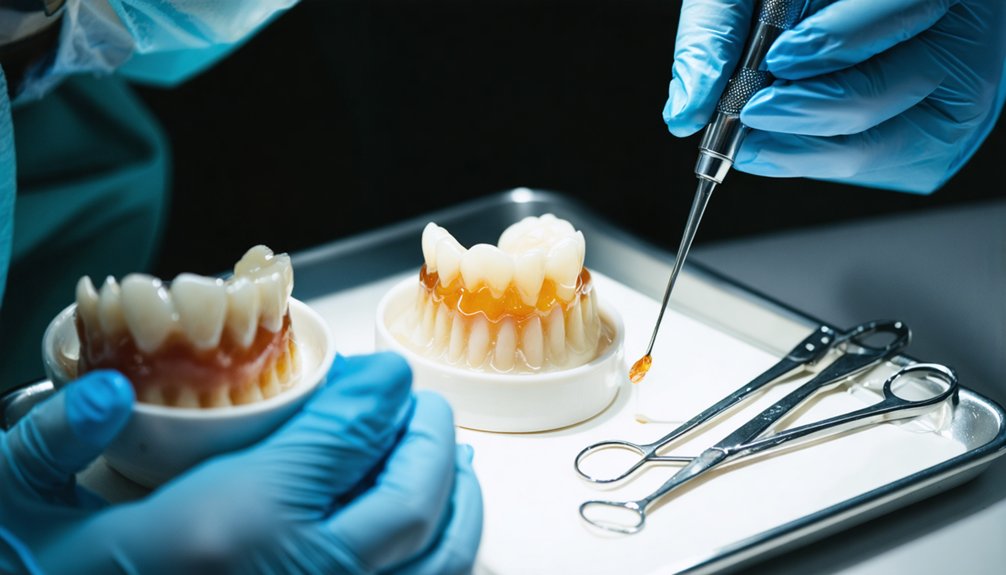
For tea stains that resist home treatments and surface polishing, in-office whitening delivers transformative results through controlled high-concentration peroxide application. Your dentist applies 25-40% hydrogen peroxide gel to tooth surfaces after protective barriers shield your gums from irritation.
Light or laser activation penetrates enamel to break down deep-set stains accumulated from years of tea consumption.
Sessions last 1-2 hours, producing several shades of improvement in a single visit. While extensive whitening procedures require professional supervision, they’re cost effective treatments when you consider their longevity—results typically last up to one year.
You’ll receive customized treatment intensity based on your sensitivity levels and specific staining patterns. This controlled environment guarantees uniform whitening across all visible tooth surfaces, eliminating the uneven results common with unsupervised methods.
Custom Take-Home Whitening Kits From Your Dentist
Custom take-home whitening kits bridge the gap between in-office procedures and over-the-counter products by combining professional-grade formulations with the convenience of at-home application. Following a dental consultation, your dentist creates custom whitening trays from impressions of your teeth, ensuring precise fit and ideal gel distribution.
Custom whitening trays deliver professional-strength results at home through precise fit and controlled gel application under your dentist’s guidance.
These trays prevent excess peroxide contact with gum tissue while effectively addressing tea stains through controlled bleaching.
What you’ll receive:
- Carbamide peroxide gels (10-38%) selected for your stain severity and sensitivity tolerance
- Custom whitening trays fabricated to cover all tooth surfaces without gaps
- Specific wear-time instructions ranging from 2-10 hours daily
- Professional monitoring to adjust concentrations if results plateau
This controlled approach delivers superior stain removal compared to generic options while maintaining safety through professional oversight and proper tray design.
Comparing Over-The-Counter Vs Professional Whitening Options
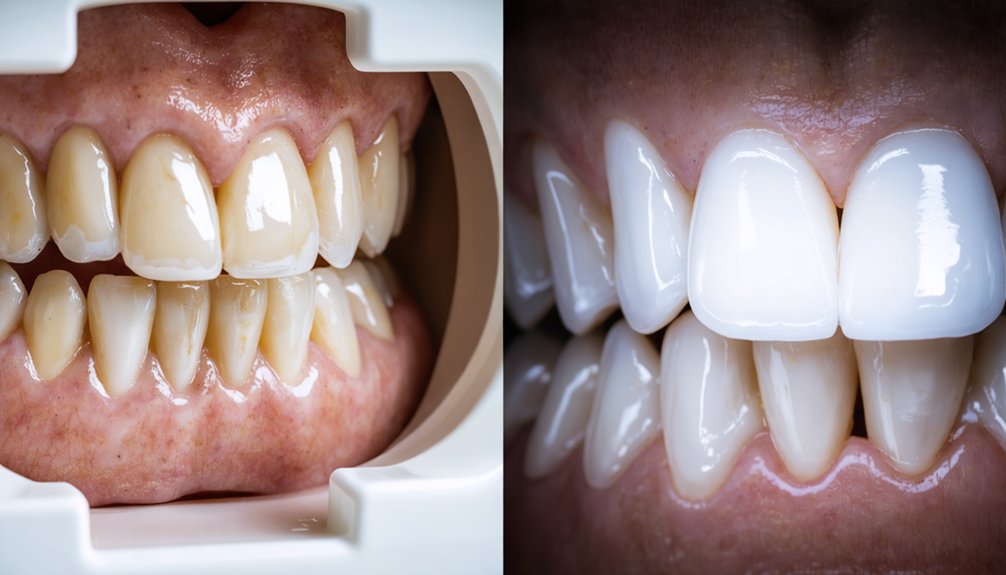
Two distinct pathways exist for addressing tea-induced tooth discoloration: over-the-counter products and professional whitening systems. OTC options—including strips, gels, and whitening toothpaste—effectively address surface stains but contain lower concentrations of hydrogen peroxide, limiting their efficacy on deep enamel discoloration. You’ll require multiple applications and extended treatment duration for noticeable results.
Professional whitening delivers pharmaceutical-grade bleaching agents under dentist oversight importance, ensuring controlled application and minimized sensitivity risks. Stain intensity considerations determine which approach you’ll need: superficial tea staining may respond to OTC products, while penetrated discoloration demands professional intervention. Dentists customize treatment protocols based on your enamel condition and aesthetic goals, achieving dramatic results in fewer sessions. Professional systems provide longer-lasting outcomes with maintenance programs designed for sustained whiteness.
Managing Tooth Sensitivity During Whitening Treatments
Tooth sensitivity represents the most commonly reported adverse effect during whitening treatments, affecting approximately two-thirds of individuals using bleaching products. You’ll experience this discomfort when peroxide penetrates enamel, exposing dentinal tubules and irritating nerves. Managing sensitivity discomfort requires proactive intervention before symptoms escalate.
Evidence-based prevention protocol:
- Apply desensitizing toothpaste containing potassium nitrate or strontium chloride two weeks before treatment to block nerve signals
- Schedule a dental examination to identify and treat cavities, gum recession, or enamel defects prior to whitening
- Select lower peroxide concentrations and reduce contact time if you have pre-existing sensitivity
- Verify proper tray fit to prevent gel leakage onto gingival tissue
Post-treatment, you’ll minimize discomfort by avoiding sensitivity triggers—hot beverages, cold drinks, acidic foods, and sweets. Sensitivity typically resolves within days as remineralization seals exposed tubules.
Maintaining Your Bright Smile After Stain Removal
After investing time and resources in removing tea stains, you’ll preserve your whitening results through strategic maintenance protocols that address re-staining mechanisms at their source.
Your daily oral hygiene routine must include twice-daily brushing with fluoride toothpaste, flossing, and alcohol-free whitening mouthwash. Implement dietary modifications by avoiding coffee, red wine, and dark beverages for 48 hours post-treatment, then use straws to minimize tooth contact. Consume crunchy vegetables like celery and apples that mechanically cleanse surfaces while stimulating saliva production. Eliminate tobacco products completely, as they accelerate discoloration.
Schedule regularly scheduled dental visits every six months for professional cleanings and monitoring. Apply at-home whitening treatments every 6-12 months to maintain ideal brightness. This evidence-based approach extends results from six months to two years when executed consistently.
Frequently Asked Questions
Does Green Tea Stain Teeth Less Than Black Tea?
Like choosing between shadows, you’ll find green tea staining comparison favors lighter discoloration. Tea polyphenol content impact differs markedly—green tea’s lower tannin levels cause subtler grayish stains, while black tea’s higher concentration produces stubborn yellowish-brown discoloration you can control preventatively.
How Long After Whitening Should I Wait to Drink Tea?
You should wait 48-72 hours before drinking tea after whitening. This wait time between whitening and drinking tea prevents staining while your enamel’s pores close. The impact of whitening on teeth’s sensitivity also decreases during this period.
Can Whitening Damage Tooth Enamel if Done Too Frequently?
Yes, overuse of whitening products can demineralize your enamel irreversibly. Studies show 60% of frequent users experience impact on tooth sensitivity. You’ll maintain control by limiting treatments to 6-12 month intervals and following dentist-supervised protocols.
Are Natural Whitening Remedies Like Baking Soda Safe for Teeth?
Baking soda’s safety depends on moderation in usage—limit application to twice weekly. You’ll minimize enamel abrasion and potential side effects like sensitivity or gum irritation. Evidence shows controlled use effectively removes surface stains while protecting your enamel integrity.
Will Veneers or Crowns Also Whiten With Whitening Treatments?
No, veneers and crowns won’t whiten with treatments. Despite differences between veneers and crowns in material composition, whitening treatments prove ineffective on both restorations due to their nonporous surfaces that resist peroxide penetration, maintaining their original shade permanently.