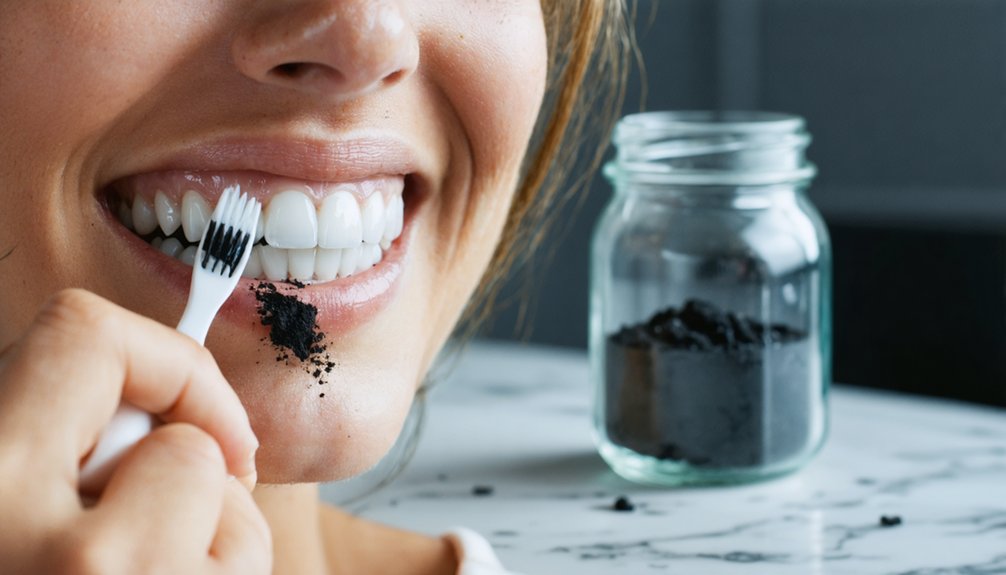
To whiten yellow teeth with activated charcoal powder, you’ll apply it to a wet toothbrush and brush in small circular motions for 1-2 minutes, twice weekly maximum. The whitening occurs through mechanical abrasion that physically scrapes surface stains rather than chemical bleaching. You’ll need consistent application over two weeks to observe gradual results, though research shows charcoal’s effectiveness is limited compared to peroxide-based treatments. The American Dental Association hasn’t approved charcoal whitening due to insufficient evidence, and excessive use can degrade your enamel. Our detailed guide below explains proper techniques and critical safety considerations.
Key Takeaways
- Activated charcoal removes surface stains through adsorption and abrasion, not by chemically bleaching teeth like peroxide-based whiteners.
- Apply charcoal to a wet toothbrush, brush in circular motions for 1-2 minutes, then allow 3-minute contact time.
- Use charcoal twice weekly maximum to prevent enamel damage from its abrasive properties and avoid nutrient absorption interference.
- Gradual whitening appears over two weeks with consistent use, though scientific evidence supporting effectiveness remains insufficient.
- Rinse thoroughly after treatment and follow with fluoride toothpaste, as charcoal only removes extrinsic stains, not intrinsic discoloration.
What Makes Activated Charcoal Different From Regular Charcoal
While both forms originate from carbon-rich organic materials, activated charcoal undergoes a critical secondary processing step that fundamentally alters its chemical structure and therapeutic potential.
The activation process exposes charcoal to temperatures of 800-1200°C with oxidizing agents, developing a highly porous structure with surface areas reaching 500-1500 m²/g—compared to regular charcoal’s mere 20-100 m²/g. This exponential increase in porosity directly translates to superior reactive capacity for adsorbing toxins, chemicals, and staining compounds.
Regular charcoal lacks these interconnected micropores, rendering it ineffective for oral care applications. You’ll find activated charcoal specifically engineered for purification purposes, whereas regular charcoal serves combustion needs. However, excessive use can interfere with nutrient absorption and medication efficacy, necessitating controlled application protocols.
The Science Behind Charcoal’s Stain-Removing Properties
Activated charcoal’s stain-removing mechanism operates through two distinct processes: adsorption via its porous nanocrystalline structure and mechanical abrasion from its mineral particles. The porous texture with negative ionic charges theoretically binds positively charged stain molecules and chromophores, while the abrasive action physically scrapes away extrinsic discoloration from your enamel surface.
However, research indicates that most stain reduction you’ll experience comes from abrasive rather than adsorptive action, with laboratory testing showing activated charcoal powder alone didn’t whiten teeth.
Porous Structure Traps Stains
However, you’ll find critical limitations. Evidence remains scarce for adsorbent action versus abrasive mechanisms.
The porous structure targets only surface-level enamel discoloration—it’s ineffective against intrinsic stains. Long-term application increases surface roughness and risks enamel degradation.
Laboratory tests confirm stain-trapping properties but lack extensive whitening validation. You’re managing surface pigments, not achieving clinical-grade bleaching through porosity alone.
Adsorption Versus Bleaching Mechanisms
Unlike peroxide-based whiteners that chemically break down chromophores, charcoal operates through physical adsorption—a distinction you’ll need to understand before evaluating its efficacy. Charcoal’s nanocrystalline structure traps staining molecules through surface binding during brushing, not chemical neutralization. This toxin trapping mechanism targets extrinsic stains exclusively, while hydrogen peroxide achieves superior color change (p < 0.01) by chemically altering yellowness and brightness.
You’ll observe charcoal produces gradual whitening over two weeks before plateauing, whereas peroxide delivers immediate results. Carbamide peroxide demonstrates considerably greater ΔEab and ΔE00 values than charcoal over 14 days. The American Dental Association maintains insufficient evidence supports charcoal’s whitening claims, denying these products its Seal of Acceptance. Your control over outcomes remains limited compared to peroxide-based alternatives.
Abrasive Action Removes Discoloration
The mechanical properties of charcoal powder create a dual-action whitening process through both abrasive scrubbing and particle-mediated stain extraction. You’ll experience stain removal as coarse particles polish your enamel through friction, lifting pigmented molecules from coffee, tea, and wine during 3-5 minute brushing sessions.
The porous texture provides increased surface contact, enabling debris collection while mechanically dislodging discoloration. However, you must maintain minimal abrasion balance—excessive use erodes enamel, exposing yellower dentin underneath and increasing cavity risk. Aggressive application creates surface roughness that promotes bacterial adhesion rather than preventing it.
For tooth sensitivity reduction, limit charcoal application frequency. Overuse fundamentally compromises enamel integrity, ultimately producing the opposite effect you’re seeking while elevating decay vulnerability and irreversible structural damage.
Step-By-Step Guide to Brushing With Charcoal Powder
You’ll need to follow specific protocols when applying charcoal powder to minimize enamel damage and soft tissue complications. Research demonstrates that charcoal-based dentifrices increase surface roughness and create heterogeneous enamel surfaces with craters, even when microhardness remains unaffected.
Before proceeding, understand that the American Dental Association finds insufficient evidence supporting both the safety and efficacy of activated charcoal for dental whitening.
Prepare Your Charcoal Mixture
Proper mixing technique requires adding dry ingredients to a glass container sequentially: clay first, then charcoal, followed by baking soda and optional one-quarter teaspoon Himalayan salt. Mix vigorously until achieving uniform gray coloration without white or black patches.
Add 15-30 drops food-grade essential oil last, stirring thoroughly. Store in an airtight glass jar to prevent moisture contamination that compromises powder integrity and effectiveness.
Proper Brushing Technique
Once you’ve prepared your charcoal mixture and stored it properly, application technique becomes the determining factor between safe whitening and potential enamel damage. Execute controlled brushing through this protocol:
- Wet your toothbrush thoroughly under running water, then shake off excess moisture to create ideal powder adhesion while preventing airborne particles that contaminate surfaces.
- Dip bristles lightly into charcoal—minimal coating reduces abrasiveness. Alternative: apply powder to dampened fingertip for gentler enamel contact.
- Brush in small circular motions for 1–2 minutes maximum, maintaining gentle pressure throughout application.
Allow three-minute contact time for stain binding, never exceeding five minutes. Keep mouth closed during brushing to contain powder. Limit frequency to twice weekly maximum—excessive use degrades enamel irreversibly despite proper storage conditions and safe storage methods.
Rinse and Clean Up
After completing the two-minute brushing protocol, immediate and thorough rinsing becomes critical to prevent charcoal particle retention in interdental spaces and subgingival margins. You’ll need multiple water rinses—at least three to four cycles—to dislodge trapped charcoal from gumlines and interproximal areas. Incomplete removal causes temporary dark staining and compromises complete oral cleansing.
Following charcoal elimination, you must apply fluoride-based toothpaste. Since activated charcoal lacks fluoride, this step provides essential enamel remineralization and cavity prevention after abrasive treatment. Use soft-bristled brushes with light pressure to avoid exacerbating sensitivity.
Inspect your mouth thoroughly before concluding. Any visible residue indicates inadequate rinsing, which undermines dental health maintenance. Don’t consume food or beverages until you’ve confirmed complete charcoal removal from all oral surfaces.
How Long Until You See Whitening Results
While charcoal powder manufacturers claim you’ll notice whitening after your first brushing session, clinical evidence doesn’t support these immediate transformation promises. Here’s the realistic whitening timeframe you should expect:
Despite manufacturer promises of instant results from first use, scientific research reveals charcoal whitening requires patience and consistent application over weeks.
- Week 1: Surface stains lift, shifting yellow tones to light ivory—the fastest visible change period
- Week 2-3: Deeper enamel pigments fade gradually, creating more uniform coloration across all teeth
- Week 4: Peak brightness stabilizes, with minimal additional changes
Your initial tooth color and staining level determine whether you’ll see results in 5-7 days or need the full 14-day protocol. Daily 6-minute sessions (3 minutes powder, 3 minutes paste) accelerate outcomes, but tooth sensitivity concerns warrant monitoring. Unlike in-office treatments delivering results in 1-2 hours, charcoal powder requires consistent application without clinical backing for speed claims.
Potential Risks to Your Enamel and Gums
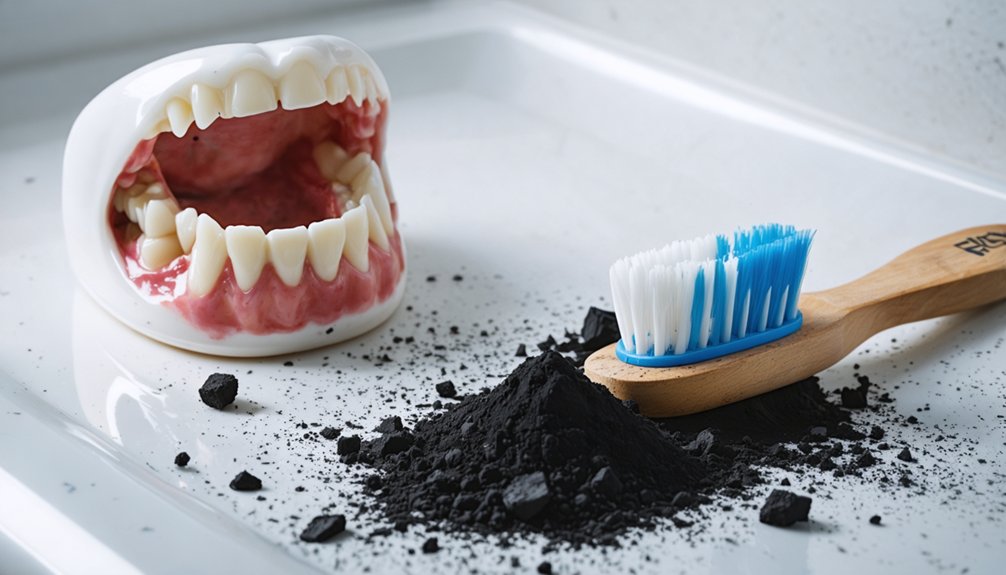
Charcoal powder’s abrasive particles pose three documented threats to your dental health: irreversible enamel erosion, gum tissue damage, and compromised cavity protection. Lab studies confirm that activated charcoal increases surface roughness and damages the enamel layer that can’t regenerate. You’ll experience increased tooth sensitivity as the soft dentin layer becomes exposed, creating a paradoxical yellowing effect rather than whitening.
The gritty particles create micro-tears along your gum line, particularly problematic if you have existing gingivitis. Most charcoal formulations lack fluoride, removing essential cavity protection while simultaneously roughening enamel surfaces where bacteria easily colonize. If you have dental restorations, charcoal particles will cling to crowns and veneers, causing discoloration rather than brightening. These compounding risks create lasting damage with minimal whitening evidence.
Charcoal Powder vs. Professional Whitening Treatments
- Efficacy: Carbamide peroxide targets intrinsic stains effectively, whereas charcoal only addresses surface-level extrinsic discoloration.
- Clinical validation: Randomized trials (n=56) consistently rank professional treatments highest, charcoal lowest in whitening outcomes.
- Patient satisfaction: Volunteers report ideal results with professional options versus unsatisfactory performance from charcoal products.
Systematic reviews analyzing 11 studies confirm charcoal toothpastes underperform alternatives. You’re assuming greater abrasion risk without evidence-backed whitening benefits when choosing charcoal over clinically-validated professional treatments.
Protecting Dental Work When Using Charcoal
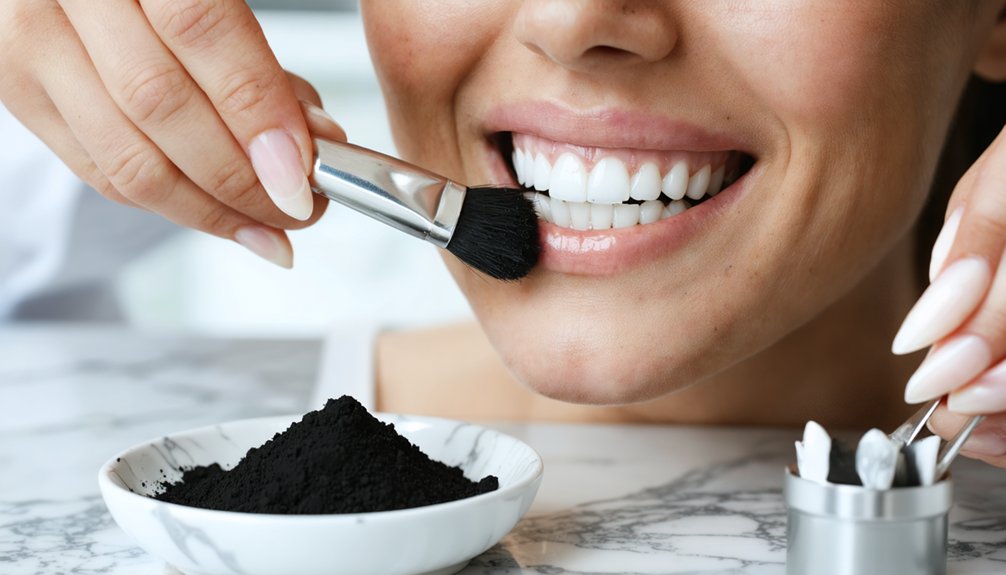
Beyond whitening efficacy concerns, you’re placing your dental restorations at significant risk when using charcoal powder. The abrasive particles—five times harsher than standard toothpastes—scratch crowns, veneers, and fillings while compromising bonding materials. Studies confirm charcoal alters enamel surfaces, weakening restoration integrity and potentially trapping particles that cause graying or cracking.
The American Dental Association withholds approval due to documented safety concerns, emphasizing risks outweigh unproven benefits. Monitoring restoration longevity requires limiting charcoal application to once biweekly maximum using extra-soft bristles, though complete avoidance remains safest.
Preserving dental integrity demands ADA-approved whitening alternatives and professional consultations before use. Your existing dental work represents significant investment—protect it through evidence-based hygiene practices rather than abrasive experimentation. Professional bleaching treatments and fluoride toothpastes deliver results without jeopardizing restoration stability.
Combining Charcoal With Fluoride Toothpaste Safely
While charcoal powder may offer cosmetic appeal, you’ll compromise essential cavity protection if you select formulas lacking fluoride. Most charcoal products omit this critical remineralization agent, elevating your decay risk. To maintain enamel integrity, implement this evidence-based protocol:
- Limit charcoal application to 2-3 sessions weekly maximum to minimize abrasive enamel erosion
- Alternate with fluoride containing options between charcoal treatments for adequate cavity prevention
- Apply fluoride rinse immediately after charcoal use to restore protective mineral content
Current research shows no adverse charcoal fluoride interactions when products are used sequentially. The Palandi study confirmed combining charcoal powder with standard toothpaste didn’t increase enamel roughness. However, lacking ADA approval and sufficient clinical validation, you must prioritize fluoride exposure through supplementary products to counteract charcoal’s protective deficiencies.
Who Should Avoid Charcoal Teeth Whitening
Despite charcoal’s trending popularity for cosmetic whitening, specific patient populations face significant contraindications that warrant complete avoidance. If you have sensitive teeth, charcoal’s abrasive properties will exacerbate discomfort and accelerate enamel erosion.
Dental restorations including crowns, veneers, and bridges undergo discoloration and structural damage from charcoal particles, negating your investment in professional smile enhancements. Pediatric patients lack FDA approval for charcoal use, and developing enamel faces irreversible harm without fluoride protection.
Pregnant and breastfeeding individuals must avoid charcoal due to insufficient safety data. Pre-existing gastrointestinal conditions contraindicate use, as activated charcoal triggers constipation, diarrhea, and dangerous electrolyte imbalances. Individuals with receding gums risk further tissue damage and dentin exposure.
Consult your dentist before implementing charcoal protocols to prevent permanent dental compromise.
Frequently Asked Questions
Can Charcoal Powder Help With Bad Breath or Halitosis?
Like a sponge without cleaning solution, charcoal powder may temporarily freshen breath through adsorption, but there’s insufficient evidence it’ll reduce bacteria causing halitosis. You’re risking enamel damage without proven antimicrobial benefits—conventional treatments offer better-substantiated control.
Will Charcoal Powder Stain My Bathroom Sink or Countertops?
Charcoal powder will stain your bathroom sink and countertops if not cleaned immediately. You’ll face demanding bathroom cleaning requirements using vinegar solutions and baking soda. Porous surfaces risk potential surface damage from charcoal’s abrasive properties and persistent adhesion.
How Often Should I Use Charcoal Powder per Week?
“Less is more”—you should limit charcoal powder to occasional use, 2–3 times weekly maximum. Daily use risks enamel erosion due to its 70–90 RDA abrasiveness score. You’ll maintain control over whitening while preserving enamel integrity through moderation.
Does Charcoal Powder Work on Internal Tooth Discoloration?
No, charcoal powder doesn’t work on internal tooth discoloration. Its absorption mechanism only removes surface stains, not chromophores within internal tooth structure composition. You’ll need professional bleaching agents to penetrate enamel and address intrinsic discoloration effectively.
Can Charcoal Powder Remove Stains From Coffee and Red Wine?
Like a magnet attracting metal, charcoal powder binds coffee and wine tannins, improving teeth whitening effectiveness on surface stains. However, you’ll face enamel damage risks and need additional staining prevention measures, as it won’t address deeper discoloration beneath your enamel.