You’ll find clinically validated whitening methods include baking soda paste (61.6% stain reduction in six weeks), hydrogen peroxide rinses (up to 6% concentration only), and over-the-counter whitening strips showing 4.73 ΔE color improvements. However, you’re risking enamel erosion if you exceed recommended concentrations or frequencies. Oil pulling, apple cider vinegar, and fruit-based treatments lack robust scientific support and may damage your enamel. Professional treatments preserve tooth structure while delivering superior results—the following sections outline evidence-based protocols and critical safety thresholds you shouldn’t ignore.
Key Takeaways
- Baking soda paste removes surface stains mechanically, achieving 61.6% reduction with twice-daily use over six weeks.
- Hydrogen peroxide up to 6% concentration oxidizes stain compounds, lightening teeth by approximately 20° within two weeks.
- Whitening strips deliver controlled peroxide exposure, producing measurable color improvements within 3-10 days depending on stain severity.
- Oil pulling with coconut oil removes surface debris but lacks scientific evidence for actual enamel bleaching effects.
- Professional treatments provide superior whitening results while maintaining tooth structural integrity and safety compared to home remedies.
Baking Soda Paste for Gentle Stain Removal
Baking soda functions as a mild abrasive agent that mechanically removes surface stains from tooth enamel, offering a clinically validated approach to at-home whitening. Clinical trials demonstrate 61.6% stain reduction after six weeks of twice-daily application, with shade improvements becoming visible within this timeframe.
Clinical studies confirm baking soda delivers 61.6% stain reduction with twice-daily use over six weeks through mechanical abrasive action.
This method excels at dental stain management for surface discoloration from coffee, tea, and wine but can’t address intrinsic yellowing from internal tooth structure changes.
Implement strict enamel protection measures by limiting use to 2-3 times weekly. Excessive application erodes enamel, increasing sensitivity and cavity susceptibility. You’ll need professional bleaching treatments for deeper stains requiring chemical penetration rather than mechanical abrasion.
Don’t replace fluoride toothpaste entirely—baking soda lacks decay-prevention capabilities. Avoid this approach if you’ve got sensitive teeth or existing enamel erosion.
Hydrogen Peroxide Mix for Natural Bleaching
Hydrogen peroxide functions as a chemical bleaching agent by penetrating enamel and oxidizing chromogenic compounds that cause tooth discoloration. While concentrations up to 6% demonstrate significant whitening effects when applied for 30 minutes daily over two weeks, exceeding this threshold or prolonging contact increases your risk of enamel erosion and gingival irritation.
You’ll achieve ideal results by limiting application to once daily and consulting your dentist to determine the appropriate concentration and duration for your specific dental condition.
How Peroxide Whitens Teeth
When teeth appear discolored, peroxide-based solutions work by initiating a controlled oxidation process that fundamentally alters stain molecules at the molecular level. Hydrogen peroxide decomposes into water and oxygen, with the extra oxygen atom removing electrons from pigmented compounds. This chemical reaction kinetics demonstrates how free radicals like perhydroxyl react with double bonds in stain molecules, triggering molecular rearrangement pathways that dismantle chromophore chains.
Peroxide penetrates enamel’s interprismatic spaces, reaching dentin within 15 minutes. The oxidation increases tooth lightness by 19.9 ± 6.5°, targeting both surface and intrinsic discoloration. However, you’re managing a potent oxidizing agent—concentrations range from 10% in store-bought products to 40% in professional treatments, requiring careful application protocols.
Safe Application and Frequency
Anyone considering at-home hydrogen peroxide bleaching must adhere to strict concentration thresholds and application protocols to prevent irreversible tissue damage. Proper dilution concentrations remain critical—you’ll find store-bought kits contain up to 10% hydrogen peroxide, while EU regulations limit at-home whiteners to 6% for safety margins. Dentist-supervised treatments may reach 40%, but home use shouldn’t exceed 3% in small doses.
Appropriate application methods require protective barriers like petroleum jelly on gums and provided applicators to shield soft tissue from gel contact. You must restrict treatments to 1-2 minutes, once or twice weekly maximum—never daily. Daily use strips enamel and irritates nerves.
Professional cleaning before application guarantees uniform penetration. Stop immediately if sensitivity or gum irritation occurs, and consult your dentist for personalized protocols.
Oil Pulling With Coconut Oil
Oil pulling with coconut oil originates from Ayurvedic medicine as a detoxification practice, though you’ll find limited scientific evidence specifically supporting its whitening claims. The antimicrobial properties stem primarily from lauric acid, which research shows can reduce plaque and gingivitis but doesn’t chemically bleach enamel like hydrogen peroxide does.
If you’re considering this method, you’ll need to swish 10-20 ml of virgin coconut oil for 10-20 minutes daily, understanding that any perceived whitening likely results from surface debris removal rather than actual color change.
Ancient Ayurvedic Detox Practice
However, you should understand its limitations: there’s insufficient evidence supporting actual teeth whitening or systemic detoxification claims. Use oil pulling strictly as an adjunct to conventional oral hygiene—never as a replacement.
Antimicrobial Properties of Lauric
Coconut oil’s antimicrobial efficacy stems primarily from lauric acid, a medium-chain saturated fatty acid (C12:0) comprising approximately 45-50% of its composition. Lauric acid benefits include potent activity against Streptococcus mutans, the primary causative agent of dental caries, with minimal bactericidal concentrations ranging from 6.8-375.0 μg/ml.
The lauric acid mechanisms involve disrupting bacterial cell membrane integrity, inhibiting glucosyltransferase enzymes, and interfering with oxidative phosphorylation. Studies demonstrate comparable efficacy to chlorhexidine against S. mutans, with superior performance versus calcium hydroxide.
However, you should recognize that while in vitro data appear promising, clinical evidence establishing lauric acid’s definitive teeth-whitening capabilities remains limited. The antimicrobial properties primarily address oral pathogen reduction rather than chromogenic stain removal, warranting realistic expectations about cosmetic outcomes.
Daily Swishing Technique Guide
The standardized protocol includes:
- Place one tablespoon of coconut oil in your mouth on an empty stomach
- Swish gently through teeth for 10-20 minutes without swallowing
- Spit oil into trash receptacle to prevent drain clogging
Oil pulling duration directly correlates with bacterial reduction effectiveness; studies demonstrating Streptococcus mutans reduction utilized consistent 10-minute sessions. You should recognize this practice lacks evidence for actual teeth whitening despite anecdotal claims.
Results require daily commitment for 7-14 days minimum before measurable plaque reduction occurs.
Whitening Strips and Gels for Fast Results
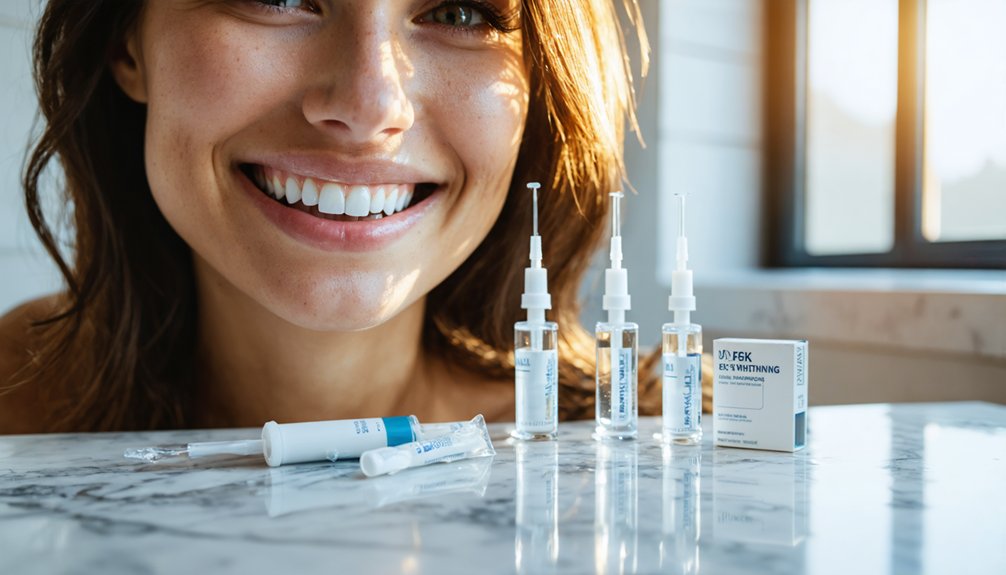
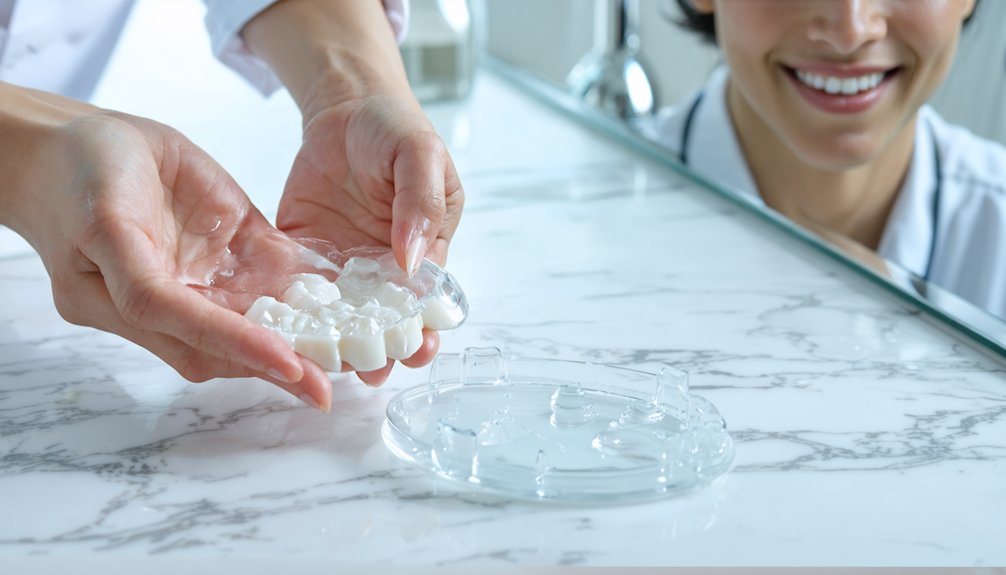
Whitening strips and gels consistently deliver measurable chromatic improvements through controlled peroxide exposure, though you’ll need realistic expectations about timelines and potential adverse effects. Clinical data demonstrates mean color changes of 4.73 ΔE units following single applications, with consistent results accumulating over standard two-week protocols.
Light stains typically respond within 3-5 days, while moderate discoloration requires 7-10 days of twice-daily treatment.
You should anticipate tooth sensitivity as the primary limiting factor—affecting 43-80% of peroxide users, though at considerably lower intensity than professional bleaching (RR=0.78). Monitor application duration strictly; exceeding recommended contact times increases enamel translucency risk without proportional whitening benefits.
Carbamide peroxide formulations convert to active hydrogen peroxide upon saliva contact, penetrating enamel to oxidize chromophores within underlying dentin structures.
Apple Cider Vinegar for Plaque Reduction
Beyond commercial peroxide formulations, some patients attempt acidic solutions like apple cider vinegar for plaque reduction, though this approach carries significant enamel safety concerns. The acetic acid component breaks down plaque biofilm and targets bacteria-forming deposits, while its antibacterial properties eliminate harmful oral pathogens. However, you’ll face substantial risks:
- Enamel erosion: High acidity (pH 2-3) progressively decreases tooth hardness, exposing yellow dentin layers
- Reduced remineralization benefits: Acid exposure compromises natural enamel repair processes
- Limited surface stain prevention: Short-term cleaning doesn’t provide protective mechanisms against future discoloration
If you’re considering this method, dilute heavily with water, limit exposure to 30-60 seconds, and rinse immediately afterward. Clinical evidence doesn’t support apple cider vinegar as a safe whitening alternative. Professional treatments offer superior results without compromising structural integrity.
Strawberry and Malic Acid Treatment
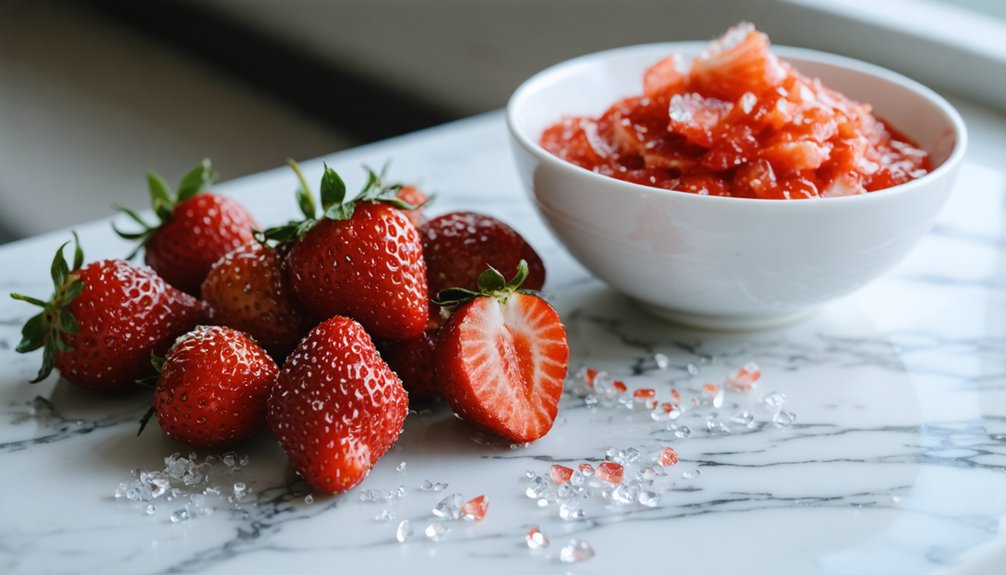
While strawberries contain malic acid that acts as a natural astringent for surface stain removal, this popular home remedy demonstrates limited clinical efficacy and poses enamel safety concerns. In a 31-participant study, 100% strawberry extract applied twice daily yielded a 35% reduction in combined stain scores by day two, though results remained superficial.
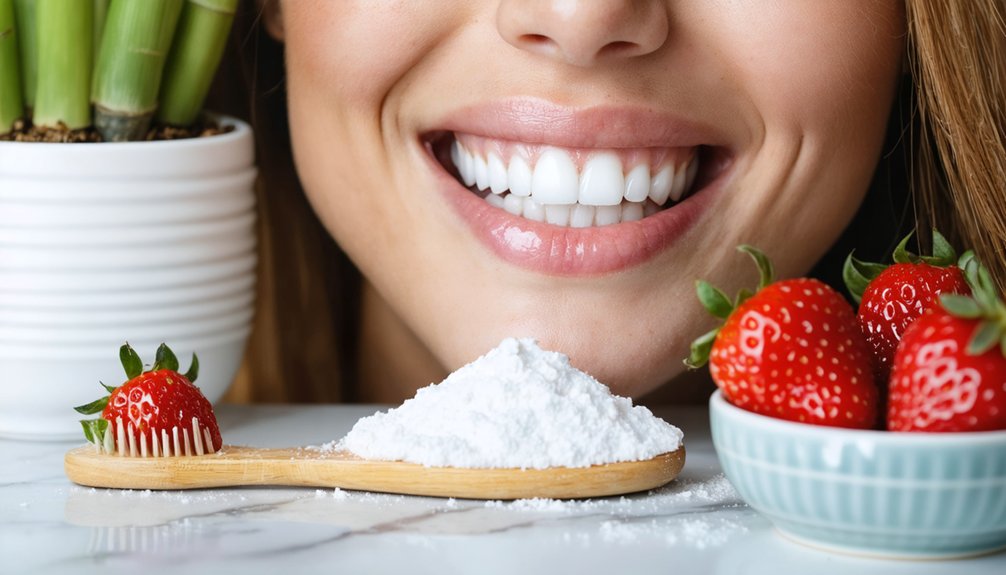
You’ll achieve only temporary whitening results, as strawberries lack hydrogen peroxide necessary for intrinsic stain penetration. The DIY method involves crushing ripe strawberries with baking soda, applying for five minutes, then thoroughly rinsing. However, enamel damage risks from malic, citric, and lactic acids warrant caution. University of Iowa research confirms no whitening beyond basic cleaning.
You should consult your dentist before use and avoid daily application to prevent irreversible enamel erosion and sensitivity.
Crunchy Fruits and Vegetables for Natural Scrubbing
Unlike acidic treatments that risk enamel erosion, crunchy fruits and vegetables offer mechanical stain removal through natural abrasive action during mastication. Their fibrous structure provides surface enamel scrubbing while simultaneously triggering saliva secretion stimulation, which neutralizes cavity-causing acids.
Evidence-based selections include:
- Apples – Contain malic acid for stain dissolution alongside mechanical cleaning action
- Carrots – High fiber content creates gentle abrasion while beta-carotene supports vitamin A production
- Celery – Stringy texture mechanically removes plaque between professional cleanings
However, you shouldn’t rely solely on dietary modifications for whitening. These foods function as complementary interventions between brushing sessions, reducing surface discoloration from coffee and tea. The protective barrier formed by iron-rich vegetables like broccoli helps prevent future staining, giving you preventative control over tooth appearance without harsh chemicals.
Frequently Asked Questions
How Long Does It Take to See Whitening Results From Home Remedies?
You’ll observe initial results within 3-4 days using strips, though the gradual whitening process varies by method. Maintaining a consistent application schedule proves critical—toothpaste requires 2-6 weeks, while rinses demand several months for noticeable improvements.
Can Teeth Whitening Methods Damage Enamel or Cause Sensitivity?
Yes, you’ll experience potential side effects including 6-18% enamel microhardness reduction and temporary sensitivity. However, proper application technique—avoiding overuse, acidic foods, and abrasive products—significantly minimizes damage risk while maintaining your control over treatment outcomes.
Which Foods and Drinks Should I Avoid to Prevent Tooth Staining?
Limit consumption of coffee, tea, and red wine, as their tannins and chromogens adhere to enamel. Avoid drinking dark-colored juices, colas, and berry-based beverages. You’ll minimize pigment accumulation by restricting acidic drinks that compromise enamel integrity.
Are Professional Whitening Treatments Better Than At-Home Remedies?
Professional treatments deliver superior results—eight shades in one visit versus weeks for home methods. When comparing effectiveness of professional and home treatments, discussing safety considerations of at-home whitening reveals professionals monitor sensitivity while you’ll risk improper application causing gum irritation.
How Often Can I Safely Use Whitening Methods Without Harming Teeth?
Prevent permanent damage: you’ll safely whiten every 3–6 months at moderate frequency. Prolonged exposure weakens enamel irreversibly, causing heightened sensitivity. You must space treatments 30 days apart minimum, use desensitizing toothpaste between sessions, and follow manufacturer protocols precisely.