
You should wait at least six to nine months after delivery before resuming teeth whitening treatments, as hormonal fluctuations affect your gum sensitivity and bleeding susceptibility during this period. If you’re breastfeeding, it’s safest to postpone whitening until after weaning, since limited research exists on peroxide-based agents transferring into breast milk. Your individual timeline depends on hormonal stabilization, oral health recovery, and lactation status. The following sections explain how to determine your personalized whitening schedule and maintain dental aesthetics safely during postpartum recovery.
Key Takeaways
- Wait until breastfeeding completely ends, as whitening agents may transfer to breastmilk with unknown safety effects.
- Allow 6-12 months postpartum for hormones to stabilize and gum sensitivity to resolve before whitening treatments.
- Schedule a dental evaluation to assess gum health and pregnancy-related oral complications before proceeding with whitening.
- Consult your obstetrician to confirm full systemic recovery supports elective cosmetic dental procedures.
- Use whitening toothpaste and professional cleanings as safer alternatives while waiting for optimal whitening timing.
Understanding Postpartum Hormonal Changes and Oral Health
While progesterone and estrogen levels decline after delivery, their residual effects powerfully impact your oral cavity for weeks postpartum. These hormonal fluctuations increase blood vessel permeability, causing gum edema and heightened bleeding susceptibility.
You’ll face elevated gingivitis risk—affecting up to 75% of postpartum women—as your gums overreact to plaque bacteria. Maternal saliva production decreases during this shift, compromising your mouth’s natural pH balance and cleansing mechanisms. This reduction fosters bacterial proliferation and accelerates enamel decay.
Additionally, estrogen decline delays bone density restoration in your jaw, potentially loosening tooth-supporting ligaments and exposing vulnerable root surfaces. You must recognize these physiological changes to implement proactive oral hygiene measures. Daily brushing and flossing become critical interventions to prevent gingivitis progression toward periodontitis during this vulnerable postpartum window.
The Breastfeeding Factor: Why Timing Matters
Because breastfeeding introduces unique chemical transfer considerations, you must evaluate whitening treatments through the lens of maternal-infant safety protocols. The chemical absorption concern centers on whether peroxide-based agents enter your bloodstream and subsequently transfer to breastmilk. While hydrogen peroxide breaks down into water and oxygen upon contact with teeth, and swallowed amounts metabolize harmlessly, the safety prioritization debate reflects mixed clinician opinions.
Limited research on whitening agents during lactation creates evidence gaps that necessitate precautionary approaches. You should delay elective whitening until weaning completes, as no urgent need justifies potential chemical exposure. Professional treatments warrant postponement, though whitening toothpaste and professional cleanings offer safer alternatives. Consult your dentist before implementing any whitening regimen while breastfeeding.
Professional Whitening Treatments vs. At-Home Options
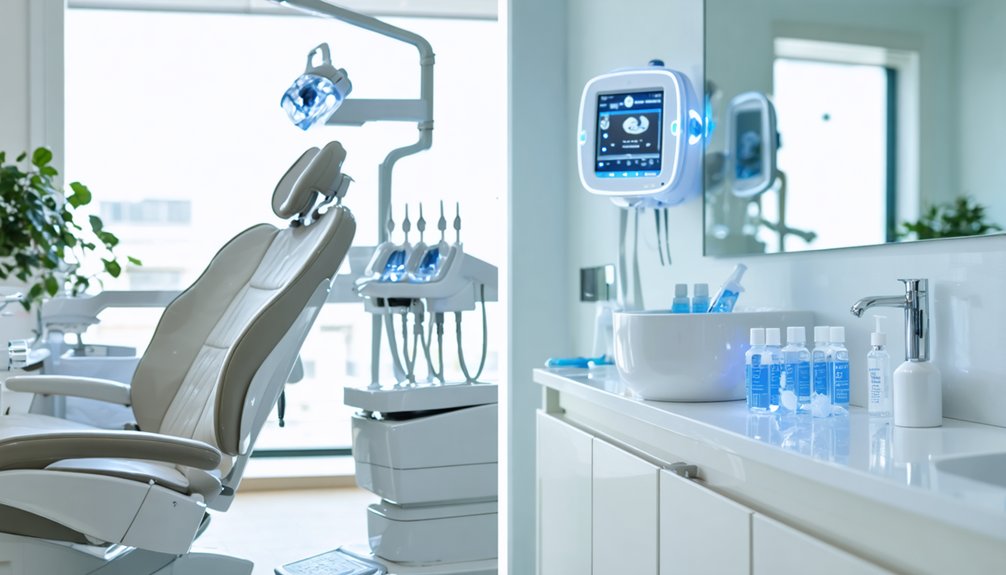
Once you’ve determined the appropriate timing for teeth whitening postpartum, you’ll need to choose between professional treatments and at-home options—a decision that carries distinct safety and efficacy implications. Professional procedures offer supervised application effectiveness through precisely calibrated hydrogen peroxide concentrations and LED activation technology, yielding superior, longer-lasting results. Dentists monitor your postpartum gum sensitivity and adjust treatment protocols accordingly.
Conversely, at-home products lack controlled safety considerations, risking enamel damage through unsupervised overuse and variable peroxide concentrations. While whitening toothpastes with ADA-approved abrasives provide gradual brightening, over-the-counter strips remain unstudied during lactation. Dentist-prescribed custom trays balance convenience with professional oversight.
For ideal risk mitigation, defer both modalities until weaning completion, then prioritize in-office treatments over unmonitored home kits. Consult your dentist and ob-gyn for individualized guidance.
Determining Your Personal Timeline for Safe Whitening
Mapping out your whitening timeline requires coordinating multiple postpartum variables rather than adhering to universal recommendations. Your personalized risk assessment should account for breastfeeding duration, hormonal stabilization, and oral health recovery status.
Dental appointment scheduling enables professional evaluation of gum sensitivity and pregnancy-related complications that haven’t fully resolved. If you’re nursing, many clinicians recommend waiting until weaning completes, though hydrogen peroxide transfer to breast milk remains unproven.
Professional dental evaluation helps assess lingering pregnancy complications and gum sensitivity before whitening, especially for nursing mothers.
Your obstetrician can confirm whether your systemic recovery supports elective procedures. Monitor for heightened gum irritation and focus on foundational oral hygiene before introducing whitening agents. Since no conclusive studies establish safety parameters for recent mothers, conservative postponement minimizes potential exposure risks.
Your individual circumstances—sensitivity levels, lactation status, and recovery progression—ultimately determine when resumption aligns with safety priorities.
Protecting Your Smile While You Wait
While you develop your personalized whitening schedule, implementing preventive strategies preserves your dental aesthetics without introducing chemical exposures. Establish rigorous dental hygiene protocols using fluoride toothpaste and soft-bristle brushes to maintain oral health during your deferral period.
Schedule professional cleanings that safely remove surface stains while supporting gum tissue recovery from pregnancy-related hormonal changes. Your personal risk assessment should account for persistent sensitivity issues, enamel alterations, and gum vulnerability that may require specialized desensitizing treatments before standard whitening procedures.
Regular dental check-ups enable your dentist to monitor oral tissue stabilization and identify pre-existing conditions that could complicate future whitening. These maintenance strategies support ideal treatment outcomes when you’re medically cleared to proceed, ensuring your enamel and gum tissue respond effectively to professional whitening agents.
Frequently Asked Questions
Can Teeth Whitening Affect Future Pregnancies if Done Postpartum?
No evidence suggests teeth whitening affects future pregnancies when done postpartum. Whitening ingredients absorption remains minimal through topical application, and postpartum hormonal changes don’t create reproductive risks. However, you should consult your dentist before proceeding for individualized assessment.
Does Cesarean Delivery Versus Vaginal Birth Change Whitening Safety Timing?
No, delivery method doesn’t alter whitening safety timing. Whether you’ve experienced cesarean or vaginal birth, you’ll face identical enamel sensitivity concerns and should maintain your oral hygiene routine while postponing whitening until breastfeeding concludes, per clinical guidelines.
Will Whitening Products Damage Teeth Weakened by Pregnancy Calcium Loss?
Whitening products can damage pregnancy-weakened teeth. Peroxide agents penetrate calcium-depleted enamel, increasing enamel sensitivity and tooth sensitivity risks. You’ll need professional assessment of your enamel integrity before whitening, as compromised tooth structure heightens demineralization and irritation potential.
Are Natural Whitening Remedies Safer Than Commercial Products After Giving Birth?
Natural whitening remedies aren’t proven safer than commercial products postpartum. Coincidentally, both lack safety data for breastfeeding considerations. You’ll find dietary whitening effects through strawberries or baking soda remain unstudied during lactation, warranting equal caution regardless of product origin.
Can Postpartum Depression Medications Interact With Teeth Whitening Treatments?
Postpartum depression medications don’t directly interact with whitening agents, but sedation-causing drugs may impair your judgment regarding teeth sensitivity levels and whitening application frequency. You’ll need to monitor CNS effects carefully before proceeding with cosmetic dental treatments.