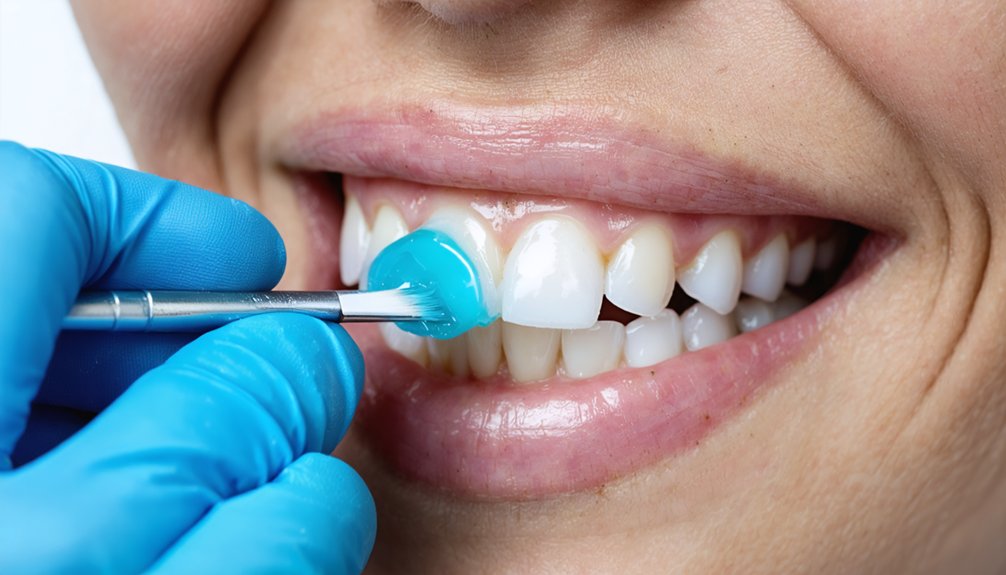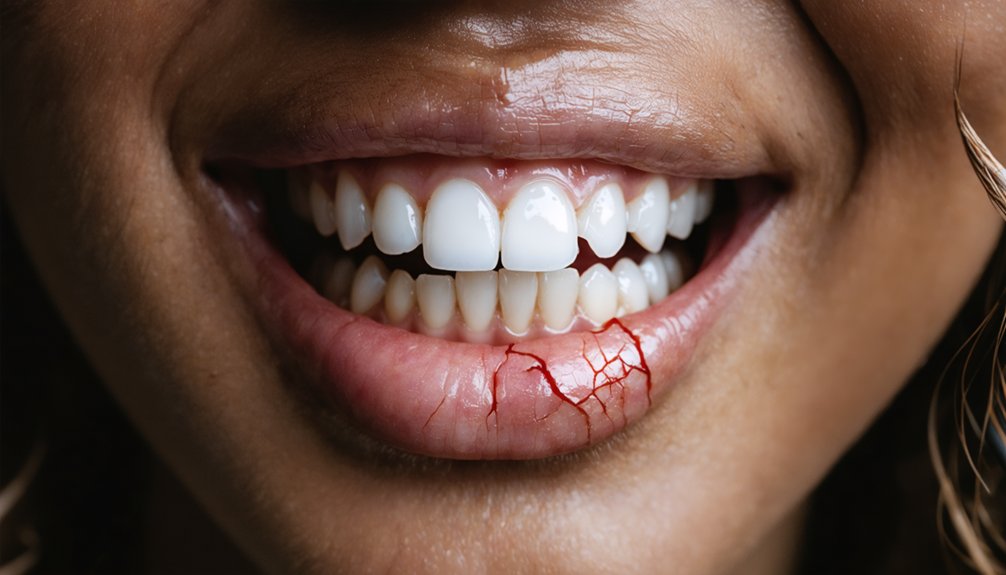
After whitening, you’ll most commonly notice tooth sensitivity and gum irritation. Sensitivity typically starts within 2-3 days and resolves by day 4, while gum redness or tenderness usually appears within 24 hours. Most side effects are mild to moderate and clear within 48 hours. Proper application and good oral hygiene help minimize discomfort. Knowing what’s normal — and what isn’t — helps you stay confident throughout the process and make smarter decisions about your treatment.
Key Takeaways
- Tooth sensitivity affects about 57% of people, typically appearing within 2-3 days after whitening and resolving by day 4.
- Gum irritation affects roughly 25% of users, presenting as redness, tenderness, mild swelling, or whitish discoloration within 24 hours.
- Most side effects are mild to moderate and clear within 48 hours without requiring professional intervention.
- Prolonged or worsening sensitivity signals overuse; pausing treatment and reducing application frequency can help manage symptoms effectively.
- Seek professional help immediately if experiencing severe sensitivity, gum swelling, chemical burns, allergic reactions, or significant nerve pain.
Side Effects of Teeth Whitening Most People Experience
Teeth whitening is effective, but it does come with some common side effects you should know about. The two most frequently reported are tooth sensitivity and gum irritation.
Around 57% of people experience some sensitivity, typically developing within two to three days of starting treatment and resolving by day four.
Gum irritation affects roughly one in four users, usually when the whitening gel contacts soft tissue.
You can manage both side effects by maintaining consistent oral hygiene and following temporary dietary restrictions, avoiding hot or cold foods and acidic beverages during treatment.
Most side effects remain mild to moderate and resolve within 48 hours.
Most whitening side effects are mild to moderate and typically clear up within 48 hours of treatment.
Understanding what’s normal helps you stay in control of your whitening experience and recognize when something requires professional attention.
How Long Does Tooth Sensitivity Last After Whitening?
Tooth sensitivity after whitening is temporary, and for most people, it follows a predictable timeline. Whitening agents penetrate your tooth enamel and reach the nerve, causing irritation that typically begins within two to three days of starting treatment.
For most people, that nerve irritation resolves by the fourth day without intervention.
You can expect mild to moderate sensitivity during the early stages of bleaching, but it shouldn’t persist beyond a few days. If you’re using at-home products, reducing application frequency or switching to a lower-concentration formula gives your enamel time to recover.
Prolonged or worsening sensitivity signals overuse and warrants a pause in treatment. Staying within recommended guidelines keeps side effects manageable and prevents temporary discomfort from becoming a longer-term concern.
What Gum Irritation After Whitening Actually Looks Like
Sensitivity isn’t the only side effect that fades within days—gum irritation follows a similar short-lived pattern, though it looks and feels distinctly different. When whitening gel contacts soft tissue, you’ll likely notice gingival redness along the gumline, sometimes accompanied by tender gums that feel sore to the touch.
This typically appears within 24 hours of treatment and stems from ill-fitting trays or misapplied strips allowing peroxide to reach tissue it shouldn’t. Roughly one in four users experience this reaction.
In more pronounced cases, you might observe mild swelling or a whitish discoloration at the contact site. These signs generally resolve within a few days.
Applying gel precisely and ensuring your tray fits properly considerably reduces your risk of experiencing this reaction.
Can Whitening Damage Your Enamel Over Time?
While gum irritation tends to resolve quickly, enamel damage raises a more complex question about long-term risk. Enamel erosion becomes a real concern when you overuse peroxide-based products or apply them incorrectly. Repeated bleaching strips essential minerals from your enamel, and that mineral depletion weakens the surface over time, making your teeth more susceptible to decay and sensitivity.
The key factor is how you use these products. High concentrations used too frequently cause surface roughening and softening that don’t reverse on their own. When you follow recommended guidelines and avoid consecutive treatment cycles without breaks, you *considerably* reduce your risk.
If you’re uncertain about your enamel’s condition, consulting your dentist before continuing any whitening regimen gives you the control you need to protect it.
How Whitening Reacts With Crowns, Fillings, and Restorations
Beyond enamel concerns, whitening products interact differently with dental restorations than with natural teeth. Crowns, fillings, and sealants don’t respond to peroxide the way enamel does, which can create uneven results or crown compatibility issues you’ll want to anticipate.
Key restoration risks to monitor:
- Restoration discoloration – Ceramic crowns may undergo unacceptable color shifts from chemical reactions with bleaching agents.
- Uneven whitening – Natural teeth lighten while restorations stay the same shade, creating visible mismatches.
- Structural degradation – Peroxide can chemically weaken composite fillings, glass ionomer cements, and sealants.
- Surface instability – In vitro studies confirm that aggressive regimens accelerate restoration breakdown over time.
Consulting your dentist before whitening guarantees your restoration materials are compatible with your chosen treatment.
What Makes Whitening Side Effects Worse?
When it comes to whitening side effects, the peroxide concentration in your chosen product plays a significant role — higher concentrations increase your risk of sensitivity and tissue irritation.
You can make side effects considerably worse by overusing products, misapplying them, or whitening more frequently than recommended.
The duration of each treatment session also matters, as prolonged or repeated exposure to bleaching agents compounds the risk of enamel damage and gum irritation.
High Peroxide Concentration Risks
The concentration of peroxide in a whitening product is one of the biggest factors determining how severe your side effects will be. Higher peroxide concentration accelerates enamel erosion and intensifies sensitivity. Staying informed helps you make safer choices.
Watch for these concentration-related risks:
- Increased sensitivity – Higher peroxide levels penetrate enamel more aggressively, irritating nerve tissue faster.
- Enamel erosion – Repeated high-concentration use strips essential minerals, weakening your tooth structure.
- Gum chemical burns – Stronger gels cause faster soft tissue damage upon contact.
- Nerve damage – Aggressive, prolonged exposure to high-concentration agents can compromise the tooth’s nerve in rare cases.
Choosing products with appropriate peroxide concentration for your needs—ideally with dentist guidance—keeps results effective while minimizing unnecessary risk.
Overuse And Misapplication Effects
While peroxide concentration plays a significant role in side effect severity, how you use a whitening product matters just as much. Overuse, extended application times, and ill-fitting trays all amplify enamel erosion, gum irritation, and sensitivity.
Misapplying gel allows it to contact soft tissue, causing chemical burns or recession.
If you’re exploring natural remedies as gentler alternatives, understand they carry their own misuse risks when applied incorrectly or too frequently. Pediatric concerns are particularly serious—whitening products aren’t designed for developing teeth and can cause disproportionate damage.
Most complications stem from ignoring product instructions or whitening without professional guidance.
You control your outcomes by following recommended application times, using properly fitted trays, and consulting your dentist before intensifying any whitening regimen.
Treatment Duration And Frequency
Beyond concentration levels, how long and how often you whiten directly shapes the severity of side effects you’ll experience. Extending sessions or whitening too frequently prevents your enamel and gums from recovering, amplifying sensitivity and irritation.
- Limit session length — Follow recommended treatment durations strictly; exceeding them increases enamel vulnerability.
- Space out treatments — Allow adequate recovery time between sessions to reduce cumulative tissue stress.
- Monitor oral hygiene — Maintaining consistent brushing and flossing supports enamel integrity during whitening cycles.
- Adjust dietary habits — Avoiding acidic or staining foods between sessions reduces additional enamel strain.
You control how your whitening schedule unfolds. Sticking to structured intervals rather than accelerating treatment lets your teeth respond safely, minimizing preventable side effects without compromising your results.
When Whitening Side Effects Mean You Should Call Your Dentist
Most whitening side effects are mild and resolve within a few days, but certain symptoms signal that you should contact your dentist promptly. If you experience severe or persistent tooth sensitivity beyond four days, significant gum swelling, or chemical burns, don’t wait. Allergic reactions—including hives, difficulty breathing, or pronounced oral inflammation—require immediate attention, as a genetic predisposition to peroxide sensitivity can intensify these responses unpredictably.
You should also call your dentist if you notice uneven gum recession, sharp nerve pain, or stomach discomfort suggesting excessive gel ingestion. Permanent sensitivity or visible enamel changes warrant professional evaluation before continuing treatment.
Recognizing these warning signs early gives you control over your outcome and prevents minor complications from becoming serious dental concerns.
Frequently Asked Questions
Can Children or Teenagers Safely Use Teeth Whitening Products at Home?
You shouldn’t use home whitening products without a dentist’s approval. Pediatric dental safety guidelines caution against unsupervised use, and teen whitening guidelines recommend waiting until dental development’s complete to avoid enamel damage or heightened sensitivity risks.
Does Teeth Whitening Affect Breath Odor or Cause Bad Breath?
Whitening brightens your smile, yet it doesn’t directly cause halitosis concerns. Temporary gel residue may affect oral freshness impact briefly, but you’ll typically notice no lasting bad breath from standard whitening treatments when used correctly.
Are Whitening Side Effects Different for Pregnant or Breastfeeding Individuals?
You should avoid whitening treatments during pregnancy and breastfeeding. Pregnancy safety guidelines recommend postponing due to unknown peroxide risks. Breastfeeding considerations similarly apply, so you’ll want to consult your dentist before proceeding with any whitening regimen.
Can You Use Desensitizing Toothpaste Before Whitening to Prevent Sensitivity?
Yes, you can use desensitizing toothpaste before whitening to support pre-treatment sensitivity management. Toothpaste effectiveness works by blocking tubules, reducing nerve irritation. Start applying it two weeks before treatment to strengthen your protection proactively.
Do Natural or Charcoal Whitening Products Cause Fewer Side Effects Than Peroxide?
Like Hippocrates’ “first, do no harm,” natural remedies and charcoal products don’t eliminate chemical risks—they sidestep peroxide but can erode enamel differently. You’ll still face sensitivity and surface damage without proven whitening benefits.
References
- https://www.dentistryofwestbend.com/teeth-whitening-risks-and-side-effects/
- https://www.caryprosthodontics.com/teeth-whitening/teeth-whitening-risks-and-side-effects/
- https://www.coronadodentalassociates.com/post/what-are-the-most-common-side-effects-of-teeth-whitening
- https://www.mouthhealthy.org/all-topics-a-z/teeth-whitening
- https://www.youtube.com/watch?v=Wb-SEujgqeU
- https://pmc.ncbi.nlm.nih.gov/articles/PMC4058574/
- https://www.cornerstonedentistryvan.com/the-hidden-dangers-of-teeth-whitening-treatments/
- https://www.ada.org/resources/ada-library/oral-health-topics/whitening
- https://crest.com/en-us/oral-care-tips/teeth-whitening/what-are-the-side-effects-teeth-whitening
- https://www.gabrielshilldentalmaidstone.com/are-there-any-risks-or-side-effects-of-teeth-whitening/