For aging teeth, your best whitening option depends on enamel thickness and sensitivity levels. Custom take-home trays with calibrated peroxide concentrations offer gradual, controlled results without overwhelming thinning enamel. Professional in-office treatments like Zoom Whitening tackle deeper stains but require desensitizing agents for comfort. Over-the-counter options like Colgate Optic White Renewal work gently on age-related discoloration. You’ll want to consult your dentist first — and what follows breaks down exactly which approach suits your specific situation.
Key Takeaways
- Custom-fitted take-home whitening kits with calibrated peroxide concentrations offer gradual, controlled results ideal for aging teeth with thinning enamel.
- Professional in-office treatments like Zoom Whitening effectively target deep-set stains but require desensitizing agents to manage increased sensitivity risks.
- Over-the-counter products like Colgate Optic White Renewal provide gentle formulations specifically designed for sensitive, aging teeth.
- Consulting a dentist before whitening is essential to assess enamel thickness and determine the safest, most effective treatment approach.
- Gradual whitening application combined with fluoride treatments helps protect thinning enamel while minimizing irritation and sensitivity risks.
Why Your Teeth Yellow Differently as You Age
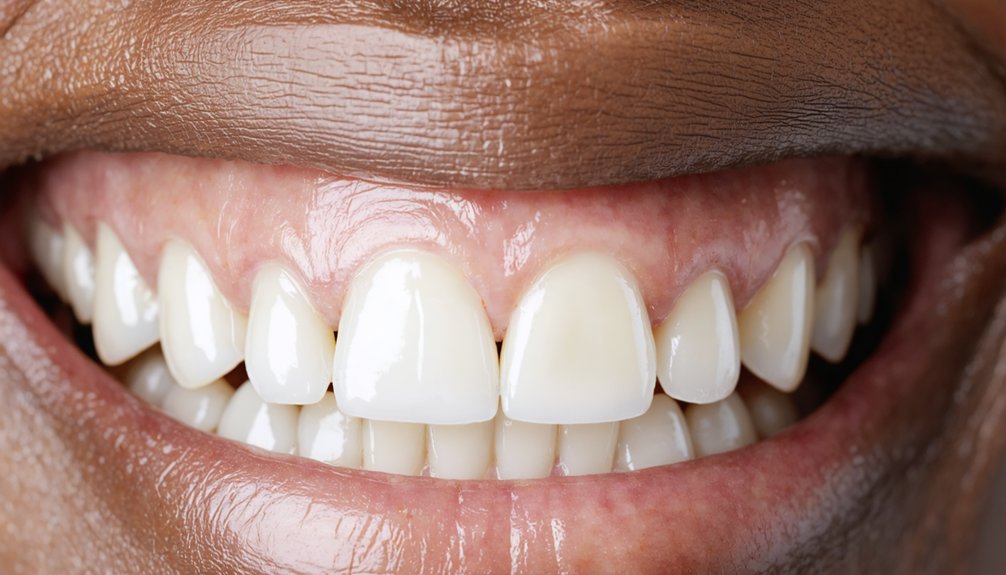
As you age, your teeth yellow for reasons that go far beyond surface stains. Aging factors work beneath the enamel, thinning its structure and exposing the naturally darker dentin underneath.
Aging doesn’t just stain your teeth — it thins the enamel, revealing the darker dentin beneath.
These enamel changes make your teeth appear more yellow regardless of your hygiene habits.
Lifestyle impacts compound the problem. Years of dietary stains from coffee, tea, wine, and tobacco penetrate your increasingly porous enamel, embedding deeply into the tooth structure.
Unlike surface discoloration, intrinsic discoloration originates within the tooth itself, making it resistant to standard whitening approaches.
Understanding these mechanisms gives you a clear advantage. Your dental health history, combined with age-related structural changes, determines which whitening strategies will actually work for you — and which ones will waste your time and money.
What Makes Whitening Harder After 50?
Once you pass 50, your teeth present a fundamentally different whitening challenge than they did in your younger years. Thinning enamel exposes more dentin, deepening discoloration while simultaneously reducing your tolerance for bleaching agents.
Enamel thickness directly controls how aggressively you can treat stains—less enamel means fewer options. Sensitivity issues compound this further. Your teeth’s increased porosity allows bleaching chemicals to penetrate beyond the stain layer, triggering nerve irritation that limits treatment frequency and concentration.
Age-related intrinsic stains also resist surface-level treatments that worked effectively at 30. Additionally, existing dental restorations won’t respond to any whitening method, creating uneven results if you’re not strategic.
Understanding these compounding factors lets you choose targeted solutions rather than wasting time on approaches designed for younger, structurally different teeth.
Which Whitening Method Works Best for Seniors?
When choosing a whitening method, you’ll find that your options fall into three main categories: professional take-home kits, in-office treatments, and over-the-counter products.
Each carries distinct advantages and trade-offs depending on your sensitivity levels, budget, and how quickly you need results.
Understanding how these methods compare helps you make a smarter, safer choice for aging teeth.
Professional Kits vs. In-Office
Choosing between professional take-home kits and in-office treatments isn’t just about speed—it’s about what your aging teeth can actually tolerate.
In-office options like Zoom Whitening deliver dramatic results fast, but stronger bleaching agents increase gum irritation and sensitivity risks—common concerns for seniors with thinner enamel.
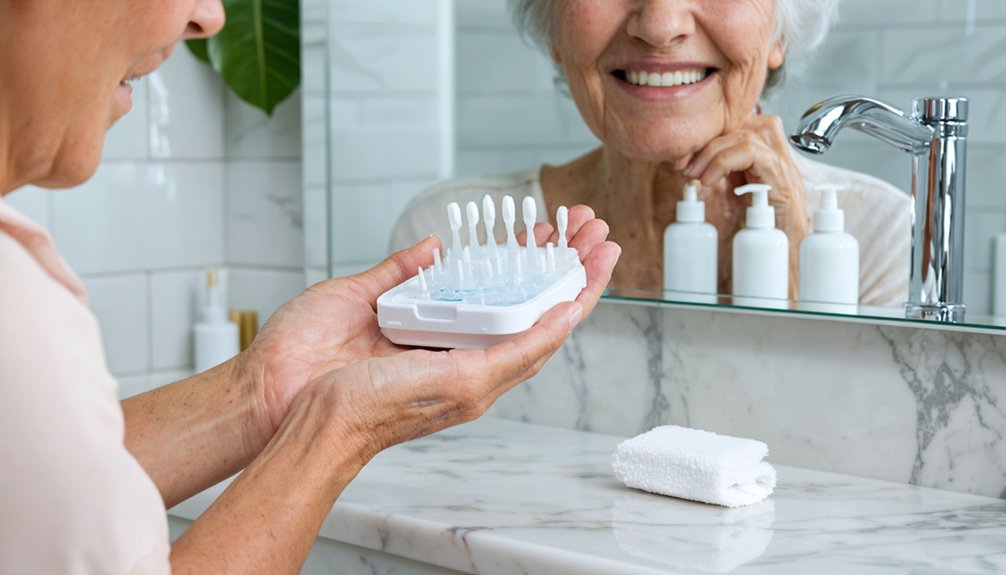
Professional whitening take-home kits, by contrast, give you control. Custom-fitted trays with peroxide gel let you manage application time, minimize discomfort, and achieve gradual, even results over several weeks.
That pacing matters when your dental health involves porosity, sensitivity, or existing restorations that won’t respond to bleaching.
If speed isn’t your priority but lasting, manageable results are, take-home kits typically suit aging teeth better.
Always confirm your candidacy with your dentist before committing to either approach.
Over-the-Counter Gentle Options
Not everyone needs a dentist’s chair to see results. Over-the-counter products now offer gentle formulations specifically designed for aging teeth, letting you manage whitening on your own terms.
Colgate Optic White Renewal targets a decade’s worth of stains using hydrogen peroxide, while Crest 3D White Daily Whitening Serum removes surface discoloration in just 30 minutes twice daily.
For sensitivity concerns, Crest 3D Whitestrips Sensitive Care delivers controlled peroxide exposure without overwhelming thinner enamel. These products prioritize enamel protection through milder abrasives and lower peroxide concentrations, reducing irritation risks you’d face with stronger clinical-grade treatments.
You’ll trade speed for comfort, but consistent daily use produces measurable improvement over weeks.
Always pair these products with fluoride toothpaste to reinforce enamel throughout the whitening process.
Take-Home Whitening Kits Built for Aging Teeth
For aging teeth that are more porous and sensitive, take-home whitening kits offer a controlled, dentist-supervised alternative to harsher in-office treatments. You get take-home convenience without sacrificing professional oversight — your dentist custom-fits trays to prevent gel leakage and minimize gum irritation.
Peroxide concentrations in these kits are calibrated for thinning enamel, delivering gradual results over several weeks rather than overwhelming sensitive teeth in a single session. Products like Opalescence Go use precise peroxide formulations worn 30 minutes twice daily or overnight, letting you control pace and intensity.
This approach works because it lets the bleaching agent penetrate deeper, age-related stains without triggering excessive sensitivity.
Before starting, consult your dentist to confirm the kit’s peroxide strength matches your current enamel condition and dental restoration status.
Is Professional In-Office Whitening Safe for Seniors?
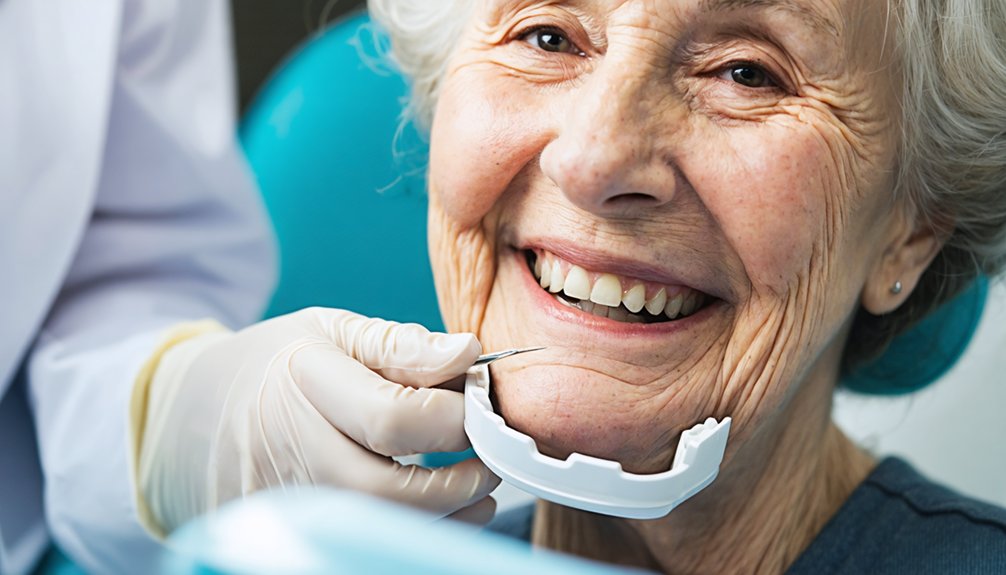
While take-home kits suit most seniors well, professional in-office whitening remains an option worth examining — particularly when stubborn, deep-set stains resist weeks of gradual treatment. Treatments like Zoom Whitening can brighten teeth several shades in a single session using high-concentration peroxide under direct dental supervision.
However, sensitivity concerns are real. Thinner enamel and increased tooth porosity make seniors more vulnerable to gum irritation and post-treatment discomfort. Your dentist can apply desensitizing agents and customize peroxide concentrations to prioritize enamel protection throughout the procedure.
You’re not automatically disqualified from in-office treatment — you simply need a thorough pre-treatment evaluation. If your dental health supports it, professional whitening delivers precise, accelerated results that gradual methods can’t always achieve.
Whitening Products That Actually Work on Deep Age-Related Stains
When targeting deep, age-related stains, you’ll need professional-grade peroxide treatments that penetrate beyond the enamel surface to address intrinsic discoloration.
Hydrogen peroxide concentrations of 25–40%, used in treatments like Zoom Whitening, break down stubborn chromogens embedded within the dentin that over-the-counter products simply can’t reach.
If you’re dealing with decades of intrinsic staining, custom take-home trays with high-concentration carbamide peroxide gels offer a gentler yet effective alternative that delivers comparable results over several weeks.
Professional-Grade Peroxide Treatments
Deep age-related stains don’t respond to the same mild treatments that work on younger teeth, which is why professional-grade peroxide solutions are often the only effective option. Your dentist controls peroxide concentration considerations precisely, selecting formulations strong enough to penetrate dentin without compromising thinning enamel.
Professional treatment options include custom take-home trays using carbamide peroxide gels and in-office systems like Zoom Whitening, which deploy high-concentration hydrogen peroxide under controlled conditions.
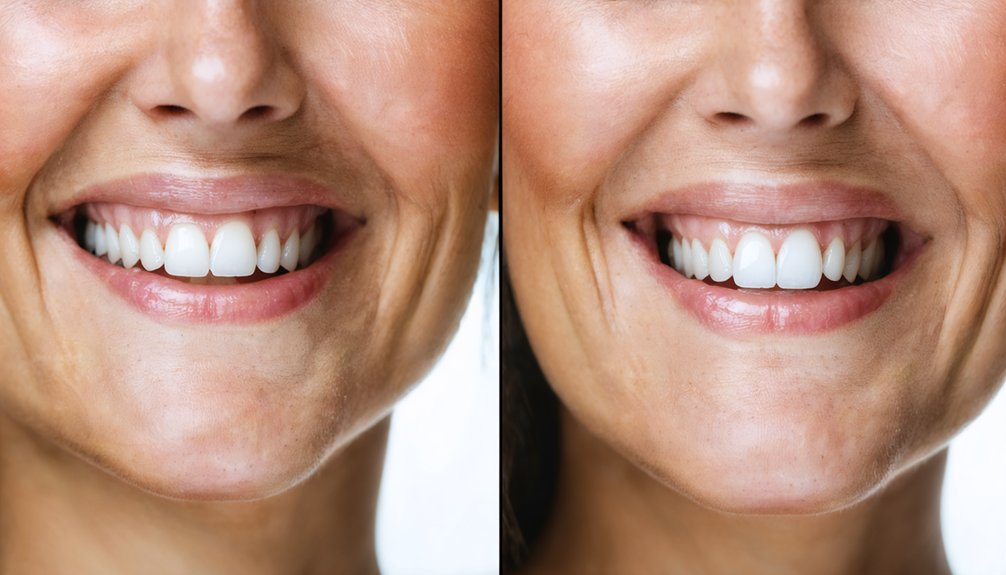
Take-home trays deliver gradual, even results over weeks, reducing sensitivity risks. In-office treatments accelerate the process, brightening teeth several shades in a single session.
Both approaches outperform over-the-counter alternatives on stubborn intrinsic stains. Choosing between them depends on your sensitivity levels, the depth of discoloration, and how quickly you need results.
Targeting Intrinsic Deep Stains
Intrinsic stains embedded within dentin don’t respond to surface-level treatments, so you’ll need whitening agents that penetrate beyond enamel to produce visible results.
Effective intrinsic stain treatments rely on higher-concentration peroxides that diffuse into dentin, breaking down discoloration at its source. Deep stain solutions require consistent application and professional oversight to deliver measurable outcomes without compromising structural integrity.
- Custom take-home trays with carbamide peroxide allow extended contact time, enabling deeper dentin penetration.
- In-office Zoom Whitening uses high-concentration hydrogen peroxide to target stubborn age-related discoloration in a single session.
- Overnight peroxide gels maximize dwell time, making them effective against deeply embedded chromogens.
- Dentist-prescribed formulas calibrate peroxide strength to your enamel thickness, optimizing results while controlling sensitivity risk.
The Best Over-the-Counter Whitening Products for Seniors
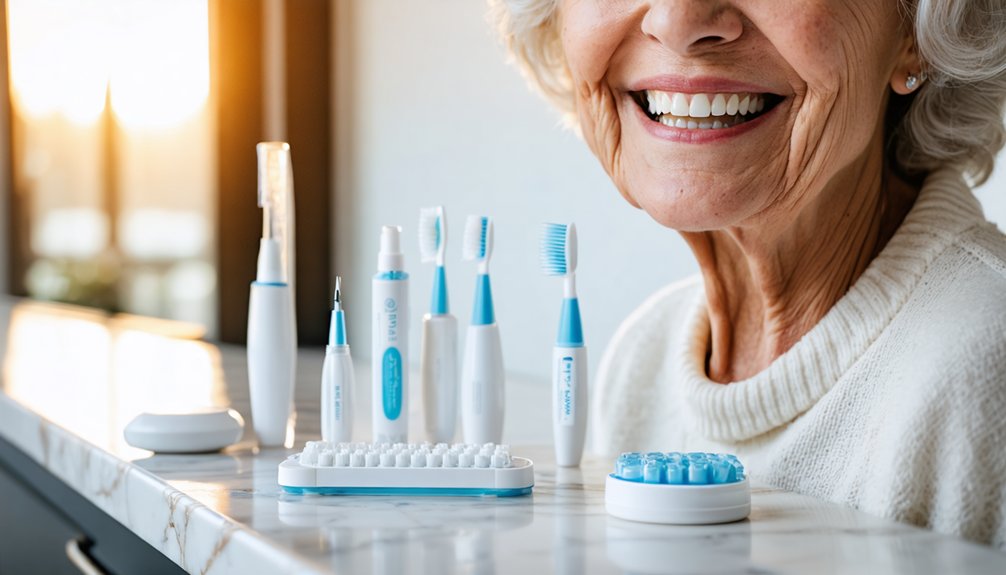
Many over-the-counter whitening products can effectively address age-related tooth discoloration without requiring a dentist visit, making them a practical first step for seniors.
You’ll want to prioritize gentle formulations specifically designed for sensitive teeth, as aging enamel requires careful enamel protection throughout the process.
Colgate Optic White Renewal targets up to 10 years of stains using hydrogen peroxide, while Crest 3D White Daily Whitening Serum removes surface discoloration in just 30 minutes twice daily.
For strip-based options, Crest 3D Whitestrips Sensitive offers controlled peroxide delivery without excessive irritation.
These products contain hydrogen or carbamide peroxide to break down enamel stains methodically.
Combining whitening toothpaste with serum or strips maximizes your results while keeping sensitivity manageable through consistent, gradual application.
How Seniors Can Whiten Safely With Thin or Sensitive Enamel
Whitening with thin or sensitive enamel requires a deliberately cautious approach, but you can still achieve meaningful results by prioritizing gradual methods over aggressive treatments.
Gentle techniques and consistent enamel protection let you whiten effectively without compromising your dental health.
- Consult your dentist first to assess enamel thickness and identify sensitivities before selecting any whitening method.
- Use low-concentration peroxide products like sensitivity-formulated strips or take-home trays to minimize irritation while still breaking down stains.
- Apply fluoride treatments before and after whitening sessions to actively reinforce thinning enamel and reduce vulnerability.
- Extend treatment timelines deliberately—spacing sessions further apart gives enamel recovery time and prevents cumulative damage.
Controlling your whitening pace isn’t a compromise; it’s the strategy that delivers lasting, safe results.
Frequently Asked Questions
Can Whitening Treatments Interfere With Medications Commonly Taken by Seniors?
It’s a gray area—whitening treatments can interact with medications affecting sensitivity concerns. You should consult your dentist to protect your dental health, ensuring bleaching agents don’t conflict with blood thinners or anti-inflammatory drugs you’re taking.
How Does Menopause or Hormonal Changes Affect Teeth Whitening Results?
Hormonal fluctuations during menopause effects your teeth by increasing sensitivity and gum inflammation, making whitening less effective. You’ll achieve better results by choosing gentler, gradual treatments and consulting your dentist to optimize your personalized whitening strategy.
Will Whitening Worsen Existing Dry Mouth Conditions in Older Adults?
Whitening can turn your dry mouth into a desert wasteland, worsening discomfort. You’ll need to prioritize dry mouth remedies and strict oral hygiene practices beforehand. Consult your dentist to control sensitivity risks effectively.
Can Seniors With Dentures Whiten Their Remaining Natural Teeth Safely?
Yes, you can safely whiten your remaining natural teeth while wearing dentures. Prioritize natural teeth care with gradual whitening methods and maintain separate dentures maintenance routines, since bleaching agents won’t affect artificial materials—consult your dentist first.
How Long Do Whitening Results Typically Last on Aging Teeth?
Like sand slipping through an hourglass, results fade in 6–12 months. You’ll extend them by managing teeth sensitivity with gentle whitening products and avoiding staining foods, keeping your smile consistently brighter longer.
References
- https://tarpondental.com/teeth-whitening-for-seniors-tips-and-tricks-for-optimal-dental-care/
- https://sunlakesdentistry.com/can-senior-teeth-be-whitened/
- https://www.target.com/s/best+teeth+whitening+for+older+adults
- https://www.willowstreetdental.com/age-related-yellowing-whitening-solutions-for-seniors/
- https://www.colgate.com/en-us/oral-health/teeth-whitening/whitening-aging-teeth
- https://www.doverfamilydentistry.org/teeth-whitening-for-aging/
- https://www.ada.org/resources/ada-library/oral-health-topics/whitening
- https://www.aarp.org/health/conditions-treatments/teeth-whitening/