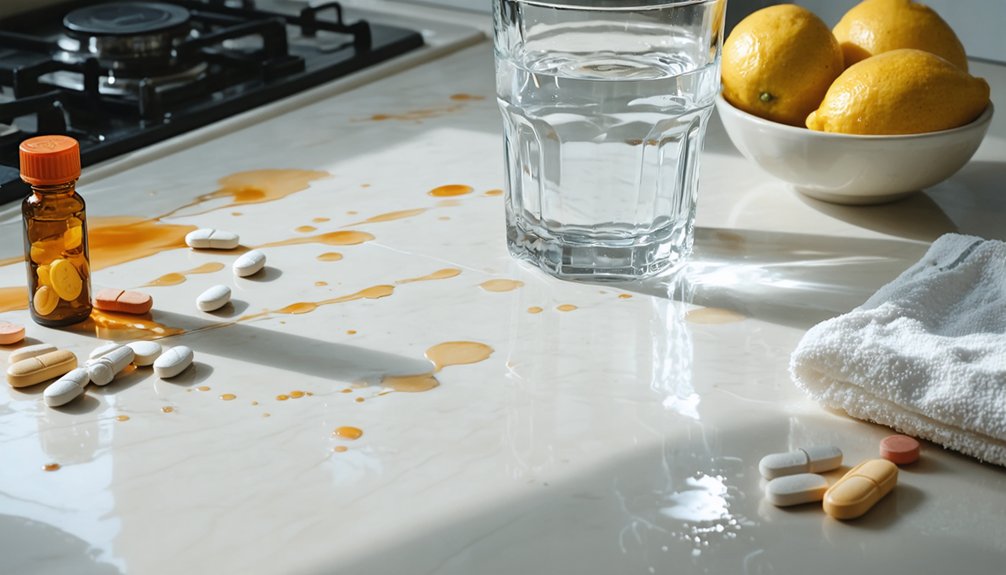
For cough syrup stains, you’ll want to soak the fabric in warm water with liquid dish detergent and white vinegar, then sponge with alcohol for residual pigment. Iodine responds best to sodium thiosulfate crystals dissolved with ammonia drops. Mercurochrome requires ammonia-based soaking followed by a white vinegar treatment. Always act quickly — stains exceeding 48 hours oxidize and bond more deeply to fibers. The specific technique and product you choose can make all the difference in your results.
Key Takeaways
- For cough syrup stains, soak in warm water with liquid dish detergent and white vinegar, then sponge with alcohol for remaining pigment.
- Iodine stains respond best to sodium thiosulfate crystals dissolved in warm water combined with a few drops of ammonia.
- Mercurochrome stains are effectively treated by soaking in warm water with ammonia, followed by a white vinegar soak if needed.
- Chlorine bleach can be used on bleach-safe fabrics for stubborn medication stains that resist standard treatments.
- Pre-treating stained fabrics with mild detergent immediately after exposure minimizes permanent setting and improves removal success rates.
Why Medication Stains Bond So Deeply to Fabric
Medication stains penetrate fabric fibers so aggressively because most active pharmaceutical ingredients contain complex organic compounds—dyes, alcohols, iodine derivatives, and sugar-based syrups—that chemically bond with textile fibers on contact.
Understanding stain chemistry gives you a critical advantage in treatment timing and method selection.
Understanding the chemistry behind stains empowers you to choose the right treatment method at precisely the right moment.
Each compound interacts differently during fabric interaction. Iodine oxidizes cellulose fibers, mercurochrome binds to protein-based textiles, and syrup-based medications deposit sugars that caramelize under heat, permanently setting the stain.
You’re working against both physical absorption and chemical bonding simultaneously.
Act immediately. Heat accelerates molecular bonding, so you must avoid hot water and machine drying until the stain is fully neutralized.
Delayed treatment markedly reduces your removal success rate.
How to Remove Cough Syrup Stains
To tackle a cough syrup stain, soak the garment for 15 minutes in 1 quart of warm water mixed with 1/2 teaspoon of liquid dish detergent and 1 tablespoon of white vinegar.
Then rinse thoroughly with water.
After rinsing, sponge the stained area with alcohol to break down any remaining residue.
For persistent staining, soak the fabric for 30 minutes in 1 quart of warm water with 1 tablespoon of sodium perborate bleach.
Apply a commercial pre-wash stain remover, and launder normally.
Initial Soaking Method
Removing a cough syrup stain begins with a straightforward soaking solution you can prepare at home. Combine the following in a basin to address stain duration effectively:
- 1 quart warm water
- ½ teaspoon liquid hand dishwashing detergent
- 1 tablespoon white vinegar
Submerge the stained fabric in this mixture for exactly 15 minutes. Soaking solutions like this work by loosening the syrup’s sugar and dye compounds from the fabric fibers.
After the soak, rinse thoroughly with water to flush out the dissolved residue. You’ll then want to sponge the area with alcohol to target any remaining pigment.
If discoloration persists, shift to a secondary soak using 1 quart warm water combined with 1 tablespoon sodium perborate bleach for 30 minutes.
Post-Rinse Alcohol Treatment
Once you’ve completed the initial rinse, sponge the stained area directly with rubbing alcohol to break down any residual pigment the water couldn’t extract.
Alcohol effectiveness depends on prompt application and consistent, deliberate strokes using a clean white cloth. Work from the stain’s outer edge inward to prevent spreading.
Apply moderate pressure during stain lifting, ensuring the alcohol penetrates the fabric fibers without saturating surrounding areas. Replace your cloth frequently to avoid redepositing extracted pigment back onto the fabric.
Don’t scrub aggressively, as this risks damaging fiber integrity.
If the stain persists after initial alcohol treatment, reapply and repeat the sponging process. This controlled, methodical approach maximizes pigment extraction before proceeding to the sodium perborate bleach soaking phase.
Final Stain Removal
After completing the alcohol treatment, two final steps will fully eliminate the cough syrup stain.
These effective stain removal methods guarantee complete eradication without damaging fabric integrity.
Apply these final stain removal techniques sequentially:
- Sodium perborate soak: Submerge the garment in 1 quart warm water with 1 tablespoon sodium perborate bleach for 30 minutes.
- Pre-wash treatment: Apply a commercial pre-wash spot and stain remover directly to the affected area.
- Final wash cycle: Launder the garment using your standard washing method.
Each step builds upon the previous treatment, systematically breaking down residual stain compounds.
Don’t skip the sodium perborate soak—it targets deeply set pigments that earlier treatments loosened but didn’t fully extract.
You’ll achieve complete removal by executing each step precisely.
How to Remove Iodine and Mercurochrome Stains at Home
When treating iodine stains, rinse the fabric from the back with cool water.
Then apply a solution of 1 teaspoon sodium thiosulfate crystals dissolved in 1/2 cup warm water with a few drops of ammonia, flushing thoroughly with water afterward.
For mercurochrome stains, soak the garment for 30 minutes in 1 quart warm water mixed with 1/2 teaspoon light-duty liquid detergent and 1 tablespoon ammonia.
Then rinse and follow with a 1-hour soak in 1 quart warm water and 1 tablespoon white vinegar.
If stains persist in either case, apply alcohol directly to the affected area and, where the fabric allows, finish with a chlorine bleach treatment before laundering.
Removing Iodine Stains
Iodine stains require a two-step approach for effective removal. Understanding iodine properties helps explain stain persistence—iodine bonds aggressively with fabric fibers, demanding targeted treatment rather than standard washing.
Start by rinsing from the back of the stain with cool water to push iodine out rather than deeper into the fabric.
Then apply these targeted treatments:
- White fabric: Apply color remover per package directions, rinse thoroughly, then launder.
- General fabric: Sponge with water, then apply 1 teaspoon sodium thiosulfate crystals dissolved in ½ cup warm water with added ammonia drops.
- Persistent stains: Flush with water and repeat the sodium thiosulfate application until the stain lifts completely.
You’ll maintain full control over the process by working methodically through each step.
Removing Mercurochrome Stains
Mercurochrome stains present a similar challenge to iodine but require a distinct multi-stage protocol.
First, hold the fabric under cool running water to flush excess residue. Next, soak it for 30 minutes in one quart of warm water combined with ½ teaspoon of light-duty liquid detergent and one tablespoon of ammonia, then rinse thoroughly.
For persistent stain types, soak the fabric one additional hour in one quart of warm water with one tablespoon of white vinegar, then rinse and dry.
If residue remains, apply alcohol directly and cover with a damp alcohol pad until the stain lifts.
These targeted cleaning techniques conclude with chlorine bleach application on bleach-safe fabrics, followed by standard laundering for complete elimination.
Which Products Work Best on Medication Stains?
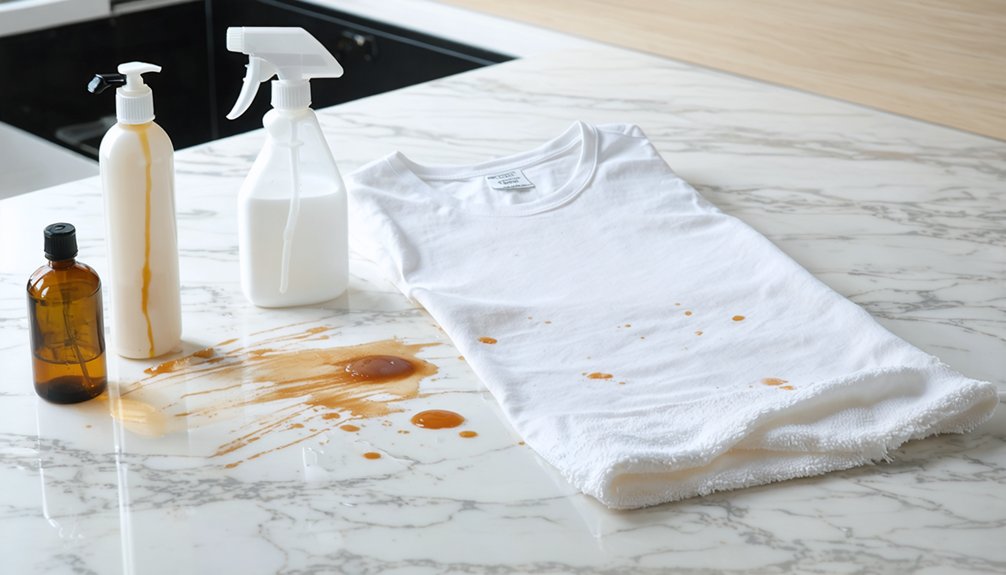
Treating medication stains effectively depends on matching the right product to the specific stain type. Your treatment options vary greatly based on the medication’s chemical composition.
- Cough syrup stains: Use liquid dish detergent with white vinegar, followed by alcohol sponging for complete removal.
- Iodine stains: Apply sodium thiosulfate crystals dissolved in warm water, adding ammonia drops to neutralize the compound.
- Mercurochrome stains: Combine ammonia-based soaking with white vinegar treatment, finishing with chlorine bleach if fabric permits.
Stain prevention remains your strongest strategy—pre-treating uniforms with mild detergent immediately after exposure minimizes permanent setting.
Enzyme-based detergents handle protein-based medication residues effectively, while surfactant cleaners target oil-based compounds.
Act quickly; delayed treatment dramatically reduces removal success rates.
How to Get Medication Stains Out of Medical Uniforms
Medical uniforms face 3 primary medication stain categories—cough syrup, iodine, and mercurochrome—each requiring a distinct removal protocol.
For fabric care precision, treat each stain type differently.
For cough syrup, soak in warm water, liquid dish detergent, and white vinegar for 15 minutes. Rinse, then sponge with alcohol. Apply a pre-wash stain remover before laundering.
For iodine, rinse from the back with cool water. Then apply sodium thiosulfate solution with ammonia drops. Flush thoroughly.
For mercurochrome, soak in warm water with liquid detergent and ammonia for 30 minutes. Follow with a vinegar soak, then bleach if fabric-safe.
Effective uniform maintenance demands you avoid harsh chemicals during routine treatment.
Always apply mild detergent with gentle rubbing before standard washing cycles.
Signs a Medication Stain Is Beyond DIY Treatment
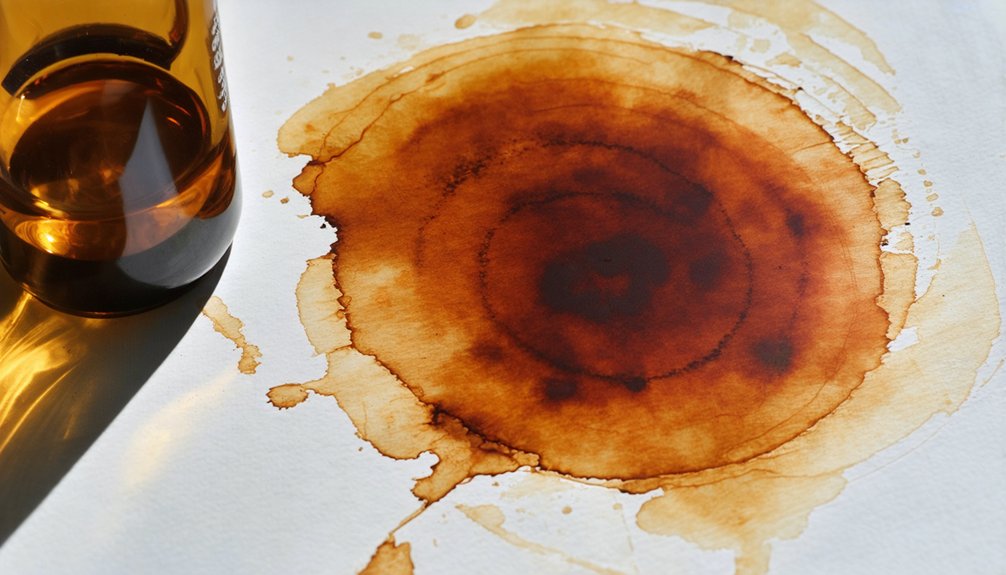
While the removal protocols above handle most medication stains effectively, some stains exceed what DIY methods can resolve. Recognizing stain permanence early prevents wasted effort and fabric damage.
Escalate to professional cleaning when you observe:
- Set stains exceeding 48 hours — oxidation bonds the compound to fabric fibers, markedly reducing removal success rates.
- Repeated treatment failures — if two complete protocol cycles produce no visible improvement, chemical bonding has likely occurred.
- Fabric degradation — discoloration, weakened fibers, or texture changes signal that continued DIY attempts will worsen damage.
At this threshold, professional cleaning services employ industrial solvents and controlled extraction methods unavailable to consumers. Acting decisively at these signs protects your uniform’s structural integrity and extends its functional lifespan.
Frequently Asked Questions
Can Medication Stains Be Removed After They Have Already Been Dried?
Dried medication stains, like stubborn shadows set into fabric, can still be tackled. You’ll apply mild detergent, rubbing gently—stain removal techniques vary across fabric types—then rinse, repeat, and wash normally for effective results.
Are There Medication Stains That Are Completely Impossible to Remove?
While most medication stains aren’t completely impossible to remove, certain stain types like set iodine or mercurochrome can be extremely stubborn. You’ll find prevention methods more reliable than removal when dealing with deeply embedded, dried pharmaceutical residues.
Does Water Temperature Affect How Well Medication Stains Respond to Treatment?
Yes, water temperature directly impacts your stain treatment success. You’ll achieve better results using warm water for soaking medication stains, as it activates detergents more effectively, while cool water prevents certain stains like iodine from setting deeper.
Can Stain Removers Cause Skin Reactions When Worn After Treatment?
Yes, stain removers can trigger skin sensitivity reactions. You’ll minimize risk by rinsing treated fabric thoroughly before wearing. Prioritize stain prevention through immediate treatment, reducing chemical exposure and ensuring complete residue removal during normal washing cycles.
How Long Can You Wait Before Treating a Medication Stain Effectively?
Like a ticking clock, act fast—you’ll maximize stain treatment timing by treating medication stains immediately. Don’t let it set; apply mild detergent using effective cleaning methods, rub gently, and rinse before normal washing cycles begin.
References
- https://site.extension.uga.edu/textiles/care/stain-removal/remove-stains-from-medicine-acne-mercurochrome-cough-syrup-iodine/
- https://www.jelrisofit.com/en-us/blogs/news/20250121702
- https://pmc.ncbi.nlm.nih.gov/articles/PMC3988498/
- https://ijrpas.com/HTMLPaper.aspx?Journal=International+Journal+of+Research+in+Pharmacy+and+Allied+Science;PID=2025-4-3-19
- https://www.columbiapikelaundry.com/post/how-stain-removers-work-for-every-stain-type
- https://www.goodhousekeeping.com/home/cleaning/g70453070/best-stain-remover/