You’ll find the most effective treatments for tetracycline staining include extended home bleaching with 10% carbamide peroxide worn overnight for 3-4 months, or the advanced KöR Bleaching System that uses refrigerated gel over 6-8 weeks. For severe discoloration that doesn’t respond to whitening, porcelain veneers offer complete coverage with minimal tooth preparation. Many patients achieve ideal results by combining professional in-office sessions with at-home treatments. The following sections explore each approach in detail to help you achieve your brightest, most confident smile.
Key Takeaways
- KöR Bleaching System uses refrigerated gel for superior penetration, breaking down stain molecules over 6-8 weeks with proven tetracycline results.
- Home bleaching with 10% carbamide peroxide in custom trays overnight requires 3-4 months to address tetracycline’s tight molecular binding.
- Porcelain veneers provide complete coverage for severe staining with minimal tooth preparation and 10-15 year lifespan.
- Hybrid protocols combine in-office hydrogen peroxide treatments with extended overnight carbamide peroxide wear, achieving 91% patient satisfaction.
- Professional cleanings every six months and ADA-approved stain-removal toothpaste help maintain whitening results long-term.
Home Bleaching With Carbamide Peroxide for Long-Term Results
When tetracycline staining compromises your smile, home bleaching with 10% carbamide peroxide offers the most time-efficient and cost-effective solution available. You’ll achieve ideal results through overnight tray application duration in custom-fabricated trays, typically requiring 3 to 4 months of consistent use. This extended timeline addresses tetracycline’s tight molecular binding to your dentin, demanding prolonged exposure to bleaching agents.
Your treatment success depends on proper tray design—non-scalloped trays extending 1 to 2 millimeters onto your gingiva guarantee complete coverage of stained areas. While sensitivity affects over 90% of patients, you can minimize discomfort using desensitizing toothpaste containing 5% potassium nitrate two weeks before treatment. The lower concentration combined with extended wear produces less sensitivity than higher-concentration alternatives, leading to patient satisfaction increase and long-lasting whitening effects lasting up to 90 months.
KöR Bleaching System: Advanced Treatment for Stubborn Stains
The KöR Bleaching System represents a breakthrough for patients whose tetracycline stains resist conventional whitening methods. You’ll benefit from refrigerated gel that maintains superior penetration quality, breaking down stain molecules at the molecular level rather than treating surfaces alone.
KöR’s refrigerated gel penetrates deep to break down stubborn tetracycline stains at the molecular level, not just the surface.
The system’s custom trays maximize gel absorption while preventing saliva interference—critical factors for patient compliance during your 6-8 week treatment.
Your protocol includes:
- Nightly tray wear for six to eight hours over several months for severe cases
- Combined approach starting with at-home treatment followed by in-office sessions
- Documented results from over 400 tetracycline cases showing dramatic improvement
You’ll achieve considerably greater whitening than other systems while preserving your natural teeth—a cost-effective alternative to veneers that delivers long-lasting results.
Porcelain Veneers: Complete Coverage for Severe Discoloration
For tetracycline stains that bleaching can’t adequately address, porcelain veneers offer a transformative solution that completely masks even the most severe discoloration. These thin ceramic shells bond to your front teeth, utilizing minimal tooth preparation—typically just 0.25-0.75mm of reduction—while maximizing aesthetic results.
The key to masking dark bands lies in the layered porcelain design. Your dentist will use opaque cement and strategically placed porcelain layers, creating 1.5mm of total space that allows complete blockage of underlying stains while maintaining natural translucency. For optimal results, you’ll likely need veneers on all visible teeth in both arches to guarantee seamless color harmony.
The transformation takes just 2-3 visits, delivering a dramatic change from severe banding to a bright, natural-looking smile that lasts 10-15 years with proper care.
Combining Professional and At-Home Whitening Approaches
Between the extremes of DIY whitening strips and permanent porcelain coverage lies a powerful middle ground: hybrid protocols that merge clinical expertise with home-based care. You’ll undergo a dental consultation to assess stain severity, then begin targeted in office procedures using hydrogen peroxide or laser-activated agents that penetrate deeply. These sessions precede or follow weeks of custom tray use at home with professional-grade gels.
Multi visit bleaching protocols deliver gradual results:
- Extended overnight wear with refrigerated high-potency carbamide peroxide (10-20%) over 2-6 weeks
- In-office boost sessions spaced strategically for moderate to severe discoloration
- Minimal sensitivity with 91% satisfaction at three months
This gold-standard approach yields noticeable improvement in yellow and gray tetracycline stains, giving you control over treatment duration while achieving results beyond over-the-counter limits.
Maintaining Your Results Through Proper Oral Care
After investing time and resources into treating tetracycline stains, you’ll want to protect that brighter smile through deliberate daily habits. Brush twice daily with ADA-approved stain-removal toothpaste and floss consistently to prevent discoloration buildup. Schedule professional dental cleanings every six months to remove surface deposits that home care can’t address.
Implement lifestyle behavior modifications by limiting dark-colored beverages like coffee and tea—or use a straw to minimize contact. Rinse thoroughly after consuming staining substances and eliminate smoking entirely. If sensitivity develops, apply desensitizing agents like CPP-ACPF or potassium nitrate treatments.
Monitor your results through regular dental checkups, discussing shade retention with your dentist every 6-12 months. Request touch-up whitening sessions as needed to maintain ideal brightness and address any emerging concerns immediately.
Frequently Asked Questions
Can Dental Microabrasion Effectively Treat Tetracycline Stains on Its Own?
Microabrasion alone can’t fully treat tetracycline stains—it’s only 75% effective compared to 95% for other discolorations. You’ll need dental microabrasion considerations alongside bleaching or veneers for long term microabrasion effectiveness and complete control over your smile transformation.
How Long Does Tetracycline Staining Take to Develop in Teeth?
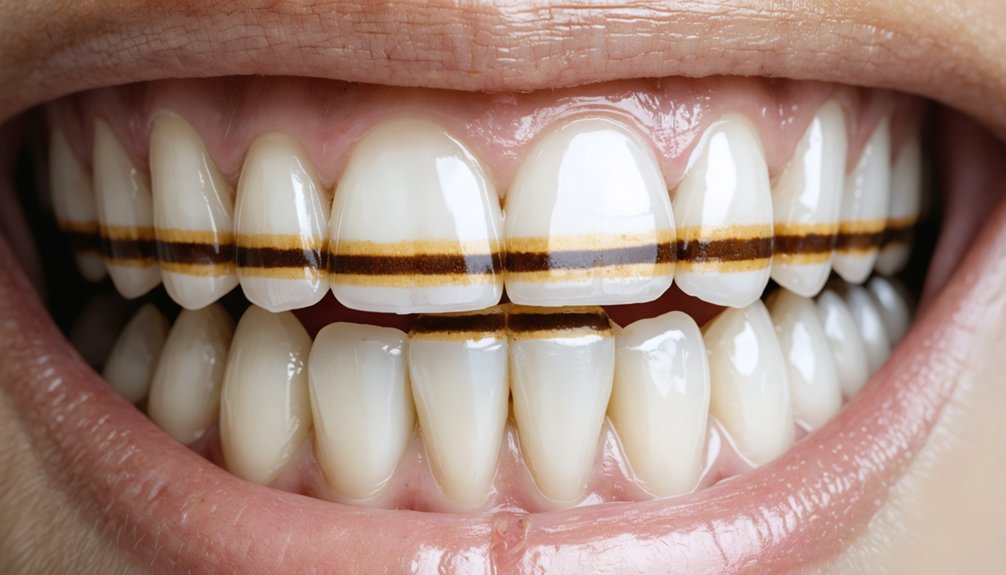
Tetracycline staining duration occurs during tooth formation—from pregnancy through age 8. The tetracycline staining development timeline shows yellow discoloration appearing immediately upon tooth eruption, then progressively darkening to brown or grey over months to years with light exposure.
Are Children Still at Risk for Tetracycline Staining Today?
Yes, ongoing risk of childhood exposure remains if your child receives tetracyclines before age eight. Proper childhood dental hygiene can’t prevent staining from these medications. You’ll want to discuss alternative antibiotics with your pediatrician to maintain control over your child’s smile aesthetics.
What Causes the Different Color Variations in Tetracycline Stained Teeth?
The degree of staining intensity and fluorescence properties determine your tooth’s color variation. Light exposure oxidizes tetracycline, transforming initial yellow fluorescence into brown or gray discoloration. Dosage, treatment duration, and your age at exposure control the final shade you’ll see.
How Much Does Veneer Replacement Typically Cost After 10-15 Years?
You’ll find veneer replacement costs mirror initial prices: $900-$2,500 per porcelain tooth after 10-15 years. This investment maintains your tooth discoloration management results, letting you control your aesthetic outcome through strategic timing and material selection for lasting confidence.