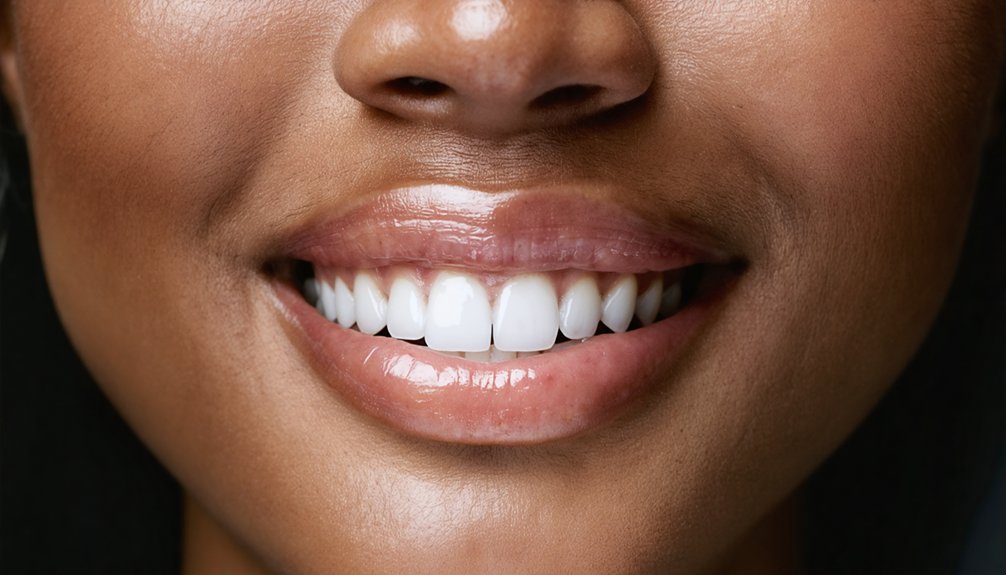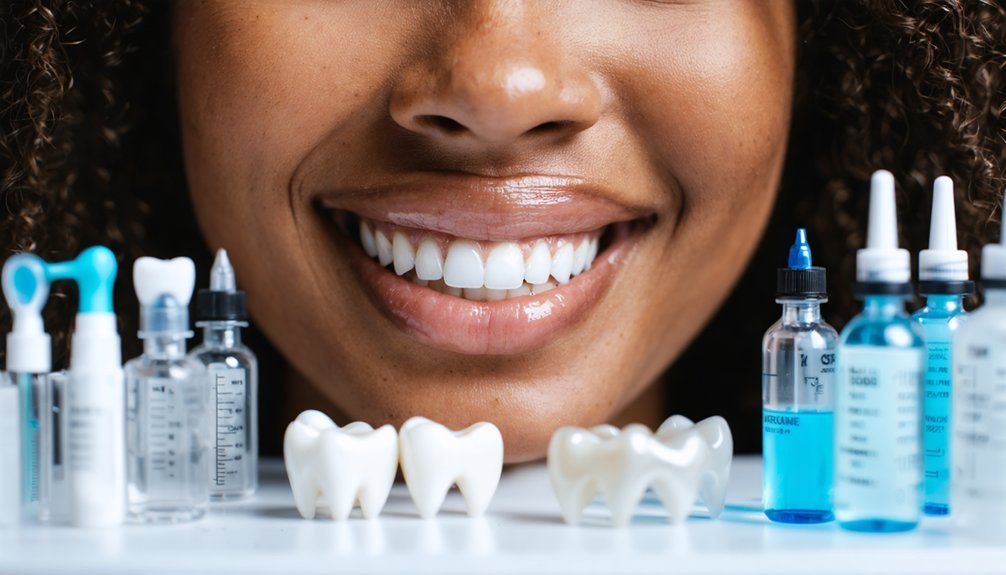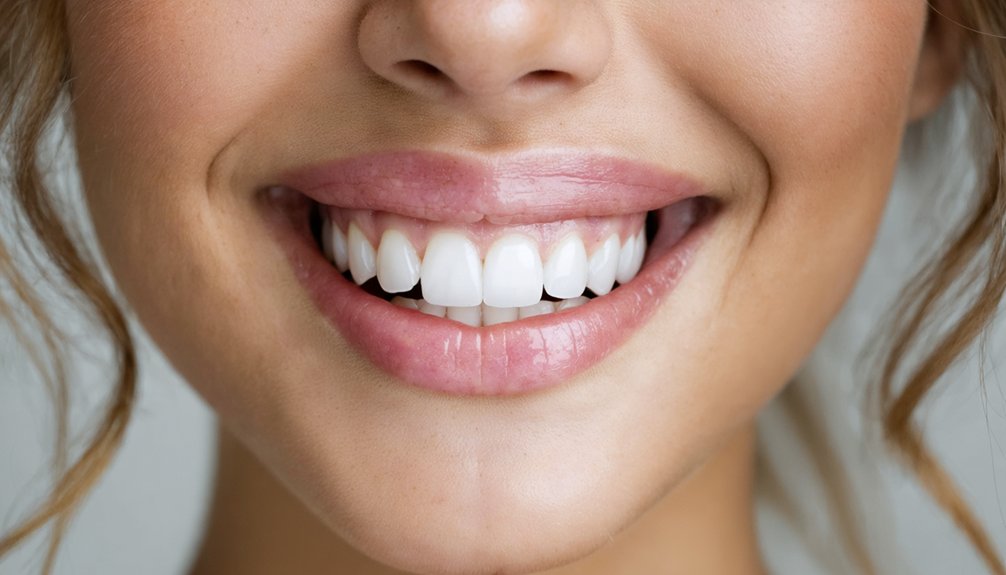
If you’ve inherited tooth discoloration, professional whitening treatments offer your most effective solution. In-office procedures using high-concentration peroxide (25-40%) can lighten genetically darkened teeth by 5-8 shades in a single visit, while custom take-home kits provide gradual results under dental supervision. For severe cases where bleaching proves insufficient, porcelain veneers or dental bonding can mask intrinsic stains that penetrate deep into your enamel and dentin. Understanding which approach suits your specific genetic condition will help you achieve lasting improvements.
Key Takeaways
- In-office whitening with high-concentration peroxide (25-40%) targets deep genetic discoloration, achieving 5-8 shades lighter in one session.
- Custom take-home kits combine professional-grade peroxide with personalized trays for gradual, effective treatment of intrinsic genetic stains.
- Porcelain veneers provide permanent solutions for severe hereditary discoloration unresponsive to bleaching, lasting 10-15 years.
- Dental bonding offers a cost-effective alternative, masking genetic stains with minimal preparation and delivering immediate results.
- Genetic conditions like amelogenesis imperfecta require specialized approaches beyond standard whitening due to structural enamel abnormalities.
Understanding How Genetics Affect Tooth Color
Your tooth color begins at the genetic level, where inherited traits determine enamel thickness, dentin composition, and overall shade before environmental factors ever come into play. You’ve inherited these characteristics the same way you received your eye color—through familial transmission patterns that establish your baseline tooth whiteness.
Your genetic blueprint determines tooth color just as definitively as it establishes eye color—inherited traits set your natural shade from the start.
Thicker enamel creates opacity that masks the yellow-brown dentin beneath, while thinner enamel allows more dentin visibility, resulting in naturally darker teeth.
Understanding this genetic foundation empowers you to set realistic expectations. Your developmental timeline and epigenetic factors influence enamel formation from early childhood, establishing transparency levels that vary across family lines.
While you can’t alter your genetic predisposition, recognizing that your yellow teeth stem from hereditary traits rather than poor hygiene allows you to pursue appropriate professional whitening solutions designed specifically for genetic discoloration.
Common Hereditary Conditions That Cause Discoloration
While environmental factors often take the blame for tooth discoloration, several hereditary conditions create intrinsic staining that no amount of brushing can resolve. Dentinogenesis Imperfecta produces blue-gray or yellow-brown teeth through DSPP gene mutations, creating abnormally soft dentin prone to fractures.
Amelogenesis Imperfecta disrupts enamel formation, resulting in hypoplastic or hypomineralized surfaces that appear mottled yellow or brown. You might also inherit thinner enamel, allowing yellow dentin underneath to show through regardless of oral hygiene importance.
Dentin hyperplasia genetics create thicker, more opaque dentin layers that compound discoloration. While dietary stain reduction and meticulous cleaning help manage surface stains, these genetic conditions require specialized whitening approaches.
Understanding your specific hereditary condition empowers you to select treatments targeting the underlying structural causes rather than surface-level solutions.
Why Standard Whitening Methods Often Fall Short
Standard whitening methods work well for surface stains but struggle against genetic discoloration because your enamel defects run deeper than peroxide can effectively reach.
If you’re dealing with thin enamel from hereditary conditions, traditional bleaching agents can’t penetrate structural abnormalities without risking sensitivity and damage to already compromised tooth surfaces.
You’ll need specialized approaches that address both the intrinsic nature of your discoloration and the unique challenges your genetic condition presents.
Deep Intrinsic Stain Resistance
Genetic tooth discoloration presents a unique challenge: the stains originate deep within the dentin layer, far beneath the enamel surface where standard whitening products operate. During natural tooth development, chromophores embed themselves into your dentin’s molecular structure, creating discoloration that resists surface-level bleaching agents. Your genetic tooth morphology determines how these pigments integrate, making them fundamentally different from coffee or wine stains.
Over-the-counter products can’t penetrate deeply enough to oxidize these internal chromophores. While brushing removes surface deposits effectively, it won’t address dentin-based discoloration. Even high-concentration peroxide gels struggle to reach these embedded stains through intact enamel. You’ll need targeted chemical bleaching—or alternative treatments like internal bleaching, veneers, or bonding—to achieve meaningful results when genetic factors have predetermined your tooth color from within.
Thin Enamel Layer Challenges
When your enamel measures thinner than average—whether from genetics, erosion, or natural variation—standard whitening protocols create disproportionate risks compared to their limited benefits. You’ll face heightened sensitivity as bleaching agents penetrate more rapidly through reduced protective layers, exposing dentin tubules to nerve irritation. Higher peroxide concentrations compound this vulnerability by increasing temporary dehydration and enamel softening effects.
Your ideal approach prioritizes strengthening remineralization before initiating any whitening treatment. Professional supervision becomes non-negotiable, ensuring pH-neutral formulations and lower-concentration agents that minimize microhardness impact. Tray methods—which cause greater hardness reduction than strips—should be avoided entirely. Instead, demand gradual protocols incorporating fluoride applications between sessions, allowing your compromised enamel seven-day recovery intervals. This measured strategy delivers aesthetic improvement without irreversible structural compromise to your already-limited enamel reserves.
Hereditary Defects Require More
Your genetic blueprint determines how your teeth respond to whitening agents, creating a frustrating reality where standard treatments deliver inconsistent results. Hereditary conditions like dentinogenesis imperfecta and amelogenesis imperfecta alter tooth structure at fundamental levels, blocking peroxide penetration and limiting surface-level improvements.
Research confirms that teeth with intrinsic genetic discoloration respond 30-60% less effectively to at-home kits compared to environmental stains. Professional bleaching succeeds in under 40% of hereditary cases, with 50% experiencing color relapse within six months.
Understanding genetic discoloration trends enables you to bypass ineffective protocols. Personalized whitening recommendations based on your hereditary profile prevent wasted time and resources.
For persistent genetic defects, cosmetic solutions like veneers or bonding provide predictable outcomes where traditional bleaching fails, giving you definitive control over your smile’s appearance.
Professional In-Office Whitening Treatments
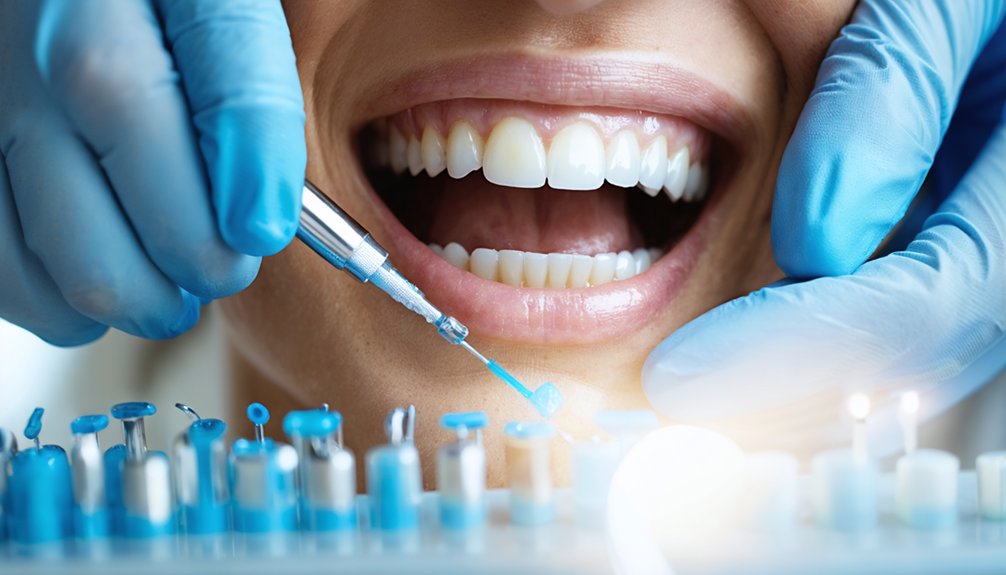
Professional in-office whitening treatments utilize high-concentration bleaching agents—hydrogen peroxide at 25%-40% or professional-grade carbamide peroxide—that penetrate enamel far more effectively than over-the-counter products containing only 3%-20%.
You’ll experience dramatic results in a single session, with teeth potentially lightening several shades in approximately one to two hours through multiple gel applications and light activation cycles. This concentrated approach specifically targets the deep-set discoloration characteristic of genetic tooth staining, delivering visible improvements that standard whitening methods can’t achieve.
High-Concentration Bleaching Agents
For genetic tooth discoloration that resists over-the-counter treatments, high-concentration bleaching agents administered in a professional setting deliver the most dramatic results. You’ll encounter hydrogen peroxide formulations ranging from 38% to 44%, with 40% Opalescence Pro being particularly effective for penetrating deep enamel stains. These concentrations require professional application, supervising patient safety throughout the 15-20 minute treatment sessions. Your dentist will use syringe-to-syringe mixing systems to guarantee fresh gel consistency and proper activation.
Alternatively, carbamide peroxide options at 30-45% concentration offer gentler treatment due to their 3:1 ratio combination with urea. These formulations include potassium nitrate to block sensitivity while mitigating adverse reactions. High water content—over 20%—prevents dehydration and shade relapse, maintaining your whitening results longer than traditional formulations.
Single-Session Treatment Results
In-office whitening delivers measurable improvements within 30-60 minutes, achieving what at-home treatments require weeks to accomplish. You’ll see results 14-280 times faster than alternative methods, with most patients achieving 5-8 shades lighter in a single visit.
Treatment duration directly impacts your scheduling flexibility. One 60-minute session typically produces outcomes that at-home kits need 2-4 weeks to match. Zoom Whitening averages 7-8 shades, while Opalescence Boost yields approximately four shades in comparable timeframes.
Color change metrics quantify your results objectively. Immediate ΔE values reach 5.92, considerably exceeding at-home’s 2.0. At six months, values increase to 7.20-7.68, though long-term differences between professional and supervised at-home methods narrow. Surface stains respond predictably, while genetic discoloration shows more variable outcomes depending on enamel characteristics.
Custom Take-Home Whitening Kits From Your Dentist
When genetic tooth discoloration resists over-the-counter products, custom take-home whitening kits from your dentist offer a clinically proven solution that combines professional-grade strength with the convenience of home use. Your dentist creates impressions of your teeth to fabricate trays with custom fit tray design, ensuring ideal gel contact and preventing leakage that causes gum irritation.
Professional gel formulations contain higher peroxide concentrations than store-bought alternatives, effectively penetrating deeper intrinsic stains caused by genetics, medications, or tobacco. You’ll wear these trays for a specified duration daily—typically one to two weeks—following your dentist’s personalized protocol based on your enamel condition and sensitivity levels.
This supervised approach delivers dramatic, uniform results while minimizing risks. You’ll achieve natural-looking whitening that lasts six to twelve months, making it a cost-effective long-term solution.
Porcelain Veneers For Severe Genetic Staining
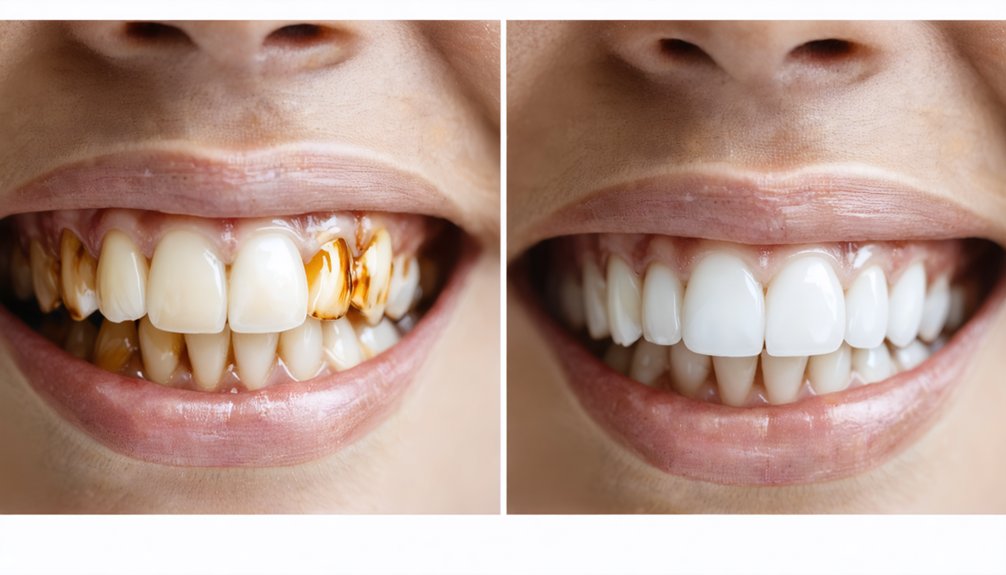
While custom whitening kits effectively treat many cases of genetic discoloration, some intrinsic stains—particularly those from fluorosis, tetracycline exposure, or congenital enamel defects—penetrate too deeply for bleaching agents to address. In these situations, porcelain veneers represent the most definitive restorative procedures available.
These thin ceramic shells permanently cover resistant stains by bonding directly to your tooth surface. You’ll achieve immediate, predictable results through custom shade matching that mimics natural enamel translucency. Unlike whitening treatments, veneers simultaneously correct additional imperfections like chips or gaps.
With proper care, your veneers will last 10-15 years while resisting future staining from coffee or tobacco. Studies demonstrate 100% survival rates for high-quality zirconia veneers over five years, with exceptional patient satisfaction. This permanence eliminates ongoing whitening maintenance entirely.
Dental Bonding As A Color-Correcting Solution
Dental bonding offers a conservative middle-ground approach for genetic discoloration that persists after whitening but doesn’t warrant the expense of veneers. Your dentist applies color-matched composite resin directly to affected teeth, masking stains from medications or trauma that resist traditional whitening methods.
The tooth surface preparation involves minimal intervention—roughening the enamel and applying conditioning gel without removing significant tooth structure. Your dentist sculpts the composite resin application to match adjacent teeth, then hardens it with a curing light. You’ll leave with immediate results in a single appointment.
Expect bonding to last 5-10 years with proper maintenance. While less durable than porcelain alternatives and more prone to discoloration over time, it’s reversible and cost-effective. You’ll need consistent oral hygiene and biannual dental visits to maximize longevity.
Crown Placement For Comprehensive Coverage
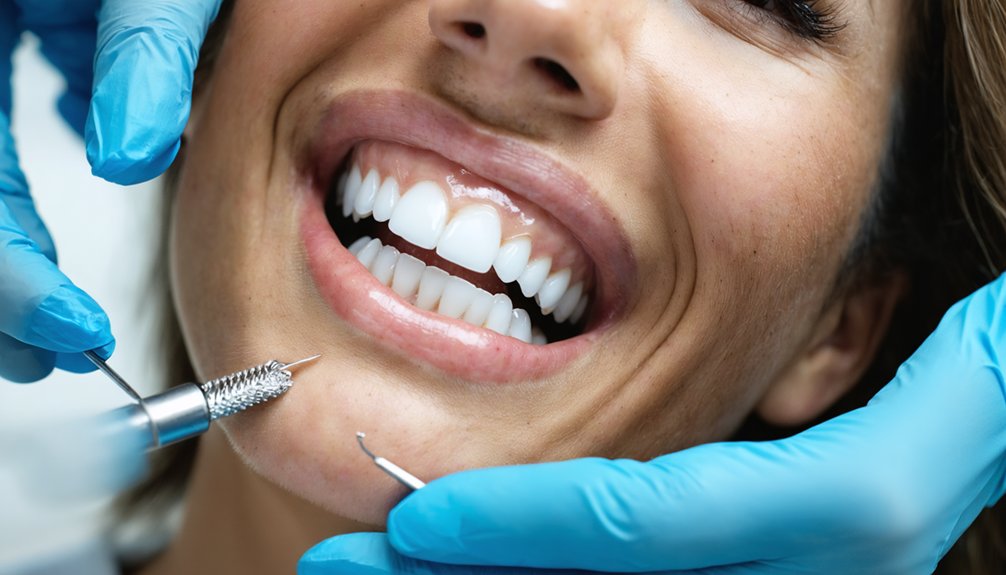
For severe genetic discoloration that resists all other treatments, crowns provide the most exhaustive solution by encasing the entire visible tooth structure. Your dentist removes a precise layer of enamel, creates digital impressions, and custom-fabricates a restoration that completely masks intrinsic stains from conditions like dentinogenesis imperfecta or amelogenesis imperfecta.
Crown placement addresses genetic discoloration through:
- Complete coverage hiding grayish, yellow-brown, or severe intrinsic stains
- Structural reinforcement for brittle teeth with hereditary enamel defects
- Permanent aesthetic correction when whitening proves ineffective
- Strategic crown material selection matching adjacent teeth precisely
- Long crown lifetime expectations with proper hygiene maintenance
You’ll wear a temporary restoration during fabrication, then receive your permanent crown within weeks. This dual-purpose treatment delivers both cosmetic correction and functional strength for compromised tooth structure.
Daily Care Strategies To Preserve Your Results
After investing in professional whitening treatments for genetic discoloration, you’ll need strategic daily habits to maintain your enhanced smile. Your whitening maintenance procedures should include brushing twice daily with fluoride toothpaste, daily flossing, and antibacterial mouthwash to prevent plaque-related staining.
Implement lifestyle enhancement tips by consuming staining beverages like coffee and red wine through a straw, then rinsing immediately with water. Cut back on tobacco use to prevent yellow-brown discoloration from undermining your results. Wait one hour before brushing after acidic foods to protect softened enamel.
Schedule regular dental check-ups for early intervention when issues arise. Use over-the-counter whitening agents cautiously and only as your dentist recommends. These proactive strategies give you control over maintaining your brightness long-term while preventing genetic discoloration from reappearing.
Frequently Asked Questions
Can Genetic Tooth Discoloration Be Passed Down to My Children?
Yes, you can pass genetic tooth discoloration to your children through hereditary teeth structure and genetic tooth enamel composition. However, modern whitening treatments offer effective solutions, and you’ll have options to help them achieve brighter smiles regardless of inheritance.
Does Insurance Cover Whitening Treatments for Hereditary Tooth Discoloration?
Most dental insurance coverage classifies hereditary discoloration as cosmetic, denying claims. However, you can secure approval by documenting medical necessity through your dentist’s referral. Treatment cost considerations enhance substantially when using FSA/HSA accounts for tax advantages.
At What Age Should Genetic Tooth Discoloration Be Treated?
You should seek treatment by your child’s first birthday or when their first tooth erupts. The importance of early intervention can’t be overstated—it prevents structural damage and enables the best time to seek treatment for ideal outcomes.
Are There Specific Toothpastes Designed for Genetically Discolored Teeth?
No targeted oral hygiene products exist specifically for genetically discolored teeth. However, you’ll find whitening strategies for sensitive teeth using remineralizing formulas with hydroxyapatite or ACP that strengthen enamel while gently addressing surface discoloration under your control.
How Long Do Whitening Results Last for Genetic Stains?
You’ll maintain professional whitening results for 1-3 years with genetic stains. Professional whitening frequency depends on your tooth sensitivity management and lifestyle habits. Touch-ups every 6-12 months preserve brightness while minimizing sensitivity, giving you lasting control over discoloration.