You’ll achieve the ideal at-home teeth brightening by using whitening strips containing 3-10% hydrogen peroxide, which deliver results comparable to professional treatments with 1-2 shade improvements. Brush with baking soda two to three times weekly to remove surface stains through mild abrasive action, showing significant shade reductions by week six. Consider oil pulling as a complementary practice for bacterial reduction and plaque control. Always schedule a dental checkup before starting any whitening regimen to confirm your oral health status and discover additional evidence-based strategies for perfect results.
Key Takeaways
- Use OTC whitening strips with 3-10% peroxide twice daily for best at-home results comparable to professional treatments.
- Brush with baking soda two to three times weekly to remove surface stains without damaging enamel.
- Schedule a dental checkup before whitening to confirm suitability and avoid damaging sensitive or compromised teeth.
- Supplement baking soda with fluoride toothpaste since it lacks cavity-prevention properties essential for oral health.
- Expect gradual results over weeks with consistent application; most at-home methods improve teeth by 1-2 shades.
Use Natural Whitening Remedies With Baking Soda
Baking soda removes extrinsic tooth discoloration through mild abrasive action that scrubs away surface stains from coffee, tea, red wine, and tobacco without penetrating deep into tooth structure.
Clinical studies demonstrate significant whitening outcomes: you’ll see shade reductions of 1.82 at week four and 2.57 at week six (p<0.0001) when using baking soda-peroxide dentifrices. You should brush twice daily for ideal results, though two to three times weekly prevents enamel damage.
Baking soda dentifrices outperform higher-abrasivity alternatives in stain removal while remaining gentler than activated charcoal. However, you must avoid excessive use to prevent enamel wear and increased sensitivity. Monitor enamel health regularly, discontinue use if sensitivity develops, and supplement with fluoride toothpaste since baking soda lacks cavity-prevention properties.
These remedies address only surface discoloration, not internal stains.
Try Oil Pulling For Daily Oral Care
While oil pulling has gained popularity as a natural oral care practice, scientific evidence doesn’t support its effectiveness for teeth whitening. In vitro studies demonstrate that coconut and sunflower oils produce negligible shade changes compared to hydrogen peroxide’s 3-7 shade value increase. However, oil pulling may offer other oral health benefits.
Research indicates potential bacterial reduction, with studies showing decreased Streptococcus mutans counts within two weeks of daily practice. Some trials demonstrate coconut oil’s similarity to chlorhexidine mouthwash for plaque control in specific populations. While evidence quality remains mixed, oil pulling may contribute to bad breath reduction through bacterial management.
For teeth sensitivity management and extensive oral care, consider oil pulling as a complementary practice alongside evidence-based whitening treatments, not a standalone solution for tooth brightening.
Apply Over-The-Counter Whitening Products
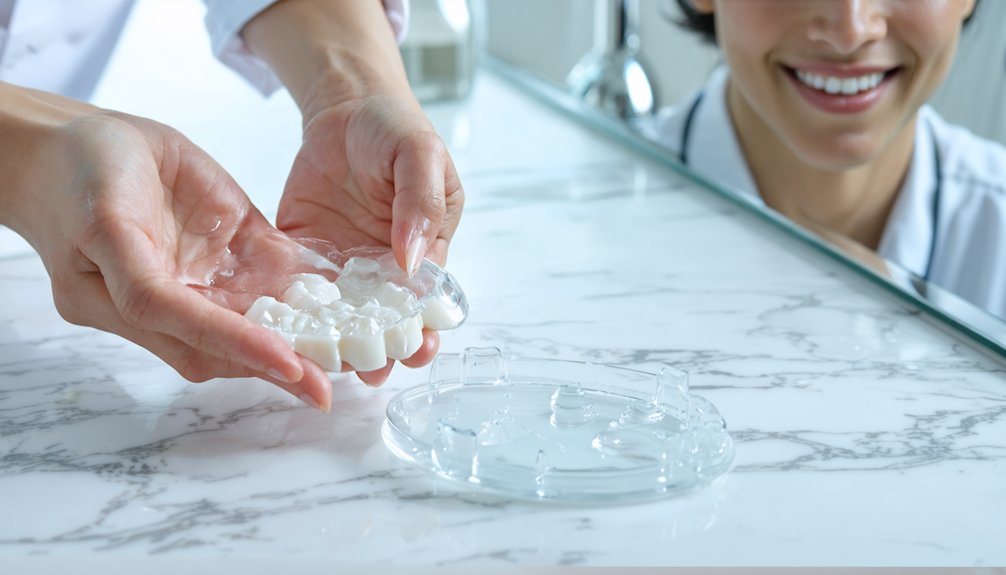
Over-the-counter whitening products offer a more direct approach to tooth lightening than supplementary oral care practices. Whitening strips represent the most effective OTC option, delivering results comparable to dentist-supervised carbamide peroxide treatments for surface stains. These products contain hydrogen peroxide or carbamide peroxide at 3-10% concentrations—lower than professional 25-40% formulations, limiting deep stain removal capability.
Strips outperform dentifrices and rinses through superior enamel contact time and peroxide concentration. However, OTC products can’t address intrinsic discoloration from medication, trauma, or aging. You’ll need consistent application over extended periods for 1-2 shade improvements. Monitor sensitive teeth during treatment, as peroxide causes mild enamel dissolution.
Prioritize dental checkups before beginning any whitening regimen to confirm suitability based on your oral health status and minimize tissue damage risks.
Frequently Asked Questions
How Long Does It Take to See Whitening Results at Home?
Like watching a sunrise, you’ll notice a gradual whitening over time, typically seeing a noticeable difference in weeks two through four. Consistent twice-daily application optimizes your results, giving you control over your treatment timeline.
Can Teeth Whitening Cause Permanent Damage to Tooth Enamel?
No, professional whitening won’t permanently damage your enamel when used correctly. However, overuse elevates enamel erosion risks and worsens tooth sensitivity concerns. You’ll protect your teeth by following prescribed protocols and avoiding excessive at-home treatments without professional guidance.
What Foods Should I Avoid While Whitening My Teeth?
you’ll need to avoid acidic foods and avoid staining beverages like coffee, red wine, and dark sodas. Additionally, eliminate highly pigmented items including berries, tomato sauce, and artificial dyes for ideal whitening results.
Are Home Whitening Methods Safe for People With Dental Work?
Home whitening carries risks if you’ve got dental work. Effects on dental restorations include chemical reactions and inconsistent results. The impact on sensitive teeth intensifies near crowns or fillings. You’ll need professional evaluation before proceeding safely.
How Often Should I Whiten My Teeth to Maintain Results?
Like maintaining a garden’s bloom, you’ll need consistent frequency every 6–12 months for professional treatments. Using proper technique with dentist-guided protocols prevents enamel damage while you control long-term outcomes through evidence-based maintenance schedules.