Match your whitening method to your stain severity: use OTC strips for mild extrinsic discoloration, custom carbamide peroxide trays for moderate cases, and professional 15-43% hydrogen peroxide treatments for severe or intrinsic stains. You’ll minimize sensitivity by applying gingival barriers, using custom-fitted trays, and selecting lower-strength agents with desensitizing gels. Follow manufacturer-specified wear times, complete minimum 7-day consecutive treatments, and schedule touch-ups every 6-12 months. The following evidence-based strategies will help you achieve ideal results while protecting your oral health.
Key Takeaways
- Choose whitening methods based on stain severity: OTC products for mild stains, professional treatments for severe or intrinsic discoloration.
- Professional whitening delivers faster results (8 shades in 60-90 minutes) but costs more than gradual at-home treatments.
- Minimize sensitivity by using custom trays, applying protective gum barriers, and selecting lower-strength peroxide formulations.
- Complete minimum 7 consecutive daily treatments without skipping; tetracycline stains require 3-4 months of nightly application.
- Maintain results with touch-ups every 6-12 months, avoid staining beverages, and brush twice daily with whitening toothpaste.
Choose the Right Whitening Method Based on Your Stain Severity
Understanding your stain type and severity determines which whitening method will deliver ideal results while minimizing complications. For mild extrinsic stains, you’ll achieve 1-2 shades lighter using OTC strips over 2-4 weeks or whitening toothpaste for maintenance.
Moderate discoloration requires custom take-home trays with carbamide peroxide, delivering 1-6 shades in 1-2 weeks under dentist supervision. Severe or intrinsic stains demand professional in-office treatments with 15-43% hydrogen peroxide, providing 3-8 shades improvement in 1-2 hours.
When you customize home whitening treatments, you’ll balance effectiveness with sensitivity management. Choose appropriate whitening agents by consulting your dentist about stain origin—tetracycline requires 3-4 months nightly application, while brown fluorosis responds better than white fluorosis. Microabrasion supplements chemical bleaching for stubborn extrinsic discoloration.
Understand the Difference Between Professional and At-Home Treatments
Two distinct whitening pathways—professional in-office treatments and at-home systems—differ fundamentally in peroxide concentration, application technique, and clinical outcomes. Professional treatments utilize 25-40% hydrogen peroxide, delivering 8 shades lighter within 60-90 minutes while mitigating tooth discoloration causes from aging, medications, and trauma. A 2023 meta-analysis confirms statistical superiority (p < 0.01).
At-home systems contain 3-10% peroxide, requiring weeks of consistent application for 2-6 shades’ improvement.
You’ll achieve optimal results by optimizing treatment timeline based on stain severity. Professional methods penetrate deep gray-brown discoloration and last 12-36 months, while at-home options address surface yellowing with 6-12 month longevity. Dentist supervision reduces sensitivity risks and guarantees even application. Professional treatments cost $300+ versus $50 for at-home kits, though multiple purchases often become necessary for comparable outcomes.
Protect Your Gums and Minimize Tooth Sensitivity
While whitening agents effectively brighten enamel, they’ll simultaneously expose vulnerable soft tissues to chemical irritation if you don’t implement protective measures. Sensitivity reduction techniques and gum barrier maintenance demand strategic planning before treatment begins.
Essential Protection Strategies:
- Apply professional gingival barriers that dentists cure under light, creating hardened seals preventing gel contact with soft tissues
- Use custom-fitted trays molded precisely to your dental anatomy, eliminating gel overflow onto gums
- Select lower-strength agents (10-16% vs. 35% hydrogen peroxide) to reduce irritation while maintaining gradual whitening results
- Coat gum lines with petroleum jelly at home, forming a protective barrier against accidental gel migration
- Apply desensitizing gels pre-treatment containing potassium nitrate or fluoride to numb vulnerable areas
Follow manufacturer instructions strictly regarding application time and gel quantity to prevent overexposure.
Follow Proper Application Guidelines for Maximum Results
Following evidence-based application protocols guarantees peak whitening efficacy while minimizing adverse effects. You’ll achieve superior results by adhering to manufacturer-specified wear times, protecting soft tissues before gel application, and maintaining a disciplined treatment schedule.
Consistent compliance with these clinical parameters directly correlates with treatment success and reduced risk of gingival irritation or dental hypersensitivity.
Respect Recommended Wear Times
Understanding proper wear times for whitening products directly impacts both treatment effectiveness and oral health safety. You’ll achieve ideal results by following concentration-specific guidelines rather than extending sessions beyond recommendations.
Concentration-Based Wear Time Protocol:
- High concentration (35-45% carbamide peroxide): 15-60 minutes daily for controlled whitening
- Medium concentration (15-20% carbamide peroxide): 2-6 hours daily depending on tooth sensitivity
- Low concentration (10% carbamide peroxide): 8-10 hours or overnight application
- Hydrogen peroxide gels (6%): 30 minutes once daily maximum
- First-time users: Begin with 30-60 minutes, implementing gradual application schedule increases
Wear time adjustment becomes necessary if sensitivity develops. You’ll notice changes within 3-4 applications when respecting manufacturer timelines. Complete initial treatment cycles span 10-14 days, with maintenance requiring monthly single-day applications.
Protect Gums Before Treatment
Protecting gum tissue from whitening agents prevents chemical burns and soft tissue damage that compromise treatment outcomes. Apply light-cured gingival barriers along the gum line—this resin hardens under curing light to form a protective seal that blocks high-concentration peroxide gel contact.
Alternatively, petroleum jelly creates a slippery barrier that minimizes chemical burns from gel overflow. You’ll achieve ideal protection with custom-fitted trays molded precisely to your dental anatomy, preventing spillover that causes irritation. Fill trays only to recommended levels—excess gel leaks onto soft tissues, triggering sensitivity and burns.
Keep cotton swabs available to wipe leaked gel immediately upon contact. Following these protocols will reduce gum irritation while maximizing whitening efficacy. Custom trays combined with barrier application provide clinically proven tissue protection during peroxide exposure.
Maintain Consistent Application Schedule
Consistent daily application of whitening gel determines treatment success more than any other factor in your at-home regimen. To understand application timeline effectively, recognize that concentration dictates duration: 35% carbamide peroxide requires 20-30 minutes, while 10% formulations work overnight for 8-10 hours. Follow whitening regiment diligently by treating once daily for seven consecutive days to achieve ideal results.
Essential scheduling protocols:
- Apply gel at the same time daily to establish routine adherence
- Complete minimum seven consecutive treatments without skipping days
- Space full whitening courses six months apart for enamel remineralization
- Extend treatment duration to 3-4 months for tetracycline staining
- Limit sessions to once per day regardless of concentration strength
Deviation from prescribed schedules compromises whitening efficacy and potentially increases sensitivity complications.
Maintain Your Whitening Results With Consistent Follow-Up Care
Whitening treatments produce ideal results that gradually fade over time, requiring consistent follow-up care to extend their longevity from six months to two years.
You’ll need to implement a thorough maintenance strategy that includes scheduling periodic touch-up treatments every six months to one and a half years, depending on your initial whitening method.
Daily preventative measures—such as avoiding stain-causing beverages like coffee and red wine, and brushing twice daily with whitening toothpaste—are essential for preserving your bright smile between professional interventions.
Schedule Regular Touch-Up Treatments
Once you’ve achieved your desired shade, maintaining those results requires strategic planning for periodic touch-up treatments. Professional in-office procedures can be safely repeated every six months, though annual sessions suffice for most patients.
At-home maintenance kits offer treatment schedule flexibility, with dentist-provided systems recommended every 6-12 months and custom trays applied every 4-6 months as needed.
Your personalized regimen should account for:
- Lifestyle factors including coffee, tea, or tobacco consumption that accelerate discoloration
- Enamel sensitivity levels requiring extended intervals between frequent whitening cycles
- Dietary habits and oral hygiene practices affecting stain accumulation
- Initial treatment type determining appropriate maintenance protocols
- Visual indicators such as dullness or yellowing signaling intervention timing
Consult your dentist to establish evidence-based intervals that preserve enamel integrity while sustaining ideal aesthetic outcomes.
Avoid Stain-Causing Foods Daily
Strategic maintenance extends beyond scheduling treatments—your dietary choices directly impact whitening longevity. Stay away from staining snacks like berries, beets, and dark-colored desserts containing chromogens and tannins that bind to enamel.
Coffee, tea, and dark colas rank among the most persistent staining culprits due to their tannin content and acidity levels. Red wine presents particular challenges—its chromogens and acids erode enamel while embedding pigments deeply into tooth structure. Moderate consumption of staining beverages by using straws or rinsing immediately afterward.
Tomato-based sauces, balsamic vinegar, soy sauce, and curry-containing dishes penetrate porous enamel surfaces. Your teeth remain especially vulnerable 48 hours post-whitening when enamel porosity peaks. Control exposure to acidic citrus fruits and pigmented condiments.
Implement strategic dietary modifications to preserve treatment investments and maintain ideal whitening results.
Use Whitening Toothpaste Regularly
While professional whitening treatments deliver dramatic initial results, maintaining those outcomes requires incorporating whitening toothpaste into your daily oral hygiene routine. To maximize whitening toothpaste use, select formulations containing silicon dioxide or optical colorants, which demonstrate superior efficacy in clinical studies.
When you regularly brush with whitening toothpaste, you’ll achieve 1-2 shade improvements over several weeks through mechanical stain removal.
Key implementation strategies:
- Brush twice daily for 2-6 months of sustained results
- Choose enzyme-based formulas (papain, bromelain) to minimize enamel roughness
- Avoid charcoal toothpastes that increase surface roughness by 66%
- Expect ideal response with yellowish teeth versus grayish discoloration
- Use whitening toothpaste as maintenance following professional treatments
Consistent application preserves your investment in professional whitening while preventing surface stain accumulation.
Consider Peroxide Concentration Levels for Safety and Effectiveness
Professional applications utilizing 15-35% hydrogen peroxide deliver faster initial results but increase sensitivity risks up to 80% of users. Match concentration to your stain severity and enamel thickness—higher concentrations accelerate whitening but may cause quicker color reversal.
The ADA restricts over-the-counter products to 10% peroxide concentration, while the FDA confirms 3% hydrogen peroxide as safe. Understanding peroxide concentration risks enables informed treatment selection.
Consult Your Dentist Before Starting Any Whitening Treatment
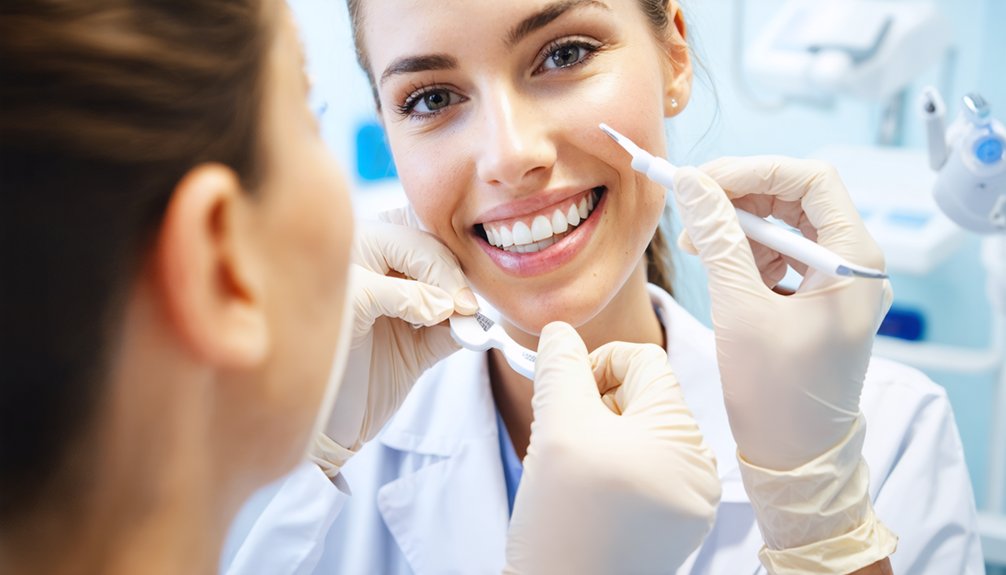
Before applying any whitening product, schedule an extensive dental examination to identify potential contraindications that could compromise treatment outcomes or exacerbate existing conditions. Expert consultation guarantees your enamel thickness, gum health, and overall oral condition support safe whitening procedures. Your dentist will determine whether surface stains or deeper discoloration require specific treatment approaches.
A thorough pre-treatment dental exam provides:
- Safety assessment of existing decay, infections, or gum disease requiring resolution before whitening
- Product recommendations for ADA-accepted formulations matching your dental needs
- Cause identification of staining from coffee, smoking, medications, or aging
- Professional cleaning to remove plaque and tartar that diminish whitening effectiveness
- Risk prevention through supervised application of bleaching agents protecting enamel integrity
This preventative approach integrates whitening into your broader oral health strategy while maximizing results.
Frequently Asked Questions
How Long Do Teeth Whitening Results Typically Last?
The expected length of whitening effects ranges from several months to three years, depending on your treatment choice. You’ll maximize longevity through routine maintenance requirements including consistent oral hygiene, professional cleanings, and limiting staining substances like coffee and tobacco.
What Causes Teeth to Become Stained or Discolored?
Your teeth become discolored through extrinsic factors like food staining from coffee, tea, and berries, plus tobacco use, while intrinsic causes include aging, medications, and excessive fluoride exposure. You’ll prevent staining by maintaining proper oral hygiene and avoiding these risk factors.
Are There Any Foods to Avoid After Whitening Treatments?
Ironically, your newly brightened smile needs protection from everyday favorites. You’ll want to avoid abrasive foods and limit dark colored beverages for 48 hours post-treatment, as enamel remains porous and susceptible to staining during this critical period.
Can Whitening Damage Tooth Enamel or Existing Dental Work?
Yes, overuse causes enamel erosion and potential tooth sensitivity in up to 60% of users. Whitening agents don’t affect existing dental work like crowns or fillings, creating uneven coloring. You’ll need professional supervision to prevent irreversible damage.
How Much Does Professional Teeth Whitening Cost on Average?
Professional teeth whitening’s average cost ranges from $500 to $1,000 for in-office treatments, while at-home kits cost $150 to $400. You’ll find many dental offices offer payment plans to help manage these preventative cosmetic investments affordably.