You can brighten stained teeth at home using evidence-based methods like baking soda dentifrices, which reduce shade scores greatly within four to six weeks through mild abrasive action. Hydrogen peroxide rinses (diluted to 1.5%) offer oxidative whitening after two weeks of daily use, while coconut oil pulling provides modest bacterial reduction benefits. However, you’ll need to exercise caution with each approach—baking soda and activated charcoal can wear enamel with overuse, and apple cider vinegar causes substantial erosion that paradoxically increases discoloration. The thorough guide below explains proper application protocols and safety considerations.
Key Takeaways
- Baking soda toothpaste removes surface stains effectively when used twice daily, reducing discoloration significantly within four to six weeks.
- Hydrogen peroxide rinses whiten teeth through oxidation; dilute 3% solutions equally with water and limit contact to one minute.
- Coconut oil pulling reduces plaque bacteria but offers minimal whitening effects; use as supplementary hygiene rather than primary treatment.
- Activated charcoal provides minor stain removal through abrasion; apply 2-3 times weekly maximum to prevent irreversible enamel damage.
- Avoid apple cider vinegar despite stain-removal claims, as its acidity causes substantial enamel erosion and increases long-term discoloration.
Harness the Power of Baking Soda for Natural Whitening
Baking soda dentifrices demonstrate clinically significant whitening effects, reducing mean shade scores by 1.82 at four weeks and 2.57 at six weeks (p < 0.0001) compared to controls. The whitening effectiveness stems from mildly abrasive properties that mechanically remove extrinsic stains from coffee, tea, and wine without deep color alteration. You’ll achieve superior stain reduction versus negative controls when brushing twice daily.
However, you must exercise caution. The abrasive properties that enable stain removal can wear enamel and increase sensitivity with overuse. Most baking soda formulations lack fluoride, eliminating essential cavity prevention benefits. While clinical evidence supports safety for controlled use, baking soda ranks lower than hydrogen peroxide for noticeable whitening. You’ll need continued application beyond six weeks for ideal results, yielding additional shade reductions of 0.88.
Try Coconut Oil Pulling for a Brighter Smile
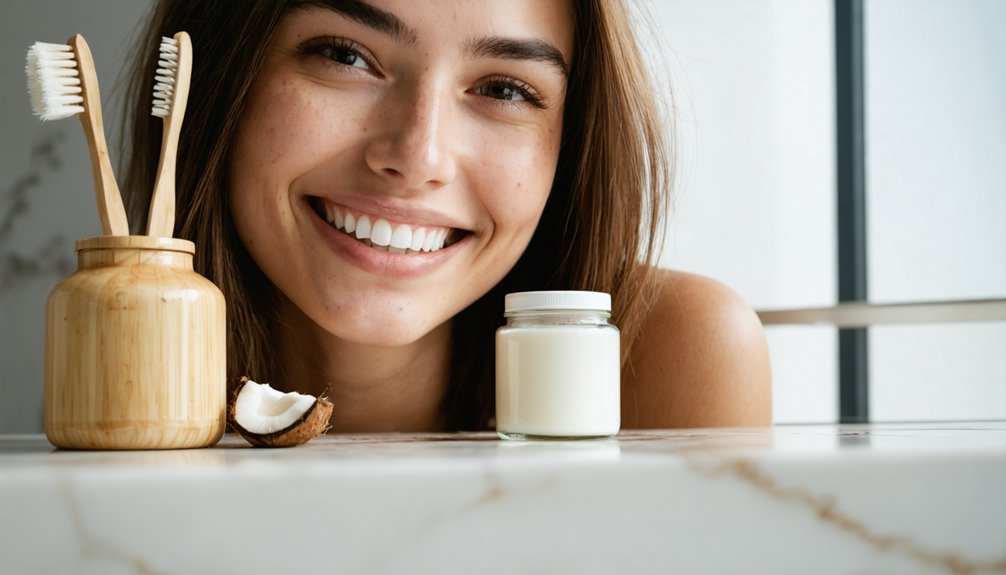
While baking soda demonstrates measurable whitening effects through mechanical abrasion, coconut oil pulling represents an alternative approach rooted in ancient Ayurvedic medicine that claims to brighten teeth through different mechanisms. This daily practice involves swishing 10-20ml of coconut oil for 15-20 minutes before spitting it into trash.
The oil composition—particularly lauric acid—targets plaque-forming bacteria like Streptococcus mutans, potentially reducing stains indirectly through improved oral hygiene.
However, you should understand the evidence limitations. In vitro studies show no whitening effect, though one RCT reported reduced staining versus chlorhexidine (p=0.0002). The time-consuming protocol yields modest benefits primarily for bacterial reduction, not dramatic whitening. You’ll achieve superior results through professional treatments. Consider oil pulling as supplementary oral hygiene rather than your primary whitening method, and always maintain standard brushing and flossing protocols.
Use Apple Cider Vinegar With Caution for Stain Removal
Though apple cider vinegar‘s acetic acid may remove surface stains through its low pH and bleaching properties, you’ll face significant enamel erosion risks that contradict safe whitening practices. A 2022 study demonstrated substantial enamel damage on 190 permanent teeth exposed to apple cider vinegar. This erosion exposes underlying dentin, paradoxically increasing discoloration over time.
If you choose this method despite clinical warnings, use in moderation with these precautions:
- Dilute at 2:3 ratio (vinegar to water) to reduce acidity
- Limit application to 1-2 minutes maximum
- Rinse thoroughly immediately after use
- Never exceed once daily for one month
Most dental professionals advise against this approach. Consult dental professional before attempting, as eroded enamel increases cavity susceptibility and temperature sensitivity while potentially interacting with medications.
Brighten Teeth With Hydrogen Peroxide Rinses
Hydrogen peroxide functions as a dental bleaching agent through oxidative mechanisms that break down chromophore molecules responsible for tooth discoloration. You’ll find concentrations ranging from 1.5% in commercial mouthwashes to 6% for at-home applications, with whitening effectiveness demonstrated after just two weeks of daily use.
Hydrogen peroxide whitens teeth by oxidizing stain molecules, with concentrations from 1.5% to 6% showing results within two weeks of consistent use.
However, long term safety concerns require careful consideration—prolonged exposure increases risks of enamel erosion and heightened decay vulnerability.
You should dilute 3% solutions with equal parts water, limiting contact to one minute maximum. Don’t exceed 6% concentrations without professional supervision. The FDA recognizes hydrogen peroxide‘s antiseptic properties but hasn’t approved it specifically for whitening purposes.
If you’re experiencing tooth sensitivity, gum disease, or have active cavities, consult your dentist before initiating treatment. Select products bearing the ADA Seal for verified safety standards.
Activated Charcoal as a Natural Bleaching Agent
Activated charcoal’s highly porous structure creates a mildly abrasive texture that mechanically scrubs extrinsic stains from your enamel surface, though it can’t penetrate deeper layers to bleach intrinsic discoloration.
While manufacturers promote it as a natural whitening solution, clinical evidence demonstrates only minor, unsatisfactory results comparable to regular toothpaste—not the chemical bleaching agents like carbamide peroxide.
If you’re considering this method, you’ll need to understand both its limited mechanism of action and the significant safety concerns documented by dental researchers.
How Charcoal Works
Many individuals seeking natural alternatives turn to activated charcoal for teeth whitening, though the mechanism differs substantially from conventional bleaching agents. You’re utilizing a product processed at high temperatures to create improved adsorption properties through microscopic pores. The porous structure attracts surface stains through:
- Ionic binding: Negatively charged particles trap positively charged toxins and pigments
- Mechanical removal: Physical abrasion lifts extrinsic discoloration from coffee, tea, and wine
- Surface-level action: Limited to external stains rather than intrinsic tooth discoloration
- Gradual results: Perceptible changes emerge within 7-14 days, plateauing after 30 days
However, detailed scientific evidence remains insufficient according to the American Dental Association. You’ll achieve inferior results compared to hydrogen peroxide-based treatments (p < 0.01), with effectiveness restricted to superficial staining only.
Safe Application Methods
Understanding charcoal’s mechanism enables you to implement proper application protocols that minimize risk while optimizing surface-level stain removal. Effective application methods require grinding 1-2 activated charcoal tablets into fine powder, then mixing with minimal water to achieve paste consistency.
Wet your toothbrush slightly before applying a small amount, using gentle circular motions for 1-2 minutes maximum. Proper brushing techniques involve dabbing or tapping rather than vigorous rubbing to reduce abrasive enamel damage. Leave the paste on teeth for three minutes to bind stains before rinsing thoroughly.
Limit application to 2-3 times weekly—never daily—to prevent irreversible enamel wear. Follow each session with fluoride toothpaste to restore protective mineralization. Consult your dentist before beginning treatment, particularly if you have compromised enamel.
Eat Crunchy Fruits and Vegetables for Natural Cleaning
While chemical whitening treatments remain prevalent, incorporating specific crunchy fruits and vegetables into your diet provides a mechanical approach to stain reduction through natural abrasion and enzymatic activity.
A strategic crunchy veggie rotation delivers ideal results:
- Apples and strawberries: Malic acid dissolves surface discoloration while fibrous texture mechanically removes debris
- Carrots: Beta-carotene converts to vitamin A, strengthening enamel integrity and preventing decay
- Celery: Low-calorie option providing bacterial clearance through vigorous mastication
- Leafy greens: Folic acid supports gum health while chlorophyll neutralizes odor-causing compounds
Consume raw vegetables one to two times daily for maximum efficacy. Avoid starch based cleansers that compromise results. Monitor enamel sensitivity—excessive acidic fruit consumption requires moderation. This evidence-based intervention complements professional treatments while maintaining dietary control.
Stay Hydrated to Prevent Stain Buildup
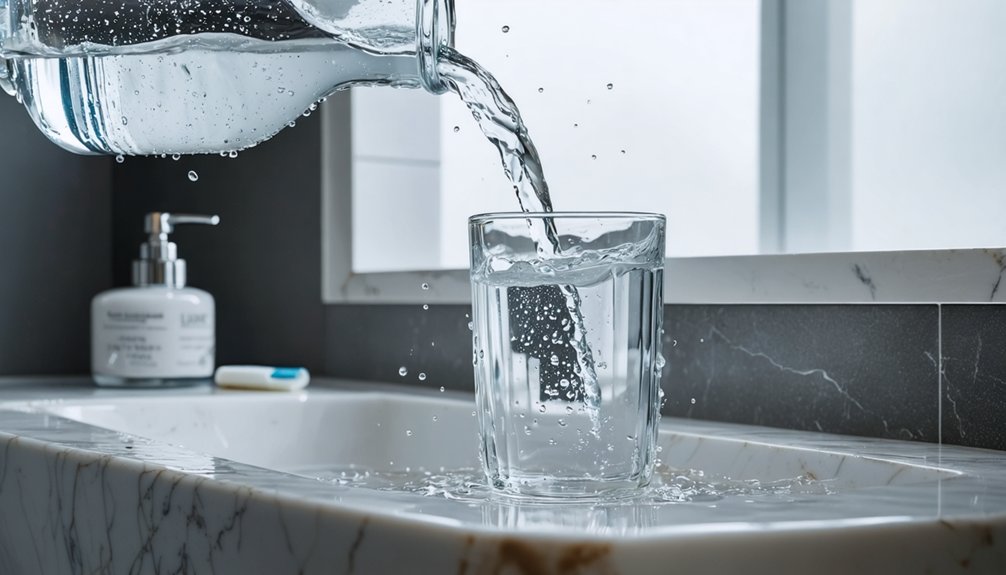
Beyond dietary modifications that mechanically remove surface stains, maintaining adequate hydration represents a fundamental yet frequently overlooked strategy for preventing discoloration accumulation. When you drink water consistently, you’ll notice it boosts hydration levels that directly combat dry mouth—a condition that increases plaque retention and subsequent staining.
Water promotes saliva production, which neutralizes acid-producing bacteria and rinses pigmented particles from coffee, tea, and wine before they adhere to enamel. You should prioritize fluoridated water specifically, as it facilitates remineralization while simultaneously diluting chromogenic compounds. Clinical evidence demonstrates that dehydration reduces salivary flow rates, creating an environment conducive to both bacterial proliferation and stain accumulation.
Implement regular water consumption throughout your day, particularly after consuming stain-causing beverages, to establish a protective barrier against discoloration progression.
Incorporate High-Fiber Foods Into Your Diet
When you consume high-fiber foods, their fibrous texture mechanically scrubs tooth surfaces through an abrasive action that functions similarly to natural brushing, effectively removing plaque accumulation and surface stains before they calcify into tartar. The chewing process stimulates saliva production, which neutralizes enamel-attacking acids while delivering antibacterial properties.
High-fiber foods naturally cleanse teeth through mechanical scrubbing while stimulating saliva that neutralizes acids and fights bacteria.
To reduce inflammation with fiber rich foods and boost metabolism through fiber, target these daily servings:
- 4 servings of wholegrains (minimum 3g fiber per slice)
- 5 servings of vegetables, beans, or legumes
- 2 servings of fruit containing malic acid (apples, strawberries)
- Cruciferous vegetables providing natural cleaning action
Substances in wholegrain bran layers inhibit oral bacteria growth, while pineapple’s bromelain enzyme breaks down plaque biofilm. However, immediately brushing after consuming acidic fruits may damage softened enamel—wait 30 minutes.
Rub Citrus Peels on Teeth for Extra Brightness
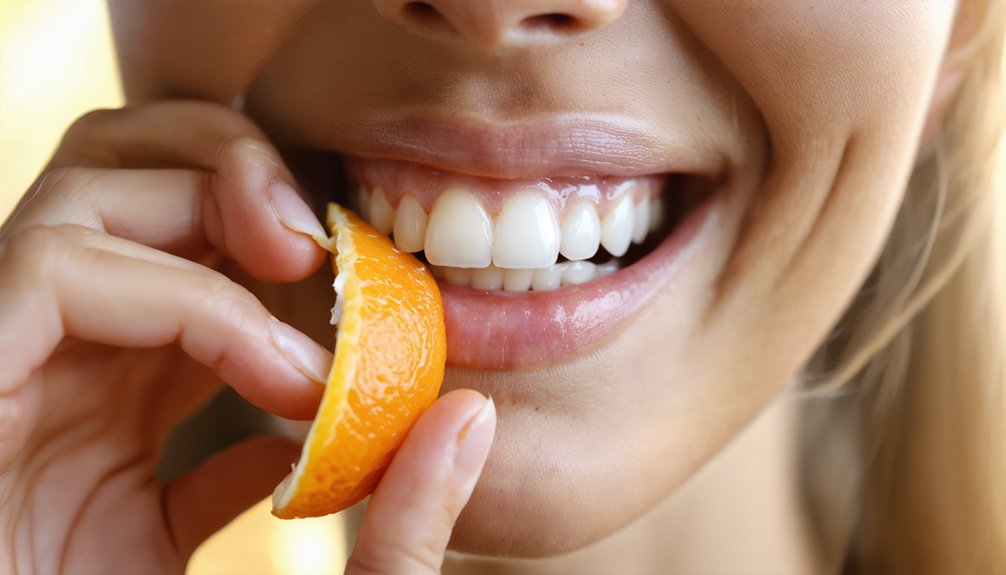
Citrus peel rubbing presents a dual-edged whitening method supported by research demonstrating 2.5% Citrus reticulata blanco peel extract gel applications increase tooth brightness (∆L*) and total color change (∆Eab*), with higher concentrations (5-10%) producing more substantial results.
The mechanism involves citric acid penetrating enamel to remove surface stains, while D-limonene provides antibacterial benefits against Streptococcus mutans. However, you’ll face significant enamel erosion risks with repeated applications, as the acidic pH progressively damages tooth structure. This method can’t substitute for long term enamel protection strategies or periodic professional cleanings.
While ethanolic citrus extracts demonstrate 8-13mm zones of inhibition against caries pathogens, they’re inferior to carbamide peroxide for extensive whitening. You should limit usage frequency and consider citrus peels strictly for short-term stain management rather than sustained whitening protocols.
Chew Sugar-Free Gum After Meals to Remove Debris
Chewing sugar-free gum for 20 minutes post-meal stimulates saliva flow, which neutralizes acids and physically removes surface debris that contributes to staining. The mechanical action, combined with xylitol’s bacteriostatic properties, reduces plaque accumulation by up to 21.58% and helps clear superficial discoloration from dietary sources like coffee or wine.
However, this method provides only temporary stain removal rather than true whitening, and evidence quality shows high heterogeneity (I²=86.0%), limiting definitive clinical recommendations.
Stimulates Saliva Production Naturally
How does your mouth naturally defend against staining and decay between brushing sessions? Chewing sugar-free gum activates salivary glands through mechanical compression, triggering protective mechanisms that complement your oral hygiene routines. Saliva flow increases within minutes, delivering calcium and phosphate to remineralize enamel while elevating pH above 5.5 to prevent acid erosion.
This evidence-based approach supports teeth whitening efforts through:
- Acid neutralization – Saliva counters bacterial acids and acidic foods, reducing enamel breakdown risk
- Mineral delivery – Enhanced flow transports remineralizing compounds directly to tooth surfaces
- Bacterial reduction – Xylitol-containing gums decrease cavity-causing bacteria populations
- Stain prevention – Increased salivary flow rinses pigmented particles before adhesion occurs
However, this method supplements—not replaces—brushing and flossing. Maintain thorough oral care protocols for ideal results.
Prevents Stain-Causing Buildup
Beyond stimulating protective saliva flow, mechanical mastication of sugar-free gum actively dislodges food particles and debris that would otherwise mineralize into discoloration. You’ll effectively remove residues from stain-promoting beverages like coffee and red wine before they adhere to enamel surfaces. The chewing action functions as a physical cleanser, clearing precursors that lead to visible discoloration buildup.
Studies demonstrate xylitol-containing formulations reduce plaque accumulation by up to 21.58% compared to non-sugar-free alternatives. This prevents discoloration buildup by eliminating the bacterial biofilm matrix where stains typically embed. You’re fundamentally extending brushing benefits when conventional cleaning isn’t accessible.
However, gum shouldn’t replace proper oral hygiene protocols. It serves as an adjunctive measure that removes unsightly stains between scheduled cleanings. Sugar-free formulations remain critical—sugar-containing variants feed decay-causing bacteria, counteracting any whitening benefits you’d otherwise achieve.
Frequently Asked Questions
How Long Does It Take to See Whitening Results From Home Remedies?
You’ll notice gradual whitening timeline results within one to three weeks of consistent home remedy use. However, you should expect potential discomfort from home remedies like sensitivity or irritation. Professional-grade treatments deliver more predictable, controlled outcomes than unregulated household substances.
Can These Natural Methods Work on Dental Crowns or Veneers?
Natural whitening methods won’t alter your crowns or veneers since these restorations can’t be chemically bleached. Effectiveness on dental restorations is zero, and potential risks with dental work include surface damage from abrasive treatments, requiring professional replacement for color matching.
Are Electric Toothbrushes Better Than Manual for Removing Stains at Home?
Electric toothbrushes demonstrate superior surface stain removal through specialized brush heads and oscillating mechanisms. However, whitening efficiency remains modest—they’ll polish extrinsic discoloration but won’t alter intrinsic tooth color. You’ll need professional treatments for significant brightening results.
Should I Avoid Coffee and Red Wine While Using Home Whitening Methods?
Like medieval alchemists guarding their elixirs, you’ll protect your whitening results by limiting consumption of coffee and red wine during treatment. Monitor staining effects closely, as post-bleaching enamel remains vulnerable to chromogen deposition for 48 hours minimum.
When Should I See a Dentist Instead of Trying Home Remedies?
See a dentist when dental issues require professional treatment—untreated cavities, gum disease, severe staining, or tooth sensitivity warrant expert evaluation. Home remedies may not be enough for underlying problems, restorations, or special health circumstances requiring customized care.