Prevent stains on your aging teeth by mastering proper flossing technique with a C-shape motion below the gum line, limiting acidic foods and beverages that erode porous enamel, and using straws for dark-colored drinks to minimize direct contact. You’ll need to eliminate tobacco products, which cause color changes exceeding 16 units on natural enamel, and maintain professional cleanings to remove chromogenic compounds trapped in microscopic surface irregularities. The detailed strategies below address both intrinsic and extrinsic discoloration through evidence-based protocols.
Key Takeaways
- Floss daily using C-shape technique around each tooth to remove plaque and prevent stains in areas brushes cannot reach.
- Limit acidic foods and beverages that erode enamel, and reduce sugar intake below 25 grams daily to protect teeth.
- Use straws for dark beverages and add milk to coffee or tea to minimize staining from tannins and chromogens.
- Eliminate tobacco products completely, as tar and nicotine cause severe discoloration that worsens with age-related enamel changes.
- Schedule regular professional cleanings to remove tartar and address microscopic irregularities where stain-causing compounds accumulate on aging enamel.
Master Your Daily Brushing and Flossing Routine
As teeth age, their enamel naturally thins and becomes more porous, increasing susceptibility to staining from dietary pigments and bacterial byproducts. Establishing consistent flossing habits prevents external stains that often originate between teeth where brushes can’t reach.
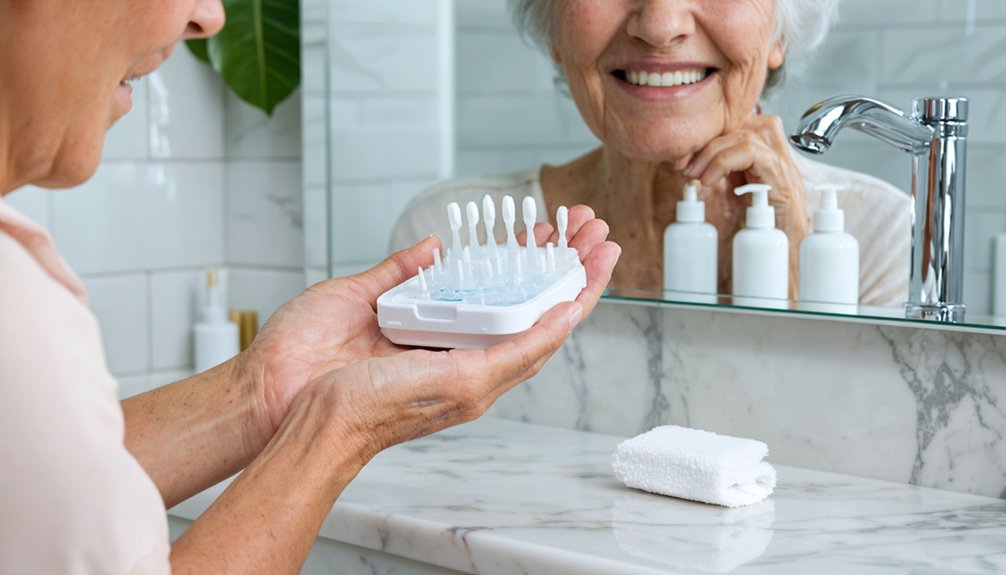
You’ll need proper floss technique: curve the strand into a C-shape around each tooth, sliding it below the gum line to disrupt plaque accumulation. Use 18 inches of floss, wrapping it around your middle fingers while maintaining 2-3 inches of working length between your thumbs and index fingers. Advance to a fresh section for each tooth gap, preventing bacterial transfer that accelerates staining.
Since brushing only covers 60% of tooth surfaces, daily flossing addresses the remaining areas where pigment-trapping plaque accumulates and tartar develops.
Adjust Your Diet to Protect Tooth Enamel
While mechanical cleaning removes surface debris, dietary choices directly influence enamel integrity and long-term stain resistance. Limit acidic foods—citrus, sodas, and wine—as they erode enamel with repeated exposure. Reduce sugar consumption below 25 grams daily; exceeding 50 grams increases cavities by 65%. Sugar feeds bacteria that produce enamel-degrading acid.
Incorporate calcium-rich foods like dairy, leafy greens, and fortified alternatives; three daily servings reduce cavities by 40%. Include phosphorus sources—fish, eggs, nuts—to rebuild protective enamel layers. Prioritize nutrient-dense snacks such as cheese over sticky candies that prolong sugar contact. Focus on fiber-rich foods that stimulate cleansing saliva flow.
Optimize meal timing by consuming acidic and sugary items during meals rather than continuous snacking, allowing your mouth adequate recovery time to restore pH balance and remineralize enamel.
Change How You Consume Stain-Causing Beverages
Beyond dietary modifications that strengthen enamel, strategic beverage consumption habits offer immediate protection against chromogen-induced discoloration on aging teeth. You’ll minimize direct contact by using straws for iced coffee, sodas, and dark-colored drinks, preventing pigment transfer directly onto enamel surfaces.
Adding milk to tea and coffee modifies the stain layer composition, reducing tannin adhesion. Consume beverages gradually while alternating sips with water to rinse away chromogens before they bond to weakened enamel. Limit your overall intake of high-stain beverages like red wine, black tea, and cola to reduce cumulative exposure to phosphoric acid and chromogens.
After consumption, wait thirty minutes before brushing acidic drinks, or chew sugar-free gum immediately to stimulate saliva production and facilitate stain compound removal from tooth surfaces.
Eliminate Tobacco Products From Your Life
Tobacco products accelerate dental discoloration through chemical compounds that penetrate compromised enamel structures common in aging teeth. Cessation eliminates recurring staining from tar and nicotine oxidation, which causes mean color differences of 16.22 units on natural teeth and 11.90 on restorations.
Quitting smoking stops tar and nicotine from continuously staining teeth, preventing color changes exceeding 16 units on natural enamel.
Address stress-related habits by implementing behavioral modifications alongside smoking cessation strategies.
Evidence-based elimination protocols include:
- Discuss nicotine replacement therapy with your healthcare provider to manage withdrawal while preventing ongoing dental pigmentation
- Recognize that smokeless tobacco produces more severe cementum staining, particularly problematic with age-related gingival recession
- Understand heated tobacco products still cause measurable discoloration (mean difference: 2.73)
- Monitor for white patches requiring professional evaluation
- Document that cessation reduces severe discoloration risk by 2.4-fold while restoring enamel’s natural resistance to future chromogenic challenges
Schedule Regular Professional Dental Treatments
Because aging enamel develops microscopic surface irregularities that trap chromogenic compounds, professional dental treatments provide essential intervention beyond home-care capabilities. Book appointments strategically every 4-6 months for ultrasonic scaling and hand instrumentation that removes accumulated tartar and external stains completely. These preventive cleanings precede any whitening procedures, eliminating plaque while saving you time and money on corrective treatments.
Your hygienist monitors sensitivity levels and gum health, adjusting techniques for ideal results. When surface cleaning proves insufficient, professional whitening systems penetrate tooth pores to break down deep intrinsic stains that regular maintenance can’t reach. Consider dental financing options if budget concerns delay necessary treatments—postponing care allows stain accumulation that requires more extensive intervention later.
Comprehensive exams identify discoloration type and extent, enabling tailored treatment protocols for your specific aging-related staining patterns.
Add Whitening Products to Your Home Care Arsenal
Strategic integration of whitening products into your daily regimen addresses chromogenic accumulation that develops between professional treatments, though aging-specific physiological changes require careful product selection.
Dentist-supervised custom whitening trays with lower-strength carbamide peroxide formulations prove suitable for compromised enamel and receding gingival tissues. Personalized treatment plans accommodate dentin darkening and reduced saliva production characteristic of aging dentition.
Consider these evidence-based approaches:
- Professional systems: Opalescence PF delivers efficacy despite enamel translucency while minimizing sensitivity compared to in-office procedures
- OTC strips: Require strict time adherence to prevent chemical burns on exposed root surfaces
- Maintenance toothpastes: SNOW with aloe or Colgate Optic White Advanced provide gentle daily reinforcement
- Touch-up protocols: Monthly home applications extend in-office results up to six months
- Chromogen avoidance: Eliminate coffee, tea, red wine, tobacco for year-long color persistence
Increase Water Intake Throughout the Day

While professional whitening treatments address existing chromogenic deposits, sustained hydration serves as a fundamental physiological defense against age-related staining mechanisms. Maintaining proper hydration levels directly facilitates saliva production enhancement, creating a continuous cleansing system that removes chromogenic particles before they bond to enamel.
You’ll maximize remineralization when higher salivary flow delivers calcium and phosphate to tooth surfaces, simultaneously neutralizing bacterial acids that compromise enamel integrity. Water consumption dilutes pigmented compounds from coffee, tea, and wine while preventing xerostomia—a condition that accelerates staining in aging teeth.
Strategic hydration throughout your day maintains ideal pH balance, washing away debris and acids that create microporous enamel surfaces vulnerable to discoloration. This physiological approach complements topical whitening interventions, establishing conditions hostile to chromogenic adhesion.
Combat Plaque Buildup With Antibacterial Rinses
Although mechanical cleaning removes surface debris, aging enamel’s increasingly porous architecture harbors bacterial colonies in microscopic irregularities that harbor chromogenic biofilms beyond bristle reach.
The benefits of using antimicrobial mouthwashes include penetrating plaque biofilms and eliminating stain-producing bacteria in interproximal regions.
Proper usage of antibacterial rinses maximizes efficacy:
- Swish 15-20ml for 30 seconds twice daily after mechanical cleaning
- Essential oil formulations reduce interproximal plaque streptococci by 69.9%
- Chlorhexidine provides superior substantivity but may cause brown staining
- Cetylpyridinium chloride offers moderate plaque control without discoloration
- Meta-analyses confirm 56.3% plaque reduction when combining rinses with brushing
You’ll maintain antimicrobial protection for 3-5 hours post-rinse. Select formulations with ADA acceptance to guarantee clinical validation while preventing chromogenic bacterial accumulation.
Frequently Asked Questions
Does Aging Naturally Make Teeth More Susceptible to Staining Over Time?
Your teeth become staining magnets as you age. Enamel loss exposes porous dentin layers, while expanding microscopic channels trap pigments deeper. You’ll need strategic diet changes and protective measures to counteract this increased vulnerability to discoloration over time.
Can Certain Medications Cause Increased Tooth Discoloration in Older Adults?
Yes, medications like tetracyclines, antihistamines, and chlorhexidine directly cause tooth discoloration. You’ll minimize staining through proper dental hygiene habits and dietary choices affecting discoloration. Consult your healthcare provider about alternative medications if staining occurs.
Are Veneers or Bonding Better for Covering Age-Related Permanent Tooth Stains?
Veneers resist staining better than bonding for permanent age-related discoloration. Before choosing, you’ll want to maximize other tooth whitening options and maintain professional cleaning frequency every six months, as veneers require irreversible enamel removal.
How Does Dry Mouth From Aging Affect Stain Accumulation on Teeth?
Dry mouth reduces saliva production, allowing plaque and acids to accumulate on your teeth, which accelerates stain formation. You’ll need increased saliva production through hydration and reduced oral hygiene lapses to prevent discoloration effectively.
Do Dental Restorations Like Crowns Stain Differently Than Natural Aging Teeth?
Yes, crowns resist staining better than natural teeth. However, crown porosity and restoration margins can trap pigments over time. You’ll maintain control by limiting staining foods, brushing thoroughly around margins, and scheduling professional cleanings to preserve both surfaces.