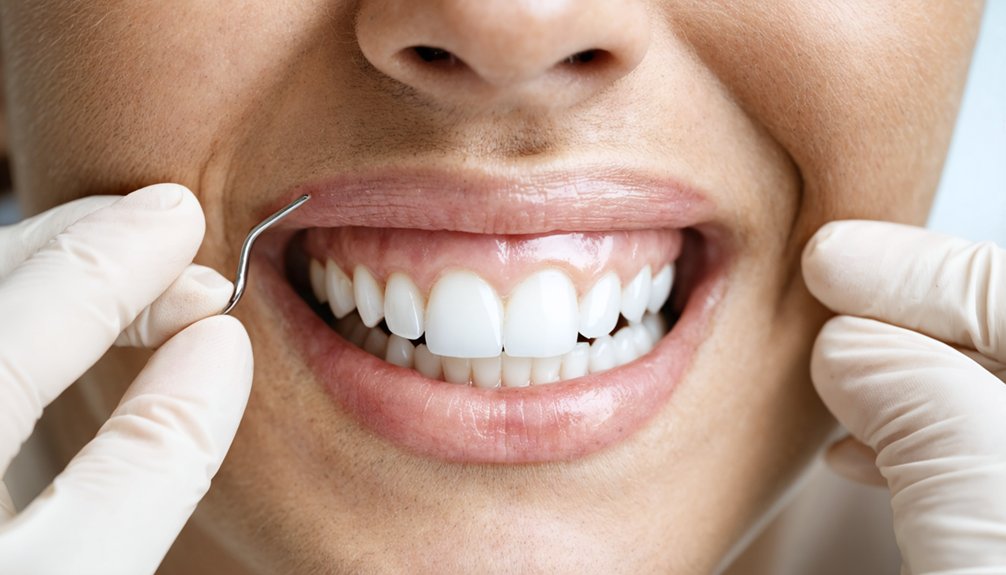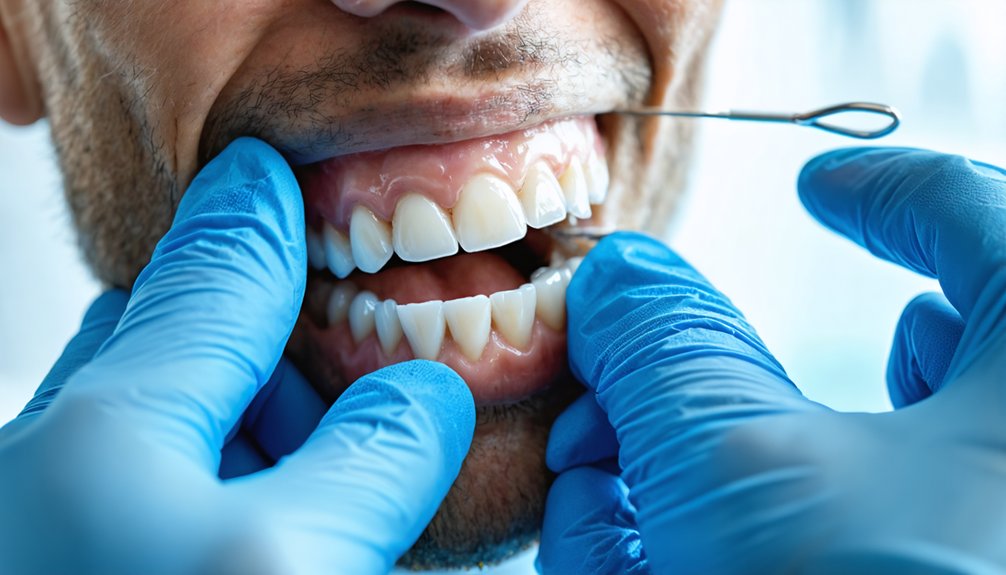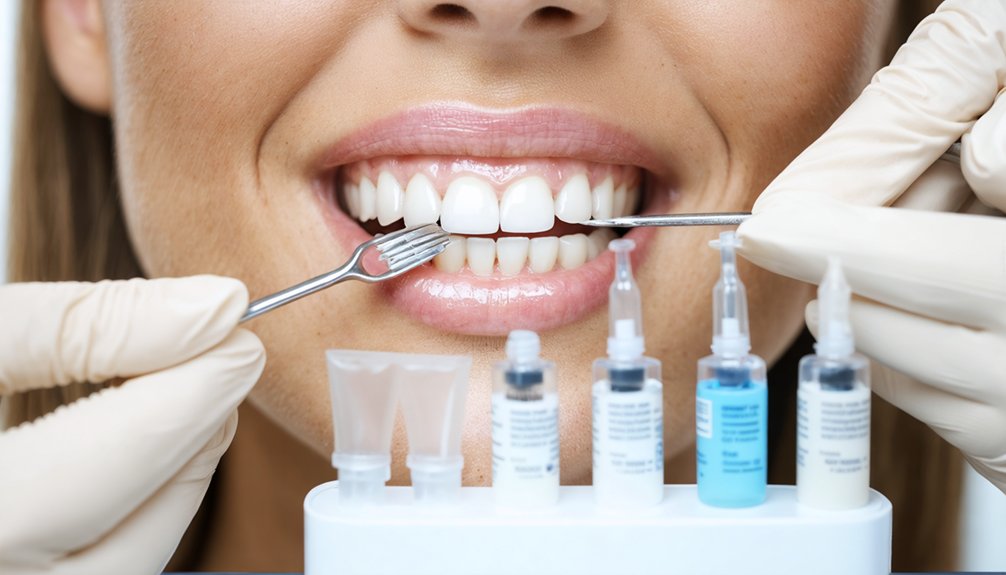
Your personalized teeth whitening plan depends on several factors: your natural tooth color, existing dental work, staining type, and sensitivity levels. Professional in-office treatments deliver 6-10 shade improvements in one hour using 25-40% bleaching agents, while custom take-home trays offer gradual results with 10-22% concentrations. For stubborn discoloration unresponsive to bleaching, bonding or veneers provide alternative solutions. Your dentist will evaluate your skin tone, facial features, and aesthetic goals to determine whether you’ll benefit most from immediate dramatic results or a gentler approach.
Key Takeaways
- Dentists assess natural tooth color, existing restorations, stain types, skin tone, and sensitivity levels to recommend personalized whitening treatments.
- Professional in-office whitening delivers dramatic 6-10 shade improvements in one hour using 15-43% peroxide concentrations with protective barriers.
- Custom take-home trays with 10-22% carbamide peroxide offer professional-grade results on flexible schedules with personalized sensitivity management protocols.
- Dental bonding and veneers address stubborn discoloration like tetracycline stains when traditional whitening methods prove ineffective or unsuitable.
- Treatment selection depends on priorities: immediate dramatic results favor in-office procedures, while gradual improvements suit over-the-counter options.
Understanding Your Whitening Options: Professional vs. Over-the-Counter Methods
Your teeth whitening journey begins with a fundamental choice: professional treatments administered by licensed dentists or over-the-counter products you’ll use at home. Professional systems deliver 6-10 shades of improvement in 60-90 minutes using 25-40% concentration bleaching agents, with results lasting 1-3 years. Over-the-counter kits contain 3-10% concentrations, requiring 2-3 weeks of daily application for 2-3 shade improvements that fade within 6 months.
Accessibility considerations matter: professional treatments demand single appointments and higher upfront costs, while home kits offer budget-friendly, flexible scheduling. Lifestyle based recommendations depend on your priorities—choose professional care for immediate, long-lasting results with supervised safety protocols, or select at-home options when you’ll consistently follow manufacturer instructions and accept gradual improvements.
In-Office Power Whitening: Dramatic Results in a Single Appointment
When you’re seeking immediate cosmetic transformation, in-office power whitening delivers 6-10 shade improvements in approximately one hour—dramatically faster than the weeks required for at-home treatments. The gel concentration effectiveness stems from professional-grade formulations containing 15% to 43% peroxide, compared to 3% to 20% in retail products. Your dentist applies multiple cycles of this potent gel during your appointment, with each application breaking down deeper stain molecules.
Light technology enhancements, including LED and UV activation systems, accelerate the oxidation process during 15-minute treatment intervals. Protective barriers shield your gums and soft tissues from the high-concentration bleaching agents throughout the procedure. Your dentist documents your baseline shade before treatment and final results afterward, providing measurable proof of your transformation within a single chair appointment.
Custom Take-Home Trays: Gradual Whitening on Your Schedule
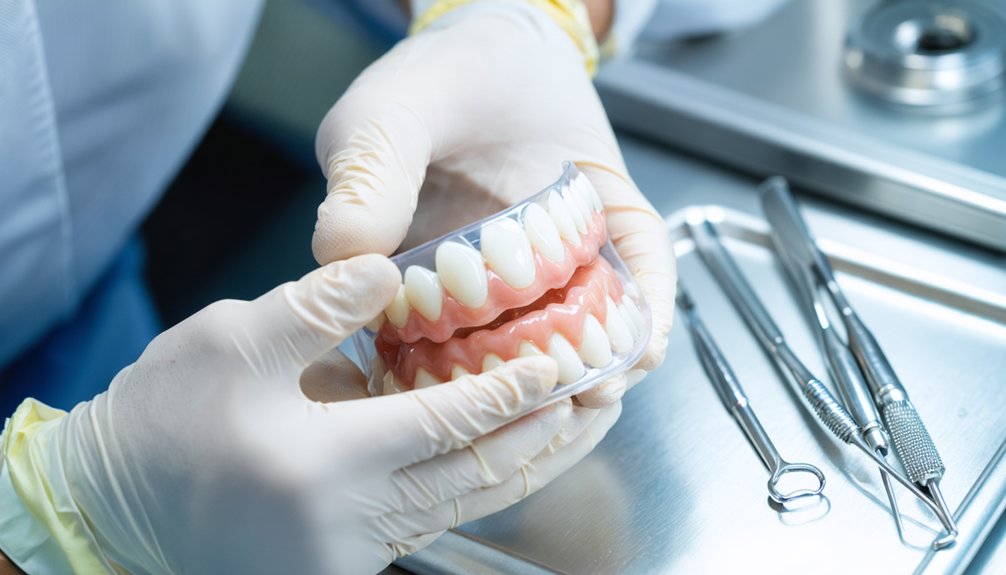
Custom take-home trays offer professional-grade whitening results without requiring you to schedule multiple dental appointments or commit hours in the treatment chair. You’ll receive trays molded precisely from your dental impressions, ensuring even gel distribution and minimizing gum irritation. The professional-strength formulas contain 10-22% carbamide peroxide—significantly more effective than store-bought alternatives.
You control your treatment with customized whitening schedules that fit your lifestyle, whether that’s 30 minutes daily or overnight sessions. Your dentist provides targeted sensitivity management protocols to address any discomfort while maintaining treatment effectiveness. You’ll notice improvements within 1-2 weeks, achieving 2-6 shades lighter over 2-4 weeks of consistent use. The reusable trays accept refill gel for long-term maintenance, giving you complete autonomy over your whitening timeline and final results.
Beyond Whitening: Bonding and Veneers for Stubborn Discoloration
Some discoloration simply won’t respond to whitening treatments, no matter how professional or persistent your efforts. When you’re facing deep intrinsic stains, you’ll need alternative solutions that deliver results.
Dental bonding offers advantages of dental bonding including preserving your natural tooth structure while correcting minor imperfections in a single visit. It’s cost-effective, reversible, and requires minimal anesthesia. However, the composite resin can stain over time and isn’t whitenable like natural teeth.
Veneers provide dramatic transformation for severe discoloration that whitening can’t address. They’re highly stain-resistant and last 10-20 years. Understanding the limitations of porcelain veneers matters: they require enamel removal, multiple appointments, and aren’t reversible.
Your dentist can determine which option matches your specific discoloration concerns and aesthetic goals.
Tailoring Your Treatment: Factors That Determine the Best Approach
Whether you’re considering whitening treatments or exploring bonding and veneers, your dentist weighs multiple factors before recommending a specific approach. Your natural tooth color establishes the baseline, while existing restorative materials impact final results since crowns and fillings won’t change shade. Brown stains from fluorosis respond better than white discoloration, with tetracycline cases requiring three to four months of nightly treatment.
Your skin tone and facial features guide shade undertones selection for harmonious results. Surface stains from coffee or wine lighten more predictably than deep intrinsic discoloration. Tooth sensitivity levels determine peroxide concentration and treatment duration—lower percentages reduce discomfort while achieving color change. Your dentist evaluates these variables during consultation, creating a personalized plan that addresses your specific discoloration type, existing dental work, and aesthetic goals efficiently.
Frequently Asked Questions
How Long Do Teeth Whitening Results Typically Last Before Retreatment Is Needed?
Your whitening results typically last 6 months to 3 years, depending on factors affecting whitening duration like diet and tobacco use. With proper whitening maintenance—avoiding staining foods and maintaining excellent oral hygiene—you’ll maximize your investment.
Can Teeth Whitening Damage Existing Dental Work Like Crowns or Fillings?
No, whitening won’t damage your crowns or fillings—they’re designed to withstand bleaching agents. However, you’ll experience potential tooth sensitivity, and the impact on dental restorations means they won’t lighten, creating possible color mismatches you’ll need to address.
Are There Any Foods to Avoid Immediately After Professional Whitening Treatments?
Your teeth act like sponges post-treatment. You’ll need professional whitening consultation considerations regarding staining foods for 48 hours. Minimally invasive whitening techniques still require avoiding coffee, red wine, berries, and acidic items to protect your investment.
Is Teeth Whitening Safe for People With Sensitive Teeth or Gums?
You can safely whiten with sensitive teeth if you address teeth sensitivity factors first. Choose professional-supervised treatments with lower peroxide concentrations and custom trays to minimize gum irritation risks, ensuring you’ll maintain control throughout the process.
What Causes Teeth to Become Discolored or Stained in the First Place?
Your teeth become discolored through staining from certain foods like coffee, berries, and red wine, plus lifestyle habits that cause discoloration including smoking and poor oral hygiene. Aging, medications, and genetics also affect your tooth color over time.